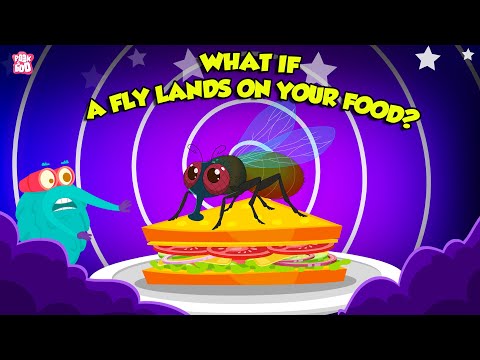
Flies are very common insects that can land on our food, but they can carry harmful germs and bacteria. Let’s find out what happens when a fly lands on your food and why it’s important to keep your food clean.
- Flies land on food to search for something to eat.
- They carry germs and bacteria from dirty places.
- When a fly touches food, it can transfer germs onto it.
- This can make the food unhealthy to eat.
- It’s important to cover food and keep it clean.
- Always wash your hands before eating to stay safe.
Contents
- What Happens When a Fly Touches Your Food?
- Related MCQ’s
- 1. What do flies bring with them when they land on food?
- 2. What happens if flies land on food for too long?
- 3. What should you do if a fly lands on your food?
- 4. How do flies eat food?
- 5. Why is it important to maintain cleanliness around your house to prevent flies?
- 6. How long does the life cycle of a house fly usually last?
- You may like these:
What Happens When a Fly Touches Your Food?
Related MCQ’s
1. What do flies bring with them when they land on food?
a) Food crumbs
b) Germs and bacteria
c) Dust
d) Clean water
Answer: b) Germs and bacteria
Explanation: Flies often land on rotting waste, carrying harmful germs and bacteria that can spread to food.
2. What happens if flies land on food for too long?
a) The food gets tastier
b) The food might get infected with harmful bacteria
c) The food becomes safe to eat
d) The food becomes clean
Answer: b) The food might get infected with harmful bacteria
Explanation: Flies can spread harmful bacteria like salmonella or E. coli, increasing the risk of food poisoning if they stay on food for too long.
3. What should you do if a fly lands on your food?
a) Eat it anyway
b) Throw it away or remove the piece the fly touched
c) Leave it alone and keep eating
d) Wait for the fly to fly away
Answer: b) Throw it away or remove the piece the fly touched
Explanation: It’s best to remove the part of the food the fly landed on to avoid germs and bacteria.
4. How do flies eat food?
a) They chew it with teeth
b) They swallow it whole
c) They vomit digestive enzymes onto it
d) They suck it like a straw
Answer: c) They vomit digestive enzymes onto it
Explanation: Flies don’t have teeth. Instead, they release digestive enzymes to turn solid food into liquid before eating.
5. Why is it important to maintain cleanliness around your house to prevent flies?
a) To keep flies entertained
b) To keep your food safe from germs
c) To make your house look nice
d) To make your food taste better
Answer: b) To keep your food safe from germs
Explanation: Keeping your house clean and disposing of waste properly helps prevent flies from spreading germs to your food.
6. How long does the life cycle of a house fly usually last?
a) 5 days
b) 30 days
c) 1 year
d) 6 months
Answer: b) 30 days
Explanation: The life cycle of a house fly typically lasts around 30 days, but they can lay up to 500 eggs in that time.
You may like these:
Bacteria
Bacteria are single-celled microorganisms that can live in diverse environments. They can be helpful or harmful, playing key roles in ecosystems and human health
Are bacteria alive?
Yes, bacteria are considered alive because they grow, reproduce, and respond to their environment. They lack a nucleus but have essential life processes.
How Do Antibiotics Kill Bacteria?
Antibiotics kill bacteria by targeting specific structures like cell walls, protein synthesis, or DNA replication, disrupting their functions and preventing their growth or survival.