Learning about the food chain can be fun and exciting for young children. These simple food chain rhymes help early learners understand how plants, animals, and humans get energy. Through catchy verses and easy science concepts, kids can explore ecosystems, animal relationships, and the flow of energy in nature while enjoying rhyming activities.
Contents
Food Chain Rhyme for Kids – Learn Energy Flow in Nature

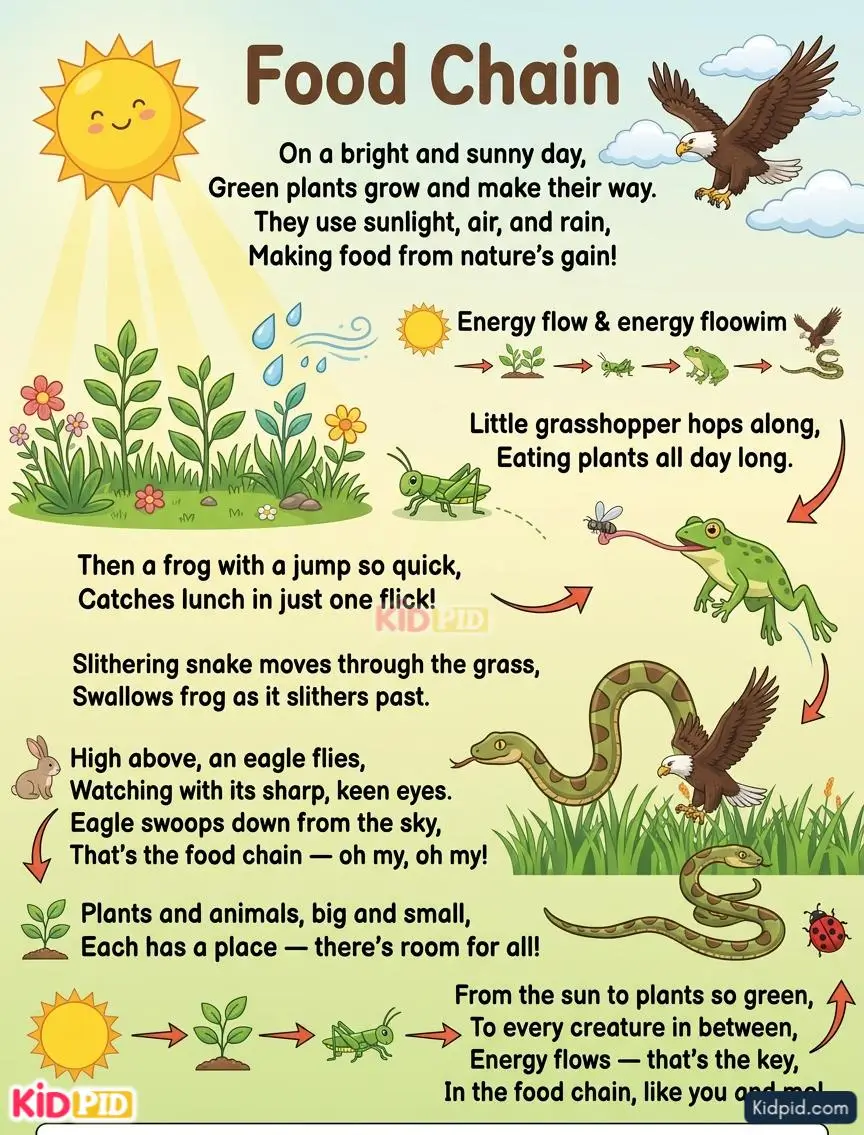
This fun food chain rhyme teaches kids how energy moves through nature, helping them understand ecosystems, animal relationships, and science concepts through easy-to-follow verses.
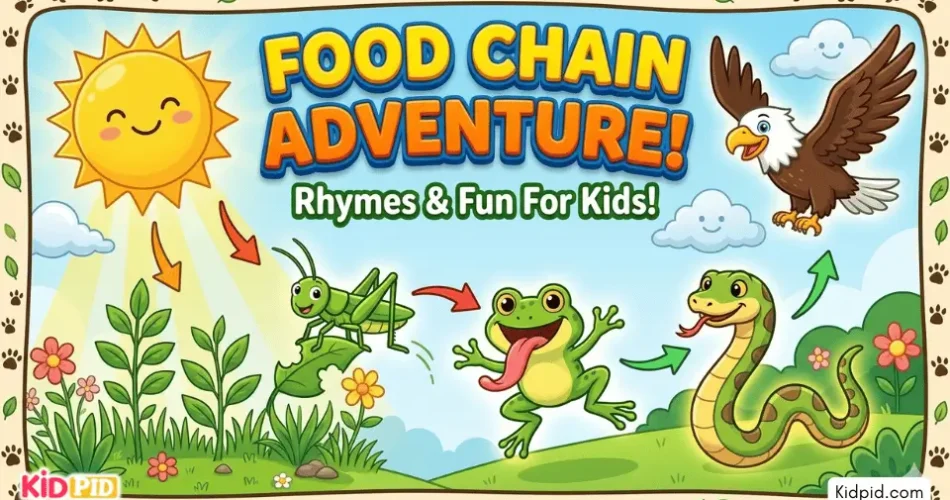
Help children explore nature with this delightful Food Chain rhyme poster that explains how energy travels from the sun to plants and then to different animals. Bright illustrations and rhythmic lines make it easy for kids to follow each step of the food chain while building science vocabulary. The poster encourages curiosity about ecosystems and the important role every living thing plays in the environment. Tap the YouTube link below to enjoy the complete Food Chain rhyme video and continue the learning adventure!
What is a Food Chain?
A food chain is a sequence that shows how living organisms get their food and energy from one another. It illustrates the flow of energy through different living things in an ecosystem.
Food Chain Example
☀️ Sun → 🌱 Plants → 🦗 Grasshopper → 🐸 Frog → 🐍 Snake → 🦅 Eagle
Explanation:
- The Sun provides energy.
- Plants use sunlight to make their own food.
- The Grasshopper eats plants.
- The Frog eats the grasshopper.
- The Snake eats the frog.
- The Eagle eats the snake.
This sequence shows how energy moves from one organism to another in nature. 🌿🍃
Why Are Food Chains Important?
- How energy moves through ecosystems
- The relationship between plants and animals
- The importance of biodiversity
- How every living thing has a role in nature
Key Food Chain Terms
- Producer: Plants that make their own food using sunlight.
- Primary Consumer: Animals like grasshoppers that eat plants.
- Secondary Consumer: Animals such as frogs that eat insects.
- Tertiary Consumer: Predators like snakes that eat other animals.
- Apex Predator: Top predators, such as eagles, that have few or no
FAQs
Q1. What is a food chain?
Answer: A food chain is a sequence that shows how energy and nutrients pass from one living organism to another.
Q2. Why is the food chain important?
Answer: It helps maintain ecological balance and shows how living things depend on one another.
Q3. What is the first step in a food chain?
Answer: The Sun is the primary source of energy for most food chains.
Q4. What is an example of a food chain?
Answer: Sun → Plants → Grasshopper → Frog → Snake → Eagle
Q5. What are consumers in a food chain?
Answer: Consumers are animals that cannot make their own food and must eat plants or other animals to get energy. Examples include grasshoppers, frogs, snakes, and eagles.
Q6. What is an apex predator?
Answer: An apex predator is an animal at the top of the food chain that has few or no natural predators. In this food chain, the eagle is the apex predator.
The food chain teaches us how plants and animals depend on one another for energy and survival. From the Sun to the eagle, every living thing has an important role in the ecosystem. Understanding the food chain helps children appreciate nature, biodiversity, and the balance of life on Earth. Don’t forget to visit our website for new rhymes, paragraphs, essays, worksheets, flashcards, quizzes, and exciting educational content. Follow us on YouTube & Facebook for daily fun learning videos and activities designed especially for kids.