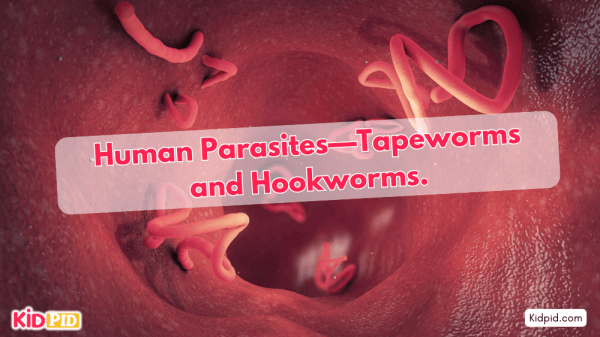
Parasites are tiny creatures that can live inside your body and cause harm. In this lesson, we’ll learn about some of the most common and scary parasites, like tapeworms, hookworms, and roundworms. These creatures can be dangerous, but knowing how they work and how to stay safe can help you avoid them!
- Parasites are small creatures that live inside the body of another animal or human to survive.
- Tapeworms are long, flat worms that can grow very big inside your intestines.
- Hookworms are tiny worms that can enter your body through your skin, especially if you walk barefoot on contaminated soil.
- Roundworms are worms that live in your intestines and can cause problems like stomach pain and breathing issues.
- Pinworms are tiny worms that make your bottom itchy and can spread easily.
- Prevention is key! Always wash your hands, cook food properly, and avoid contact with contaminated soil to stay safe from these parasites.
Contents
- Frightening parasites in humans: tapeworms, hookworms, roundworms & others
- Related MCQ’S
- 1. What is a tapeworm?
- 2. How do tapeworms enter the human body?
- 3. What is the best way to prevent hookworm infection?
- 4. What are roundworms most commonly known to cause in humans?
- 5. What is the main way pinworm infection spreads?
- 6. What is a parasite?
- 7. What type of parasite is known to control the behavior of ants?
- You may like these:
Frightening parasites in humans: tapeworms, hookworms, roundworms & others

Related MCQ’S
1. What is a tapeworm?
A) A type of bacteria
B) A type of parasite with a long, segmented body
C) A type of fungus
D) A type of fish
Answer: B) A type of parasite with a long, segmented body
Explanation: Tapeworms are flatworms that live in the intestines of animals and can cause infections in humans when they consume undercooked meat.
2. How do tapeworms enter the human body?
A) Through the skin
B) By breathing in air
C) By eating undercooked infected meat
D) Through direct contact with infected animals
Answer: C) By eating undercooked infected meat
Explanation: Tapeworms enter the human body when someone consumes raw or undercooked meat from an infected animal.
3. What is the best way to prevent hookworm infection?
A) Eating healthy food
B) Walking barefoot in soil
C) Washing hands thoroughly and avoiding contact with contaminated soil
D) Drinking plenty of water
Answer: C) Washing hands thoroughly and avoiding contact with contaminated soil
Explanation: Hookworms enter the body when someone walks barefoot on contaminated soil. Washing hands and avoiding such exposure can help prevent infection.
4. What are roundworms most commonly known to cause in humans?
A) Skin infections
B) Stomach-related symptoms like nausea and pain
C) Vision problems
D) Fever and cough
Answer: B) Stomach-related symptoms like nausea and pain
Explanation: Roundworms, especially Ascaris lumbricoides, affect the intestines and can cause symptoms like difficulty breathing, loss of appetite, and stomach pain.
5. What is the main way pinworm infection spreads?
A) Through contaminated food
B) Through the air
C) By touching contaminated objects and not washing hands
D) By drinking contaminated water
Answer: C) By touching contaminated objects and not washing hands
Explanation: Pinworm eggs can be found on contaminated surfaces like clothes and toys, and they spread when someone touches these objects and then doesn’t wash their hands.
6. What is a parasite?
A) An animal that hunts for food
B) A living thing that lives on or inside another organism for food
C) A plant that needs water to survive
D) A type of bacteria
Answer: B) A living thing that lives on or inside another organism for food
Explanation: A parasite lives on or inside another organism (the host) and survives by feeding off the host.
7. What type of parasite is known to control the behavior of ants?
A) Tapeworm
B) Zombie fungus
C) Pinworm
D) Hookworm
Answer: B) Zombie fungus
Explanation: The zombie fungus infects ants, taking control of their behavior and making them leave their nests to benefit the fungus’s growth.
You may like these:
How parasites change their host’s behavior
Parasites manipulate host behavior to increase their chances of survival and reproduction, often altering feeding, movement, or reproductive patterns to benefit the parasite.
Human Experimentation: The Good, The Bad, & The Ugly
Human experimentation can advance science and medicine, but unethical practices lead to harm, exploitation, and violations of human rights, sparking debates over morality and regulation