

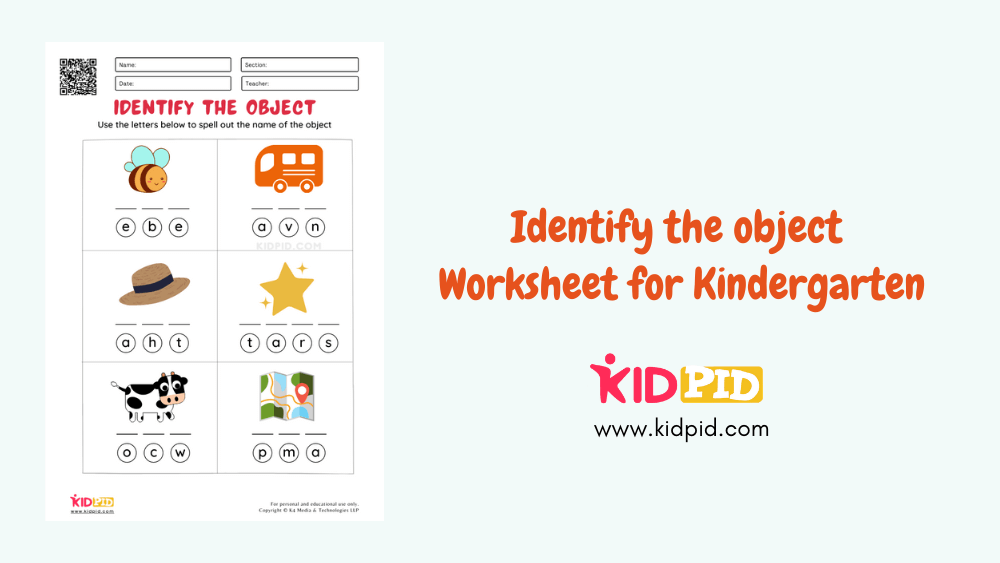
Who doesn’t want their children to learn and grow? Enhancing kids’ knowledge now has an easier way with many creative and wonderful activities that kids will love. Given below is an interesting way to teach kids about things. How will the kids know what a given thing or animal is called? This worksheet is a must-try. This will surely help children to identify the things in day-to-day life that they encounter, whether it’s a bag, a ball, or any other thing.
Also, the amazing part is the realistic pictures. We all know that pictures capture children’s attention, which will make them curious to learn. Also, it will help them learn spellings, which will automatically enhance their vocabulary. Now, this is a great deal that sharpens both vocabulary and identifying skills.
Look at the pictures given below with the words. Identify the picture and try to put the given words in a way that they will spell the name of the picture. Easy, right? Yes, it is. Now try these amazing worksheets with children, and hope it’ll be great fun.
Contents
- Identify the object Worksheet for Kindergarte.n
- 1. Car
- 2. Pen
- 3. Dog
- 4. Tree
- 5. Cup
- 6. Cat
- 7. Bee
- 8. Van
- 9. Hat
- 10. Star
- 11. Cow
- 12. Map
- 13. Sun
- 14. Ten
- 15. Leaf
- 16. Duck
- 17. Egg
- 18. Bag
- 19. Mat
- 20. Pan
- 21. Socks
- 22. Bone
- 23. Hen
- 24. Mouse
- 25. Log
- 26. Pig
- 27. Bell
- 28. Hand
- 29. Can
- 30. Pin
- 31. Bed
- 32. Top
- 33. Fish
- 34. Book
- 35. Jet
- 36. Pen
- 37. Lip
- 38. Owl
- 39. Fox
- 40. Frog
- 41. Drum
- 42. Ant
- Key Facts About Identify the Object Worksheets
- Parts, Types, and Examples of Object Identification Worksheets
- How Does an Identify the Object Worksheet Work?
- Benefits of Learning About Object Identification
- Learning Objectives
- Worksheet Instructions
- Interesting Facts About Everyday Objects
- Vocabulary Words
- Real-Life Applications
- FAQs
- Read More:
Identify the object Worksheet for Kindergarte.n

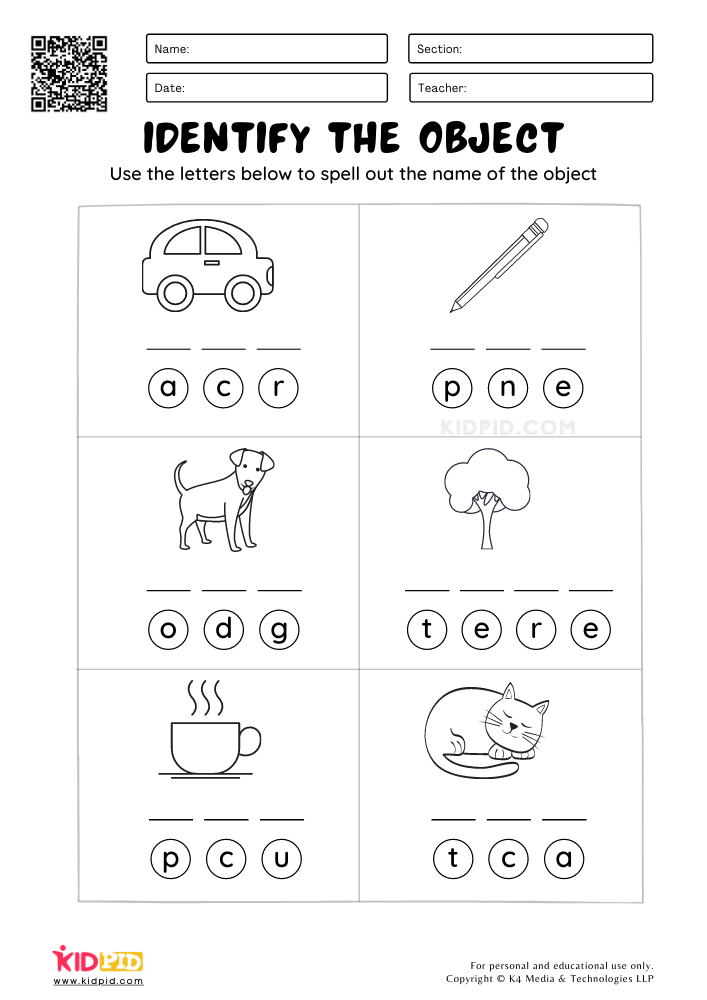
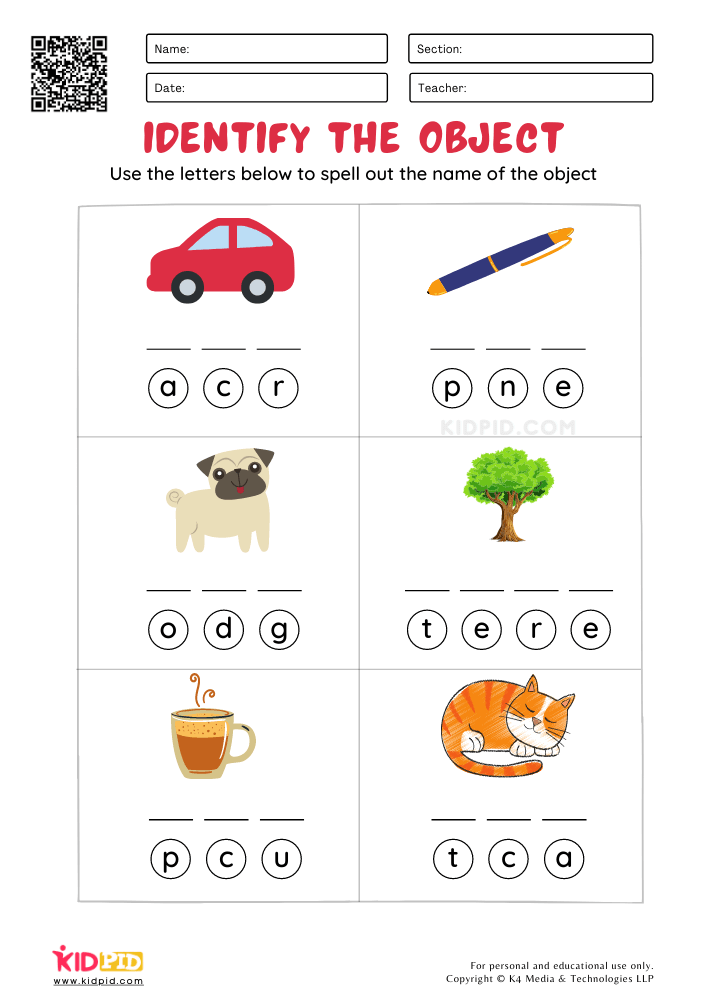
1. Car
- A wheeled motor vehicle is usually used for transportation.
- The word excites (yes, it does ); everyone dreams of having a car. After all, it is a sign of luxury.
- Cars usually excite children, with their fascinating colours, the roaring sound that it makes as soon as they get started, the thought gives goosebumps.
- Sometimes it even turns out to be scary; the speed that some might like can turn out to be dangerous, too.
2. Pen
- ‘Pen’ sounds familiar; yes, it is a writing instrument that is used in everyday life.
- Filled with ink, when scratched on paper does magic.
- It’s a magic tool that can help to change life courses.
3. Dog
- A dog is a pet animal with a life expectancy of only 16 -17 years.
- Dogs are called man’s best friend, not just because they are called that, but they actually are man’s best friend. They always stay loyal to the one they are connected with.
- They usually make a sound that can some time scary children.
Tea
4. Tree
- A tree is a plant with branches, a trunk, roots, etc.
- Trees are precious; they give all the living creatures life, they have so much to give but take nothing in return.
- They provide the most important life-supporting things: oxygen and food.
- The two things without which we cannot imagine life. -They are a necessity, and we should surely put more effort into preserving them.
5. Cup
- It is an open-top container with a handle
- It is usually used for holding liquids of any kind
- In the picture, the given cup is holding a hot liquid, which may be tea or coffee.
- It can be made up of either glass or steel.
6. Cat
- The cat, which is also called the domestic cat
- When kept indoor they are termed as ppets
- They have strong paws, which are enough to cause serious damage to anyone who is attacked.
- Their babies are called kittens.
- An amazing fact about cats is that they can rotate their ears 180 degrees.
- Cats make a meow sound.
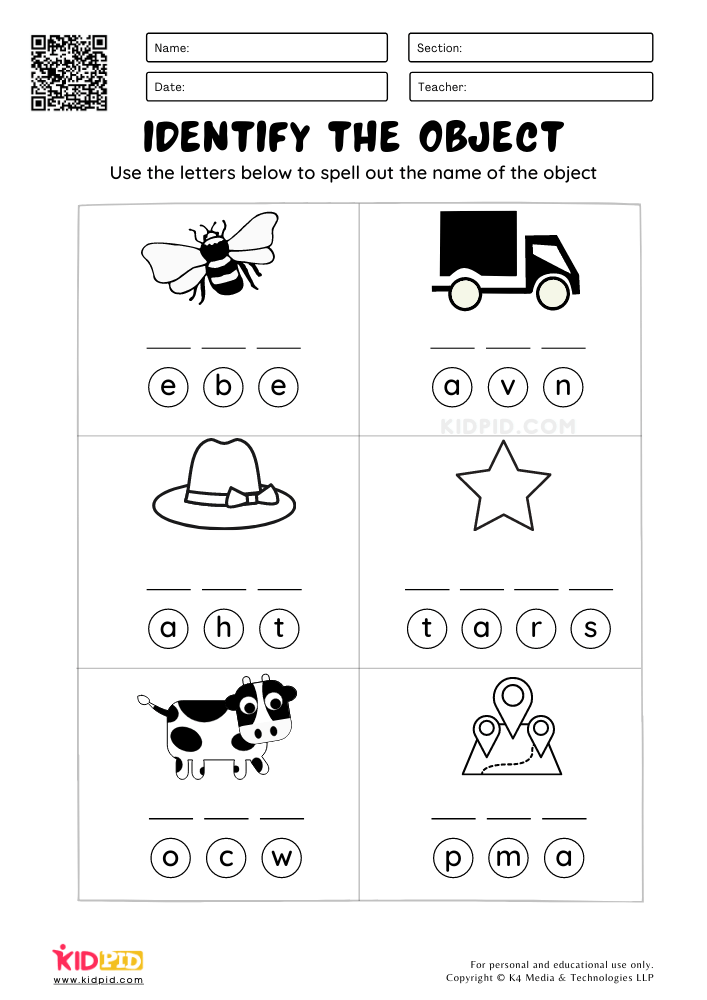
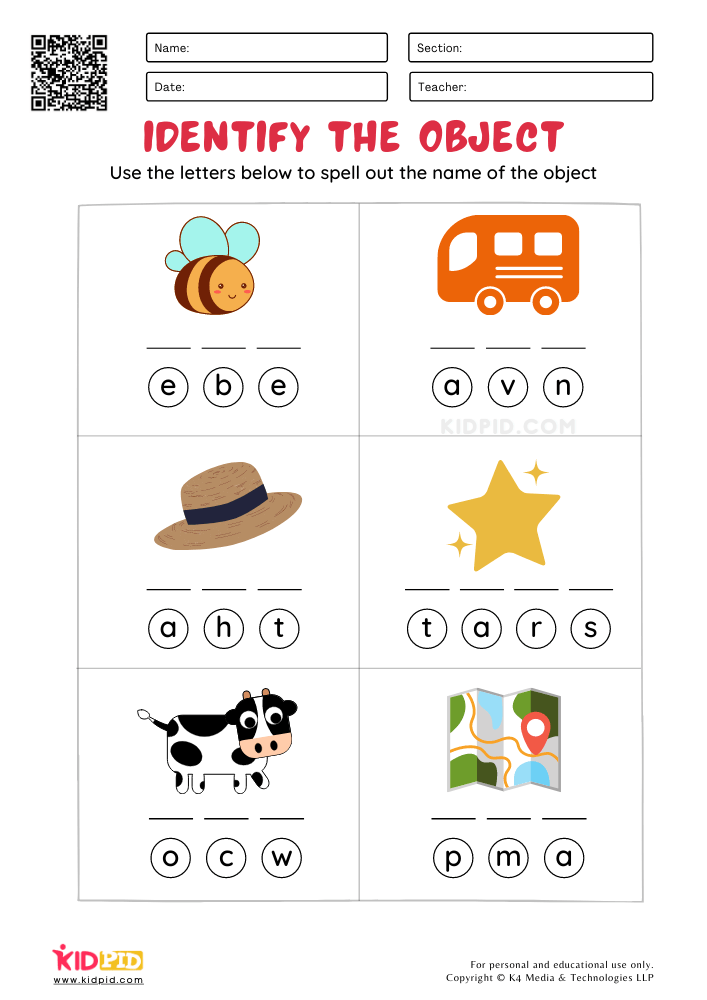
7. Bee
- A bee is a flying insect closely related to an ant
- Bees are considered the main agents for pollination
- Bees are found everywhere where there are flowers
- Bees have many species; the most common of them all is the ‘Honey bee’.
- Honey bees are usually responsible for producing honey.
8. Van
- A van is a road vehicle that is used for transporting people or goods
- Vans are usually of many types depending on their usage.
9. Hat
- A hat is a head cover that is worn for various reasons.
- The reason may vary for an outing, a ceremony, or any important occasion.
10. Star
- A. A star is an object with luminous plasma in the sky
- Some stars are visible to the naked eye, but some are far in distance.
- They usually shine like a diamond in the sk.y
11. Cow
- It is a mature female cow.
- A cow is a domestic animal.
- A cow gives us milk, which is an important food for a healthy being.
- In India, cows are even worshipped; they are considered a goddess.
12. Map
- A map is a pictorial representation of regions, places, countries, etc.
- Maps are used to find the way to a location.n
- You can easily find your way out in an unknown location with the help of a map.
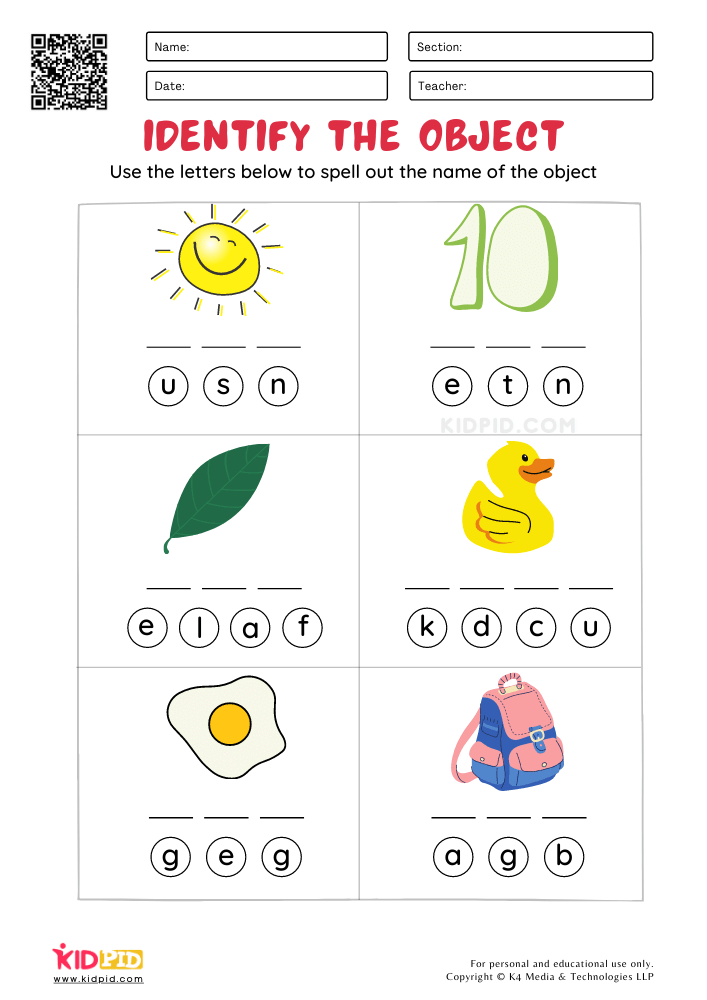
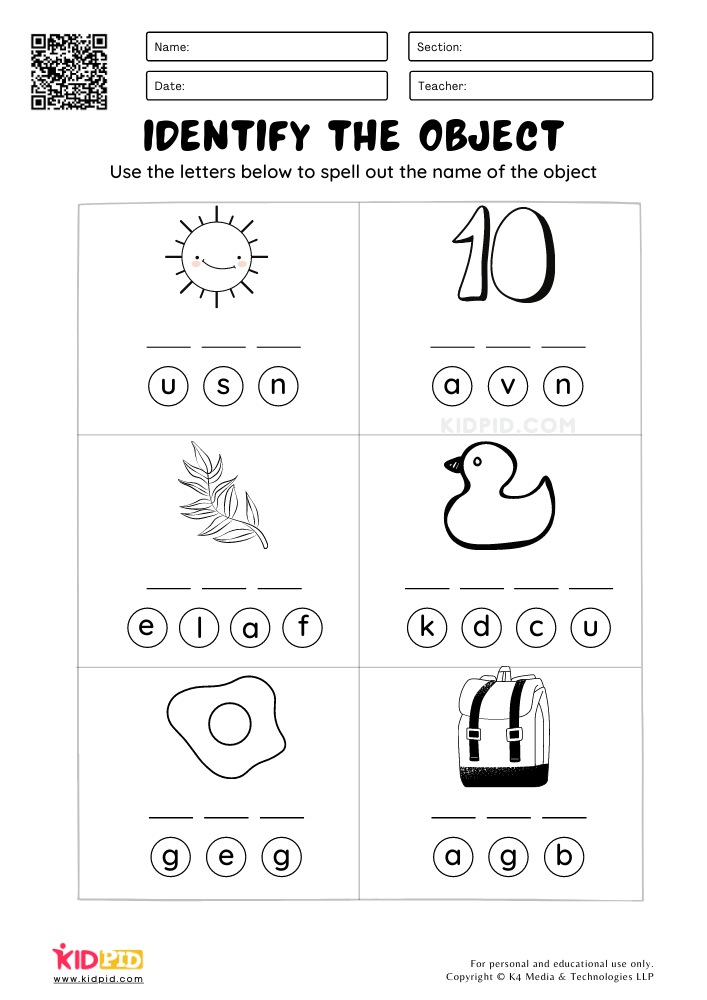
13. Sun
- The Sun is a star located at the centre of the solar system.
- It is yellow in colour.
- It gives out energy in the form of light
- It’s a giant heat ball full of heat.
- It also gives out harmful UV rays.
14. Ten
- Ten is an even natural number following 9 and preceding 11
- Ten is also the smallest two-digit number.
- It is the first double-digit number.
15. Leaf
- A leaf is an above-ground plant part that is green
- They are involved in the process of photosynthesis and gas exchange
- They make food for the plant.
16. Duck
- Ducks are water animals, but they can survive on both water and land
- Ducks are harmless creatures; they don’t usually harm humans
- Ducks are female; male ducks are called drakes.
17. Egg
- An egg is a white ball from a chicken.
- They can be cooked with their shells broken as well as unbroken.
- When an egg is boiled, it is simply cooked unbroken, but when an omelette is made or when an egg is added to any other recipe, it is cooked with its shell unbroken.
- It consists of a yellow substance called yolk, which is very nutritious.
18. Bag
- A bag is a soft container.
- Usually used to hold things.
- It may be made up of cloth, leather, plastic, or any other material.
- Children usually carry another form of bag, which is a school bag.
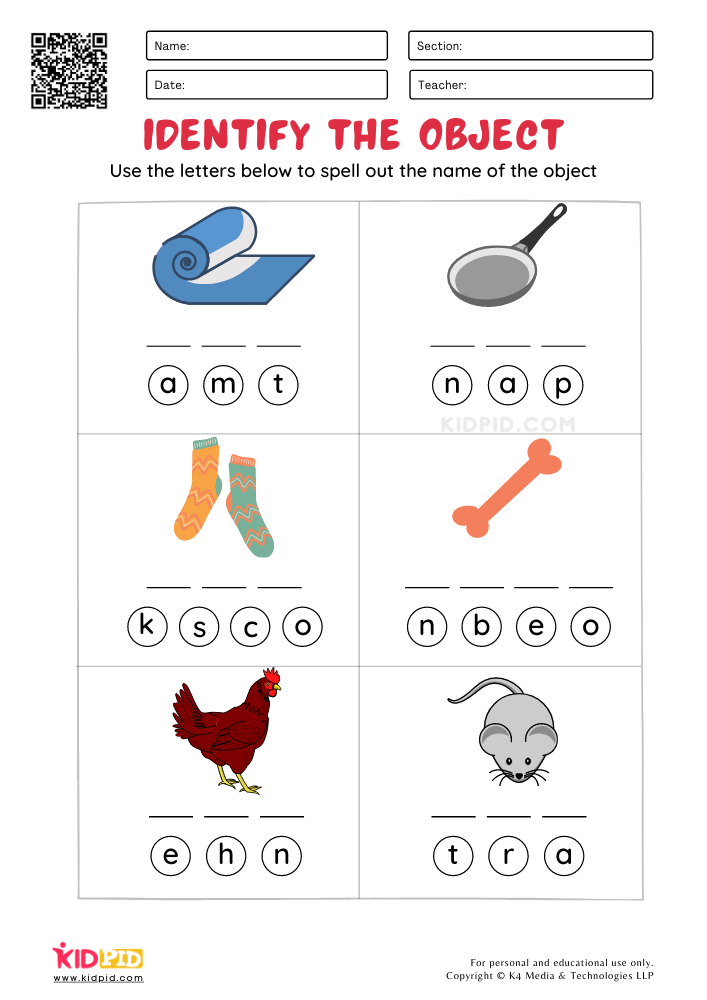
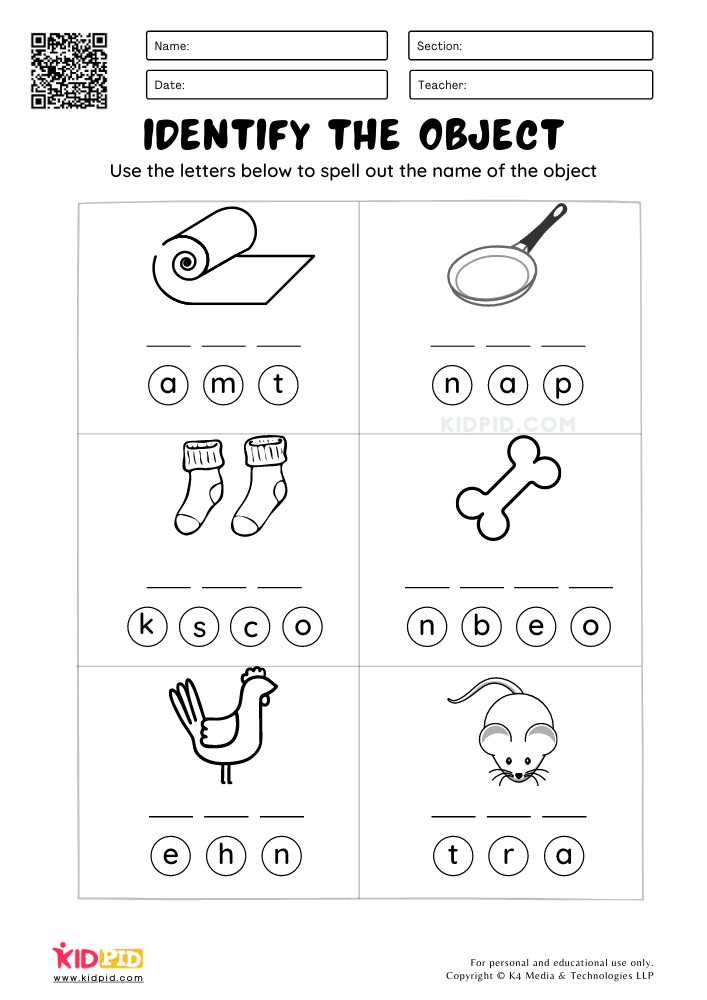
19. Mat
- A mat is a flat rectangular object usually used for sitting, doing yoga, or exercising.
- The mats which are used for placing outside or inside the entrance of a house are usually called a doormat.
20. Pan
- A pan is a deep cooking utensil used for cooking food.
- With a flat bottom and a handle.
- Used for making sauces, boiling milk, or water.
21. Socks
- It is a piece of clothing that is worn on the feet.
- It covers the ankle area and sometimes the half area of the calf
- It comes in many types: winter socks, summer socks, school socks, etc.
22. Bone
- It is a bone-shaped toy usually made for dogs to play with.
- It comes in many different colours.
23. Hen
- It is commonly referred to as a female animal.
- Hens lay eggs, which are usually brown or white in colour.
- They are generally harmless creatures.
24. Mouse
- The plural of mice is mice.
- It is a kind of mammal with a pointed snout and small, round ears.
- It can be harmful and can cause several diseases in humans.
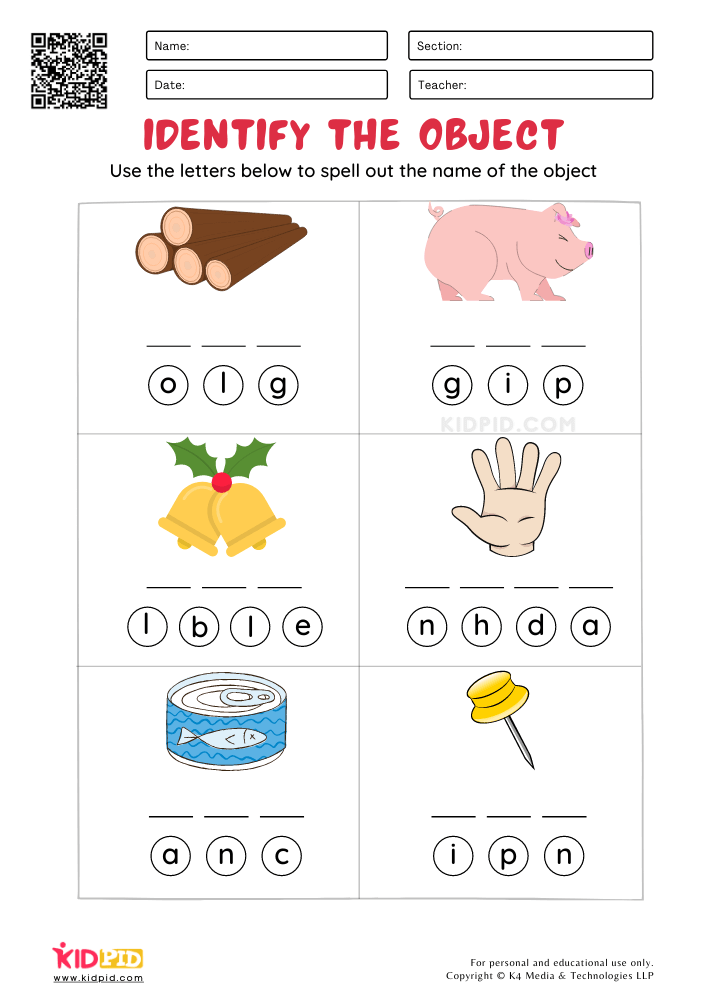
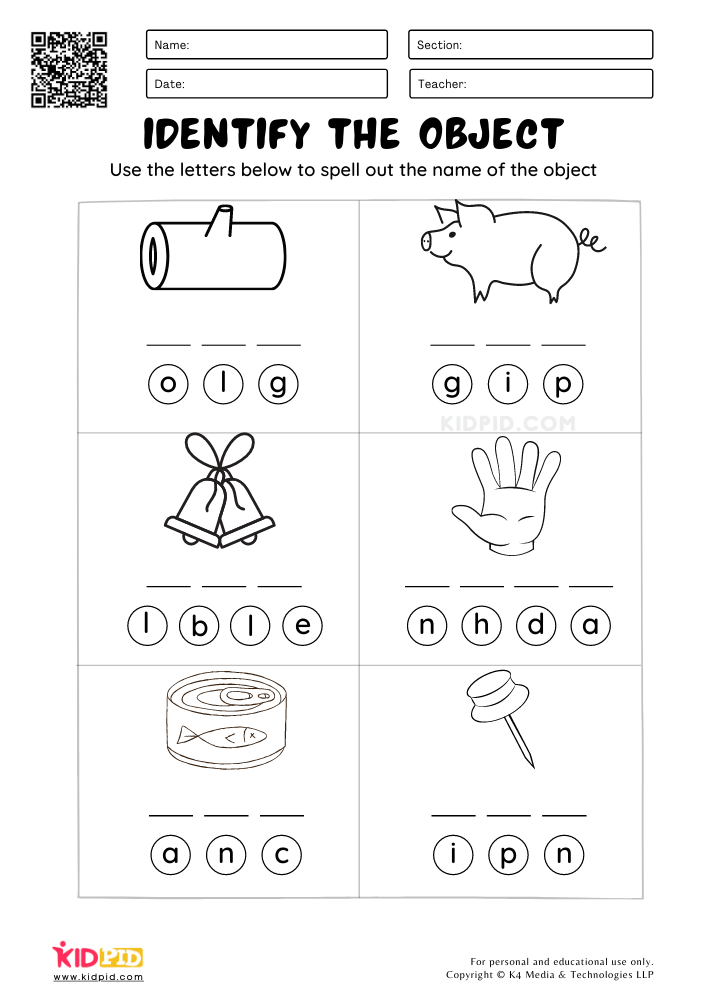
25. Log
- The stem and main wooden axis of a tree is called a log
- It is a Small wooden piece cut out from the tree with the help of an axe or any other machinery.
- It is usually the same colour as the tree, slightly brown, with some cracks.s
26. Pig
- A pig is an animal usually found in the shade.
- They can be wild as well as pets.
- Wild pigs can cause several diseases in humans.
27. Bell
- It is a type of bell that usually produces a sound of jingling
- They come in many bright colours, with the golden one given.
- They are usually used during the Christmas season.
28. Hand
- The hand is a body part located at the end of the forearm.
- Consists of ten fingers, five on each hand.
- Humans usually have two hands.
29. Can
- It is a container used for the storage or transportation of goods.
- The given picture is a can that can usually be made of tin or steel.
- Mostly packaged food comes in these cans.
30. Pin
- A pin is a device used for sticking objects together.
- Board pins are used for sticking material on boards.
- It’s small in size but has a sharp end.
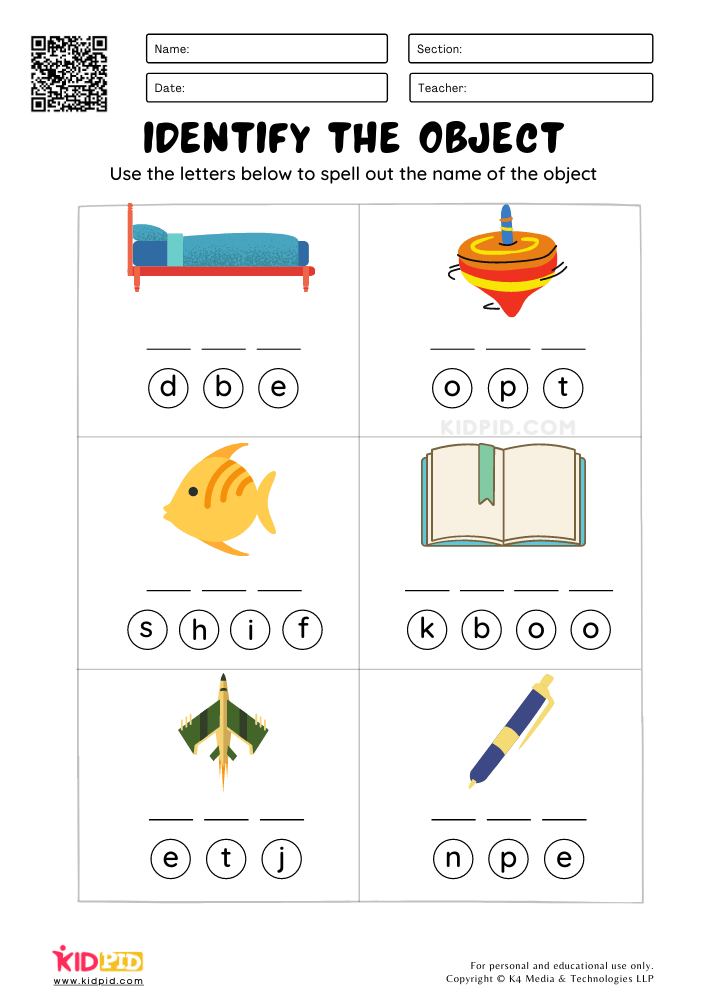
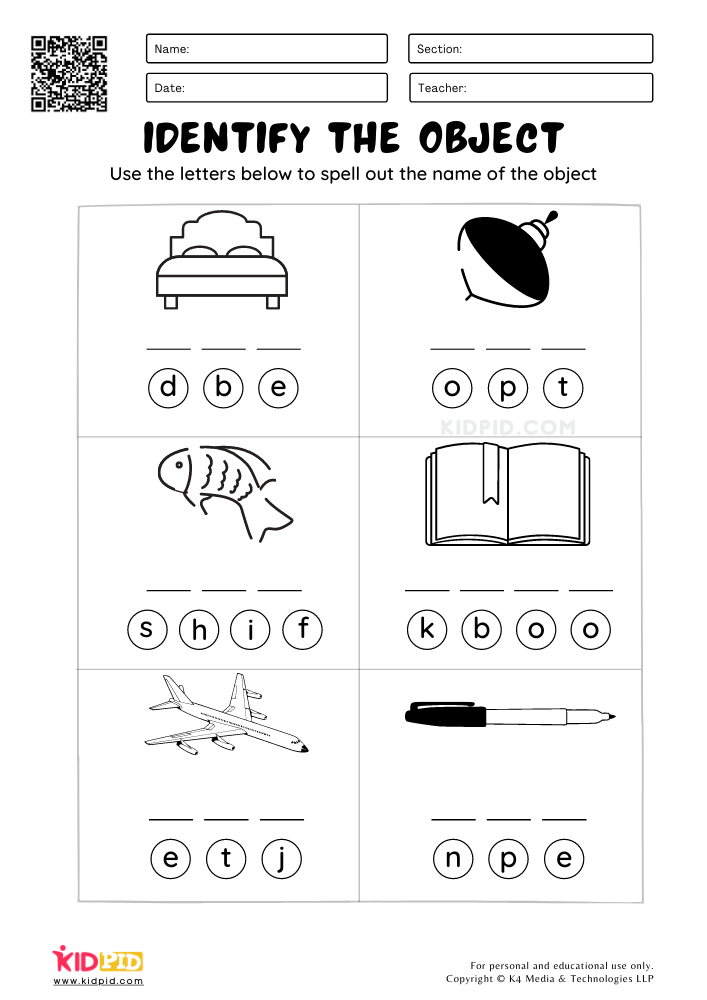
31. Bed
- A bed is a piece of furniture that is used to sleep or relax.
- As a type of furniture, beds are usually made up of wood.
- They come in a variety of designs and heights to choose from, as per preference.
32. Top
- It is a spinning toy that is used by kids to play.
- It has a sharp point at the bottom, which helps it to spin.
- It is usually made of wood or plastic.
33. Fish
- Fish are aquatic animal that loves in water
- They use gills to breath unlikeen their lungs.
- They lack limbs like hands, legs, or toes
- There are thousands of species of fish all over the world.
34. Book
- A book is a medium used for recording information
- They store information in the form of pictures and writing.
- There are books on almost every topic.
- Books are one’s best friend.
35. Jet
- It is an aircraft designed for carrying small groups through the air
- It is an air transport that can cover a large distance in hours.
36. Pen
- ‘Pen’ sounds familiar; yes, it is a writing instrument that is used in everyday life.
- Filled with ink, when scratched on paper does magic.
- It’s a magitool that can help to change life courses.
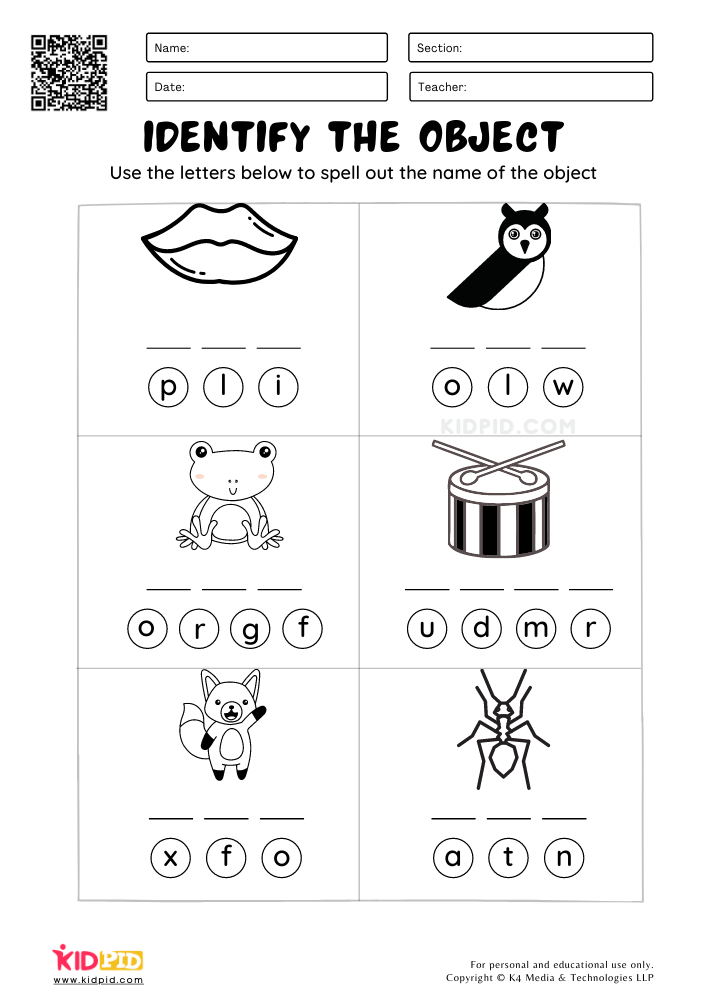
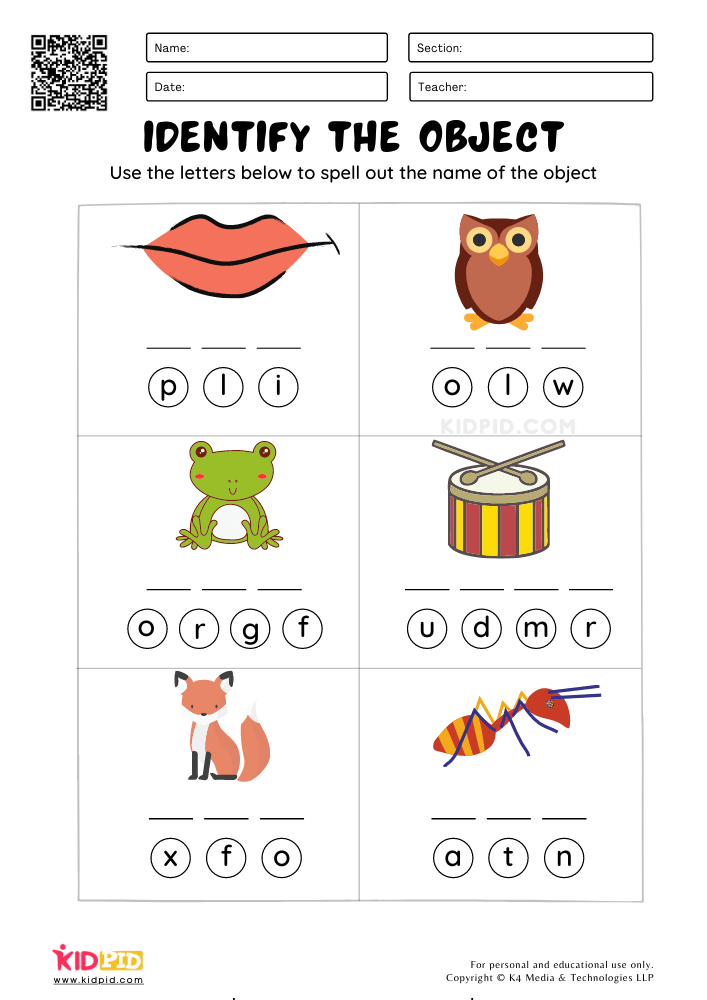
37. Lip
- Lips are a strong, movable structure on the face.
- It serves as an opening for food intake, directly connected to the food pipe.
- It’s one of the sensitive organs.
38. Owl
- Owls are a group of birds that belong to the order of Strigiformes.
- They stay awake at night and sleep during the day.
- They are usually found in the forest.
- There are almost 200 species of owl.
39. Fox
- Foxes are small to medium-sized mammals.
- They are swift runners and live in a group.
- A female fox is called a vixen.
- There are almost twelve species of fox found all over the world. The red fox is the most common. Of them all.
40. Frog
- A frog is any member of the class Amphibia, a short amphibian.
- They can survive on both land and water
- A frog cannot survive in salty water.
- They usually hatch as tadpoles from the eggs.
41. Drum
- The drum is one of the important members of musical instruments.
- It is played with hands using a drumstick.
- A drum produces a banging sound.
42. Ant
- Ants are a type of insect that is similar to wasps, another kind of insect.
- Ants usually live in groups, and they gather their food in groups.
- Ants can bite; they bite hard.
Key Facts About Identify the Object Worksheets
- Target Age Group: Perfect for children aged 4 to 6 years old (Preschool and Kindergarten).
- Skill Focus: Combines visual discrimination, spelling pattern recognition, and phonics (identifying beginning, middle, and ending sounds).
- Format: Multi-sensory learning approach featuring high-quality, recognisable real-world images alongside scrambled or blank text spaces.
- Curriculum Alignment: Directly supports early childhood education benchmarks for English Language Arts (ELA), specifically print awareness, vocabulary acquisition, and foundational reading skills.
Parts, Types, and Examples of Object Identification Worksheets
Early childhood educators categorise object identification activities to target specific milestones. These worksheets generally feature three main components: a clear Visual Prompt (the image), a Word-Building Element (jumbled letters), and a Writing Line for fine motor practice.
Common types and examples included in this printable packet feature:
- Three-Letter CVC Words (Consonant-Vowel-Consonant): Simplest phonetic words ideal for early blenders. Examples: Car, Pen, Dog, Cup, Cat, Bee, Van, Hat, Cow, Map, Sun, Ten, Bag, Mat, Pan, Hen, Log, Pig, Can, Pin, Bed, Top, Jet, Lip, Owl, Fox, Ant.
- Four-Letter Words with Blends & Digraphs: Introducing slightly more complex structural patterns. Examples: Tree, Star, Leaf, Duck, Bone, Bell, Hand, Fish, Book, Frog, Drum.
- Multi-Syllable/Compound Concepts: Words that expand environmental awareness. Examples: Socks, Mouse.
How Does an Identify the Object Worksheet Work?
These worksheets leverage a cognitive developmental process known as scaffolding—offering a temporary framework to help children achieve a task they cannot quite complete independently.
-
- Visual Stimulus: The child encounters a realistic picture (e.g., a “Dog”). The brain retrieves the familiar word from its visual memory.
- Phonemic Retrieval: The child says the word aloud, breaking it down into individual sounds:
/d/,/ɒ/,/ɡ/. - Grapheme Coding (Spelling): The child takes the jumbled letter cues provided on the page and reorganises them into the correct order based on those sounds.
- Kinesthetic Application: Writing down the letters reinforces muscle memory, bridging the gap between seeing a word, saying it, and spelling it.
Benefits of Learning About Object Identification
Engaging with these interactive printables offers several developmental advantages for young minds:
- Accelerated Vocabulary Growth: Associating text with vivid images helps children label the world around them, expanding their functional vocabulary.
- Phonics Mastery: Forcing children to sort jumbled letters prevents them from relying solely on visual guessing, reinforcing letter-sound relationships.
- Enhanced Visual Discrimination: Children learn to notice minor, distinct details in images, a skill that translates directly to telling the difference between tricky letters like
b,d,p, andq. - Fine Motor Skills & Pencil Control: Writing letters within structured lines builds the hand muscles required for neat handwriting.
Learning Objectives
By completing these worksheets, kindergarteners will achieve the following educational milestones:
- Identify and Name: Correctly recognise and verbally name 40+ common household, animal, and environmental objects.
- Segment and Blend: Break down simple words into individual phonemes and blend them back together to spell words accurately.
- Isolate Sounds: Identify the initial, medial vowel, and final consonant sounds in CVC and four-letter words.
- Demonstrate Print Awareness: Understand that spoken words map directly to specific sequences of written text.
Worksheet Instructions
Make learning smooth and stress-free for your child by following these simple, step-by-step instructions:
- Look and Say: Look at the picture in the box. Say the name of the object out loud clearly.
- Examine the Clues: Look at the letters mixed up next to the picture. These are the ingredients you need to build your word!
- Listen for the Sounds: Say the word slowly. What sound do you hear first? Find that letter and write it down. Repeat for the middle and end sounds.
- Read and Check: Trace or write the complete word on the line provided. Read it back to make sure it matches the picture!
Interesting Facts About Everyday Objects
Keep young learners engaged by sharing these fun, real-world tidbits while they work through their pages:
- Cats can rotate their ears an incredible 180 degrees to pinpoint exactly where a sound is coming from!
- Trees are the lungs of our planet; they give us the oxygen we need to breathe every single day.
- The Sun is actually a giant star sitting right at the very centre of our solar system.
- Honeybees have to visit about two million flowers just to make a single pound of sweet honey.
Vocabulary Words
Here are the foundational vocabulary terms children will master throughout this worksheet package, organised by theme for easy lesson planning:
| Animals & Insects | Everyday Objects | Nature & Science |
|---|---|---|
| Dog, Cat, Bee, Cow, Duck, Hen, Mouse, Pig, Fish, Owl, Fox, Frog, Ant | Pen, Cup, Hat, Van, Car, Bag, Mat, Pan, Socks, Bone, Bell, Can, Pin, Bed, Top, Book, Drum | Tree, Star, Map, Sun, Leaf, Log, Jet |
Real-Life Applications
Learning doesn’t stop when the worksheet is turned over! Parents and teachers can easily apply these skills to daily routines:
- Grocery Store I-Spy: Have your child locate items on your shopping list (“Can you find the can of soup? What sound does can start with?”).
- Labelling the House: Use sticky notes to write simple words like Bed, Pen, or Book and have your child stick them onto the matching household objects.
- Interactive Storytime: While reading bedtime stories, point to pictures and ask your child to sound out and guess the spelling of simple objects on the page.
FAQs
Q1. At what age should my child start using object identification worksheets?
Answer: These printables are designed for children aged 4 to 6. If your child knows their basic letter sounds (A to Z), they are ready to start blending them using these activities.
Q2. My child can say the word but struggles to unjumble the letters. How can I help?
Answer: Try oral scaffolding. If the word is “Cat,” ask them, “What sound do you hear at the very beginning?” Once they say “/c/”, point to the letter ‘C’ among the jumbled options to help them narrow it down.
Q3. Are these worksheets suitable for English Language Learners (ELL/ESL)?
Answer: Absolutely. The clear, realistic illustrations act as excellent visual anchors, making them an ideal resource for children learning English as a second language to build basic vocabulary safely and quickly.
Encourage observation and learning with these Identify the Object worksheets for kindergarten. Children recognize everyday objects, expand their vocabulary, and improve visual discrimination skills through engaging activities. Regular practice strengthens early cognitive development and builds confidence in identifying the world around them. This activity set encourages early reading success through enjoyable practice. Visit our website for worksheets, essays, paragraphs, flashcards, quizzes, and interactive resources. Follow us on YouTube & Facebook.
The Content Team designed this worksheet to support educational improvement.
Reviewed By Shreyasi Desai
Read More:



Very useful