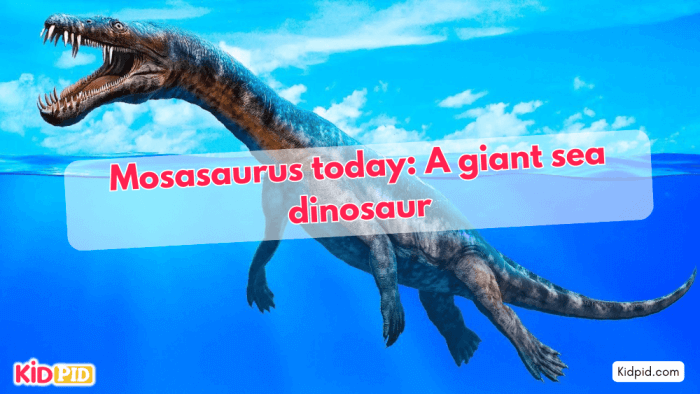
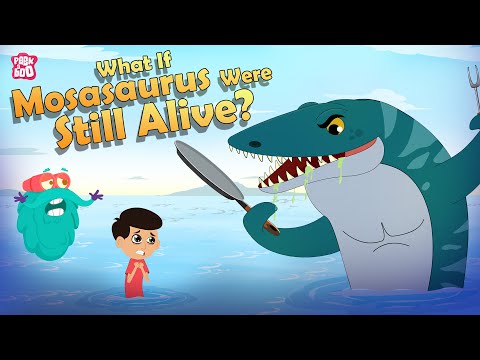
The Mosasaurus was a giant sea dinosaur that lived millions of years ago. It was huge, measuring up to 56 feet, and lived in the oceans during the late Cretaceous period. This massive creature was a fierce predator, hunting animals like sea turtles, sharks, and even smaller Mosasauruses. But what if the Mosasaurus were still alive today? How would it affect our world?
- The Mosasaurus was bigger than a T-Rex and had powerful jaws.
- It went extinct because of changes in the environment, like falling sea levels.
- If it were alive today, it could be at the top of the food chain, making other creatures in the ocean vulnerable.
- The survival of smaller animals might be in danger, and the ecosystem could become unbalanced.
- There might be new rules for swimming at beaches to avoid this dangerous predator.
Contents
- What If The Mosasaurus Survived? A Massive Sea Dinosaur Now.
- Related MCQ’S
- 1. What was the main reason why the oceans were terrified of the Mosasaurus?
- 2. What did the Mosasaurus primarily eat?
- 3. Why did the Mosasaurus become extinct?
- 4. If the Mosasaurus were still alive today, what would be the possible impact on the ecosystem?
- 5. What is the meaning of the name “Mosasaurus”?
- 6. Why might visiting certain beaches be prohibited if the Mosasaurus were alive today?
- You may like these:
What If The Mosasaurus Survived? A Massive Sea Dinosaur Now.
Related MCQ’S
1. What was the main reason why the oceans were terrified of the Mosasaurus?
a) It could fly
b) It was very fast
c) It was extremely large
d) It had sharp teeth
Answer: c) It was extremely large
Explanation: The Mosasaurus was feared because of its massive size, ranging from 30 to 56 feet, making it bigger than the T-Rex.
2. What did the Mosasaurus primarily eat?
a) Plants
b) Smaller species of Mosasaurus
c) Sea turtles, sharks, and dinosaurs
d) Fish only
Answer: c) Sea turtles, sharks, and dinosaurs
Explanation: The Mosasaurus had powerful jaws and could swallow large creatures, including sea turtles, sharks, and even smaller species of its own kind.
3. Why did the Mosasaurus become extinct?
a) It was hunted by humans
b) There was a drop in sea levels and habitat loss
c) It could not adapt to new environments
d) It migrated to another planet
Answer: b) There was a drop in sea levels and habitat loss
Explanation: The Mosasaurus became extinct due to a global drop in sea levels, which altered nutrient patterns and reduced the habitats available for them.
4. If the Mosasaurus were still alive today, what would be the possible impact on the ecosystem?
a) It would help balance the ecosystem
b) It would lead to the extinction of other creatures
c) It would increase fish population
d) It would make the oceans cleaner
Answer: b) It would lead to the extinction of other creatures
Explanation: The Mosasaurus, being at the top of the food chain, would reduce the population of weaker animals, leading to an imbalanced ecosystem.
5. What is the meaning of the name “Mosasaurus”?
a) Giant fish
b) River lizard
c) News river
d) Sea monster
Answer: c) News river
Explanation: The name “Mosasaurus” comes from the Latin word “Mosa,” meaning “news river,” referring to the area in the Netherlands where the first fossils were discovered.
6. Why might visiting certain beaches be prohibited if the Mosasaurus were alive today?
a) It would cause pollution
b) It would make the beaches dirty
c) It would be a dangerous apex predator in the waters
d) It would eat all the fish
Answer: c) It would be a dangerous apex predator in the waters
Explanation: The Mosasaurus, as an apex predator, would pose a life-threatening danger in the water, making certain beaches unsafe for swimming.
You may like these:
Label The Sea Turtle Worksheet


A fun, educational worksheet where children label parts of a sea turtle, learning about its anatomy and marine conservation importance.
Sea Animals Worksheets for Kindergarten
Engaging worksheets for young learners to explore sea animals, their habitats, and behaviors through interactive activities like coloring and matching games.
What If There Were No Sharks?
An informative worksheet exploring the ecological role of sharks, asking children to imagine the impact on marine ecosystems without these apex predators.
The River Phalgu
A geography-focused worksheet about the River Phalgu, its significance in India, and its cultural, environmental, and historical importance to local communities.