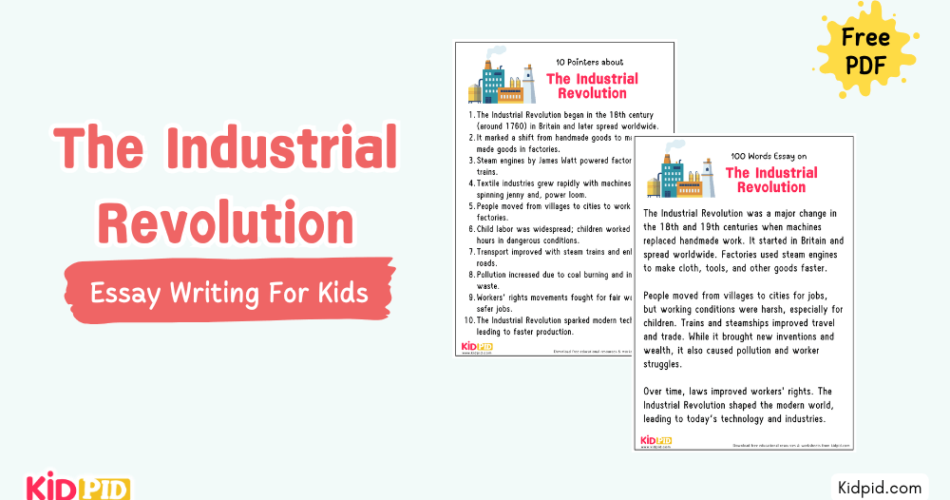
The Industrial Revolution was a major turning point in history that changed the way people lived and worked. It began in the 18th century and introduced machines, factories, and new inventions. This period helped in the growth of industries and improved production, transportation, and economic development across the world.
Contents
10 Pointers About The Industrial Revolution
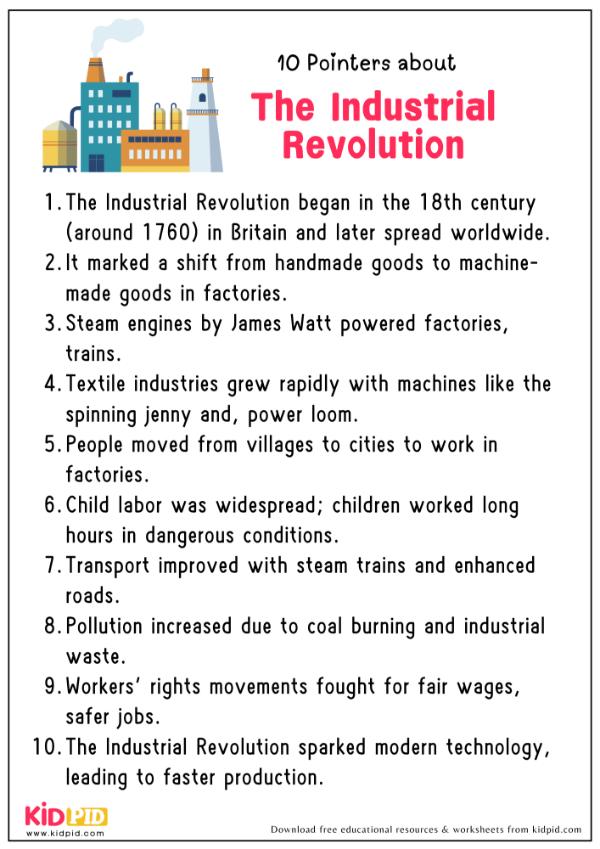

- The Industrial Revolution began in the 18th century (around 1760) in Britain and later spread worldwide.
- It marked a shift from handmade goods to machine-made goods in factories.
- Steam engines, invented by James Watt, powered factories and trains.
- Textile (cloth) industries grew fast with machines like the spinning jenny and the power loom.
- Cities grew as people moved from villages to work in factories.
- Child labor was common—kids worked long hours in dangerous conditions.
- Transport improved with steam trains and better roads.
- Pollution increased due to coal burning and factory waste.
- Workers’ rights movements began to fight for fair wages and safer jobs.
- The Industrial Revolution led to modern technology and faster production.
Short Essay on The Industrial Revolution
Essay On The Industrial Revolution in 100 Words
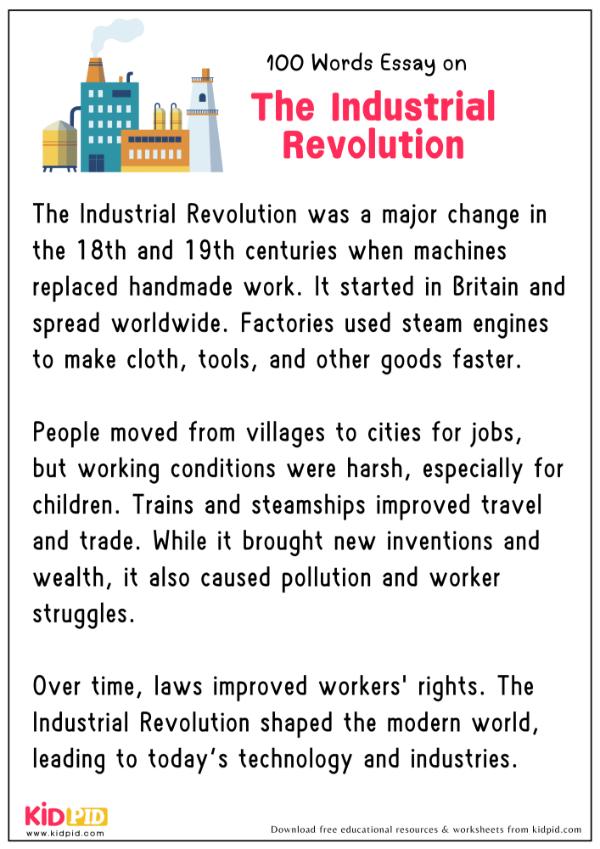
The Industrial Revolution was a major change in the 18th and 19th centuries when machines replaced manual labor. It started in Britain and spread worldwide. Factories used steam engines to make cloth, tools, and other goods faster. People moved from villages to cities for jobs, but working conditions were harsh, especially for children. Trains and steamships improved travel and trade. While it brought new inventions and wealth, it also caused pollution and worker struggles. Over time, laws improved workers’ rights. The Industrial Revolution shaped the modern world, leading to today’s technology and industries.
Essay On The Industrial Revolution in 200 Words
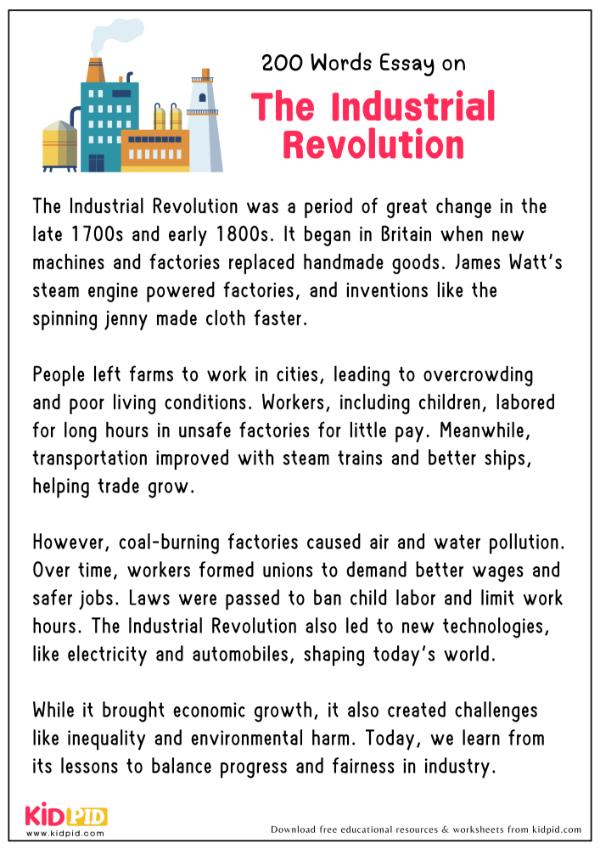
The Industrial Revolution was a period of great change in the late 1700s and early 1800s. It began in Britain when new machines and factories replaced handmade goods. James Watt’s steam engine powered factories, and inventions like the spinning jenny made cloth faster. People left farms to work in cities, leading to overcrowding and poor living conditions.
Workers, including children, labored for long hours in unsafe factories for little pay. Meanwhile, transportation improved with steam trains and better ships, helping trade grow. However, coal-burning factories caused air and water pollution.
Over time, workers formed unions to demand better wages and safer jobs. Laws were passed to ban child labor and limit work hours. The Industrial Revolution also led to new technologies, like electricity and automobiles, shaping today’s world.
While it brought economic growth, it also created challenges like inequality and environmental harm. Today, we learn from its lessons to balance progress and fairness in industry.
Essay On The Industrial Revolution in 300 Words
The Industrial Revolution was a transformative era that began in Britain around 1760 and changed how goods were made. Before this, people crafted items by hand, but machines and factories soon took over. Key inventions like the steam engine (James Watt), the spinning jenny, and the power loom revolutionized industries, especially textiles. Factories needed workers, so many moved from rural areas to cities, leading to urbanization.
Life in cities was tough—overcrowded housing, dirty streets, and long work hours were common. Children as young as six worked in factories, facing dangerous conditions. Despite hardships, the revolution brought economic growth and faster production.
Transportation saw huge improvements—steam-powered trains and ships made travel and trade quicker. However, burning coal caused smog and pollution, harming health and the environment.
Workers began protesting poor conditions, leading to labor unions and laws like the Factory Acts, which limited child labor and improved safety. Over time, wages and living conditions slowly improved.
The Industrial Revolution also sparked new technologies, paving the way for electricity, cars, and modern manufacturing. It connected the world through trade and communication, shaping today’s global economy.
However, it also created social inequalities—factory owners grew rich while workers struggled. Environmental damage from industrialization remains a challenge today.
In conclusion, the Industrial Revolution was a turning point in history, bringing both progress and problems. It teaches us the importance of fair labor practices and sustainable development as we advance technologically.
Long Essay On The Industrial Revolution in 500 Words
The Industrial Revolution: A Landmark in Human Progress
The Industrial Revolution was a profound transformation that changed the course of human history. It began in the late 18th century in Britain and eventually spread across the globe, sparking a shift from agrarian economies to industrialized societies. This era witnessed the rise of factories, new technologies, and mass production methods that revolutionized manufacturing, transportation, and daily life. While it brought about economic growth and technological advancements, it also had significant social and environmental consequences. Understanding the Industrial Revolution’s impact provides insights into the challenges and opportunities that shape the modern world.
The Beginnings of the Industrial Revolution
The Industrial Revolution began in Britain around 1760, driven by a combination of technological, social, and economic factors. Before this time, goods were primarily produced by hand in small workshops or homes. The introduction of machinery, such as the steam engine by James Watt, allowed for much faster and more efficient production. Factories began to emerge, especially in the textile industry, where inventions like the spinning jenny and power loom sped up cloth manufacturing. These machines required a significant amount of labor, which led to the migration of people from rural areas to growing urban centers in search of work.
Urbanization and the Impact on Society
As factories expanded, cities grew rapidly. However, the rise of urbanization led to overcrowding, poor living conditions, and unsanitary environments. Many workers, including women and children, lived in cramped, poorly constructed housing near factories. The streets were often polluted, and public health suffered due to overcrowding. Life in cities was hard, as long hours in factories took a toll on workers’ physical and mental health. Children as young as six worked in dangerous conditions for very low wages. Despite the hardships, the Industrial Revolution created a new working class, which fueled further growth and technological advancements.
Technological Advancements and Economic Growth
The Industrial Revolution brought significant improvements in transportation and communication. Steam-powered trains and ships made travel and trade much faster and more efficient, leading to the growth of global markets. The expansion of railways and the development of the telegraph helped connect distant regions, fostering economic integration. Furthermore, new technologies, such as the steam engine, electricity, and eventually automobiles, changed industries and led to the development of modern infrastructure.
Economic growth during the Industrial Revolution was unprecedented. Mass production made goods cheaper and more accessible to a wider population, leading to the rise of a consumer economy. Factory owners and entrepreneurs accumulated wealth, while industries like textiles, coal mining, and iron grew significantly. However, this wealth was often unevenly distributed, with workers facing exploitation and long working hours in hazardous conditions.
Social Unrest and Labor Reforms
The harsh working conditions during the Industrial Revolution led to social unrest. Workers, especially in factories and mines, faced grueling hours, unsafe environments, and low wages. As a result, labor unions began to form to secure better wages, safer conditions, and shorter workdays. Over time, workers’ movements gained momentum, and governments passed laws to improve working conditions. For instance, the Factory Acts in Britain limited child labor and set restrictions on working hours for women and children. These reforms were crucial in improving the lives of workers and paving the way for future labor rights movements.
Environmental Impact and Challenges
The Industrial Revolution also had a profound environmental impact. The rapid growth of factories, powered by coal, led to significant air and water pollution. The burning of coal released harmful gases into the atmosphere, creating smog and health problems for workers and residents alike. The increase in industrial production led to the depletion of natural resources, and waste from factories polluted rivers and landscapes. These environmental issues continue to be a legacy of the Industrial Revolution, raising questions about sustainable development and the balance between industrial progress and environmental protection.
Conclusion
In conclusion, the Industrial Revolution was a turning point in history, reshaping economies, societies, and technologies across the globe. While it led to significant advancements, such as increased production, better transportation, and new technologies, it also created social inequalities and environmental problems that continue to affect us today. The lessons from this era remind us of the importance of fair labor practices, workers’ rights, and environmental sustainability. As we continue to advance technologically, we must strive to create a balance that ensures progress benefits all of society and does not come at the expense of future generations. The Industrial Revolution may have shaped the modern world, but its challenges provide valuable lessons for the future.


FAQs on The Industrial Revolution
Q1. What was the Industrial Revolution?
Ans. A period of major change when machines replaced handmade work, starting in Britain and spreading worldwide.
Q2. Which invention by James Watt helped power factories?
Ans. The steam engine.
Q3. What was the main industry impacted by the Industrial Revolution?
Ans. The textile industry.
Q4. Why did people move from rural areas to cities during the Industrial Revolution?
Ans. To find work in factories.
Q5. What were some negative effects of urbanization during the Industrial Revolution?
Ans. Overcrowding, poor living conditions, and pollution.
Q6. How did the Industrial Revolution impact workers, especially children?
Ans. Workers, including children, worked long hours in unsafe conditions for low wages.
Q7. What improvements in transportation occurred during the Industrial Revolution?
Ans. Steam-powered trains and ships improved travel and trade.
Q8. What kind of social changes did the Industrial Revolution bring?
Ans. It created a new working class and led to the formation of labor unions for better wages and working conditions.
Q9. What environmental problems were caused by industrialization?
Ans. Pollution, including smog from coal-burning factories, and waste in rivers and landscapes.
Q10. How did the Industrial Revolution influence modern technologies and economies?
Ans. It led to advancements like electricity, automobiles, and mass production, shaping today’s global economy.
The Industrial Revolution brought many changes in society, the economy, and technology. It helped shape the modern world by boosting industry and inventions, making life easier and more productive for people. Explore more on our website for paragraphs, essays, worksheets, flashcards, Quizzes, and other interactive resources. Don’t forget to follow us on YouTube & Facebook.
You might also like
Essay – The Role of Imagination

Imagination helps us think creatively, solve problems, and dream big. This essay on The Role of Imagination explains its importance in learning, innovation, and building a better future.
Essay – Favorite Family Tradition


This essay on Favorite Family Tradition shares the joy of special customs followed at home. It highlights how family traditions build love, memories, and strong bonds between family members.
Essay – Favorite School Subject

This essay on Favorite School Subject explains why a student enjoys learning a particular subject. It shares personal interest, fun classroom experiences, and the importance of the subject in daily life.
Essay – The Value of Hard Work

This essay on The Value of Hard Work highlights how working hard leads to success. It teaches discipline, builds confidence, and helps achieve goals through dedication, effort, and strong determination.
Essay – The Value of Gratitude

This essay on The Value of Gratitude explains why being thankful is important. It helps build kindness, improves relationships, and creates happiness by appreciating people, moments, and all the good in life.