

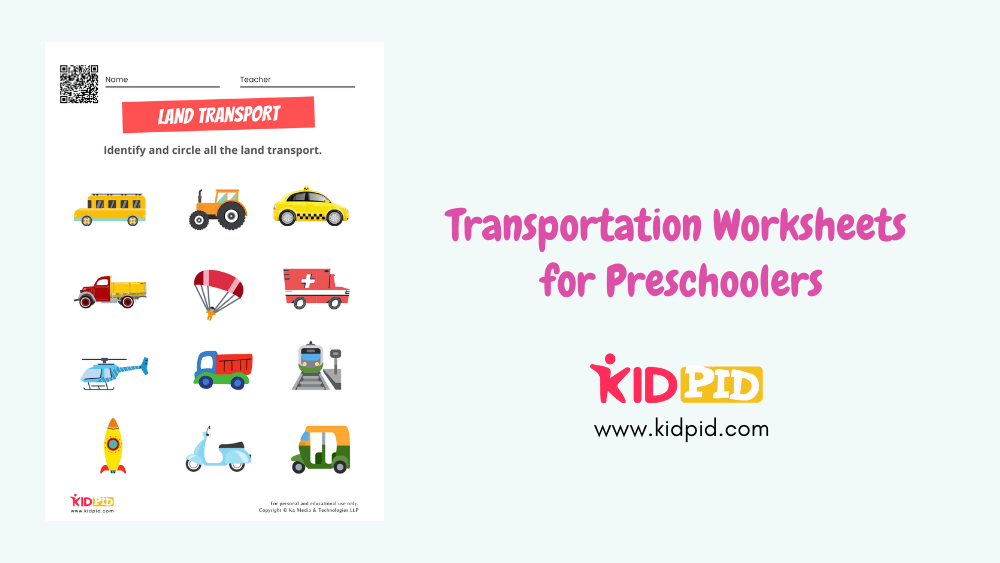
We have a compilation of free transportation preschool worksheets that will help the kids learn all about transportation. Transportation helps in reaching destinations in a reasonable amount of time. Transportation also helps in carrying goods. There are various means of transportation. Some of them are mentioned in this article for a clear understanding of transportation for preschool kids.
[Scroll Down for Download Link]
Contents
- Transportation Worksheets for Preschoolers
- Key Facts About Kidpid’s Free Transportation Worksheets
- Parts/Types/Examples of Transportation Taught in the Worksheets
- How Do Transportation Worksheets Work?
- Benefits of Learning About Transportation
- Learning Objectives
- Worksheet Instructions for Parents & Teachers
- Interesting Facts About Transportation
- Real-Life Applications
- FAQs
Transportation Worksheets for Preschoolers
Water Transportation
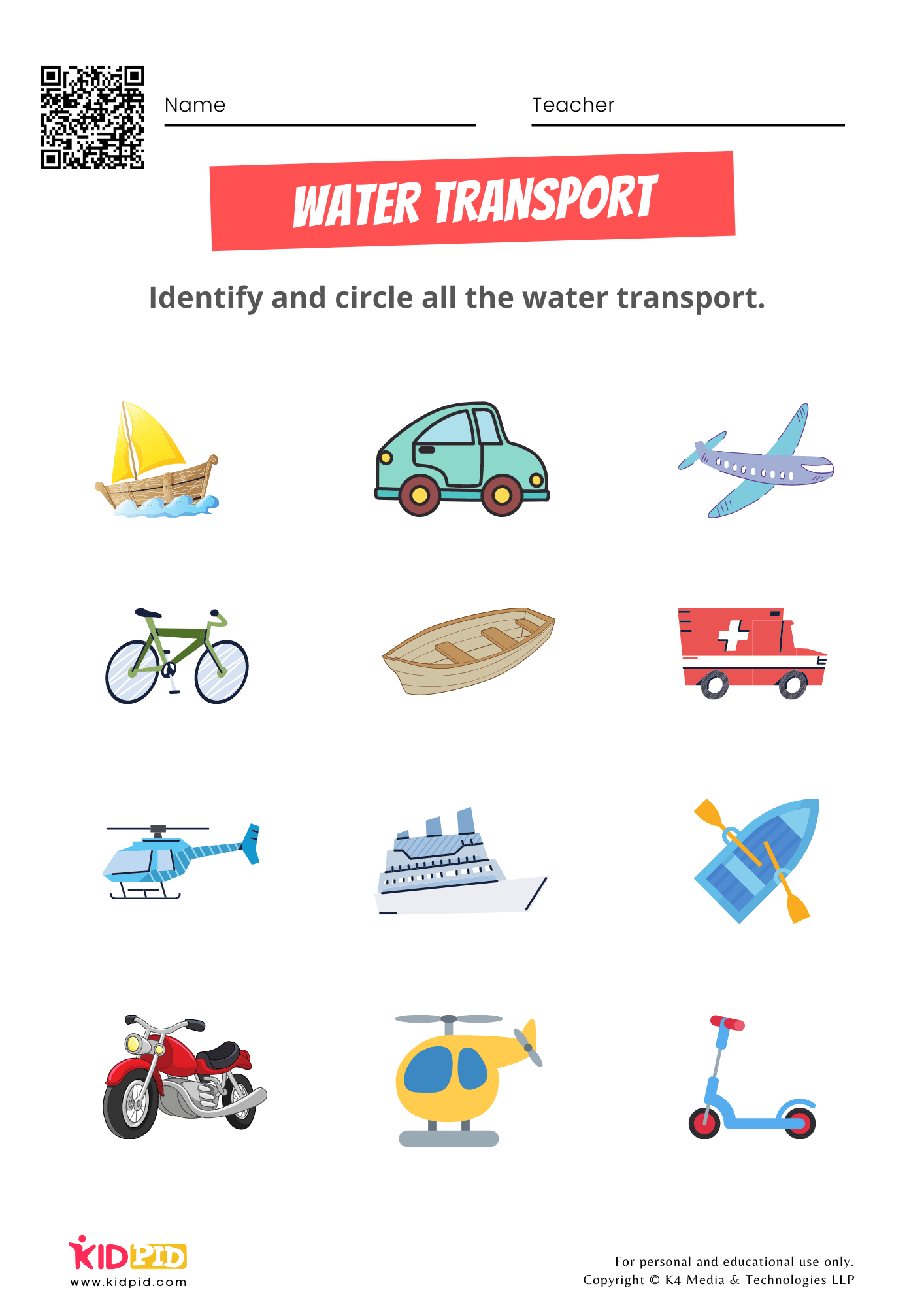
You can start with water transport and have your kids encircle all the means that encourage water transportation in the above worksheet. Water transport is a means of transport where people and their belongings or goods travel from one point to another through a watercraft on the water. The transport includes means such as boats, yachts, ships, and more, and they travel on several bodies of water, including the ocean, sea, canal, river, and even lakes.
Air Transportation
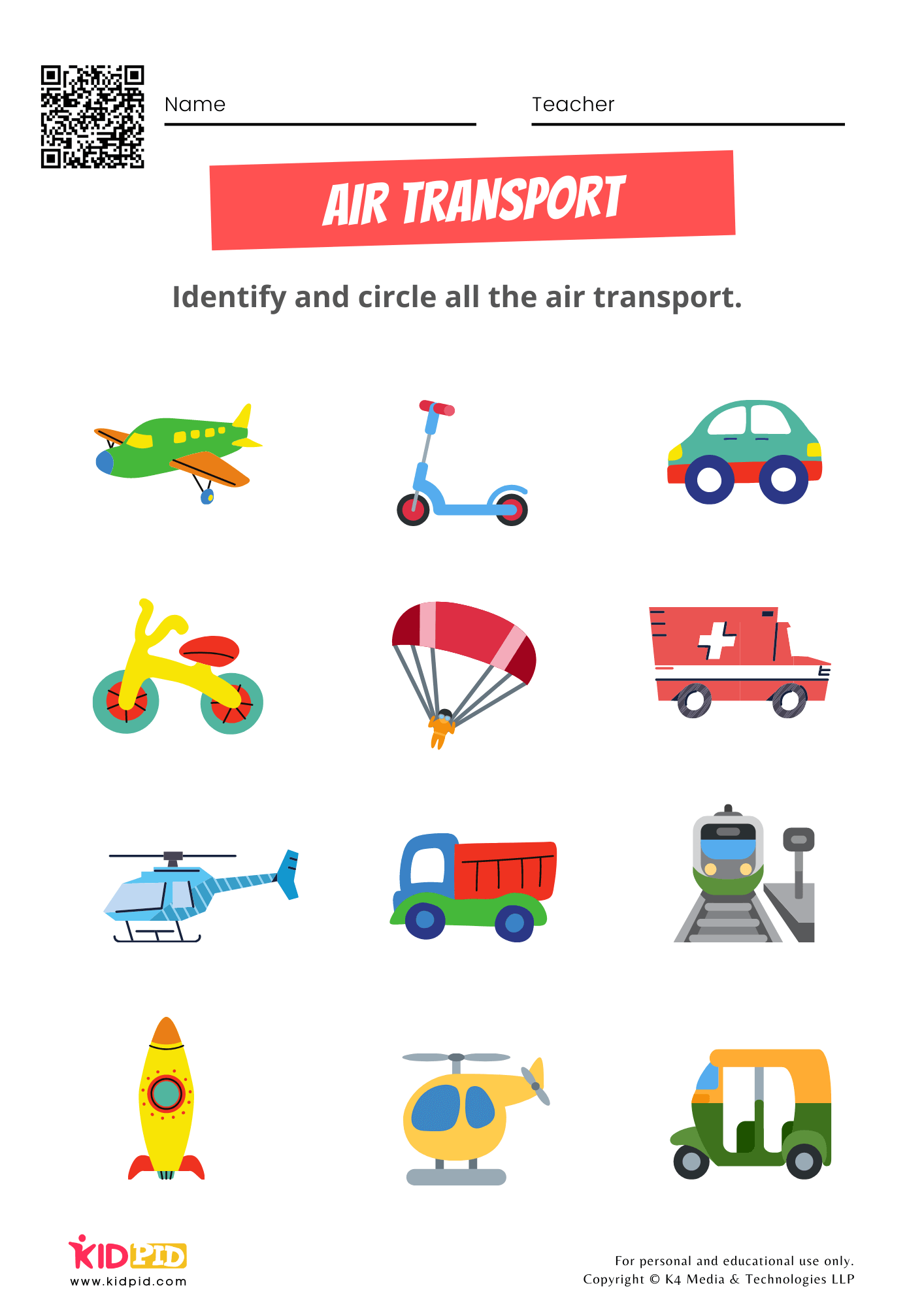
The next means of transport that your kid needs to learn is air transport. So, print out the above worksheet and guide your kid to encircle the means that can be used in air transport. While you are doing that, you can explain to your kid all about air transport. You can start by saying that people used to travel from one place to another, which is known as air transportation.
Land Transportation
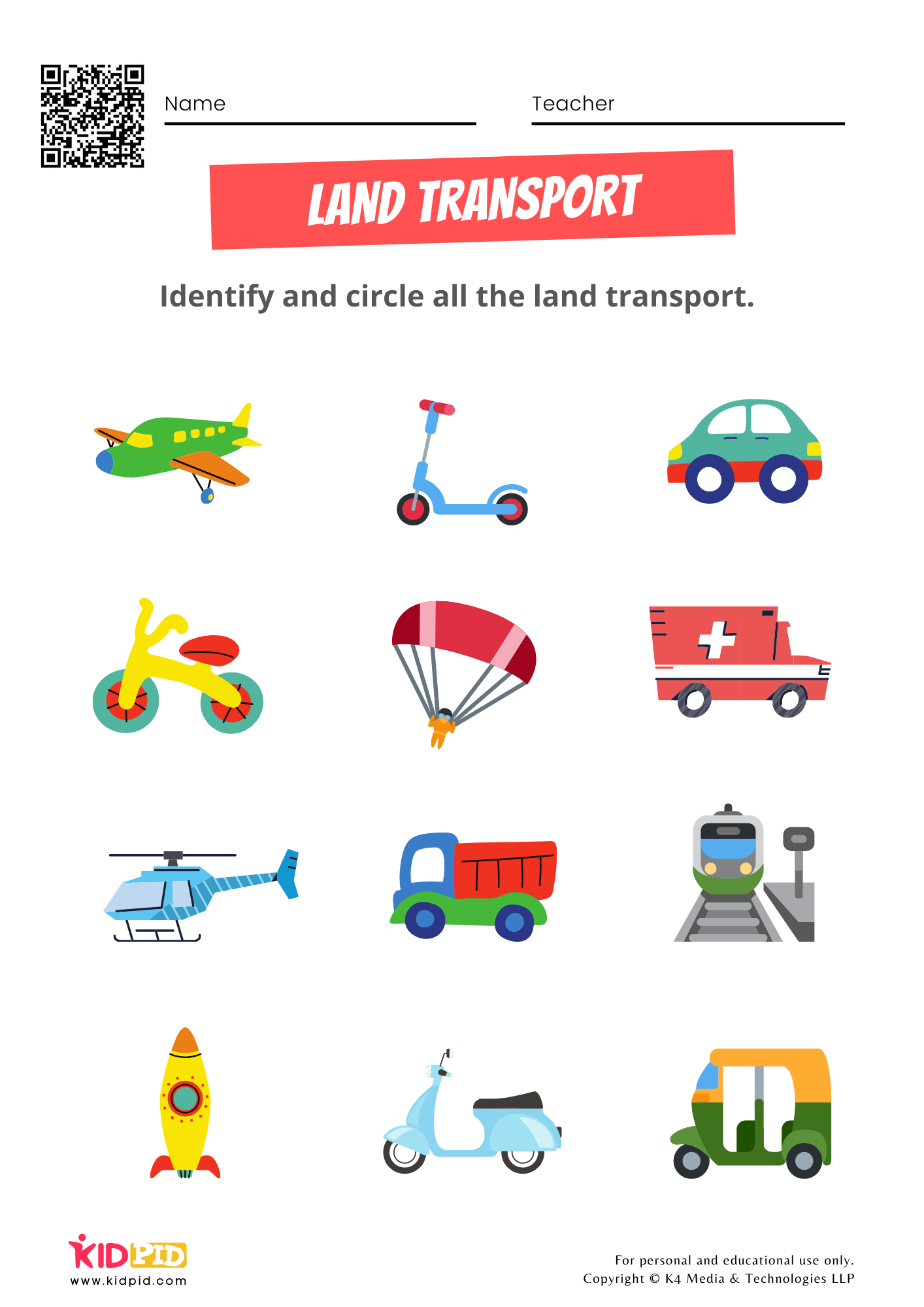
Since land transport includes vehicles of numerous sizes and shapes, we have considered two separate worksheets. In this worksheet, we have six means of land transport. You can explain all the transports to your kid while they are doing the activity.
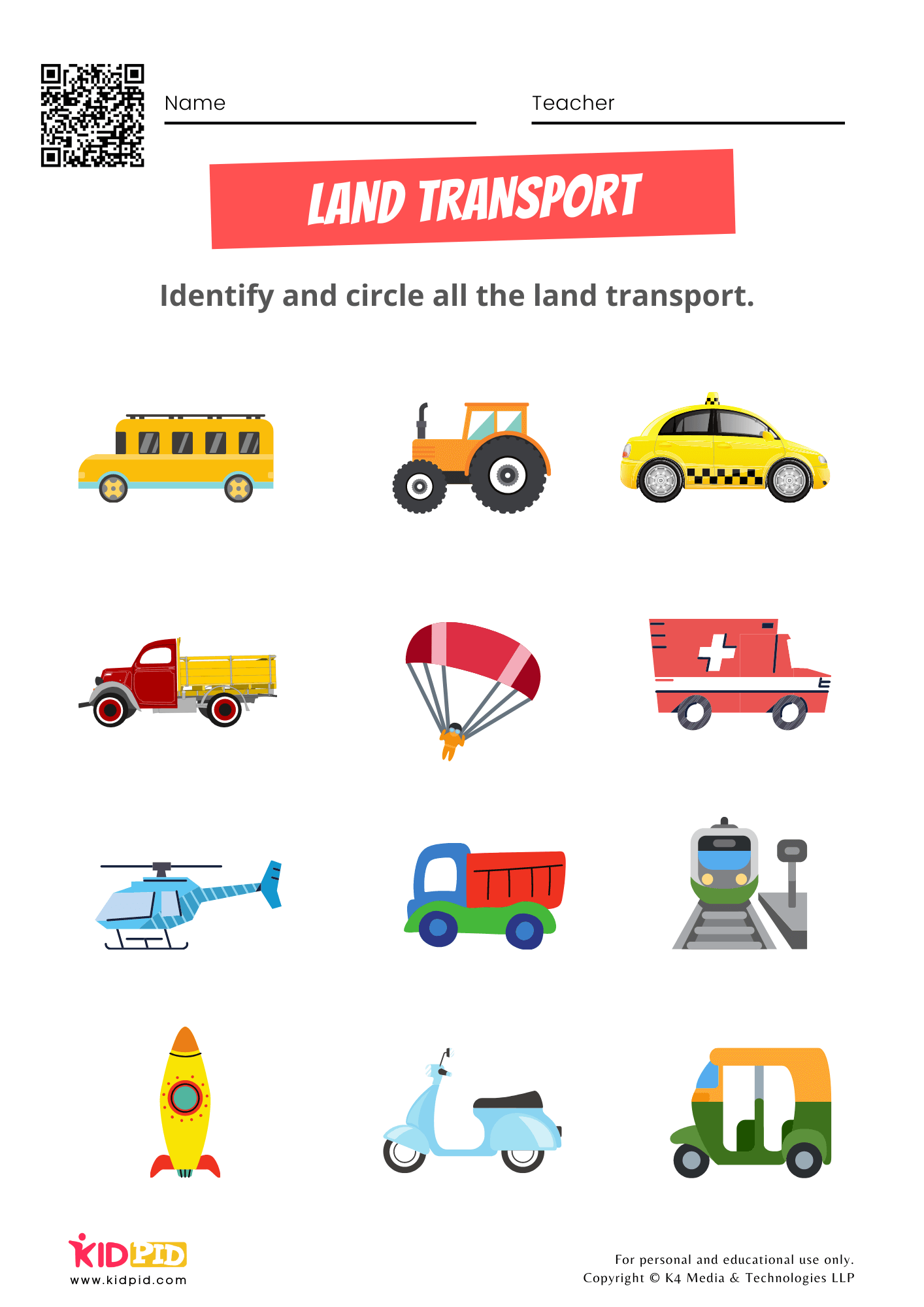
In this worksheet, we have another set of vehicles for land transport, such as buses, taxis, trucks, rickshaws, and more. So, what you can do is hand this worksheet to your kid and ask them to circle all the vehicles that are right for land transportation.
Early childhood educators agree that learning about things that move is a fundamental milestone for young minds. These printable worksheets are structured specifically around early childhood development standards, prioritizing visual recognition over advanced reading skills.
The curriculum divides the vast world of vehicles into three clean environments that match a preschooler’s conceptual understanding of the world:
These printables rely on a proven pedagogical technique called active sorting and recognition. Instead of relying heavily on text, each page presents a mixed grid of beautifully drawn vehicles.
A parent or teacher reads the prompt aloud (e.g., “Can you find what travels in the sky?”). The child uses a crayon or marker to circle or color only the vehicles that belong to that specific environment. This translates a complex abstract concept—like classification—into a tactile, visual game that builds neural pathways related to logical reasoning.
Teaching young learners about transportation does more than just help them point out a cool truck on the highway; it supports holistic development across multiple domains:
By completing these interactive vehicle worksheets, young learners will achieve the following early learning standard milestones:
To get the most value out of these printables, we suggest a simple, multi-step guided approach:
Building a rich descriptive vocabulary early gives kids a massive head start. Here are some key vehicle-related vocabulary words featured in or inspired by our worksheets that you can introduce to your preschooler:
Learning shouldn’t stop when the worksheet is put away. You can easily bridge these printable activities into everyday real-world routines:
Answer: Most children begin recognizing and naming basic vehicles (cars, trains, planes) around 2 years old. By ages 3 to 5, they should be able to conceptually categorize them into land, air, and water environments.
Answer: While designed for preschoolers, toddlers who have developed basic scribble control can enjoy them as a collaborative activity where a parent holds the crayon with them and names the objects.
Answer: Because these worksheets are highly visual and require zero reading, they alleviate academic pressure. They allow speech-delayed or non-verbal children to point, circle, and show comprehension of categories without needing to struggle for words.
Answer: Not at all! The worksheets are mindfully designed in high-contrast black and white, making them incredibly printer-friendly and perfect to double as coloring pages once the sorting activity is finished.
Key Facts About Kidpid’s Free Transportation Worksheets
Parts/Types/Examples of Transportation Taught in the Worksheets
How Do Transportation Worksheets Work?
Benefits of Learning About Transportation
Learning Objectives
Worksheet Instructions for Parents & Teachers
Interesting Facts About Transportation
Real-Life Applications
FAQs
Q1: At what age should a child know the modes of transportation?
Q2: Are these worksheets suitable for toddlers?
Q3: How do these worksheets support speech-delayed children?
Q4: Do I need a color printer to use these printables?
Along with letter recognition practice, children will learn the correct use of uppercase letters for sentence beginnings and proper nouns. By the end, they’ll be more confident in identifying different letters. Find more worksheets, essays, paragraphs, flashcards, quizzes, and interactive resources on our website. Follow us on YouTube & Facebook.
This worksheet is prepared by the Content Team to enhance student progress.
Reviewed By Sansriti Pandey
Read More:



Very helpful