Once kindergarteners have learned the alphabet, the next step is learning to read and construct words. The activities of writing and pronouncing words are quite distinct from one another and hence require separate guidelines. The first step in learning how to pronounce any word is to decode that word.
What is word decoding?
It is the application of inherent letter-sound relationships to words to correctly pronounce them.
Now, children instinctively understand how a word sounds, but explicit instruction is often beneficial. The basic way to approach a word is to identify the starting letter and sound it out slowly, correlating the sound with the specific letter. Now, do the same with every successive letter of the word and blend the sounds to correctly pronounce the word. This process allows kids to clearly understand how letters and their sounds constitute a word’s correct pronunciation. With time and practice, children will be able to recognize patterns in words and pronounce them correctly by simply looking at them, without sounding out the entire word. This will help them progress and eventually become fast and efficient readers.
Contents
- Initial Sounds Worksheets for Kids
- Key Facts About Initial Sounds Worksheets
- Parts, Types, and Examples of Initial Sounds Activities
- How Do Initial Sounds Worksheets Work?
- Benefits of Learning About Initial Sounds
- Learning Objectives
- Worksheet Instructions for Parents and Educators
- Interesting Facts About Phonemic Awareness
- Vocabulary Words
- Real-Life Applications
- FAQs
- Read More:
Initial Sounds Worksheets for Kids

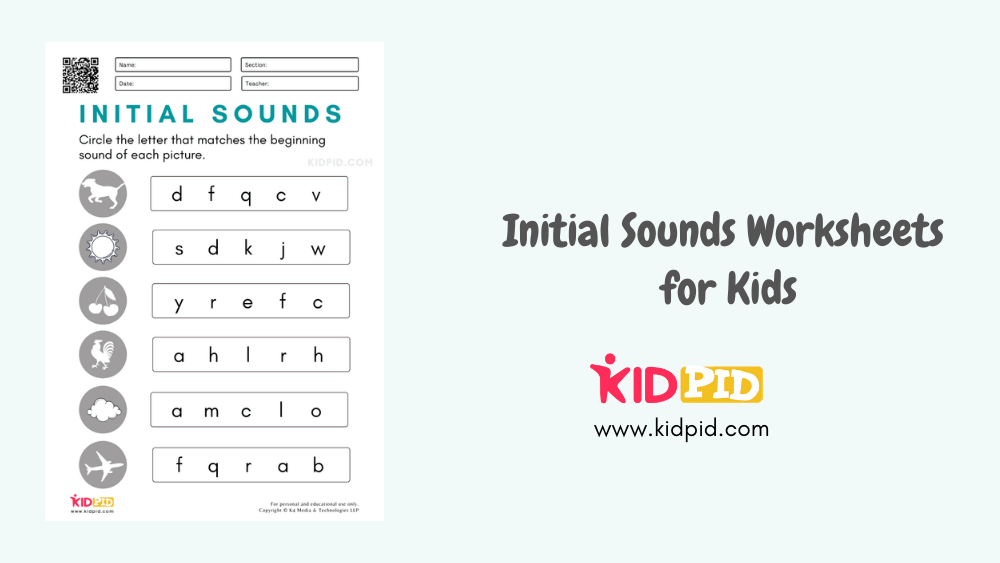
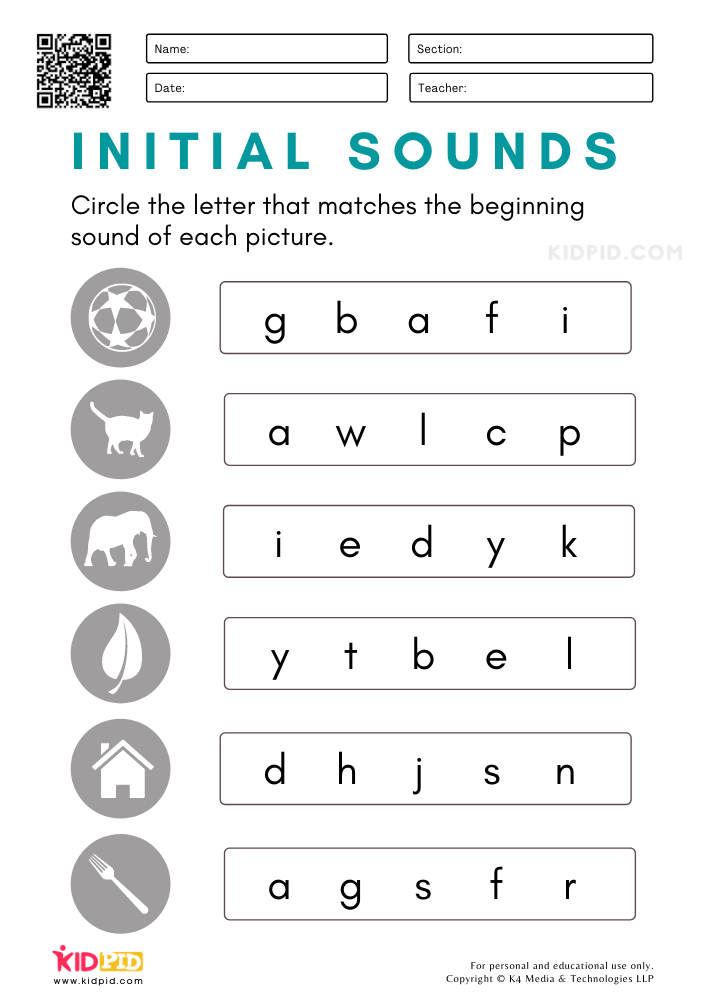
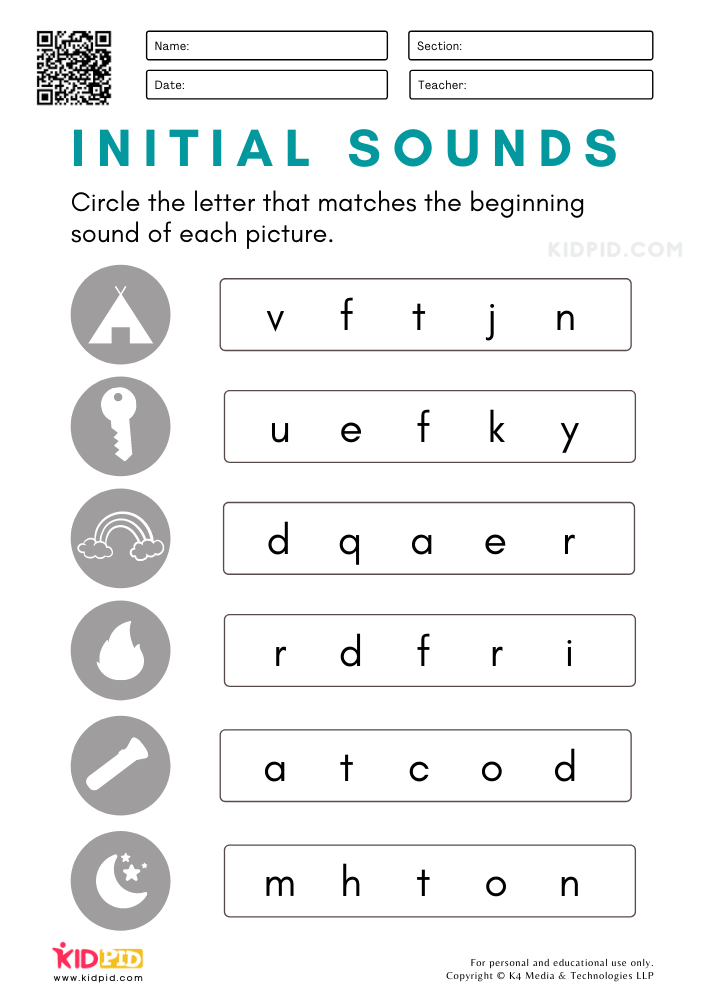
This is the first worksheet. The task here is very simple – identify the word depicted in the picture and then circle the starting letter.
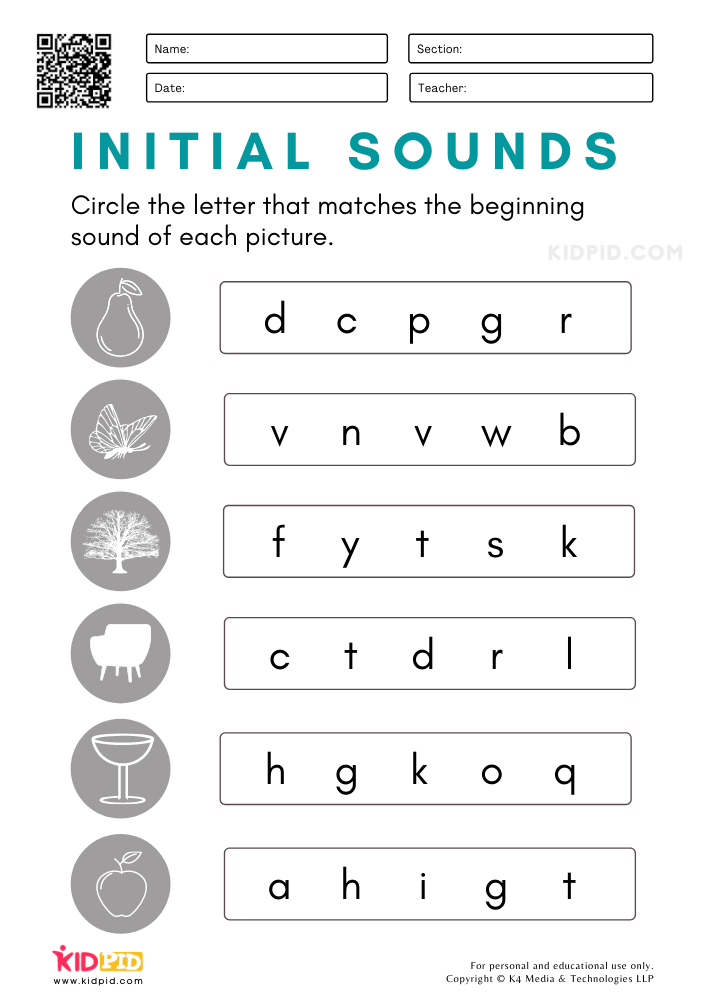
Common pictures of fruits and butterflies are provided in the worksheet, which allows children to easily identify the words. Once they know what the word is, it becomes easier to determine the starting letter.
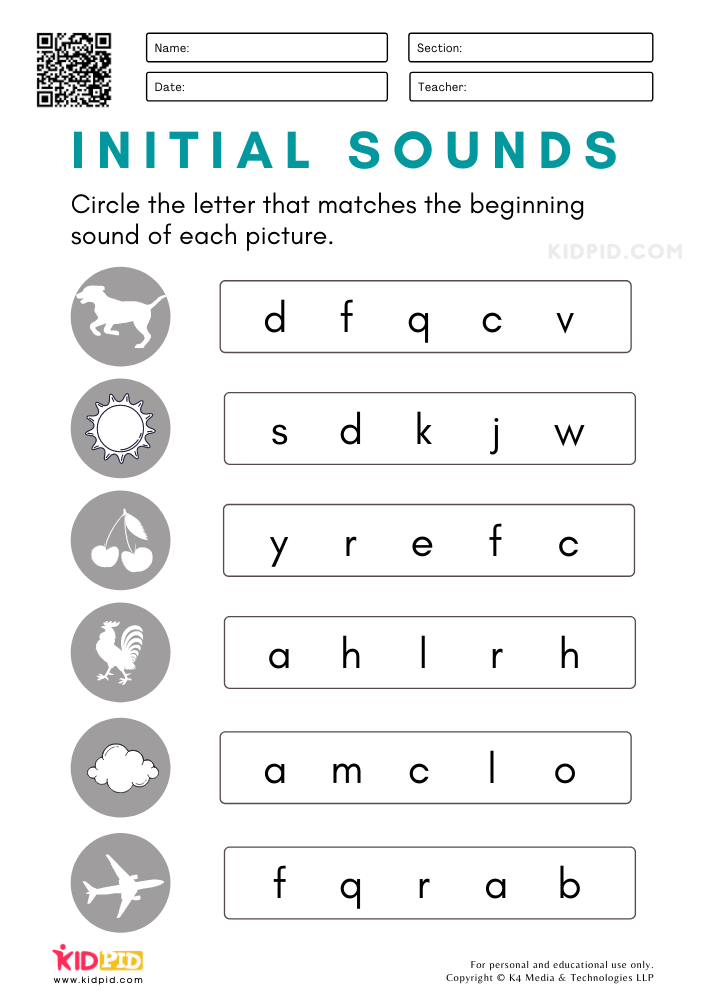
Ask children to spell out the entire word after identifying the first letter – this will allow them to have a better understanding of letters and how they make up a word.
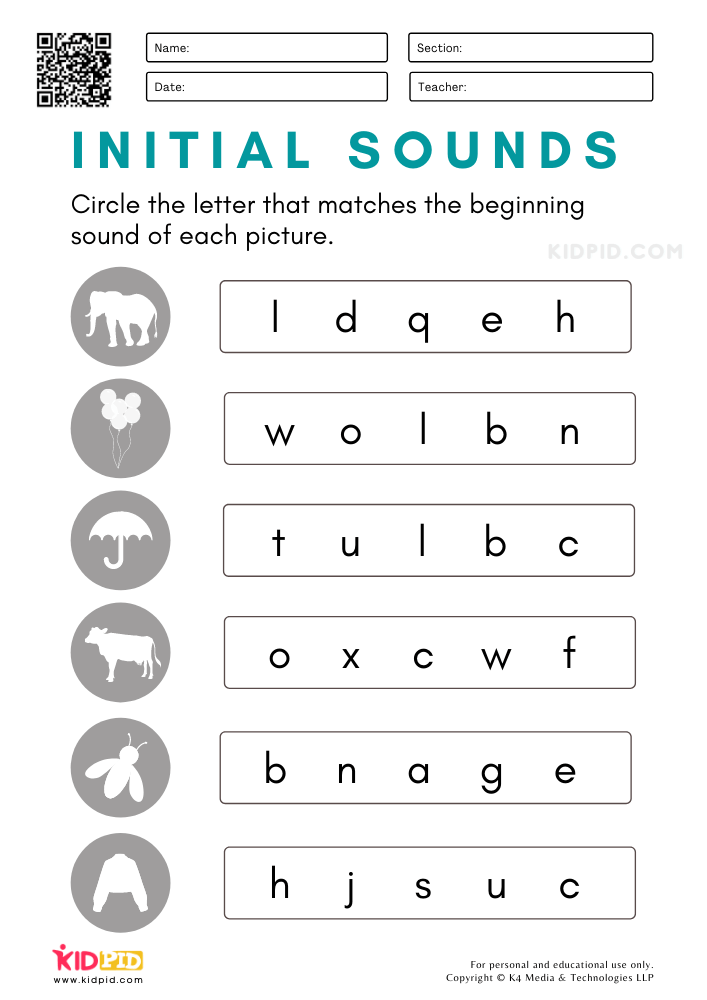
Words such as ‘elephant’ and ‘umbrella’ are quite big and can be challenging for children to break down on their own. A helpful trick is to sound out the word to them slowly and ask them to repeat it – hearing the correct pronunciation will help reinforce the process.
Simple words such as ‘ant’, ‘bag’, ‘egg’. etc are a great way to start the process of learning pronunciation. Children instinctively know how to sound out these words, and it is a great boost for their confidence.
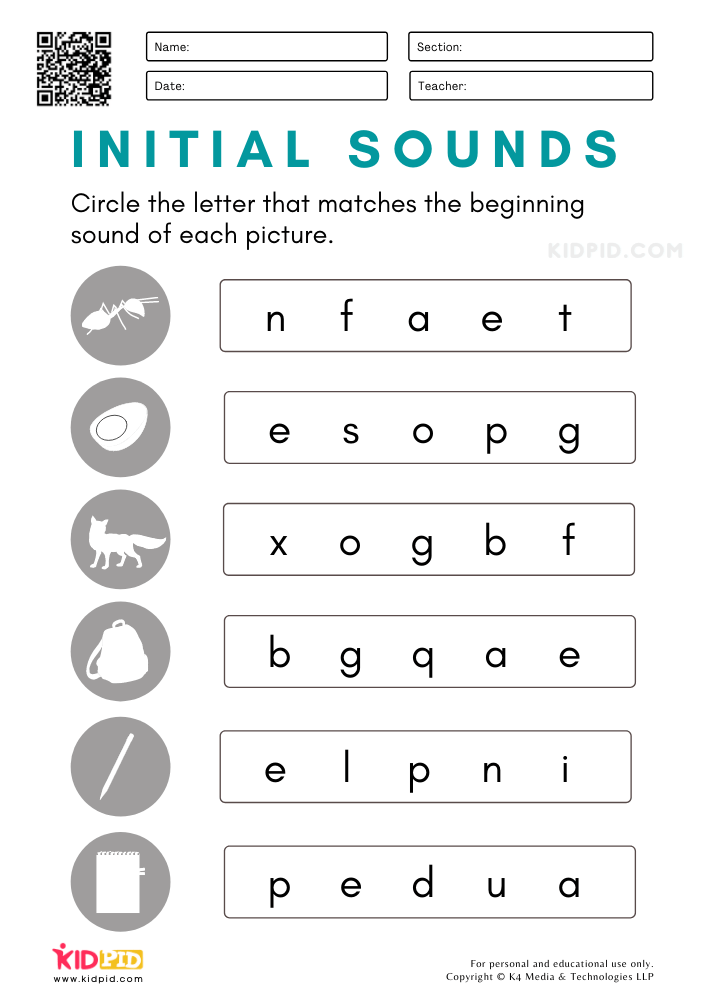
While sounding out each letter is important, it is vital to focus on blending the sounds to achieve the correct pronunciation of the word.
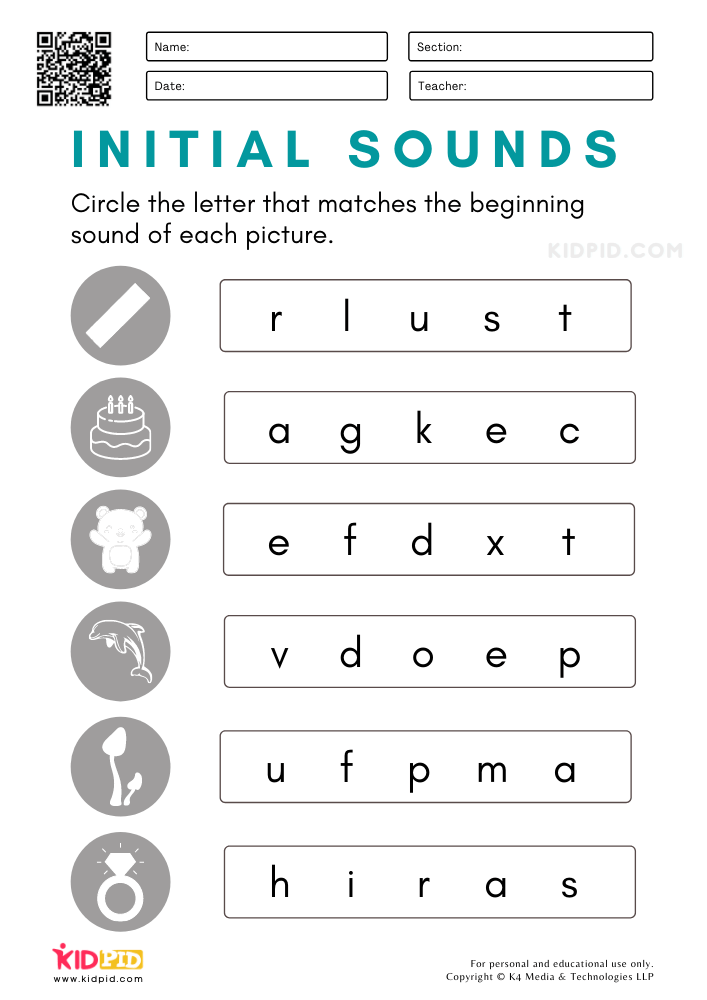
Familiar words and pictures provide a sense of comfort to young learners as it allows them to relate what they’re learning to their life and surroundings.
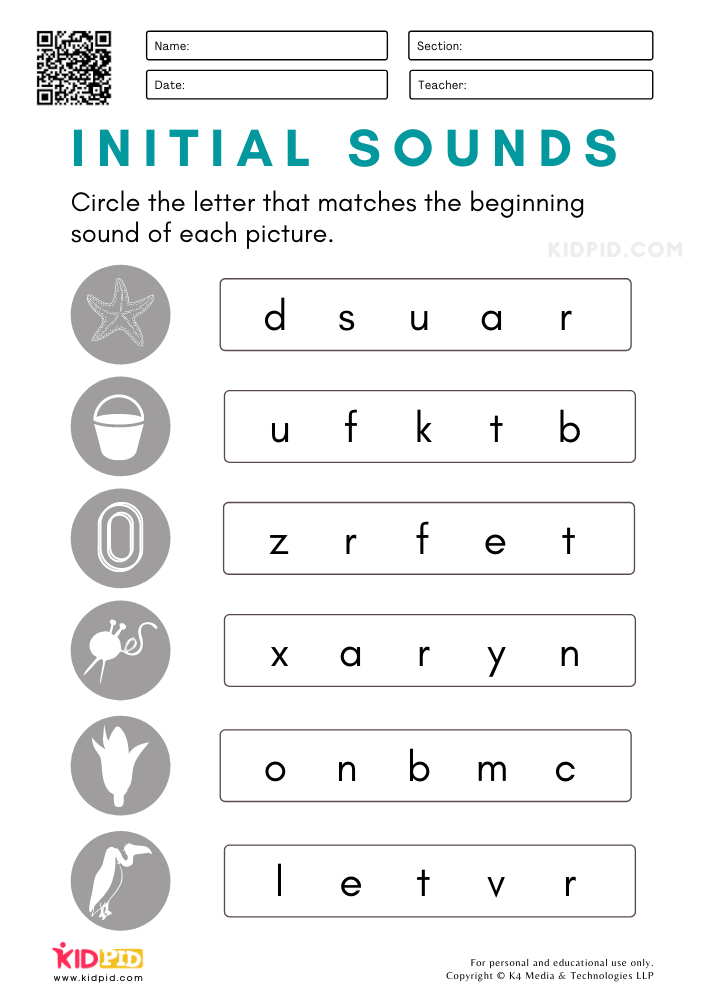
Worksheets are a fun and creative alternative to book learning and are a great way for children to enjoy themselves.
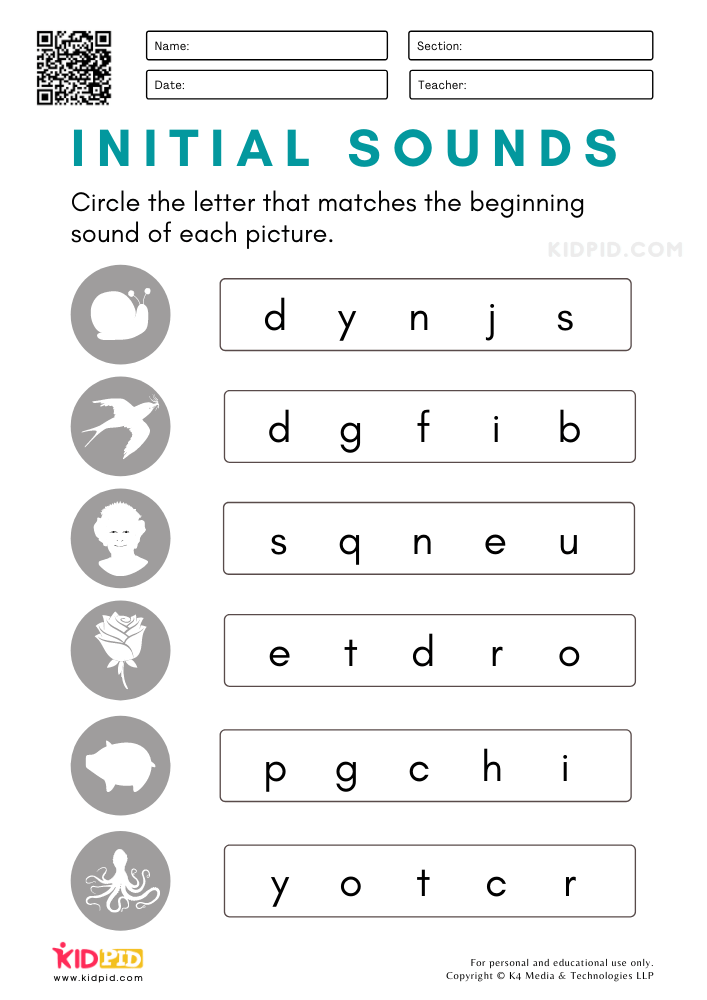
Pictures pique the interest of young minds and keep them motivated during their activity.
Schoolwork can often feel like tedious and mindless work, so make sure your child is concentrating on the task at hand.

Remember that this is a new activity and a new challenge for a young learner, and so it is crucial to be patient during the process. Worksheets are a great way to approach new tasks and help your child have fun and learn all at the same time.
Key Facts About Initial Sounds Worksheets
- Target Age Group: Best suited for early learners aged 3 to 6 years old (Preschool, Pre-K, and Kindergarten).
- Core Skill Developed: Phonemic awareness – specifically, isolating the first distinct sound (onset) in a spoken word.
- Prerequisites: Children benefit most from these worksheets if they can already recognize basic alphabet shapes and sing or say the alphabet.
- Cognitive Load: By using vivid visual cues (like pictures of a butterfly or an elephant), these sheets lower the cognitive barrier, letting children focus purely on auditory processing rather than decoding full text strings.
Parts, Types, and Examples of Initial Sounds Activities
Early literacy doesn’t use a one-size-fits-all approach. These worksheets incorporate several different structures to keep young minds engaged:
- Circle the Starting Letter: The child looks at a familiar image (e.g., an ant or a bag), pronounces the word, isolates the initial sound, and selects the correct letter from a small multiple-choice grid.
- Letter-to-Image Matching: A mix-and-match layout where kids draw lines connecting a target letter (like U) to its corresponding image (like an umbrella).
- Missing Letter Fill-ins: A slightly more advanced layout featuring a picture with a partially spelled word beneath it (e.g., “_g” with a picture of an egg), requiring the child to write the missing initial consonant or vowel.
How Do Initial Sounds Worksheets Work?
These worksheets bridge the gap between abstract symbols (letters) and spoken language through a neurological process called grapheme-phoneme mapping (connecting a written letter to its sound value).
First, the brain processes the visual image on the page to retrieve the spoken word from memory. As the child articulates the word aloud, they isolate the very first sound wave produced by their vocal tract. Finally, they map that auditory sound to the correct visual symbol on the worksheet. This repeated loop shifts letter recognition from rote memorization into functional, fluid reading readiness.
Benefits of Learning About Initial Sounds
Focusing early on initial sounds builds a massive competitive advantage for young readers:
- Accelerates Word Decoding: Teaching kids to identify the starting block of a word makes it much easier for them to blend the successive sounds that follow.
- Boosts Reading Fluency: Rather than guessing words based purely on shapes, children learn to systematically read from left to right.
- Enhances Speech Articulation: Saying words slowly to pinpoint the first letter forces children to focus on their mouth movements, improving clarity of speech.
- Drives Confident Independence: Mastering simple three-letter words (CVC words like bag, egg, ant) provides immediate wins, fostering a lifelong love for reading.
Learning Objectives
By completing these phonics activity pages, students will achieve the following developmental milestones aligned with early childhood education standards:
- Isolate Phonemes: Demonstrate the ability to isolate and pronounce the initial sound in a spoken word.
- Recognize Letter-Sound Correspondences: Correctly match the primary sound of all 26 letters to their uppercase and lowercase written forms.
- Build Visual-Spatial Association: Successfully link concrete real-world objects to abstract alphabetical categories.
- Develop Fine Motor Skills: Refine pencil grasp and control through tracing, coloring, and circling activities.
Worksheet Instructions for Parents and Educators
To get the absolute most out of these printables, guide your child with these clear steps:
- Point and Name: Have your child point to the illustration on the page and say the name of the object clearly out loud (e.g., “Elephant”).
- Stretch the Sound: Encourage them to stretch or repeat the very first sound of the word three times (e.g., “/e/ /e/ /e/ elephant”). Avoid adding a generic “uh” sound to consonants (say “/b/” instead of “/buh/”).
- Identify and Circle: Look at the letter choices provided next to the image. Ask your child to point to the letter that makes that exact starting sound and circle it firmly.
- Expand and Blend: For a bonus challenge with older kids, help them sound out the remaining letters of the word to reinforce how the whole word ties together.
Interesting Facts About Phonemic Awareness
The Predictor Metric: Research by early literacy experts shows that a child’s grasp of phonemic awareness (like identifying initial sounds) in kindergarten is one of the strongest predictors of their reading comprehension success in later elementary school grades.
- Hearing Comes Before Seeing: Long before a child truly understands what a printed letter means, their brain is already fully wired to distinguish the differences in starting sounds.
- The “Schwa” Trap: Many adults accidentally teach letter sounds incorrectly by adding a “schwa” sound to the end (e.g., pronouncing ‘T’ as “tuh”). Teaching the clean, crisp, isolated sound (“/t/”) prevents reading confusion later on.
Vocabulary Words
To expand your child’s semantic lexicon, these worksheets feature a thoughtful mix of simple and complex words:
- Ant: A simple, short three-letter word to build immediate alphabetic confidence with the short A sound.
- Bag: Ideal for practicing plosive consonant stops with the lips (B sound).
- Egg: Perfect for testing subtle short vowel distinctions (E sound).
- Elephant: A larger, multi-syllabic word that teaches kids how to extract the starting sound from a longer audio string.
- Umbrella: Great for introducing the short U sound using a highly recognizable real-world object.
Real-Life Applications
Phonics practice doesn’t have to stop when the worksheet is turned in. You can easily integrate these foundational skills into daily routines:
- Grocery Store Phonics: While shopping, challenge your child by saying: “I am looking for a fruit that starts with the /b/ sound. Can you find it?” (Bananas).
- The Alphabet I-Spy: During car rides, play a game of I-Spy limited entirely to initial sounds: “I spy with my little eye something that starts with the /t/ sound” (Tree).
- The Sound-Box Cleanup: Turn cleaning up toys into a game. Have your child put away items based on their sounds: “Let’s clean up everything that starts with the /m/ sound first!” (Blocks, cars, then marbles).
FAQs
Q1. At what age should my child start practicing initial sounds?
Answer: Most children are ready to explore initial sounds between ages 3 and 5. If your child can recognize a few letters of the alphabet and enjoys playing with spoken words, they are ready to try these worksheets.
Q2. My child can sing the alphabet, but can’t find the starting sound on the worksheet. Is this normal?
Answer: Yes, absolutely. Singing the alphabet is an exercise in rote auditory memory, whereas identifying an initial sound requires a deeper analytical skill called phonological processing. Start by heavily exaggerating the first sound for them (“Look at this /b-b-b/ bag!”) to help guide their ears.
Q3. Why does the worksheet use pictures instead of written words?
Answer: Because kids shouldn’t need to know how to read full printed words just to practice identifying individual sounds. The images act as a helpful scaffold, allowing them to instantly access the spoken word entirely on their own.
Q4. Should I teach letter names or letter sounds first?
Answer: For reading success, letter sounds are far more important than letter names. Knowing that the symbol M is named “em” doesn’t help a child decode the word “mat,” but knowing that it makes the “/m/” sound changes everything. We recommend teaching both together, but prioritizing the sound.
Early phonics practice becomes more effective when children recognize beginning sounds with confidence. These worksheets encourage sound discrimination, expand vocabulary, and lay a strong foundation for successful reading skills. Support your child’s education with worksheets, essays, flashcards, paragraphs, quizzes, and interactive resources. Stay connected on YouTube & Facebook.
This worksheet was developed by the Content Team to foster academic improvement.
Reviewed By Kartik
Read More:
- Convert Decimal Numbers (Normal to Expanded Form) Place Value Worksheet for Grade 5
- Rounding Numbers to Nearest 100 Worksheet For Grade 5
- Find Missing Place Value (6-digits) Worksheet For Grade 5
- Build 6-Digit Numbers from Parts – Place Value Worksheet For Grade 5
- Build 5-Digit Numbers from Parts – Place Value Worksheet For Grade 5