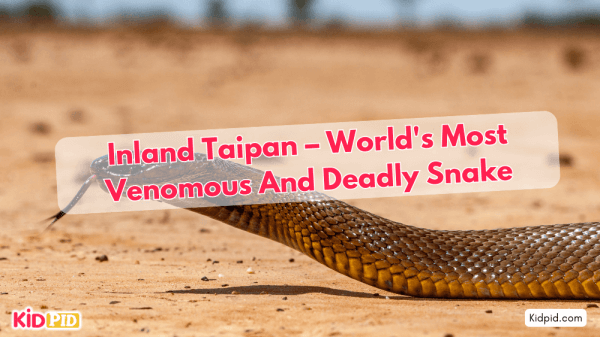
The Inland Taipan is known as the most venomous snake in the world. Although it is extremely dangerous, it usually stays away from humans and lives in remote areas. Let’s learn more about this fascinating snake and why it’s considered the deadliest!
- The Inland Taipan is the most venomous snake on Earth.
- It’s also called the “fierce snake.”
- Its venom is so strong that one bite can be very harmful.
- The snake lives in remote areas of Australia, far from people.
- Inland Taipans are shy and avoid humans, so bites are rare.
- They use their venom to hunt small animals like rats and mice.
- Even though they are dangerous, they help keep the ecosystem balanced.
- If bitten, immediate medical help is necessary, but bites are very uncommon.
Contents
- Inland Taipan – World’s Most Venomous and Deadly Snake.
- Related MCQ’s
- 1. Where does the Inland Taipan live?
- 2. What makes the Inland Taipan the most dangerous snake?
- 3. How much more venomous is the Inland Taipan compared to a cobra?
- 4. What does the Inland Taipan do when it feels threatened?
- 5. What happens if someone gets bitten by an Inland Taipan and doesn’t get treated?
- 6. What interesting feature does the Inland Taipan’s color have?
- You may like these:
Inland Taipan – World’s Most Venomous and Deadly Snake.
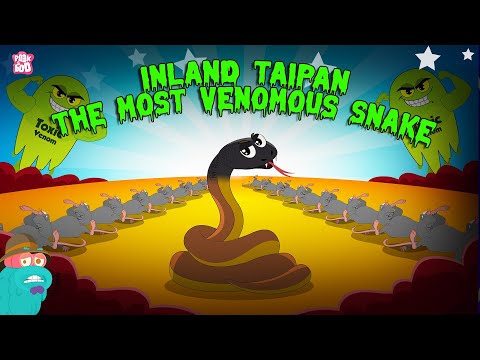
Related MCQ’s
1. Where does the Inland Taipan live?
A) In the rainforest
B) In deserts and dry areas of Australia
C) Underwater
D) In the Arctic
Answer: B) In deserts and dry areas of Australia
Explanation: The Inland Taipan lives in the dry landscapes of Australia, especially in Queensland.
2. What makes the Inland Taipan the most dangerous snake?
A) Its fast speed
B) Its powerful venom
C) Its sharp teeth
D) Its large size
Answer: B) Its powerful venom
Explanation: The Inland Taipan has the most venomous bite in the world, making it very dangerous.
3. How much more venomous is the Inland Taipan compared to a cobra?
A) 5 times
B) 23 times
C) 10 times
D) 100 times
Answer: B) 23 times
Explanation: The venom of the Inland Taipan is 23 times more powerful than that of the Indian cobra.
4. What does the Inland Taipan do when it feels threatened?
A) It runs away
B) It hisses loudly
C) It raises its body in an S-shape
D) It climbs a tree
Answer: C) It raises its body in an S-shape
Explanation: When threatened, the Inland Taipan raises its body in an S-shape as a warning before striking.
5. What happens if someone gets bitten by an Inland Taipan and doesn’t get treated?
A) They become very sleepy
B) They might experience serious symptoms, like paralysis
C) They will be fine without help
D) They will turn into a snake
Answer: B) They might experience serious symptoms, like paralysis
Explanation: Without anti-venom treatment, a person can suffer from dangerous symptoms, including paralysis and breathing problems.
6. What interesting feature does the Inland Taipan’s color have?
A) It glows in the dark
B) It changes with the seasons
C) It turns red when angry
D) It can become invisible
Answer: B) It changes with the seasons
Explanation: The Inland Taipan’s color changes with the seasons – lighter in summer and darker in winter to regulate its temperature.
You may like these:
A Snake Charmer’s Story
A captivating tale of a snake charmer’s life, blending ancient traditions, cultural heritage, and the mystical bond between humans and serpents.
Why do snakes stick their tongue out?
Snakes use their forked tongues to detect chemicals in the air, aiding their sense of smell and helping them navigate their environment effectively.
Are all snakes poisonous?
No, not all snakes are poisonous. While some species have venom to subdue prey, many are non-venomous and rely on constriction.