
The Learned Fools” is a moral story for kids that teaches wisdom, awareness, and practical thinking. This engaging tale highlights good values, common sense, and life lessons children can easily understand. Kids enjoy this story because it shows how knowledge must be used wisely in real-life situations.
[Scroll Down for Download Link]
The Learned Fools – Moral Story for Kids
The Learned Fools – A classic moral story about wisdom and understanding.
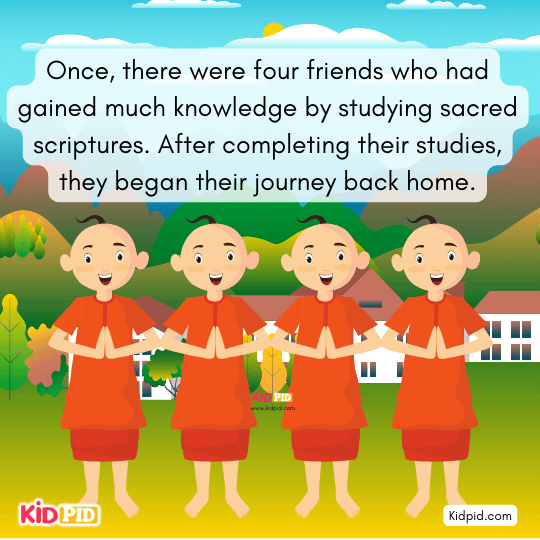
Four friends complete their scripture studies and begin their journey home.
Once, four friends had gained much knowledge by studying sacred scriptures. After completing their studies, they began their journey back home.
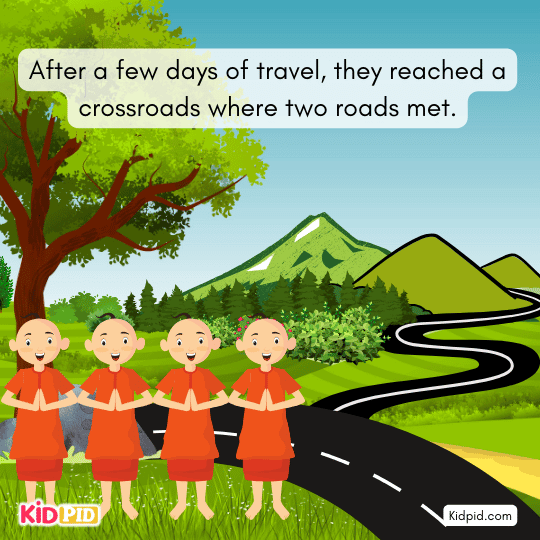
The four Brahmins reach a crossroads and must decide which path to follow.
After a few days of travel, they reached a crossroads where two roads met.
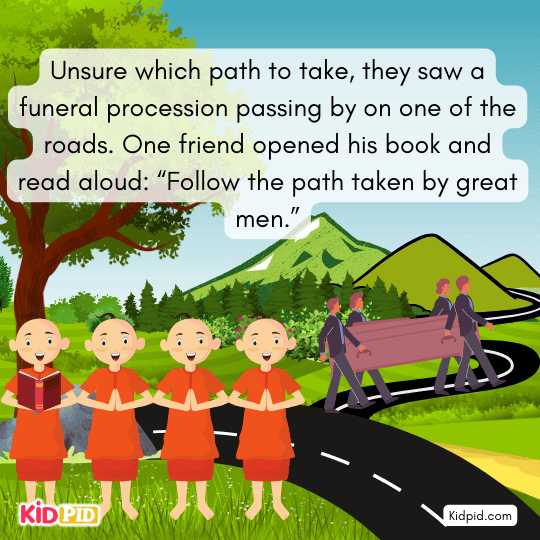
A funeral procession approaches the crossroads the Brahmins are standing at.
Unsure which path to take, they saw a funeral procession passing by on one of the roads. One friend opened his book and read aloud: “Follow the path taken by great men.”
A Brahmin reads a verse: “Follow the path taken by great men.”
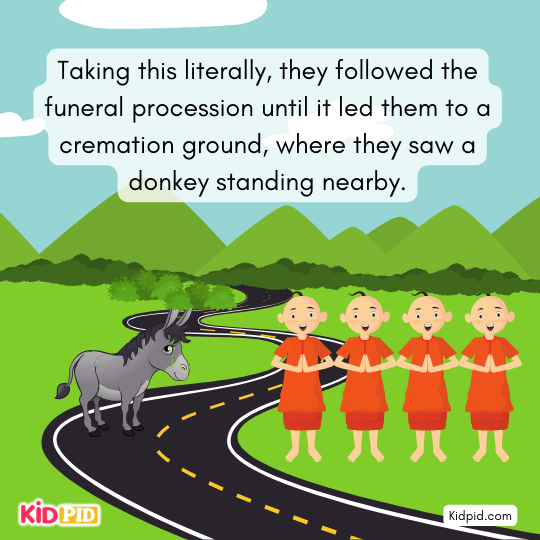
Taking this literally, they followed the funeral procession until it led them to a cremation ground, where they saw a donkey standing nearby.
The Brahmins follow the procession to the cremation ground.
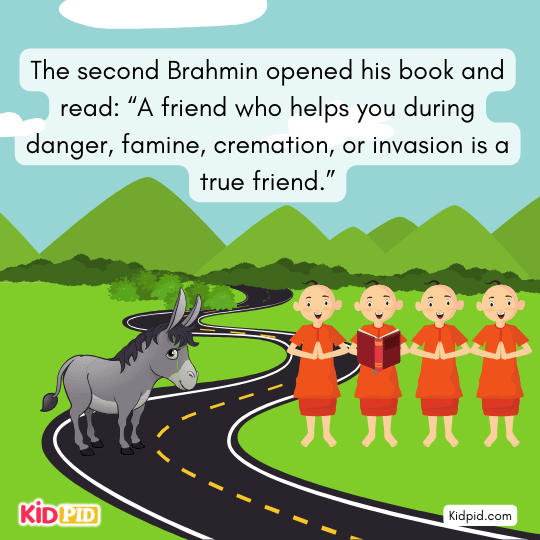
The second Brahmin opened his book and read: “A friend who helps you during danger, famine, cremation, or invasion is a true friend.”
The Brahmins see a donkey standing near the cremation area.
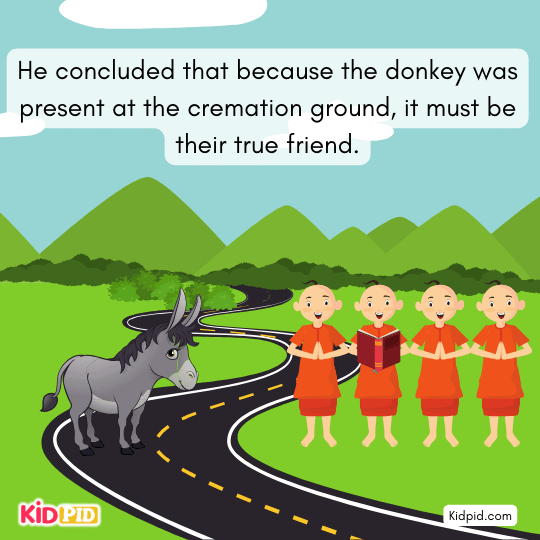
He concluded that because the donkey was present at the cremation ground, it must be their true friend.
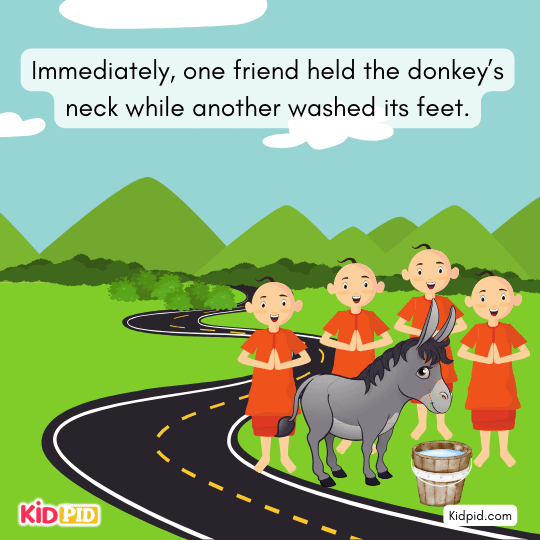
A verse convinces them that the donkey must be their faithful friend.
Immediately, one friend held the donkey’s neck while another washed its feet.
The Brahmins wash the donkey’s feet at the cremation ground.
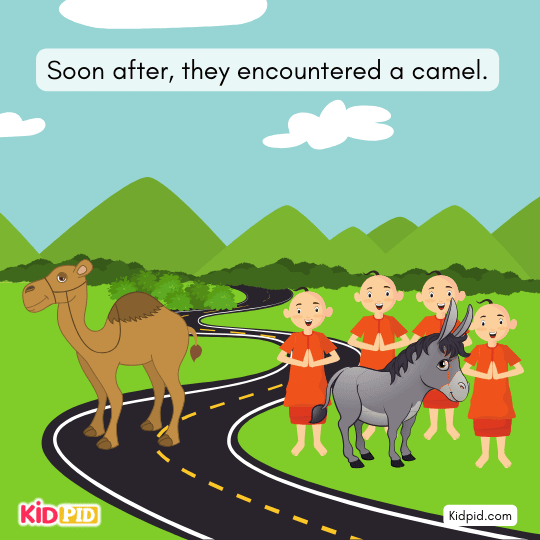
Soon after, they encountered a camel.
A camel appears before the Brahmins during their journey.
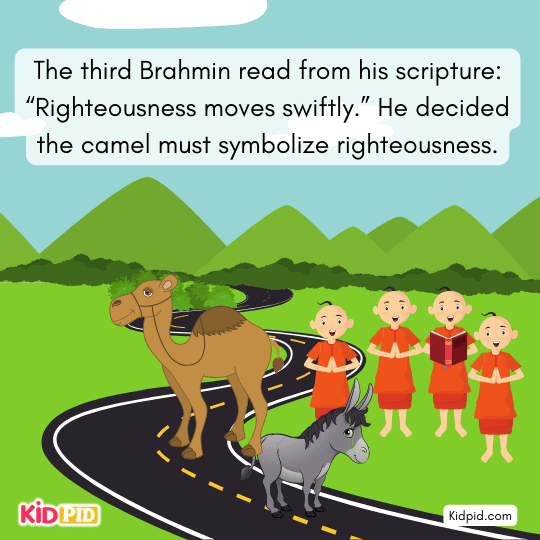
The third Brahmin read from his scripture: “Righteousness moves swiftly.” He decided the camel must symbolize righteousness.
A verse about “swift righteousness” convinces them the camel is holy.
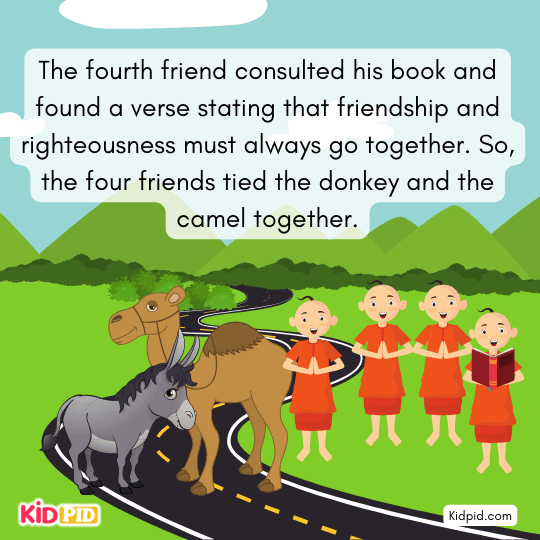
The fourth friend consulted his book and found a verse stating that friendship and righteousness must always go together. So, the four friends tied the donkey and the camel together.
The Brahmins tie the donkey and camel together based on scripture.
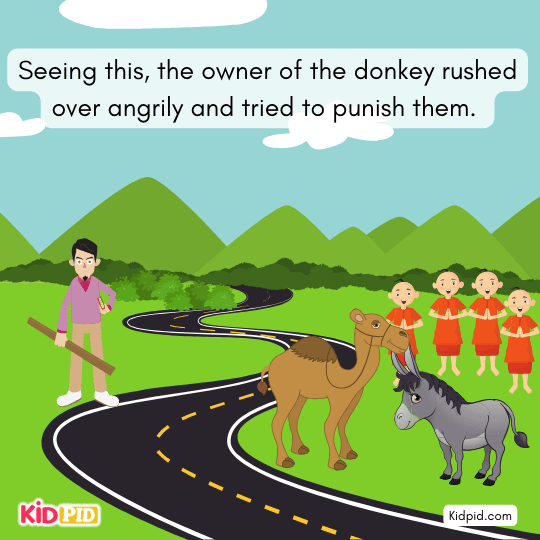
Seeing this, the owner of the donkey rushed over angrily and tried to punish them.
The donkey’s owner angrily confronts the Brahmins.
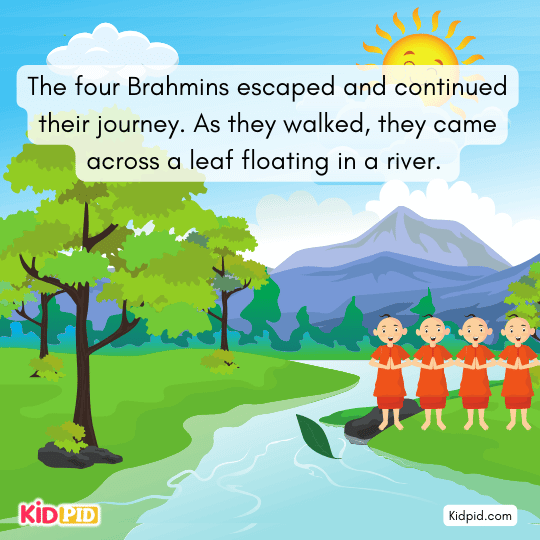
The four Brahmins escaped and continued their journey. As they walked, they came across a leaf floating in a river.
The Brahmins see a floating leaf on the river.
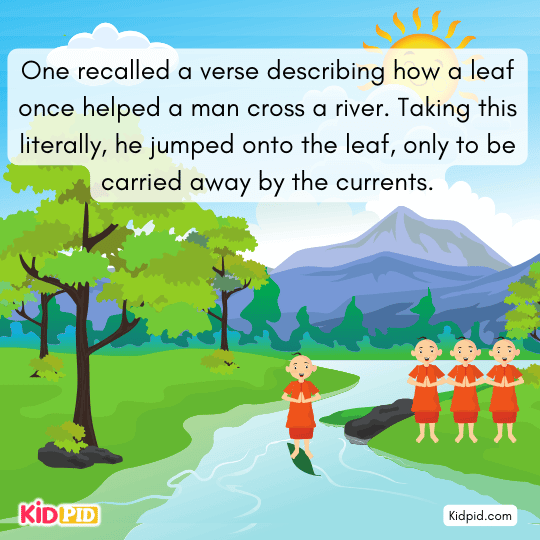
One recalled a verse describing how a leaf once helped a man cross a river. Taking this literally, he jumped onto the leaf, only to be carried away by the currents.
A Brahmin jumps onto the floating leaf, believing it can carry him.
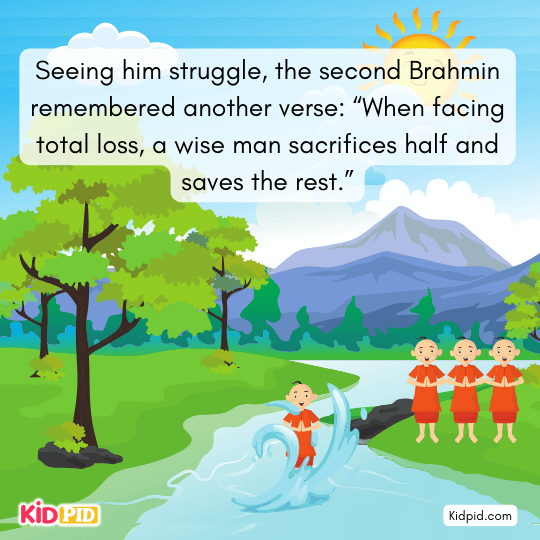
Seeing him struggle, the second Brahmin remembered another verse: “When facing total loss, a wise man sacrifices half and saves the rest.”
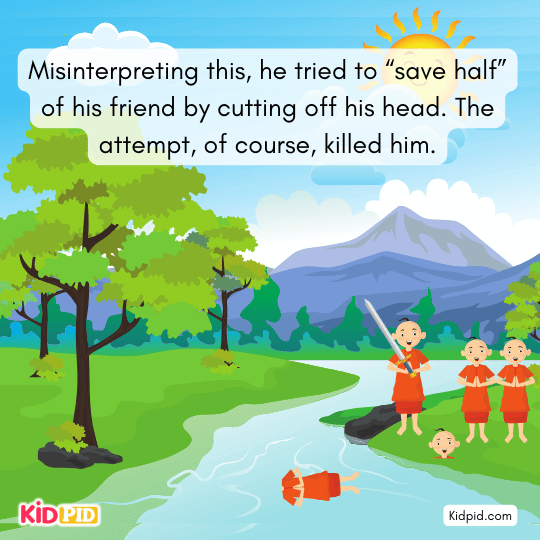
A friend tries to “save half” by cutting off his friend’s head.
Misinterpreting this, he tried to “save half” of his friend by cutting off his head. The attempt, of course, killed him.
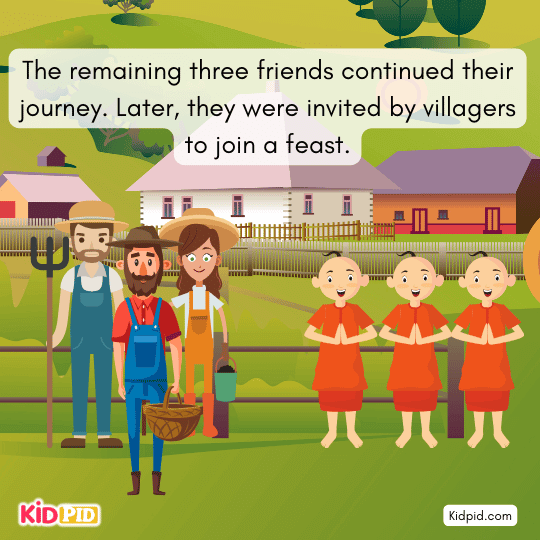
The remaining three Brahmins continue their journey.
The remaining three friends continued their journey. Later, they were invited by villagers to join a feast.
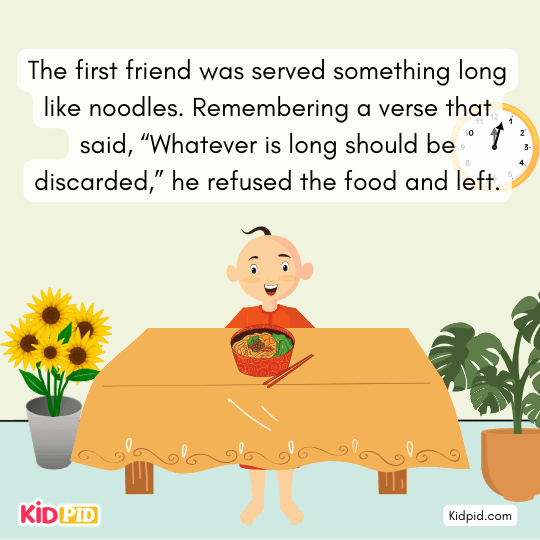
Villagers invite the Brahmins to a grand feast.
The first friend was served something long like noodles. Remembering a verse that said, “Whatever is long should be discarded,” he refused the food and left.
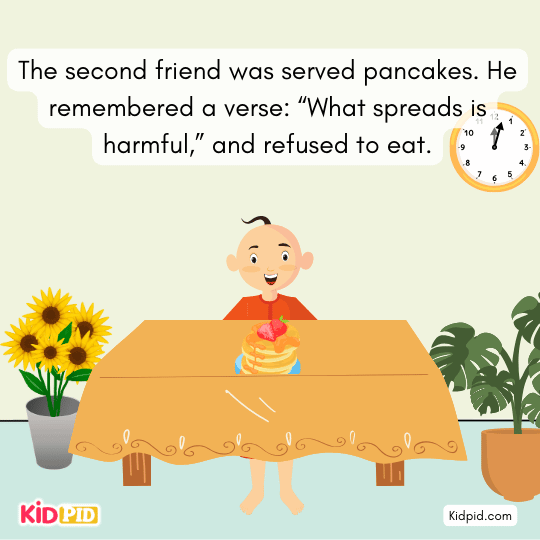
One Brahmin refuses noodles after misreading a verse.
The second friend was served pancakes. He remembered a verse: “What spreads is harmful,” and refused to eat.
Another Brahmin rejects pancakes believing “what spreads is dangerous.”
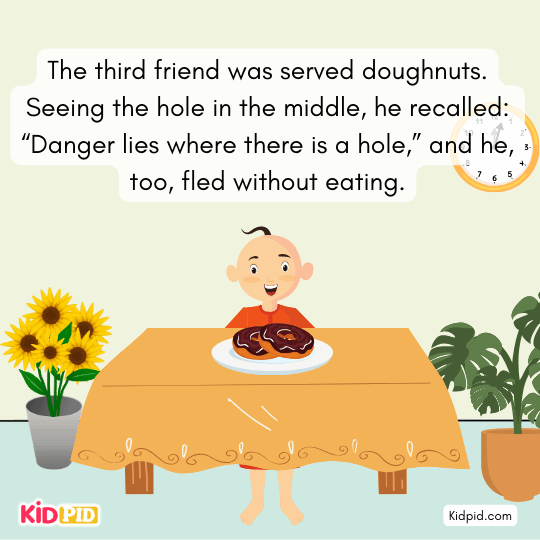
The third friend was served doughnuts. Seeing the hole in the middle, he recalled: “Danger lies where there is a hole,” and he, too, fled without eating.
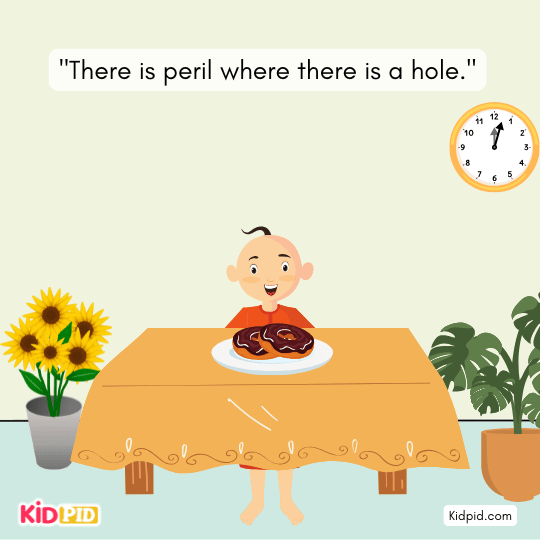
The third Brahmin refuses doughnuts because he fears the hole.
“There is peril where there is a hole”
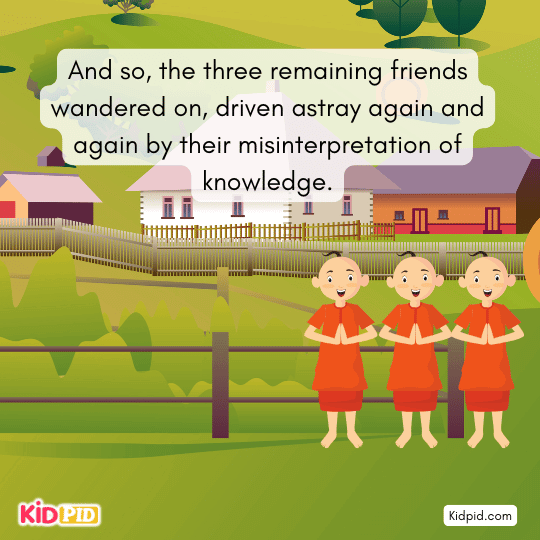
The Brahmins wander on, misled by misunderstood teachings.
And so, the three remaining friends wandered on, driven astray again and again by their misinterpretation of knowledge.
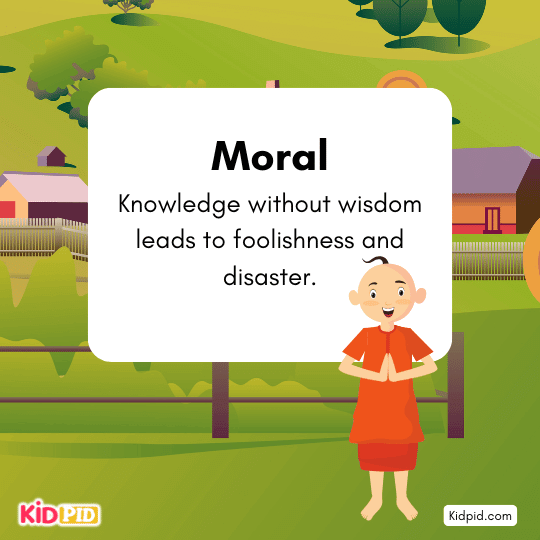
Moral: Knowledge without wisdom can lead to foolish actions.
Moral of the Story: Knowledge without wisdom leads to foolishness and disaster.

“The Learned Fools” teaches children the value of wisdom, awareness, and common sense. This moral story reminds kids that learning is useful only when applied correctly in real-life situations with understanding and responsibility.


