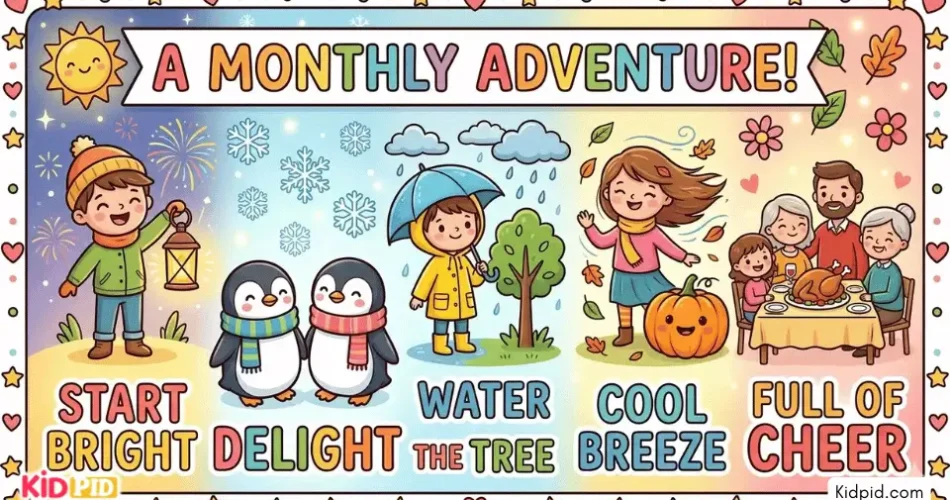
Learning the months of the year helps children understand time, seasons, and important events. This fun Months of the Year Rhyme for Kids uses simple words and catchy rhymes to help young learners remember all twelve months in order while building memory, vocabulary, and language skills.
Contents
- Months of the Year Rhyme for Kids
- What Are the Months of the Year?
- Why Should Children Learn the Months of the Year?
- Educational Benefits of This Rhyme
- Learning Outcomes
- Fun Activity for Kids
- FAQs
- Q1. How many months are there in a year?
- Q2. Why should children learn the months of the year?
- Q3. What is the first month of the year?
- Q4. What is the last month of the year?
- Q5. How can rhymes help children learn months?
- Q6. At what age can children learn the months of the year?
- Q7. Do all months have the same number of days?
- Q8. What skills does this rhyme develop?
Months of the Year Rhyme for Kids
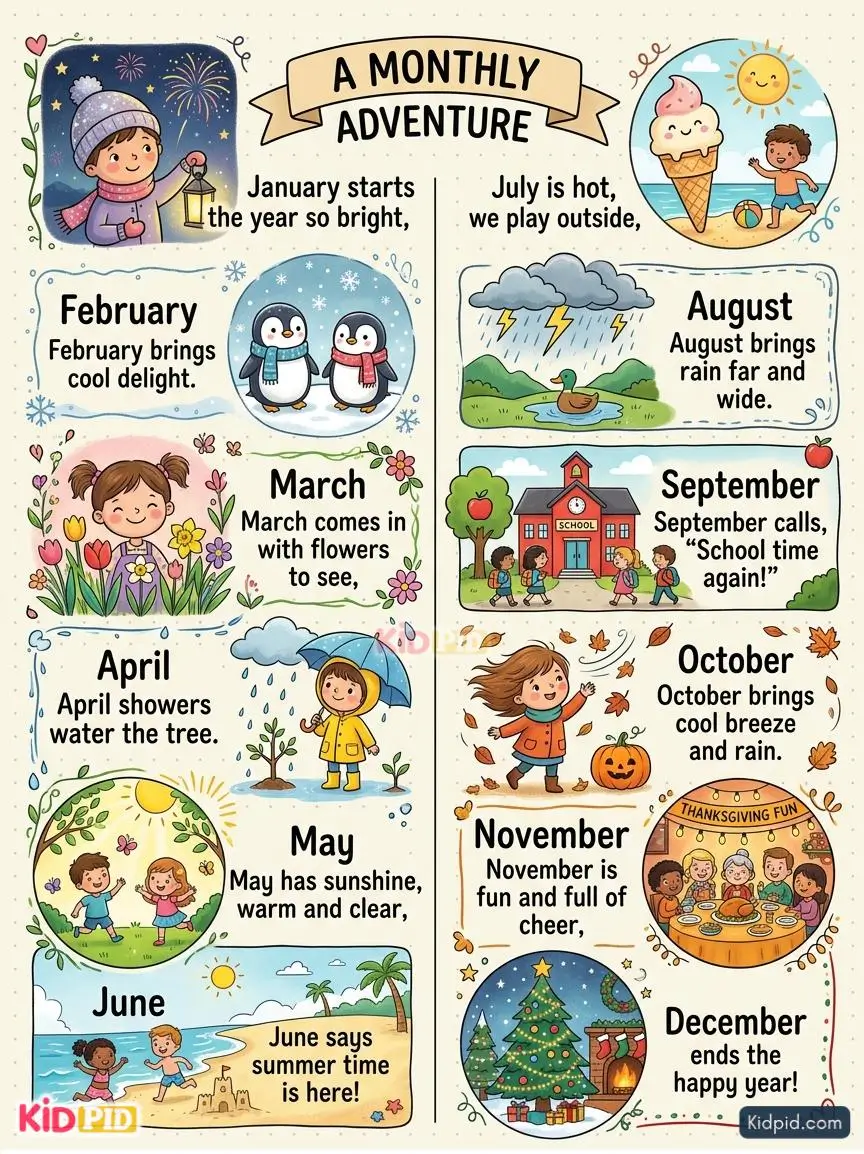
This fun rhyme helps children learn the names, order, and seasonal features of all twelve months while improving memory and language skills.
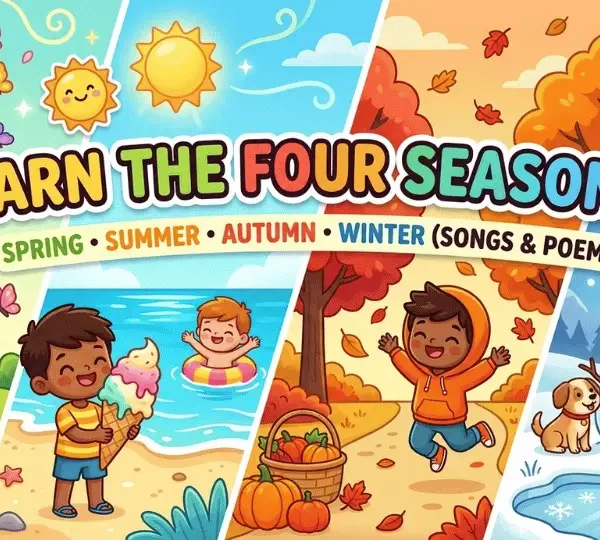
Learning the months of the year becomes easy and exciting with this colorful educational rhyme. Children can understand seasons, weather changes, holidays, and the sequence of months through engaging illustrations. The rhyme supports vocabulary development, memory retention, and time-awareness skills in a fun way.
What Are the Months of the Year?
The year is divided into twelve months:
- January
- February
- March
- April
- May
- June
- July
- August
- September
- October
- November
- December
Each month has its own special weather, festivals, activities, and seasonal changes that make the year exciting and unique.
Why Should Children Learn the Months of the Year?
- Helps children understand the calendar.
- Improves time-awareness and sequencing skills.
- Builds memory and vocabulary development.
- Introduces seasons and weather patterns.
- Helps children recognize birthdays, holidays, and special events.
- Encourages confidence in everyday conversations about dates and time.
Educational Benefits of This Rhyme
- Enhances listening and language skills.
- Supports early cognitive development.
- Strengthens memory through repetition.
- Encourages rhythm and pronunciation practice.
- Helps children learn chronological order.
- Makes learning fun and engaging.
Learning Outcomes
After practicing this rhyme, children will be able to:
- Name all twelve months of the year.
- Recite the months in the correct order.
- Identify seasonal changes throughout the year.
- Understand the basic concept of a calendar year.
- Connect months with weather and activities.
- Improve speaking and memory skills.
Fun Activity for Kids
Try these simple activities after learning the rhyme:
- Point to each month on a calendar.
- Match months with seasons.
- Say your birthday month aloud.
- Draw pictures that represent each month.
- Create a colorful “Months of the Year” chart.
FAQs
Q1. How many months are there in a year?
Answer: There are twelve months in a year, starting with January and ending with December.
Q2. Why should children learn the months of the year?
Answer: Learning the months helps children understand calendars, seasons, holidays, and important events.
Q3. What is the first month of the year?
Answer: January is the first month of the year.
Q4. What is the last month of the year?
Answer: December is the last month of the year.
Q5. How can rhymes help children learn months?
Answer: Rhymes use repetition and rhythm, making information easier to remember.
Q6. At what age can children learn the months of the year?
Answer: Most children can begin learning the months between ages 3 and 6 through songs, rhymes, and daily practice.
Q7. Do all months have the same number of days?
Answer: No. Some months have 30 days, some have 31 days, and February usually has 28 days.
Q8. What skills does this rhyme develop?
Answer: It helps develop memory, vocabulary, sequencing, listening, and time-awareness skills.
This fun Months of the Year rhyme helps children learn all twelve months in order while improving memory, vocabulary, sequencing, and time-awareness skills through enjoyable learning and repetition. Keep exploring our website for exciting rhymes, paragraphs, essays, worksheets, flashcards, quizzes, and other educational resources for kids. Don’t forget to follow us on YouTube & Facebook for fun learning videos, creative activities, and daily educational content.