

‘Biodiversity’ is one of the important topics on which students can be asked to write a paragraph in exams in school. Biodiversity refers to the variety of life on Earth, including plants, animals, and microorganisms, essential for ecological balance. Please check the various versions (in 100 words, 150 words, 200 words, and 300 words) provided below for the paragraph.
Contents
- Paragraph on ‘Biodiversity’ in 100 words for Class 6
- Paragraph on ‘Biodiversity’ in 150 words for Class 7
- Paragraph on ‘Biodiversity’ in 200 words for Class 8
- Paragraph on ‘Biodiversity’ in 300 words for Classes 9 & 10
- MCQs on ‘Biodiversity’
- 1. What is biodiversity?
- 2. Why is biodiversity important?
- 3. What role do bees play in nature?
- 4. What can happen if one species disappears?
- 5. What is one way to protect biodiversity?
- 6. What can pollution do to biodiversity?
- 7. What do plants give us that helps us breathe?
- 8. What is composting?
- 9. What human activities harm biodiversity?
- 10. How can we help protect biodiversity?
- Importance of Biodiversity
- Additional Facts of Biodiversity
- You may like these:
Read This Article in Other Languages
- जैव विविधता पर अनुच्छेद (Hindi / हिंदी)
- Párrafo sobre la biodiversidad (Spanish / Español)
- Paragraphe sur la biodiversité (French / Français)
- Absatz über die Biodiversität (German / Deutsch)
- فقرة عن التنوع البيولوجي (Arabic / العربية)
- জীববৈচিত্র্য সম্পর্কে অনুচ্ছেদ (Bengali / বাংলা)
- உயிரியல் பல்வகைமை பற்றிய பத்தி (Tamil / தமிழ்)
- జీవ వైవిధ్యం పై పేరా (Telugu / తెలుగు)
- ജൈവ വൈവിധ്യത്തെക്കുറിച്ചുള്ള പാരഗ്രാഫ് (Malayalam / മലയാളം)
- حیاتیاتی تنوع پر پیراگراف (Urdu / اردو)
- Parágrafo sobre biodiversidade (Portuguese / Português)
Translation Disclaimer: These links use Google Translate, an automated translation service. Translations may vary in accuracy and are provided for convenience only.
Paragraph on ‘Biodiversity’ in 100 words for Class 6


Biodiversity means all the different living things on Earth, like animals, plants, and insects. It’s important because each living thing has a role in nature. Animals and plants depend on each other to stay alive. For example, bees help flowers grow by spreading pollen. When we take care of biodiversity, we protect nature and help keep everything balanced. If one species disappears, it can affect many others. To protect biodiversity, we should stop polluting, plant more trees, and protect animal habitats. Everyone can help keep the Earth’s biodiversity safe.
Paragraph on ‘Biodiversity’ in 150 words for Class 7

Biodiversity is the variety of life on Earth. It includes all animals, plants, insects, and even tiny microorganisms. Every living thing plays an important role in nature. For example, plants give us oxygen, and animals like bees help flowers grow. Biodiversity is important for a healthy environment. When we have lots of different plants and animals, the Earth stays balanced. But when animals and plants disappear, it can cause problems for everyone. Pollution, deforestation, and climate change can harm biodiversity. To help protect it, we can plant trees, recycle, and take care of nature. It’s important to protect habitats so animals and plants can thrive. By respecting nature, we can keep the world full of life.
Paragraph on ‘Biodiversity’ in 200 words for Class 8

Biodiversity is the variety of all living things on Earth, including plants, animals, insects, and microorganisms. It is important because every living thing plays a part in keeping nature healthy. For example, animals like bees and butterflies help plants grow by spreading pollen. Trees and plants provide oxygen, which helps people and animals breathe. Biodiversity is important for food, medicine, and even clean air. When biodiversity is healthy, the Earth stays balanced. But when animals or plants disappear, it can harm other species and the environment. Pollution, deforestation, and climate change are some of the things that hurt biodiversity. People can help protect biodiversity by planting trees, recycling, and reducing pollution. We can also protect animals and plants by saving their habitats. When we work together to protect biodiversity, we can make the Earth a better place for all living things.
Paragraph on ‘Biodiversity’ in 300 words for Classes 9 & 10

Biodiversity means the variety of all living things on Earth. This includes plants, animals, insects, birds, fish, and even tiny organisms we can’t see with our eyes. Every living thing has a role to play in the environment. For example, animals like bees help flowers grow by spreading pollen. Plants give us oxygen and food. The ocean has many different species of fish and animals, and they all depend on each other. Biodiversity helps keep the Earth balanced and healthy. It provides food, medicine, and other resources we need.
Unfortunately, human activities, like cutting down trees, pollution, and climate change, harm biodiversity. When we destroy natural habitats, animals and plants lose their homes. This makes it harder for them to survive. When species disappear, it can affect other species too. For example, if a plant that animals eat disappears, the animals may not have enough food.
We can help protect biodiversity by doing simple things like planting trees, recycling, and using less plastic. We can also save animal habitats by stopping deforestation. Protecting biodiversity is important for the future of our planet. If we all work together, we can protect nature and make sure that all living things continue to thrive. By respecting the environment, we help create a healthy world for animals, plants, and people.
MCQs on ‘Biodiversity’
1. What is biodiversity?
a) A type of tree
b) The variety of living things on Earth
c) A kind of animal
d) A method of recycling
2. Why is biodiversity important?
a) It helps in making money
b) It keeps the Earth balanced and healthy
c) It makes things grow faster
d) It provides water
Answer: b) It keeps the Earth balanced and healthy
Explanation: Biodiversity is important because it helps maintain a balanced and healthy environment.
3. What role do bees play in nature?
a) They provide food for animals
b) They help flowers grow by spreading pollen
c) They create oxygen
d) They clean the environment
4. What can happen if one species disappears?
a) It doesn’t affect anything
b) It can affect many other species
c) It helps other species grow
d) It makes more species appear
Answer: b) It can affect many other species
Explanation: The disappearance of one species can disrupt the balance in the ecosystem, affecting other species that depend on it.
5. What is one way to protect biodiversity?
a) Polluting more
b) Planting more trees
c) Cutting down forests
d) Ignoring wildlife
6. What can pollution do to biodiversity?
a) Protect it
b) Harm it
c) Make it grow
d) Keep it balanced
Answer: b) Harm it
Explanation: Pollution can harm the environment and negatively impact biodiversity by damaging habitats.
7. What do plants give us that helps us breathe?
a) Food
b) Oxygen
c) Water
d) Medicine
8. What is composting?
a) Making trash
b) Turning food scraps into soil
c) Cutting down trees
d) Creating plastic
Answer: b) Turning food scraps into soil
Explanation: Composting is the process of turning food scraps into nutrient-rich soil that helps plants grow.
9. What human activities harm biodiversity?
a) Planting trees
b) Recycling
c) Pollution and deforestation
d) Protecting habitats
10. How can we help protect biodiversity?
a) By ignoring the environment
b) By reducing pollution and protecting habitats
c) By wasting resources
d) By cutting down more trees
Answer: b) By reducing pollution and protecting habitats
Explanation: Reducing pollution and protecting natural habitats are key ways to help conserve biodiversity.


Importance of Biodiversity
- Biodiversity supports life on Earth by maintaining healthy ecosystems that provide food, clean water, air, and climate balance. [Source: UNESCO]
- A wide variety of plants and animals helps ecosystems stay stable and recover from natural changes. [Source: UNESCO World Heritage Centre]
Additional Facts of Biodiversity
- Biodiversity includes genetic, species, and ecosystem diversity, all essential for nature’s balance. [Source: UNESCO]
- The Convention on Biological Diversity is a global agreement to protect and sustainably use biodiversity. [Source: Wikipedia]
- Scientific reports warn that biodiversity loss is increasing due to habitat destruction and human activities. [Source: UN-backed Global Assessment Report]
We hope you enjoyed the paragraphs on the topic “Biodiversity,” thoughtfully crafted by our team of experienced teachers. Keep visiting our website and explore more paragraphs, essays, worksheets, flashcards, Quizzes and many other interactive resources. Don’t forget to follow us on YouTube & Facebook.
Our Content Team created this paragraph to make learning smooth and simple.
You may like these:
Kid-Friendly Paragraph on ‘Forest Animals’
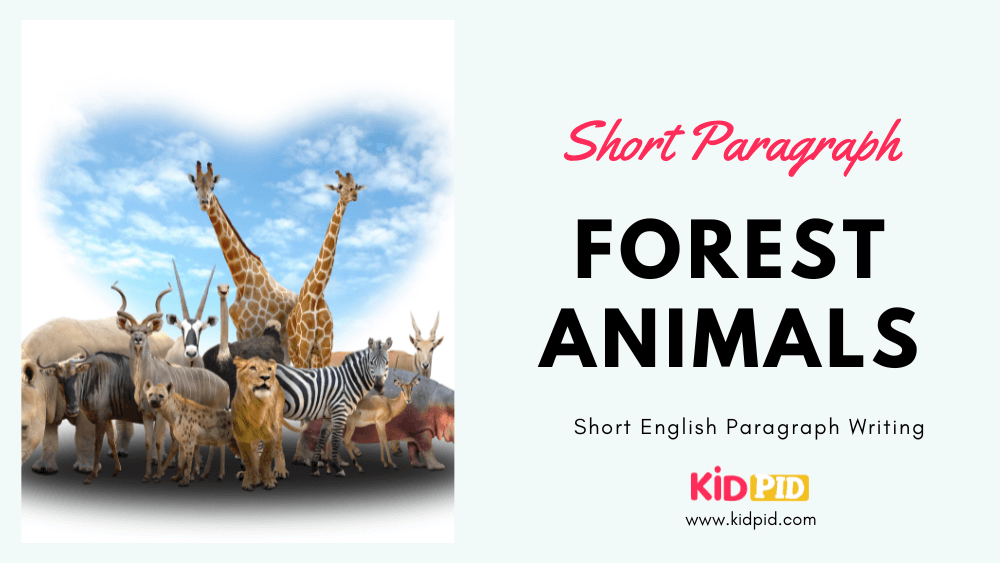

Forest animals, like deer, bears, and birds, live together in a balanced ecosystem. They rely on trees, plants, and each other to survive, making forests a vibrant and exciting home for wildlife.
Quick Paragraph on ‘The Importance of Wetlands’
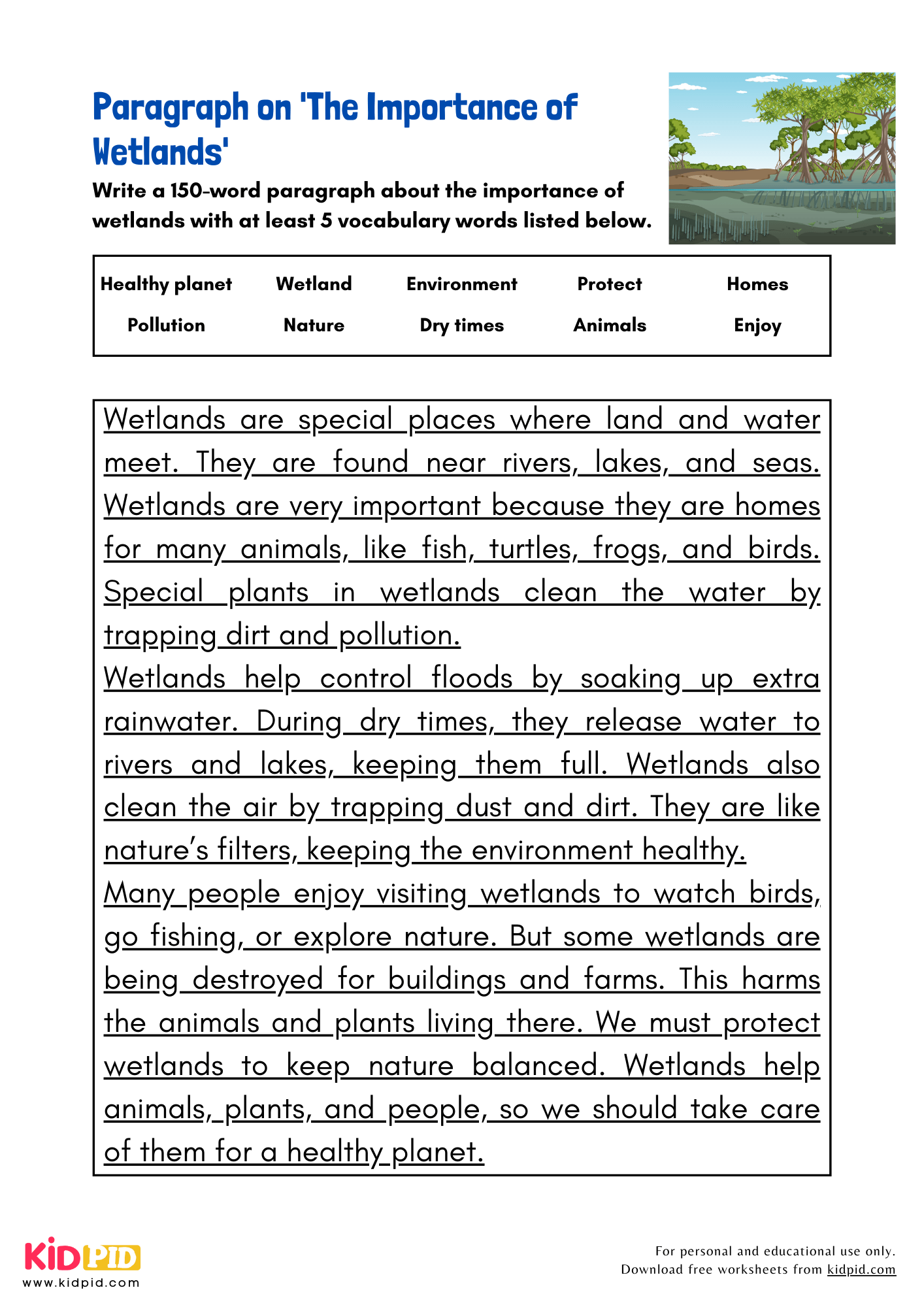

Wetlands are vital ecosystems that filter water, support diverse species, and prevent floods. They act as nature’s kidneys, maintaining ecological balance and providing resources essential for both wildlife and humans.
Simple Paragraph on ‘Environmental Issues’

Environmental issues like pollution, climate change, and deforestation harm ecosystems and human health. Addressing these challenges through sustainable practices is crucial to protect the planet for future generations.
Short Paragraph on ‘Deforestation’


Deforestation destroys forests, endangering wildlife and contributing to climate change. It disrupts ecosystems, reduces biodiversity, and impacts livelihoods, highlighting the urgent need for conservation and sustainable land use.
Engaging Paragraph on ‘Value of Oxygen and Water in Life/Earth’

Oxygen and water are the foundations of life, sustaining all living beings. Oxygen fuels respiration, while water nourishes and regulates Earth’s systems, underscoring their critical role in maintaining planetary health.


