

‘Classroom Etiquette’ is one of the important topics on which students can be asked to write a paragraph in exams in school. Classroom etiquette is about following rules to create a respectful and positive environment where everyone can learn and grow. Please check the various versions (in 50 words, 100 words, 150 words, 200 words, and 300 words) provided below for the paragraph.
Contents
- Paragraph on ‘Classroom Etiquette’ in 50 Words for Class 1 & 2
- Paragraph on ‘Classroom Etiquette’ in 100 Words for Class 3 & 4
- Paragraph on ‘Classroom Etiquette’ in 150 Words for Class 5 & 6
- Paragraph on ‘Classroom Etiquette’ in 200 Words for Class 7 & 8
- Paragraph on ‘Classroom Etiquette’ in 300 Words for Class 9 & 10
- MCQs on ‘Classroom Etiquette’
- 1. What does classroom etiquette mean?
- 2. Why should we listen when the teacher talks?
- 3. What should we do before speaking in class?
- 4. Why is keeping our desks clean important?
- 5. What should we NOT do in the classroom?
- 6. How can we show kindness in class?
- 7. What is a good habit in the classroom?
- 8. Why should we say “please” and “thank you”?
- 9. How does good classroom etiquette help everyone?
- 10. What should we do if a classmate needs help?
- Importance of Classroom Etiquette
- Additional Facts
- You may like these:
Read This Article in Other Languages
- कक्षा शिष्टाचार पर अनुच्छेद (Hindi / हिंदी)
- Párrafo sobre la etiqueta en el aula (Spanish / Español)
- Paragraphe sur l’étiquette en classe (French / Français)
- Absatz über Klassenraum-Etikette (German / Deutsch)
- فقرة عن آداب الفصول الدراسية (Arabic / العربية)
- ক্লাসরুম শিষ্টাচার সম্পর্কে অনুচ্ছেদ (Bengali / বাংলা)
- தரக்கூடத்தின் ஒழுங்கு பழக்கத்தைப் பற்றி பத்தி (Tamil / தமிழ்)
- తరగతి గది నైతికత గురించి పేరా (Telugu / తెలుగు)
- തറപാടശാല ശിഷ്ടാചാരത്തെക്കുറിച്ചുള്ള പാരഗ്രാഫ് (Malayalam / മലയാളം)
- کلاس روم آداب پر پیراگراف (Urdu / اردو)
- Parágrafo sobre etiqueta na sala de aula (Portuguese / Português)
Translation Disclaimer: These links use Google Translate, an automated translation service. Translations may vary in accuracy and are provided for convenience only.
Paragraph on ‘Classroom Etiquette’ in 50 Words for Class 1 & 2
Classroom etiquette means good behavior in class. We should listen to our teacher and follow rules. We must be polite and respect classmates. Raising hands before speaking is important. Keeping the classroom clean helps everyone learn better. Good manners make the classroom peaceful and happy.
Paragraph on ‘Classroom Etiquette’ in 100 Words for Class 3 & 4
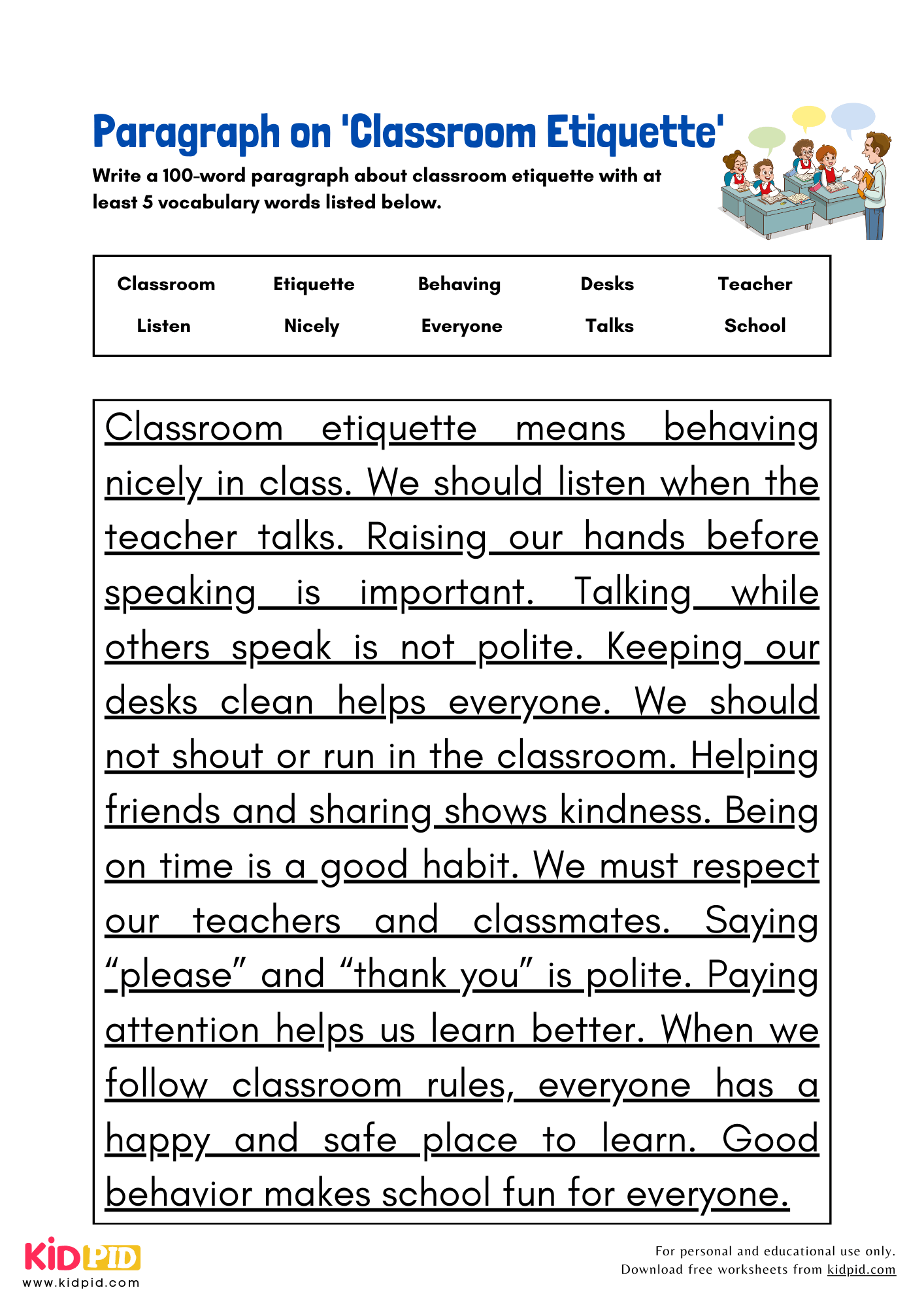
Classroom etiquette means behaving nicely in class. We should listen when the teacher talks. Raising our hands before speaking is important. Talking while others speak is not polite. Keeping our desks clean helps everyone. We should not shout or run in the classroom. Helping friends and sharing shows kindness. Being on time is a good habit. We must respect our teachers and classmates. Saying “please” and “thank you” is polite. Paying attention helps us learn better. When we follow classroom rules, everyone has a happy and safe place to learn. Good behavior makes school fun for everyone.
Paragraph on ‘Classroom Etiquette’ in 150 Words for Class 5 & 6
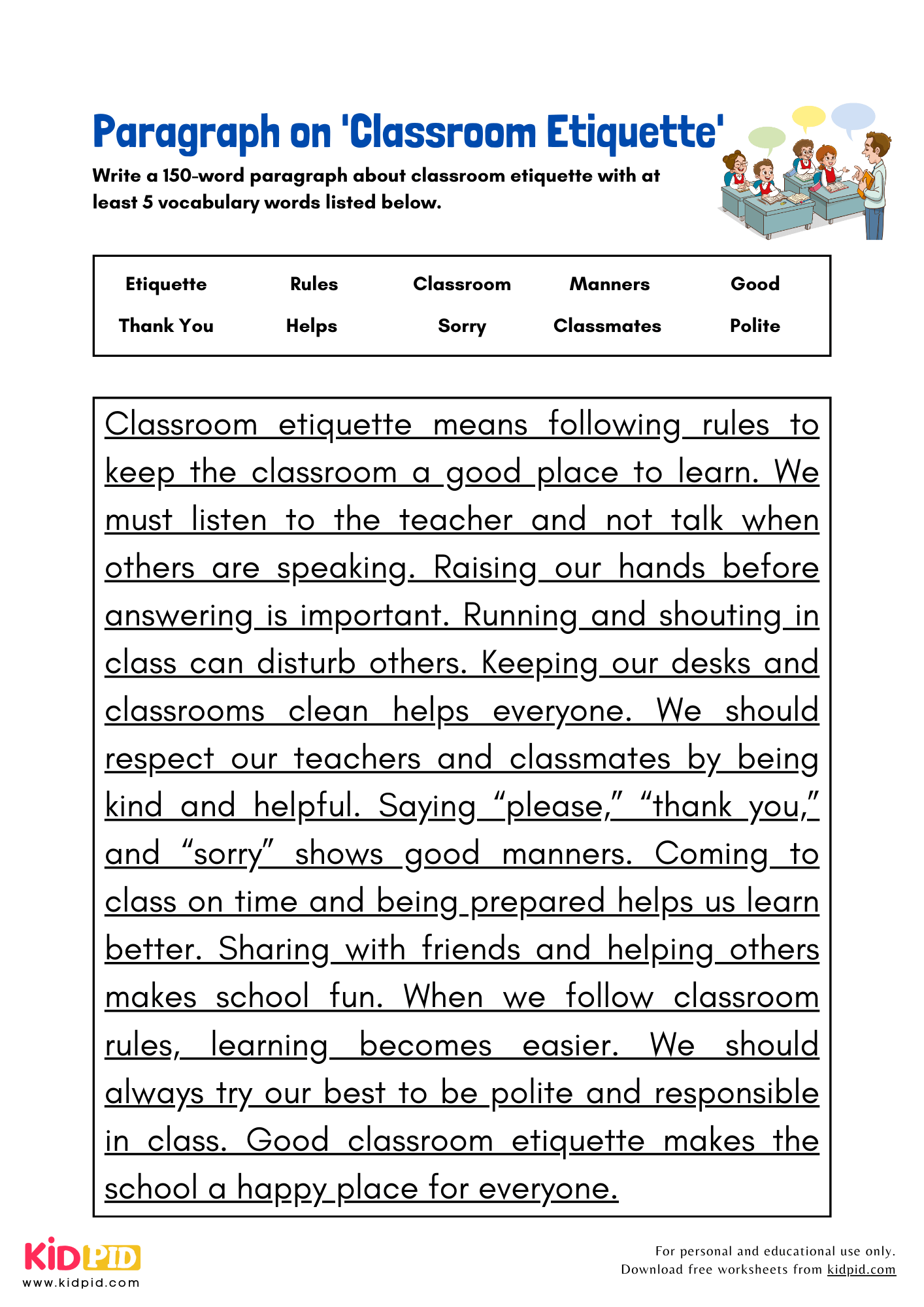
Classroom etiquette means following rules to keep the classroom a good place to learn. We must listen to the teacher and not talk when others are speaking. Raising our hands before answering is important. Running and shouting in class can disturb others. Keeping our desks and classrooms clean helps everyone. We should respect our teachers and classmates by being kind and helpful. Saying “please,” “thank you,” and “sorry” shows good manners. Coming to class on time and being prepared helps us learn better. Sharing with friends and helping others makes school fun. When we follow classroom rules, learning becomes easier. We should always try our best to be polite and responsible in class. Good classroom etiquette makes the school a happy place for everyone.
Paragraph on ‘Classroom Etiquette’ in 200 Words for Class 7 & 8
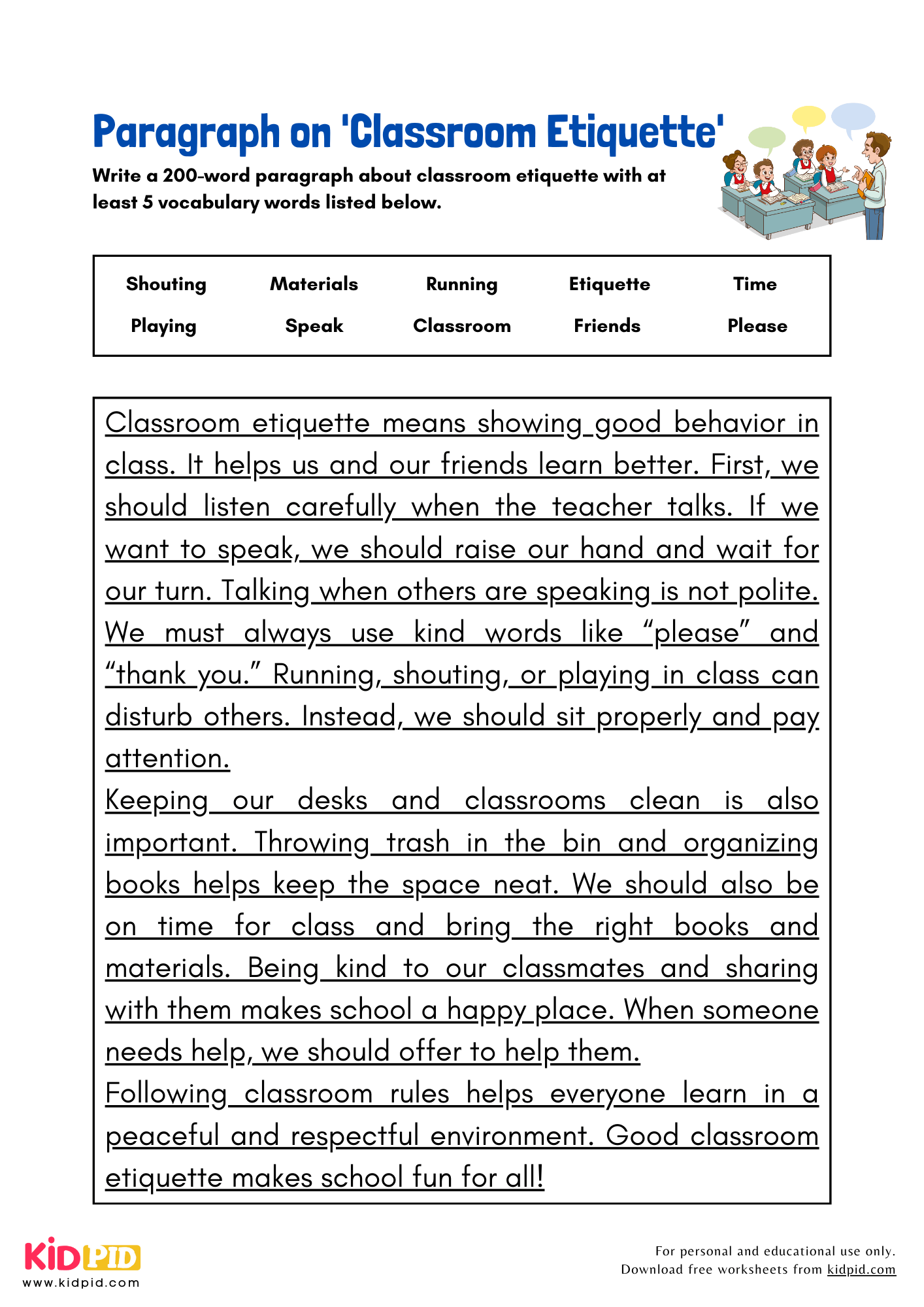
Classroom etiquette means showing good behavior in class. It helps us and our friends learn better. First, we should listen carefully when the teacher talks. If we want to speak, we should raise our hand and wait for our turn. Talking when others are speaking is not polite. We must always use kind words like “please” and “thank you.” Running, shouting, or playing in class can disturb others. Instead, we should sit properly and pay attention.
Keeping our desks and classrooms clean is also important. Throwing trash in the bin and organizing books help keep the space neat. We should also be on time for class and bring the right books and materials. Being kind to our classmates and sharing with them makes school a happy place. When someone needs help, we should offer to help them.
Following classroom rules helps everyone learn in a peaceful and respectful environment. Good classroom etiquette makes school fun for all!
Paragraph on ‘Classroom Etiquette’ in 300 Words for Class 9 & 10
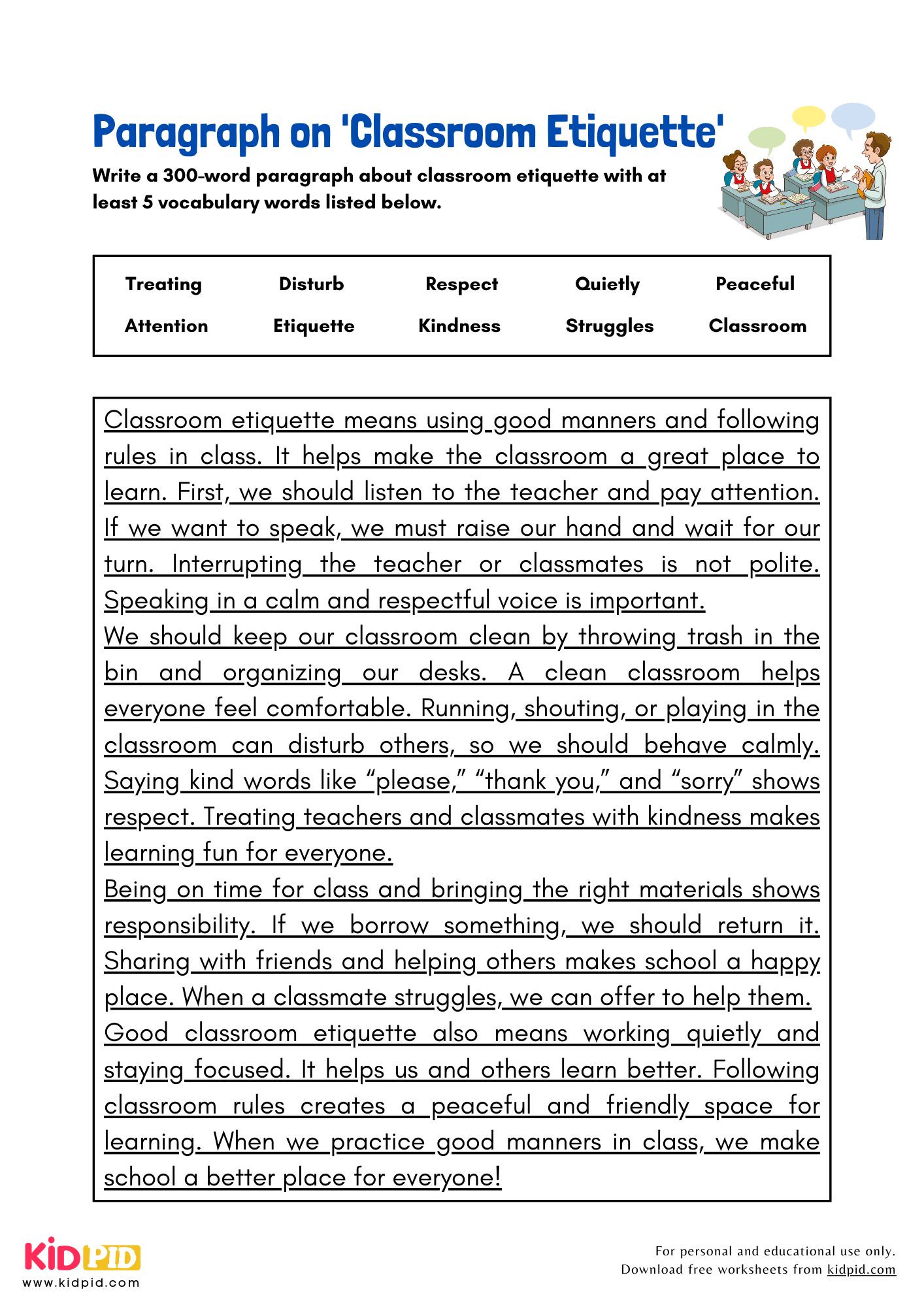
Classroom etiquette means using good manners and following rules in class. It helps make the classroom a great place to learn. First, we should listen to the teacher and pay attention. If we want to speak, we must raise our hand and wait for our turn. Interrupting the teacher or classmates is not polite. Speaking in a calm and respectful voice is important.
We should keep our classroom clean by throwing trash in the bin and organizing our desks. A clean classroom helps everyone feel comfortable. Running, shouting, or playing in the classroom can disturb others, so we should behave calmly. Saying kind words like “please,” “thank you,” and “sorry” shows respect. Treating teachers and classmates with kindness makes learning fun for everyone.
Being on time for class and bringing the right materials show responsibility. If we borrow something, we should return it. Sharing with friends and helping others makes school a happy place. When a classmate struggles, we can offer to help them.
Good classroom etiquette also means working quietly and staying focused. It helps us and others learn better. Following classroom rules creates a peaceful and friendly space for learning. When we practice good manners in class, we make school a better place for everyone!
MCQs on ‘Classroom Etiquette’
1. What does classroom etiquette mean?
A) Playing loudly in class
B) Behaving nicely and following rules
C) Talking whenever we want
D) Ignoring the teacher
2. Why should we listen when the teacher talks?
A) To understand the lesson
B) To talk to friends
C) To make noise
D) To avoid learning
3. What should we do before speaking in class?
A) Shout the answer
B) Wait until everyone leaves
C) Raise our hand
D) Talk over others
4. Why is keeping our desks clean important?
A) It helps us and others stay organized
B) It makes the classroom messy
C) It helps us hide things
D) It is not important
5. What should we NOT do in the classroom?
A) Listen carefully
B) Help our friends
C) Run and shout
D) Follow rules
6. How can we show kindness in class?
A) By ignoring classmates
B) By sharing and helping others
C) By making noise
D) By not following rules
7. What is a good habit in the classroom?
A) Coming to class on time
B) Talking while the teacher speaks
C) Leaving trash on the floor
D) Ignoring classmates
8. Why should we say “please” and “thank you”?
A) To show good manners and respect
B) To talk more in class
C) To make others listen to us
D) To interrupt the teacher
9. How does good classroom etiquette help everyone?
A) It makes the classroom a happy and safe place
B) It makes learning difficult
C) It allows students to do whatever they want
D) It creates more noise in class
10. What should we do if a classmate needs help?
A) Ignore them
B) Offer to help
C) Laugh at them
D) Walk away

Importance of Classroom Etiquette
- Classroom etiquette helps maintain a respectful and positive learning environment. [Source: Edutopia]
- Listening politely reduces classroom disruptions and improves communication skills. [Source: ERIC]
- Following classroom rules improves focus, discipline, and academic performance. [Source: U.S. Department of Education]
- Respectful behavior builds cooperation and a supportive classroom culture. [Source: NAEYC]
Additional Facts
- Clear behavior rules reduce stress and create a safe learning environment. [Source: American Psychological Association]
- Good listening habits strengthen respect between students and teachers. [Source: American School Counselor Association]
- Waiting for your turn encourages fairness and healthy discussions. [Source: Child Development Institute]
- Polite classroom behavior helps prevent conflicts and bullying. [Source: StopBullying.gov]
We hope you appreciated the paragraphs about “Classroom Etiquette” written by our expert educators. Keep visiting our website and explore more paragraphs, essays, worksheets, flashcards, Quizzes, and many other interactive resources. Don’t forget to follow us on YouTube & Facebook.
This paragraph is developed by our Content Team for clear learning.
You may like these:
Short Paragraph on ‘Etiquette’
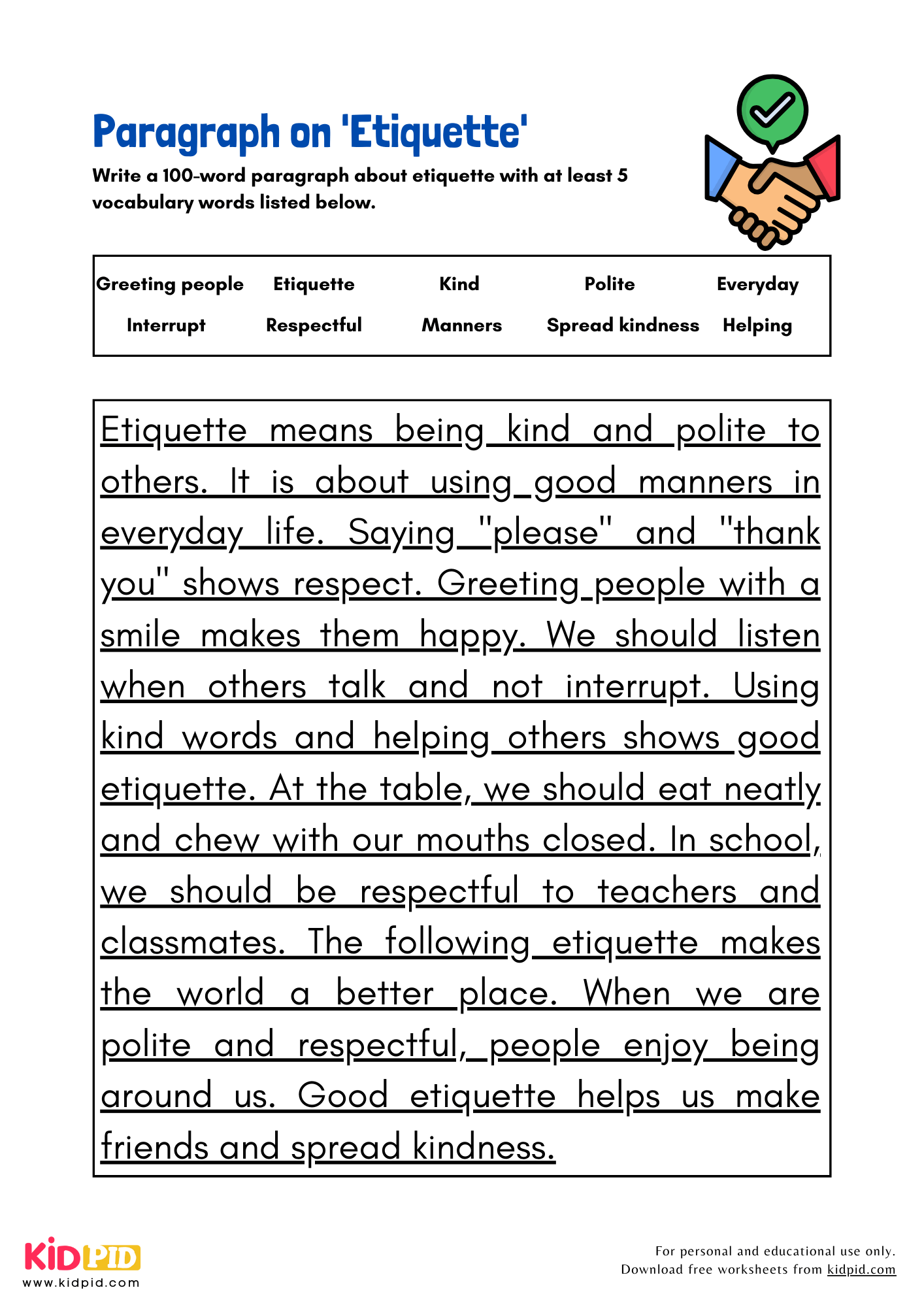
Etiquette refers to the customary code of polite behavior in society. It encompasses manners, respect, and consideration for others, helping to foster positive interactions and harmonious relationships in various settings.
Write a Paragraph on ‘Eating Etiquette’

Eating etiquette involves the accepted practices and behaviors during meals. This includes using utensils properly, chewing with your mouth closed, and engaging in polite conversation, which enhances the dining experience for everyone.
Easy-to-Write Paragraph on ‘Importance of Good Manners’
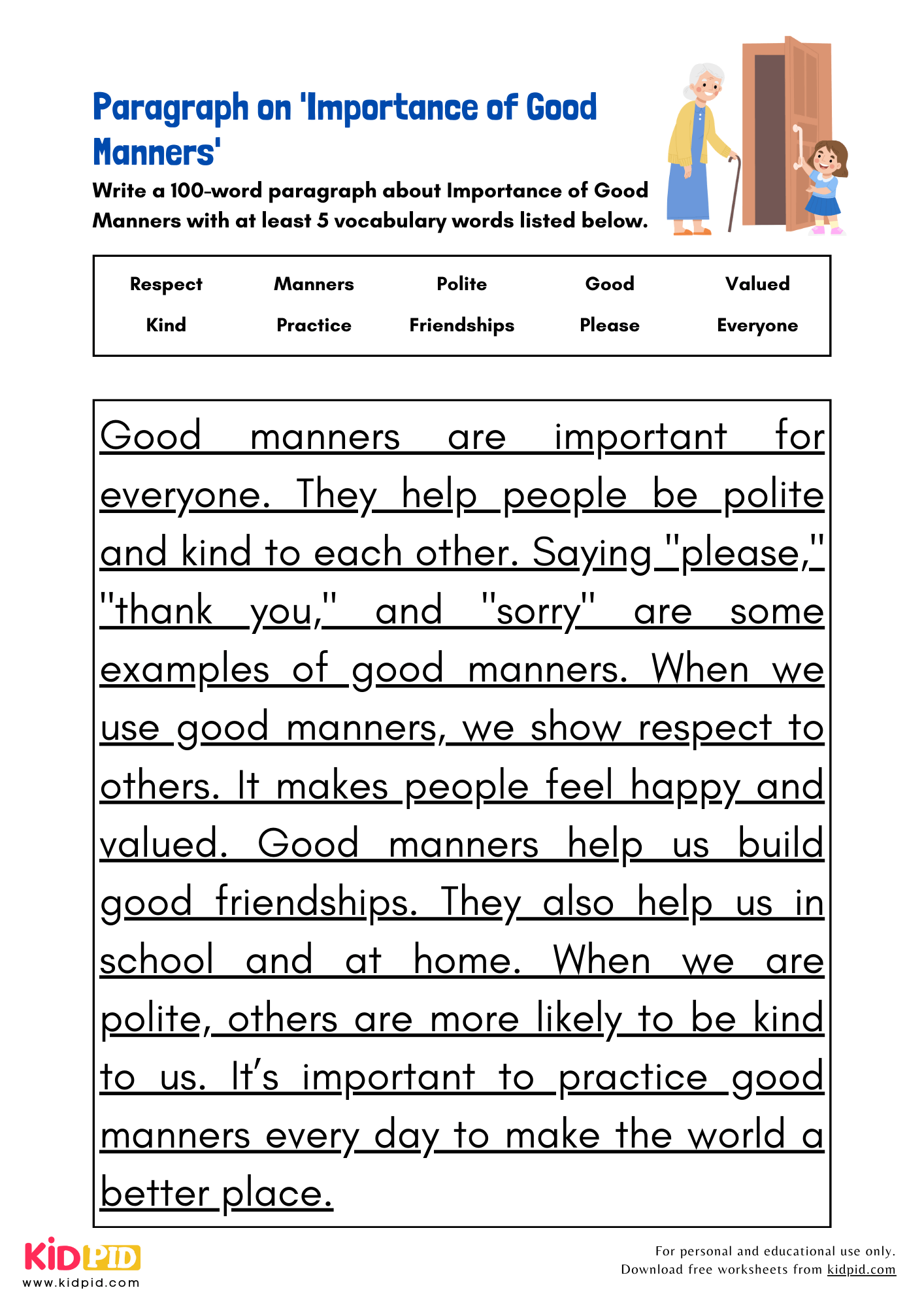
Good manners are essential for respectful communication and social interactions. They create a positive environment, show consideration for others, and help build strong relationships, making everyday interactions more pleasant and meaningful.
Polite Language In English with Examples
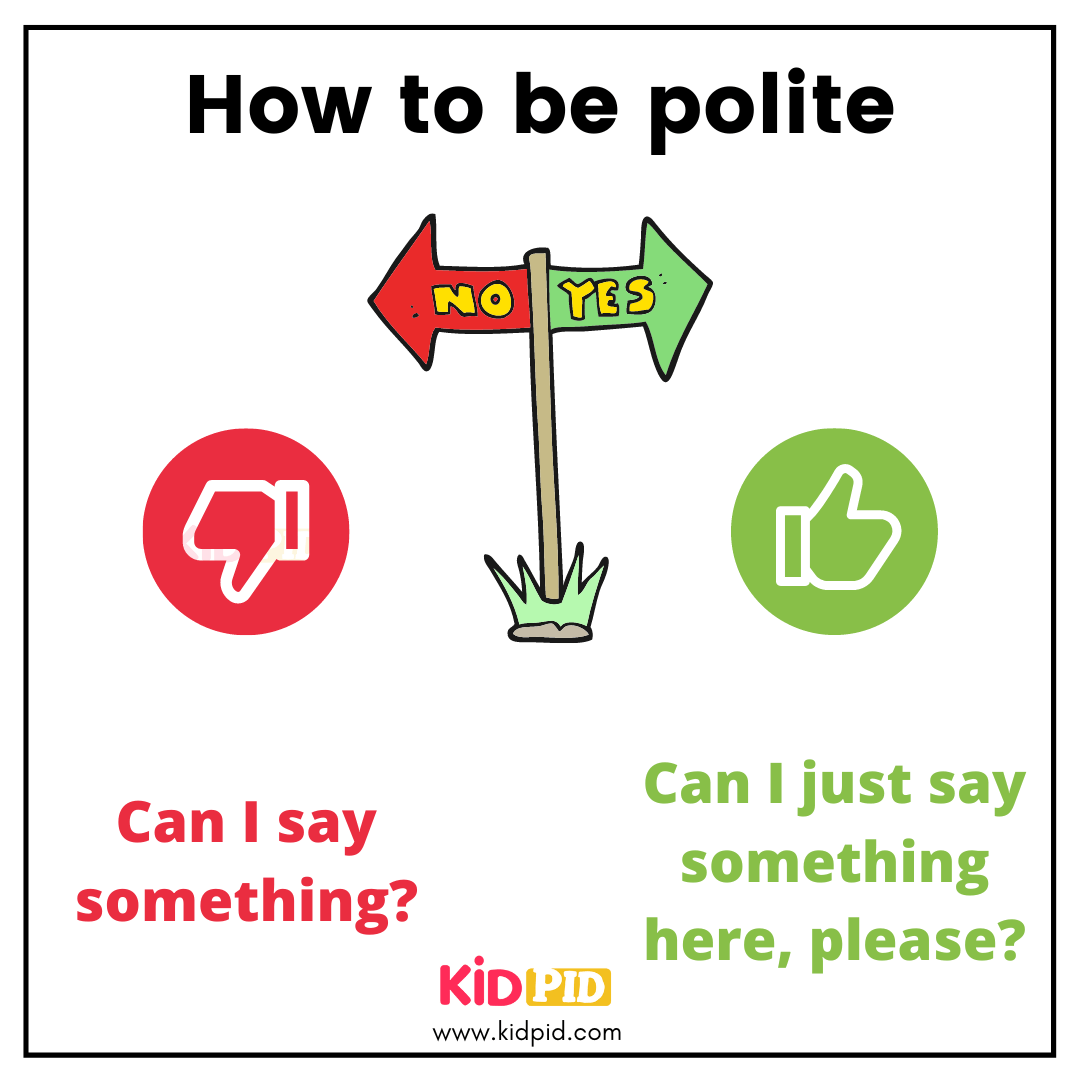
Polite language in English includes courteous expressions. For example, instead of saying “Give me that,” one might say, “Could you please pass that to me?” Using “thank you” and “excuse me” also demonstrates politeness.


