

“Financial literacy” is a key topic on which students may be asked to write a paragraph during school exams. Financial literacy is the ability to manage money wisely. It helps us understand how to use, save, and share money effectively. Please check the various samples (in 100 words, 150 words, 200 words, and 300 words) provided below for the paragraph.
Contents
- Paragraph on ‘Financial Literacy’ in 100 Words
- Paragraph on ‘Financial Literacy’ in 150 Words
- Paragraph on ‘Financial Literacy’ in 200 Words
- Paragraph on ‘Financial Literacy’ in 300 Words
- MCQ’s on ‘Financial Literacy’
- 1. What does financial literacy mean?
- 2. What is a budget?
- 3. What are the three parts money should be divided into?
- 4. Why is saving money important?
- 5. What is the difference between needs and wants?
- 6. What does sharing money mean?
- 7. What helps avoid spending too much money?
- 8. What is an example of a need?
- 9. Where can you save your money?
- 10. What does financial literacy help us do?
- You may like these:
Paragraph on ‘Financial Literacy’ in 100 Words


Financial literacy means knowing how to use money wisely. It helps us make good choices about saving, spending, and sharing. When we get money, we can use some for needs like food or clothes and save some for later. Saving helps us buy things we want in the future. Learning about money also teaches us to share with others in need. Making a budget is a good idea. A budget shows how much money we have and how we plan to use it. By learning about money, we grow smarter and can take care of it well.
Paragraph on ‘Financial Literacy’ in 150 Words

Financial literacy is about understanding how to use money smartly. It helps us learn the value of money and how to make good choices. When we earn or receive money, we should divide it wisely. We can spend some on important things, save some for the future, and share some with those in need.
Saving money is important because it helps us buy things we want later, like toys or books. We can save by putting money in a piggy bank or a savings account. Making a budget is also a smart habit. A budget is a simple plan that shows how much money we have and where it will go.
We should also know the difference between needs and wants. Needs are things we must have, like food and clothes. Wants are things we can live without, like extra toys. Learning about money helps us make smart decisions and grow responsible.
Paragraph on ‘Financial Literacy’ in 200 Words
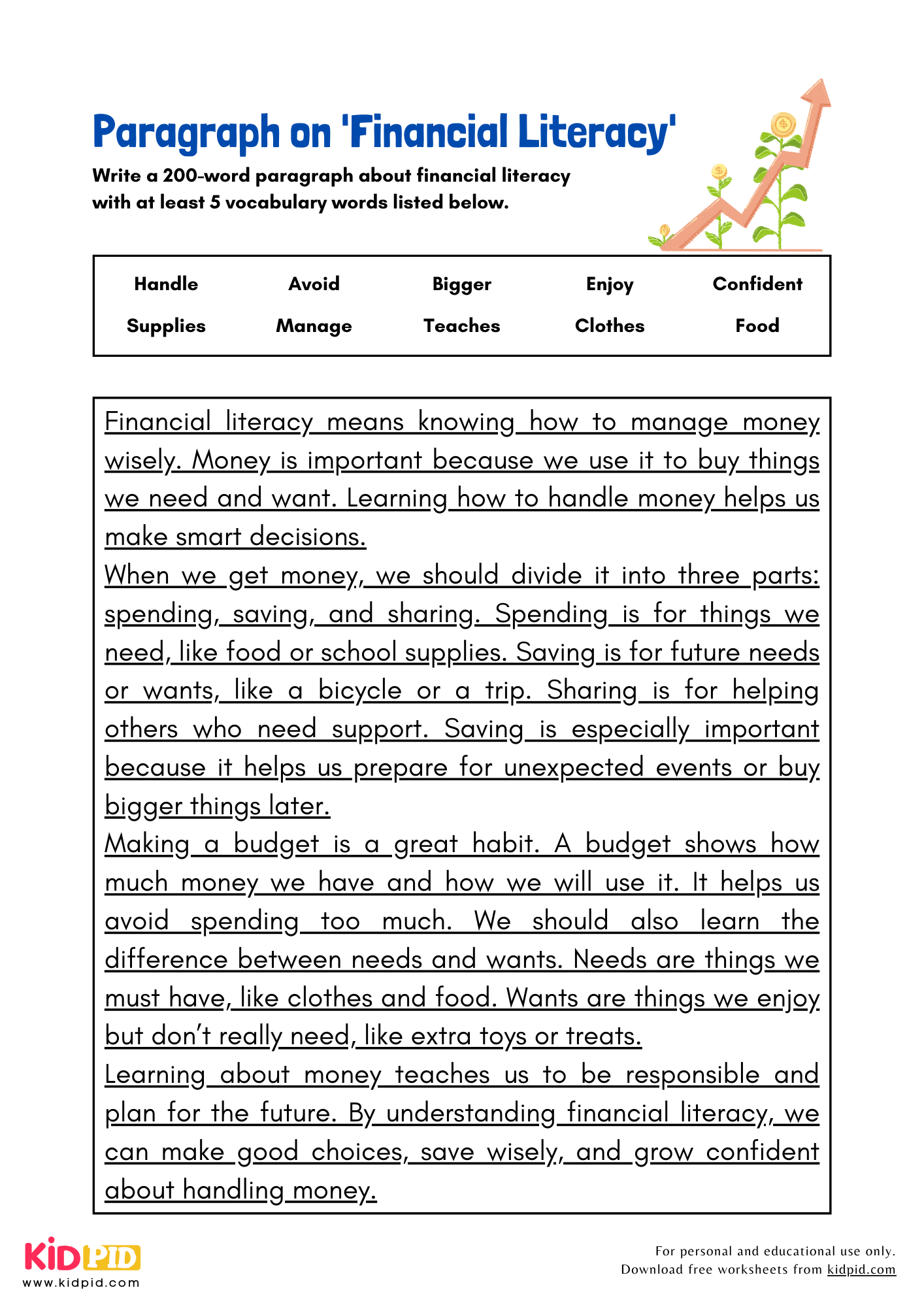
Financial literacy means knowing how to manage money wisely. Money is important because we use it to buy things we need and want. Learning how to handle money helps us make smart decisions.
When we get money, we should divide it into three parts: spending, saving, and sharing. Spending is for things we need, like food or school supplies. Saving is for future needs or wants, like a bicycle or a trip. Sharing is for helping others who need support. Saving is especially important because it helps us prepare for unexpected events or buy bigger things later.
Making a budget is a great habit. A budget shows how much money we have and how we will use it. It helps us avoid spending too much. We should also learn the difference between needs and wants. Needs are things we must have, like clothes and food. Wants are things we enjoy but don’t really need, like extra toys or treats.
Learning about money teaches us to be responsible and plan for the future. By understanding financial literacy, we can make good choices, save wisely, and grow confident about handling money.
Paragraph on ‘Financial Literacy’ in 300 Words
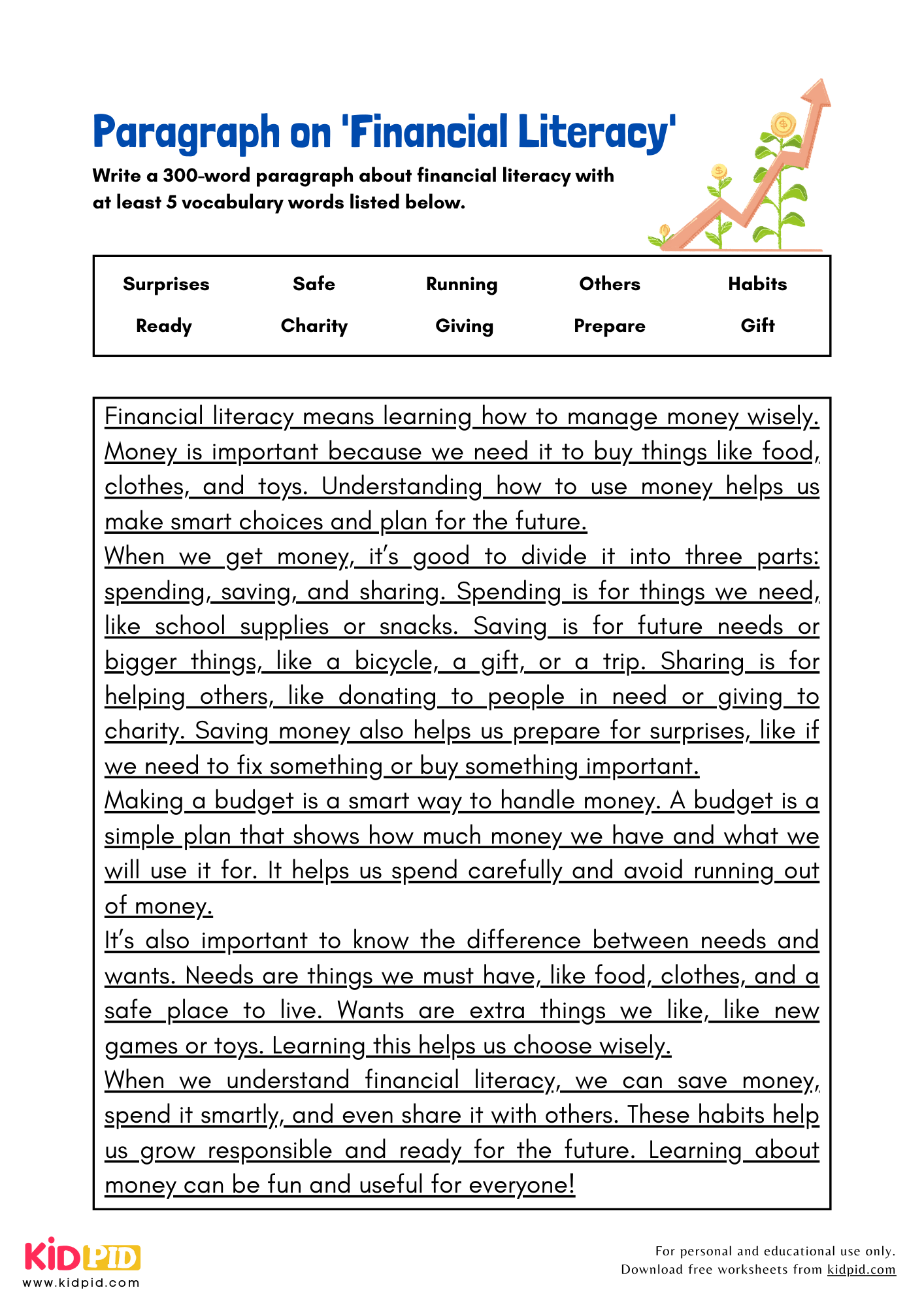
Financial literacy means learning how to manage money wisely. Money is important because we need it to buy things like food, clothes, and toys. Understanding how to use money helps us make smart choices and plan for the future.
When we get money, it’s good to divide it into three parts: spending, saving, and sharing. Spending is for things we need, like school supplies or snacks. Saving is for future needs or bigger things, like a bicycle, a gift, or a trip. Sharing is for helping others, like donating to people in need or giving to charity. Saving money also helps us prepare for surprises, like if we need to fix something or buy something important.
Making a budget is a smart way to handle money. A budget is a simple plan that shows how much money we have and what we will use it for. It helps us spend carefully and avoid running out of money.
It’s also important to know the difference between needs and wants. Needs are things we must have, like food, clothes, and a safe place to live. Wants are extra things we like, like new games or toys. Learning this helps us choose wisely.
When we understand financial literacy, we can save money, spend it smartly, and even share it with others. These habits help us grow responsible and ready for the future. Learning about money can be fun and useful for everyone!
MCQ’s on ‘Financial Literacy’
1. What does financial literacy mean?
A. Knowing how to count money
B. Knowing how to manage money wisely
C. Learning how to make toys
D. Learning to cook food
Answer: B) Knowing how to manage money wisely
Explanation: Financial literacy means understanding how to use and manage money wisely.
2. What is a budget?
A. A way to spend all your money
B. A plan showing how much money you have and how to use it
C. A shopping list
D. A list of toys
Answer: B) A plan showing how much money you have and how to use it
Explanation: A budget is a plan to manage your money properly.
3. What are the three parts money should be divided into?
A. Spending, saving, and sharing
B. Eating, playing, and working
C. Spending, losing, and sharing
D. Saving, borrowing, and spending
Answer: A) Spending, saving, and sharing
Explanation: Money should be divided into spending, saving, and sharing.
4. Why is saving money important?
A. To prepare for future needs
B. To spend it all at once
C. To avoid sharing
D. To buy unnecessary things
Answer: A) To prepare for future needs
Explanation: Saving money helps us buy things we need in the future.
5. What is the difference between needs and wants?
A. Needs are fun and wants are boring
B. Needs are essential and wants are extra things we like
C. Needs cost more and wants cost less
D. Needs are toys and wants are clothes
Answer: B) Needs are essential and wants are extra things we like
Explanation: Needs are things we must have, while wants are things we can live without.
6. What does sharing money mean?
A. Buying extra toys for yourself
B. Helping others in need
C. Spending it all
D. Keeping it unused
Answer: B) Helping others in need
Explanation: Sharing money means helping others who need support.
7. What helps avoid spending too much money?
A. Buying everything you like
B. Making a budget
C. Saving no money
D. Spending without thinking
Answer: B) Making a budget
Explanation: A budget helps manage money and avoid overspending.
8. What is an example of a need?
A. A bicycle
B. A new game
C. Food
D. A movie ticket
Answer: C) Food
Explanation: Needs are essential, like food, clothes, and shelter.
9. Where can you save your money?
A. In a piggy bank or a savings account
B. In a toy box
C. Under your bed
D. In a shopping bag
Answer: A) In a piggy bank or a savings account
Explanation: Money can be saved in a piggy bank or a savings account.
10. What does financial literacy help us do?
A. Spend all our money
B. Avoid learning about money
C. Make smart decisions about money
D. Lose track of money
Answer: C) Make smart decisions about money
Explanation: Financial literacy helps us make wise choices about money.


We trust that you found the paragraphs on the topic ‘Financial Literacy’ created by our team of skilled teachers insightful and enjoyable. Keep visiting our website and explore more paragraphs, essays, worksheets, flashcards, Quizzes and many other interactive resources. Don’t forget to follow us on YouTube & Facebook.
You may like these:
Essay on Financial Literacy
Financial literacy empowers individuals to manage money effectively, make informed decisions, and understand budgeting, saving, investing, and financial risks for long-term financial stability.
5 Most Important Money Lessons to Teach Your Kids
Teaching kids about budgeting, saving, distinguishing wants vs. needs, setting financial goals, and the value of money equips them for smart financial decisions in adulthood.
Easy DIY Piggy Bank Craft Ideas For Kids
Create fun piggy banks from jars, boxes, or plastic bottles. Decorate with vibrant colors, stickers, or personal designs to encourage saving habits in children.
The History of Money
Money evolved from bartering systems to coins, paper currency, and digital payments. It revolutionized trade, economy, and modern financial systems through centuries of innovation.


