“Waste Management” is an important topic that students may be asked to write a paragraph about in school exams. Waste management is the practice of handling trash through recycling, reusing, and reducing to keep our environment clean. Please check the various versions (in 100 words, 150 words, 200 words, and 300 words) provided below for the paragraph.
Contents
- Paragraph on ‘Waste Management’ in 100 Words for Grade 7
- Paragraph on ‘Waste Management’ in 150 Words for Grade 8
- Paragraph on ‘Waste Management’ in 200 Words for Grade 9
- Paragraph on ‘Waste Management’ in 300 Words for Grade 10
- MCQ’s on ‘Waste Management’
- 1. What is waste management?
- 2. What can waste be turned into through recycling?
- 3. What is composting?
- 4. Why is it important to manage waste properly?
- 5. Which of these is an example of reducing waste?
- 6. What is an example of reusing?
- 7. What is one benefit of recycling?
- 8. Where does waste go when it is not managed well?
- 9. What is composting used for?
- 10. What should everyone do to help manage waste?
- Importance of Waste Management
- Additional Facts of Waste Management
- You may like these:
Read This Article in Other Languages
- कचरा प्रबंधन पर अनुच्छेद (Hindi / हिंदी)
- Párrafo sobre la gestión de residuos (Spanish / Español)
- Paragraphe sur la gestion des déchets (French / Français)
- Absatz über Abfallwirtschaft (German / Deutsch)
- فقرة عن إدارة النفايات (Arabic / العربية)
- ঝুঁকি ব্যবস্থাপনা সম্পর্কে অনুচ্ছেদ (Bengali / বাংলা)
- அழுக்கு மேலாண்மை பற்றிய பத்தி (Tamil / தமிழ்)
- బతకుటుపై పేరా (Telugu / తెలుగు)
- അടുപ്പ് മാനേജ്മെന്റ്-യെക്കുറിച്ചുള്ള പാരഗ്രാഫ് (Malayalam / മലയാളം)
- فضلہ انتظام پر پیراگراف (Urdu / اردو)
- Parágrafo sobre gestão de resíduos (Portuguese / Português)
Translation Disclaimer: These links use Google Translate, an automated translation service. Translations may vary in accuracy and are provided for convenience only.
Paragraph on ‘Waste Management’ in 100 Words for Grade 7


Waste management is the process of taking care of trash. We throw away many things like food, paper, and plastic every day. When we manage waste well, it helps keep our environment clean and safe. Waste can be recycled, which means it can be used again. For example, plastic bottles can be turned into new things. Some waste is also composted, which helps plants grow. It’s important to put trash in the right bins. By reducing, reusing, and recycling, we can protect our planet and make the world a better place to live.
Paragraph on ‘Waste Management’ in 150 Words for Grade 8
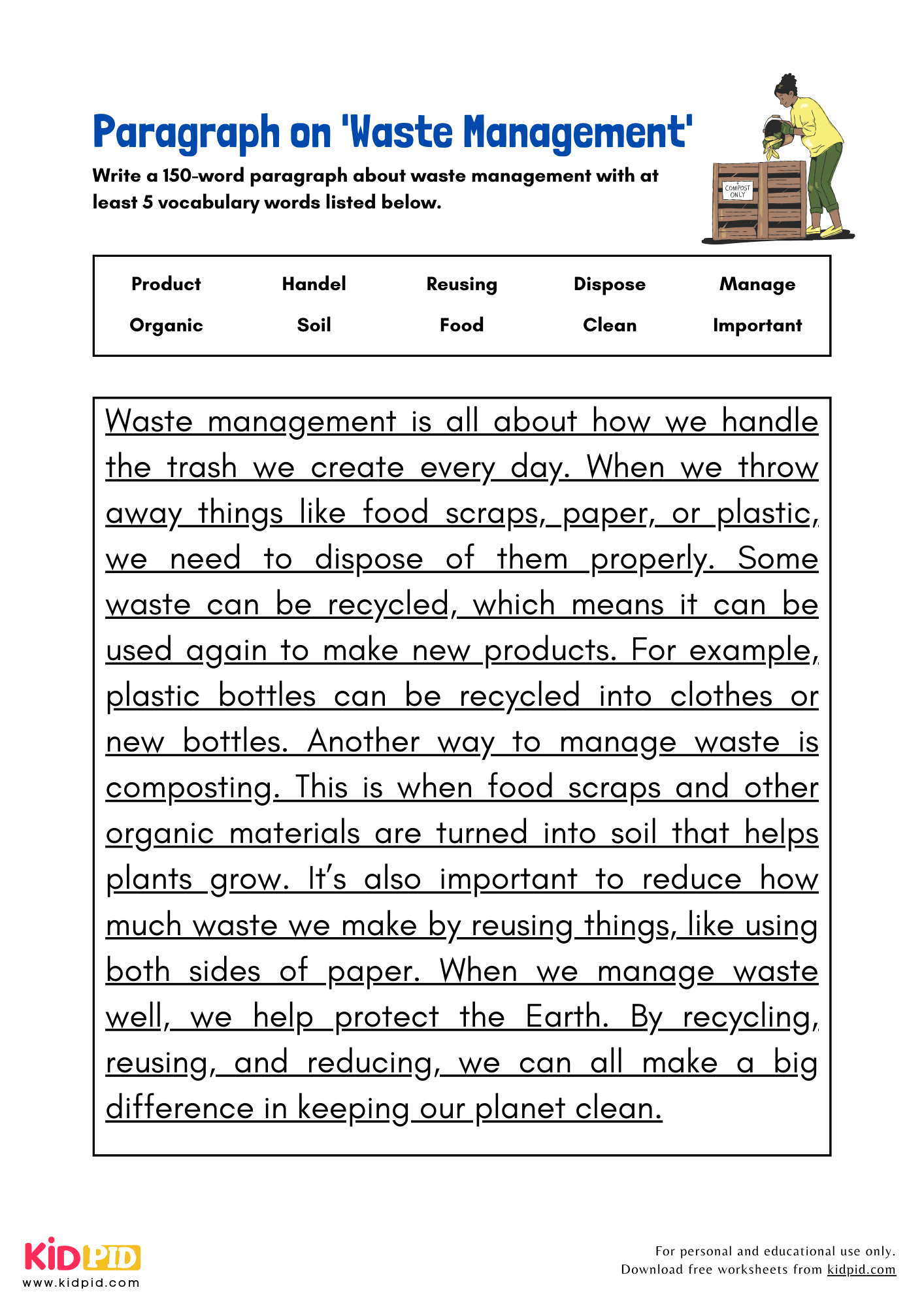
Waste management is all about how we handle the trash we create every day. When we throw away things like food scraps, paper, or plastic, we need to dispose of them properly. Some waste can be recycled, which means it can be used again to make new products. For example, plastic bottles can be recycled into clothes or new bottles. Another way to manage waste is composting. This is when food scraps and other organic materials are turned into soil that helps plants grow. It’s also important to reduce how much waste we make by reusing things, like using both sides of paper. When we manage waste well, we help protect the Earth. By recycling, reusing, and reducing, we can all make a big difference in keeping our planet clean.
Paragraph on ‘Waste Management’ in 200 Words for Grade 9

Waste management is the way we handle the trash we create every day. This is important because if we don’t manage waste well, it can harm the environment. There are three main ways to deal with waste: reduce, reuse, and recycle. Reducing means using less of things like plastic and paper. Reusing means using items again instead of throwing them away. For example, you can reuse a water bottle by refilling it. Recycling means turning old things like paper, glass, and plastic into new products. Recycling helps save resources and keeps the environment clean. Composting is another great way to manage waste. It’s when food scraps and leaves are turned into soil that helps plants grow. Good waste management can make our world a cleaner, healthier place. When we all do our part to reduce, reuse, and recycle, we help protect the planet for future generations. It’s important to teach everyone, especially kids, about how to manage waste properly so that we can all work together to keep the Earth safe.
Paragraph on ‘Waste Management’ in 300 Words for Grade 10

Waste management is how we take care of the trash we produce every day. We create a lot of waste, like paper, plastic, food scraps, and old clothes. When we don’t manage waste properly, it can cause problems for the environment. Some trash can end up in places where it shouldn’t, like the oceans or forests, harming animals and plants. To manage waste in a good way, we focus on three main actions: reducing, reusing, and recycling.
Reducing means using less of things that we throw away, like plastic bags and bottles. The less we use, the less trash we create. Reusing is when we use things again instead of throwing them away. For example, you can reuse a cardboard box to store toys or use old clothes to make new things. Recycling is turning things like paper, plastic, and glass into new products. When we recycle, we save resources and reduce waste.
Another important part of waste management is composting. Composting is when food scraps, like fruit peels and vegetable ends, are turned into soil. This soil can be used to help plants grow. By recycling and composting, we can reduce the amount of waste that goes to landfills, which are large places where trash is piled up.
It’s important for everyone to do their part in managing waste. If we all work together, we can help the planet stay clean and healthy. It’s also important to teach others, especially kids, how to manage waste so we can have a better future.
MCQ’s on ‘Waste Management’
1. What is waste management?
a) Throwing away trash
b) The process of taking care of trash
c) Making more trash
d) Recycling paper only
2. What can waste be turned into through recycling?
a) New products
b) More trash
c) Air
d) Water
Answer: a) New products
Explanation: Recycling helps turn old things into new products like clothes or bottles.
3. What is composting?
a) Turning waste into trash
b) Turning food scraps into soil
c) Throwing away food scraps
d) Burning food scraps
4. Why is it important to manage waste properly?
a) To make more trash
b) To help protect the Earth and keep it clean
c) To throw things away easily
d) To create more pollution
Answer: b) To help protect the Earth and keep it clean
Explanation: Proper waste management protects the environment and helps it stay clean.
5. Which of these is an example of reducing waste?
a) Buying more plastic bags
b) Using less plastic and paper
c) Throwing things away more often
d) Never recycling
6. What is an example of reusing?
a) Throwing away a cardboard box
b) Using a cardboard box to store toys
c) Burning old clothes
d) Using a new bottle every day
Answer: b) Using a cardboard box to store toys
Explanation: Reusing things helps reduce the amount of waste we create.
7. What is one benefit of recycling?
a) It makes the environment worse
b) It helps save resources
c) It creates more waste
d) It makes the Earth dirtier
8. Where does waste go when it is not managed well?
a) To the recycling center
b) To the oceans or forests
c) Into new products
d) To composting areas
Answer: b) To the oceans or forests
Explanation: Improper waste management can harm the environment and animals.
9. What is composting used for?
a) To turn food scraps into soil for plants
b) To burn food scraps
c) To make plastic from food scraps
d) To make new plastic bottles
10. What should everyone do to help manage waste?
a) Throw away all trash
b) Work together to reduce, reuse, and recycle
c) Only recycle plastic
d) Ignore waste problems
Answer: b) Work together to reduce, reuse, and recycle
Explanation: Managing waste properly requires everyone to reduce, reuse, and recycle.


Importance of Waste Management
- Proper waste management protects human health and the environment by preventing air, water, and soil pollution. [Source: UN Environment Programme (UNEP)]
- Safe waste handling reduces the spread of diseases and improves sanitation in communities. [Source: World Health Organization (WHO)]
Additional Facts of Waste Management
- The waste hierarchy (reduce, reuse, recycle) helps minimize landfill use and conserve natural resources. [Source: US Environmental Protection Agency]
- Global waste generation is rising, making effective waste systems essential for sustainable cities. [Source: World Bank]
- International organizations promote safe and efficient waste management practices worldwide. [Source: International Solid Waste Association]
We hope you found the paragraphs on the topic “Waste Management” informative, written by our team of knowledgeable teachers. Keep visiting our website and explore more paragraphs, essays, worksheets, flashcards, Quizzes and many other interactive resources. Don’t forget to follow us on YouTube & Facebook.
Our Content Team crafted this paragraph to offer clear instruction.
You may like these:
Garbage In Garbage Out
“Garbage In, Garbage Out” teaches proper waste management. Sorting garbage, recycling, and reducing waste keeps the environment clean and healthy for everyone to live better lives.
Recycling Sorting Activity Worksheets
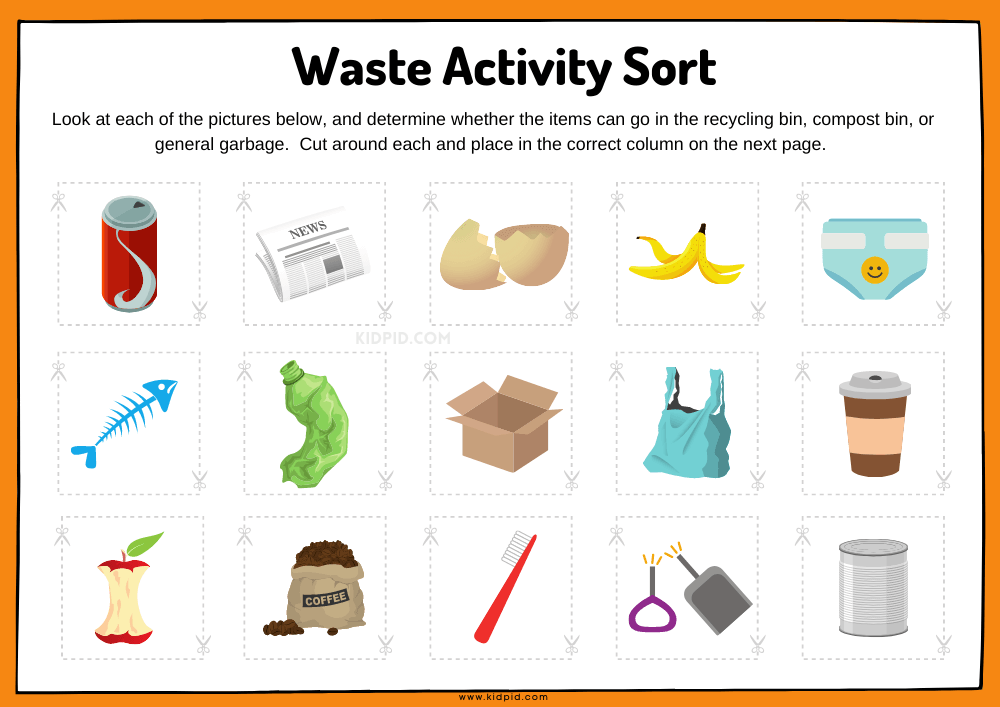

Recycling sorting worksheets help kids learn to separate waste into paper, plastic, and more. It teaches eco-friendly habits and makes recycling easy and fun.
Tips to Reduce Your Plastic Use
Use cloth bags, reusable bottles, and glass containers. Avoid single-use plastics, recycle whenever possible, and choose eco-friendly products to protect the environment and reduce plastic waste.
Essay On ‘Should plastic be banned?’
Plastic harms nature and takes years to decompose. Banning plastic can reduce pollution, save wildlife, and encourage alternatives like biodegradable materials, making the planet healthier.