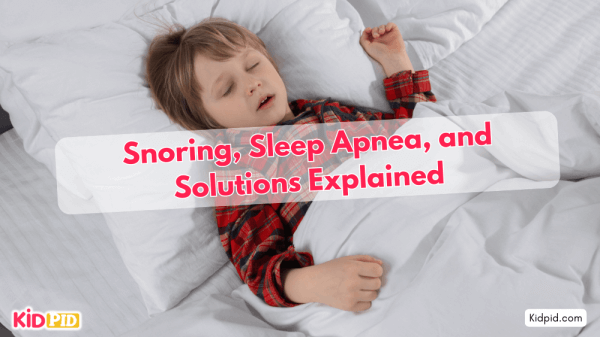
Snoring is something many people do while they sleep. Sometimes, it can be loud and keep others awake! In this guide, we’ll learn why snoring happens, what sleep apnea is, and some tips to help stop snoring.
What is Snoring: A sound made when air flows through relaxed tissues in the throat while sleeping. Can be loud and annoying to others.
What is Sleep Apnea: A sleep disorder where a person stops breathing for short moments during sleep. Can lead to feeling tired during the day and can be serious if not treated.
Common Causes of Snoring: Sleeping on your back. Being overweight or having large tonsils. Allergies or nasal congestion.
Tips to Stop Snoring: Change Sleep Position: Try sleeping on your side instead of your back.
Stay Healthy: Eat well and exercise to maintain a healthy weight.
Clear Your Nose: Use a humidifier or nasal strips to help breathe better while sleeping.
Avoid Alcohol and Smoking: These can relax throat muscles and make snoring worse.
When to See a Doctor: If snoring is loud and frequent or if you think you have sleep apnea, talk to a parent or doctor for help.
Contents
The Reasons for Snoring, Sleep Apnea, and Ways to Prevent It
Related MCQ’S
1. Why do we snore?
A) Because our throat is too tight.
B) Because our throat tissues vibrate when air passes through.
C) Because we talk in our sleep.
D) Because we sleep too long.
Answer: B) Because our throat tissues vibrate when air passes through.
Explanation: Snoring happens when the airway is partially blocked, and as air flows through, the tissues in the throat vibrate, creating the sound of snoring.
2. What can make snoring worse?
A) Sleeping on your side.
B) Sleeping on your back.
C) Eating a healthy diet.
D) Keeping a regular sleep schedule.
Answer: B) Sleeping on your back.
Explanation: Sleeping on your back can make snoring worse because it puts pressure on the airway, making it more likely to collapse and block airflow.
3. What is one of the reasons that snoring can happen?
A) Having a cold or stuffy nose.
B) Eating too much at night.
C) Sleeping in a cold room.
D) Sleeping in a dark room.
Answer: A) Having a cold or stuffy nose.
Explanation: A stuffy nose can block the airway, making snoring worse because it makes it harder for air to pass through.
4. How can obesity contribute to snoring?
A) It helps muscles in the throat stay tight.
B) It causes fat to accumulate around the neck, narrowing the airway.
C) It keeps the mouth open at night.
D) It makes people sleep less deeply.
Answer: B) It causes fat to accumulate around the neck, narrowing the airway.
Explanation: Excess body weight, especially around the neck and throat, can narrow the airway and make it more likely to collapse during sleep, causing snoring.
5. What is one way to reduce snoring?
A) Avoiding exercise.
B) Sleeping on your back.
C) Clearing your nose before bed.
D) Staying up late.
Answer: C) Clearing your nose before bed.
Explanation: Clearing your nose can help prevent congestion, allowing air to flow more easily and reducing snoring.
6. How loud can snoring be?
A) 10-20 decibels.
B) 50-100 decibels.
C) 150-200 decibels.
D) 200-300 decibels.
Answer: B) 50-100 decibels.
Explanation: Snoring can be as loud as a vacuum cleaner or chainsaw, ranging from 50 to 100 decibels.
7. What could snoring be a sign of?
A) A cold.
B) Sleep apnea.
C) A headache.
D) Overactive dreams.
Answer: B) Sleep apnea.
Explanation: Snoring can sometimes be a sign of sleep apnea, a serious condition where breathing is interrupted during sleep.
You may like these:
Why do we need sleep?


Sleep restores energy, supports brain function, boosts immunity, and repairs the body. It’s essential for memory, mood regulation, and maintaining overall physical and mental health.
10 Life-Saving Skills To Teach Your Child
Teach first aid, swimming, fire safety, self-defense, calling emergency services, road safety, basic cooking, navigation, identifying dangers, and staying calm during crises for survival.
Do fish sleep?
Yes, fish sleep, but differently than humans. They rest in a motionless state, reducing activity and metabolism, while remaining alert to potential dangers.