


In this worksheet, you’ll explore words with silent letters. These are letters you don’t pronounce when you say the word. You’ll trace the words, write them out, and practice spelling them correctly. This exercise will help you get familiar with these special letters and improve your reading and writing skills. Enjoy discovering how silent letters work and have fun learning!
[Scroll Down for Download Link]
Contents
- Silent Letter Word Worksheets For Grade 3
- Key Facts About Silent Letter Worksheets for Grade 3
- Parts/Types/Examples of Silent Letter Words
- How Does This Worksheet Work?
- Benefits of Learning About Silent Letters
- Learning Objectives
- Worksheet Instructions
- Interesting Facts About Silent Letter Vocabulary Words
- Real-Life Applications
- FAQs
Silent Letter Word Worksheets For Grade 3
Read More: Silent Letters in English
‘b’ – Silent Letter Words

‘g’ – Silent Letter Words

‘h’ – Silent Letter Words

‘k’ – Silent Letter Words

‘l’ – Silent Letter Words

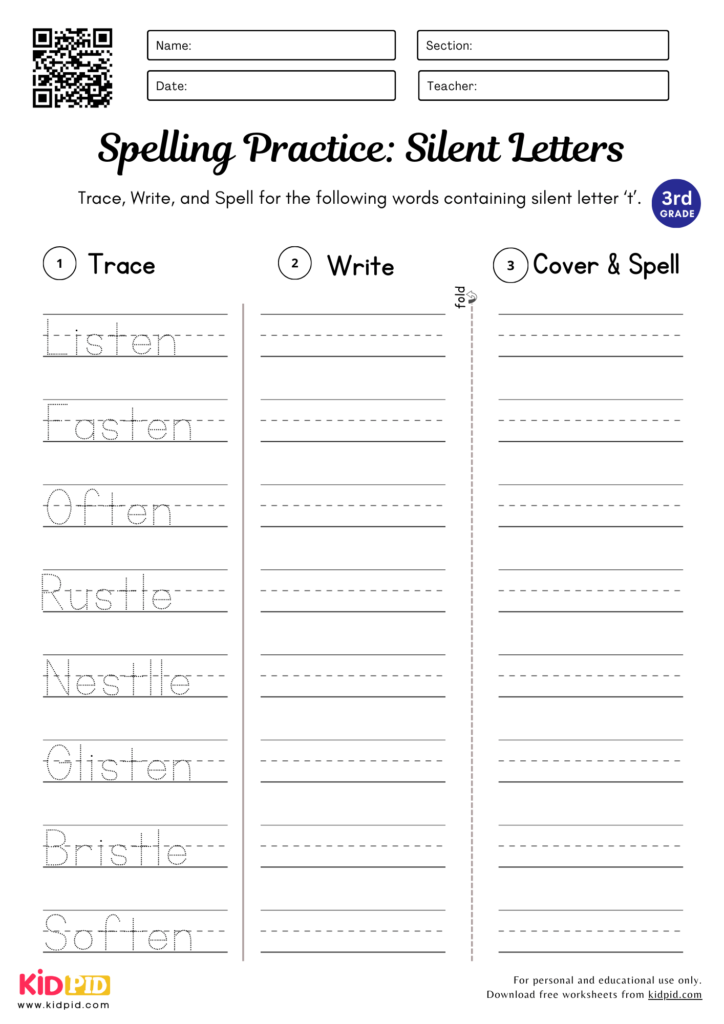
‘t’ – Silent Letter Words
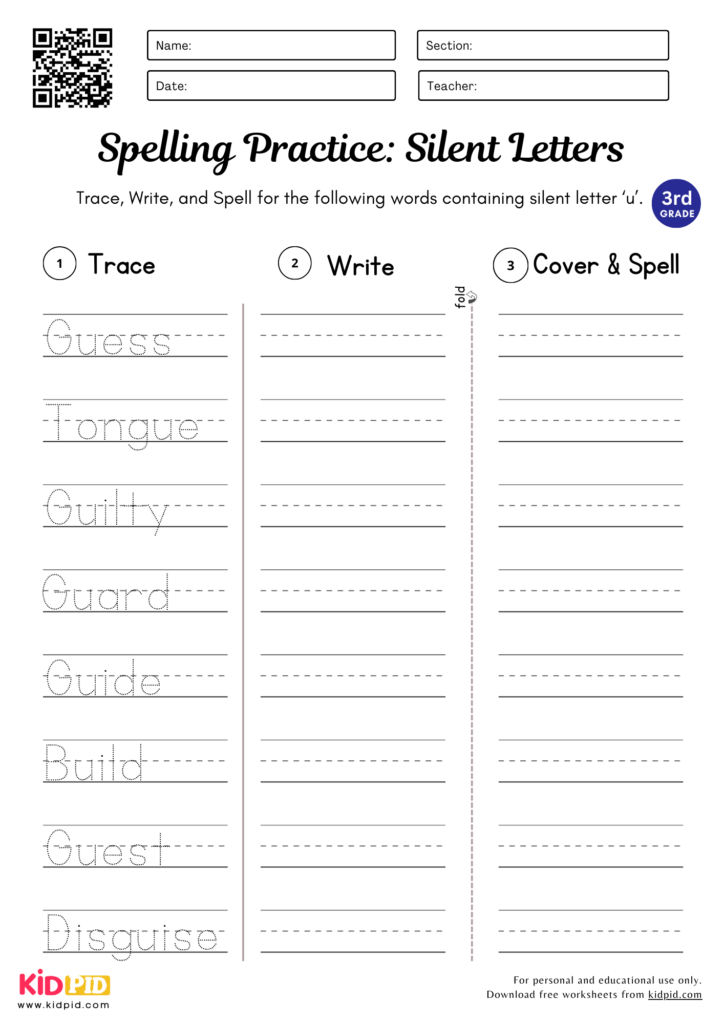
‘u’ – Silent Letter Words
Silent letters are a cornerstone of English orthography, often confusing early learners. This worksheet is specifically designed for 3rd-grade students to bridge the gap between phonetic pronunciation and correct spelling.
Silent letters appear throughout the English language in various forms. This worksheet categorizes them by the specific consonant that is omitted in pronunciation:
The worksheet utilizes a multi-sensory approach to reinforcement:
Silent letters are everywhere in daily life—on road signs, in storybooks, and on packaging. Recognizing these patterns helps children navigate complex vocabulary in textbooks and improves their ability to write essays, emails, and creative stories with fewer spelling mistakes.
Answer: English has adopted words from many different languages (like French, Latin, and German) over centuries. We kept the original spelling even as pronunciation changed over time.
Answer: While the introduction begins in the 1st or 2nd grade, 3rd grade is the ideal time to formalize this knowledge through consistent practice and worksheets.
Answer: Absolutely! They are designed for both classroom environments and independent home study.
Key Facts About Silent Letter Worksheets for Grade 3
Parts/Types/Examples of Silent Letter Words
How Does This Worksheet Work?
Benefits of Learning About Silent Letters
Learning Objectives
Worksheet Instructions
Interesting Facts About Silent Letter Vocabulary Words
Real-Life Applications
FAQs
Q1. Why are there silent letters in English?
Q2. At what age should a child start learning about silent letters?
Q3. Can these worksheets be used for homeschooling?

Discovering words containing silent letters helps Grade 3 students master tricky spelling patterns and pronunciation. These engaging worksheets improve reading accuracy, vocabulary, phonics knowledge, spelling confidence, and language development. Visit our website to explore essays, worksheets, paragraphs, flashcards, quizzes, and interactive resource materials. Follow us on YouTube & Facebook.
The Content Team created the worksheet to strengthen foundational learning.
Reviewed By Komal Singh
Read More:



