Yoga is an ancient practice that promotes harmony between the body, mind, and soul. It improves health, reduces stress, and encourages inner peace. This essay, with 10 pointers and questions, explains yoga’s benefits, importance, and how it positively influences daily life for overall well-being and balance.
Contents
10 Pointers About Yoga
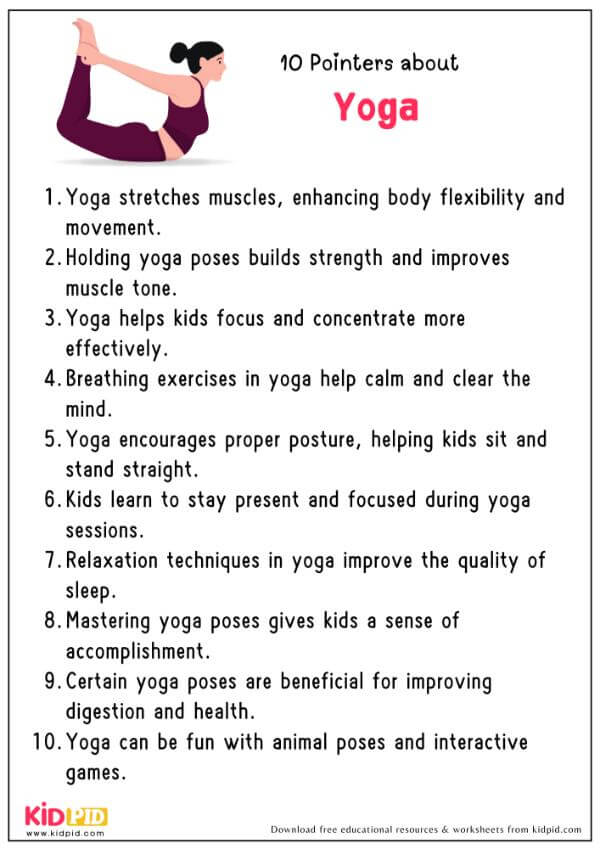
- Yoga stretches muscles, enhancing body flexibility and movement.
- Holding yoga poses builds strength and improves muscle tone.
- Yoga helps kids focus and concentrate more effectively.
- Breathing exercises in yoga help calm and clear the mind.
- Yoga encourages proper posture, helping kids sit and stand straight.
- Kids learn to stay present and focused during yoga sessions.
- Relaxation techniques in yoga improve the quality of sleep.
- Mastering yoga poses gives kids a sense of accomplishment.
- Certain yoga poses are beneficial for improving digestion and health.
- Yoga can be fun with animal poses and interactive games.
Short Essay On Yoga
Essay On Yoga in 100 Words
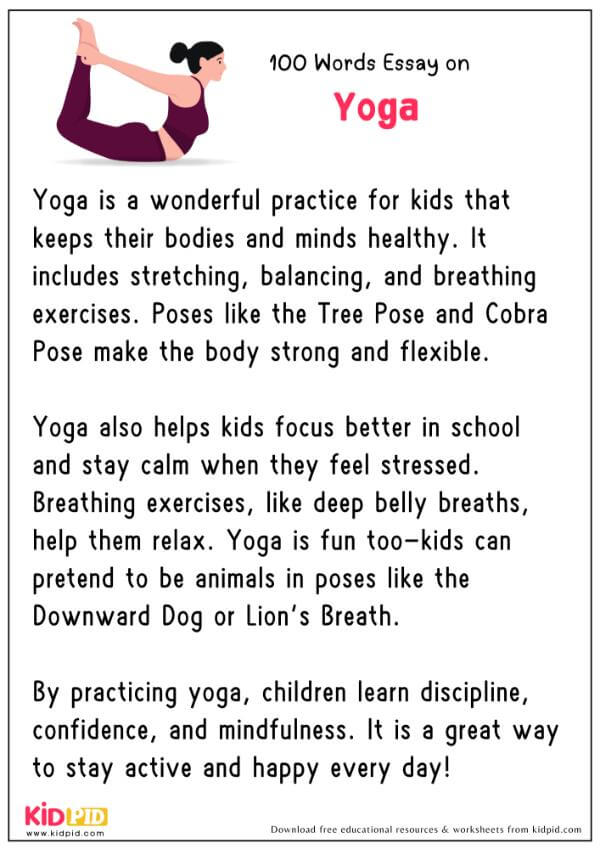
Yoga is a wonderful practice for kids that keeps their bodies and minds healthy. It includes stretching, balancing, and breathing exercises. Poses like the Tree Pose and Cobra Pose make the body strong and flexible. Yoga also helps kids focus better in school and stay calm when they feel stressed. Breathing exercises, like deep belly breaths, help them relax. Yoga is fun too—kids can pretend to be animals in poses like the Downward Dog or Lion’s Breath. By practicing yoga, children learn discipline, confidence, and mindfulness. It is a great way to stay active and happy every day!
Essay On Yoga in 200 Words
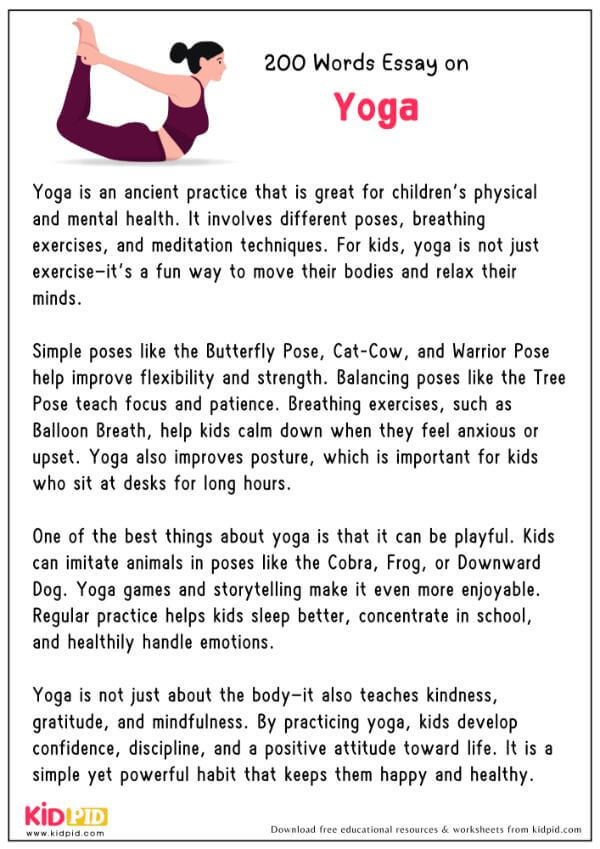
Yoga is an ancient practice that is great for children’s physical and mental health. It involves different poses, breathing exercises, and meditation techniques. For kids, yoga is not just exercise—it’s a fun way to move their bodies and relax their minds.
Simple poses like the Butterfly Pose, Cat-Cow, and Warrior Pose help improve flexibility and strength. Balancing poses like the Tree Pose teach focus and patience. Breathing exercises, such as Balloon Breath, help kids calm down when they feel anxious or upset. Yoga also improves posture, which is important for kids who sit at desks for long hours.
One of the best things about yoga is that it can be playful. Kids can imitate animals in poses like the Cobra, Frog, or Downward Dog. Yoga games and storytelling make it even more enjoyable. Regular practice helps kids sleep better, concentrate in school, and healthily handle emotions.
Yoga is not just about the body—it also teaches kindness, gratitude, and mindfulness. By practicing yoga, kids develop confidence, discipline, and a positive attitude toward life. It is a simple yet powerful habit that keeps them happy and healthy.
Essay On Yoga in 300 Words
Yoga is a fantastic activity for children that benefits their body, mind, and emotions. It is more than just exercise, it is a way to stay healthy, happy, and balanced. Yoga includes different poses (asanas), breathing techniques (pranayama), and relaxation methods that help kids grow stronger and calmer.
For physical health, yoga improves flexibility, strength, and coordination. Poses like the Downward Dog stretch the muscles, while the Plank Pose builds core strength. Balancing poses like the Eagle Pose or Tree Pose enhance stability and focus. Yoga also helps correct bad posture, which is helpful for kids who spend time sitting at school or using gadgets.
Mentally, yoga boosts concentration and memory. Breathing exercises, such as Alternate Nostril Breathing, help kids stay calm during exams or stressful situations. Meditation and mindfulness practices teach them to be present and aware of their thoughts and feelings.
Emotionally, yoga helps children manage stress, anger, and anxiety. Techniques like Lion’s Breath (roaring like a lion) release tension, while Child’s Pose provides comfort and relaxation. Yoga also encourages positive values like patience, discipline, and self-confidence.
One of the best things about yoga is that it can be fun and creative. Kids enjoy pretending to be animals in poses like the Cobra, Frog, or Butterfly. Yoga stories, games, and partner poses make it engaging. Schools and parents are increasingly introducing yoga to children because of its many benefits.
By practicing yoga regularly, kids develop healthy habits that last a lifetime. It keeps their bodies active, minds sharp, and hearts happy. Yoga is a gift that helps children grow into balanced, confident, and joyful individuals.
Long Essay On Yoga in 500 Words
Introduction
Yoga is an ancient practice that has been embraced by people of all ages for its incredible benefits. For children, yoga is not just a way to stay active, but also a tool to enhance their mental and emotional well-being. Through simple stretches, breathing exercises, and mindfulness techniques, kids can become stronger, more focused, and more balanced. In this essay, we will explore how yoga supports children’s physical health, mental development, and emotional well-being, making it a valuable practice for young learners.
Physical Benefits of Yoga
Yoga offers numerous physical benefits for children. One of the most noticeable advantages is increased flexibility. Simple poses like the Butterfly Pose and Downward Dog help stretch muscles and improve range of motion, preventing stiffness and promoting healthier movement. Additionally, yoga poses such as the Plank Pose and Cobra Pose strengthen muscles and enhance coordination. Balancing poses like the Tree Pose and Eagle Pose help kids improve their stability and focus, which are important skills for both physical activity and everyday tasks.
Another benefit of yoga is better posture. Many children today spend hours sitting in front of computers, tablets, or televisions, which can lead to poor posture. Yoga helps kids become more aware of their bodies, teaching them to stand and sit with a straight spine. This practice can be especially beneficial for children who experience discomfort from long periods of sitting in class or at home.
Mental Benefits of Yoga
Yoga can also improve children’s mental health by enhancing focus, concentration, and memory. Breathing exercises such as Balloon Breath or Alternate Nostril Breathing calm the mind and help children stay present during stressful situations like exams or presentations. These exercises teach children how to control their breath, which in turn helps them manage their emotions and focus on the task at hand. Meditation and mindfulness techniques allow kids to tune into their thoughts and feelings, promoting self-awareness and clarity.
Moreover, yoga helps improve sleep patterns. Many kids experience restless nights due to anxiety or stress, but regular yoga practice encourages relaxation, making it easier to fall asleep and stay asleep throughout the night. A good night’s sleep is crucial for a child’s growth and learning, so the calming effects of yoga are invaluable.
Emotional Benefits of Yoga
Yoga is not just about physical strength; it also helps children manage their emotions. Through mindfulness practices and breathing exercises, kids learn how to regulate their feelings and deal with negative emotions such as anger or frustration. Techniques like Lion’s Breath help children release tension and calm down during stressful moments, promoting emotional balance and a positive attitude.
Yoga also teaches children valuable life skills such as patience, self-discipline, and respect. Kids who practice yoga regularly become more confident and develop a positive self-image. The calming effects of yoga foster kindness and empathy, encouraging kids to treat others with respect and understanding. Additionally, yoga helps children develop a deeper sense of gratitude and mindfulness, which contributes to their overall emotional well-being.
Conclusion
Yoga is a powerful practice that offers a wide range of benefits for children. It promotes physical strength, flexibility, and coordination while also enhancing focus, concentration, and emotional balance. Through regular yoga practice, children develop healthier habits and cultivate positive attitudes that can last a lifetime. It helps them manage stress, improve their posture, and develop self-confidence, while also fostering a sense of mindfulness and gratitude. Whether it’s through fun animal poses, breathing exercises, or relaxation techniques, yoga provides a holistic approach to children’s well-being. As more schools and parents introduce yoga into their daily routines, children are learning the importance of staying healthy, both in body and mind. Yoga truly is a gift that helps kids grow into balanced, joyful, and confident individuals.

FAQs on Yoga
Q1. What is yoga?
Ans. Yoga is an ancient practice that involves stretching, breathing exercises, and mindfulness techniques to improve physical and mental well-being.
Q2. How does yoga improve a child’s flexibility?
Ans. Poses like the Butterfly Pose and Downward Dog help stretch muscles and improve the range of motion.
Q3. What benefits does yoga have for children’s posture?
Ans. Yoga helps children become aware of their bodies, teaching them to stand and sit with a straight spine, improving their posture.
Q4. What mental benefits does yoga provide to children?
Ans. Yoga enhances focus, concentration, and memory, and helps children manage stress, anxiety, and emotions through breathing exercises and mindfulness.
Q5. Which breathing exercises help kids stay calm?
Ans. Balloon Breath and Alternate Nostril Breathing are examples of breathing exercises that help calm kids.
Q6. How does yoga help kids manage their emotions?
Ans. Techniques like Lion’s Breath help kids release tension and manage negative emotions like anger and frustration.
Q7. How does yoga improve sleep in children?
Ans. Regular yoga practice encourages relaxation, making it easier for kids to fall asleep and stay asleep.
Q8. Why is yoga beneficial for kids who sit for long periods?
Ans. Yoga helps correct bad posture and prevent stiffness, which is important for kids who spend a lot of time sitting in class or using gadgets.
Q9. What values does yoga teach children?
Ans. Yoga teaches valuable life skills such as patience, self-discipline, respect, kindness, empathy, and gratitude.
Q10. How can yoga be made fun for children?
Ans. Yoga can be fun through animal poses, yoga games, storytelling, and partner poses, making it an engaging activity for kids.
Yoga is a path to physical fitness, mental peace, and spiritual growth. It unites body and mind, reduces stress, and promotes healthy living, making life more balanced, calm, and meaningful.
To explore more, visit our website and get more paragraphs, essays, worksheets, flashcards, Quizzes, and other interactive resources. Don’t forget to follow us on YouTube & Facebook.
You might also like
Essay – Homi J. Bhabha: The Father Of Indian Nuclear Science

Indian nuclear physicist Homi J. Bhabha revolutionized India’s science; he founded TIFR, led its nuclear energy program, and left an enduring legacy as the Father of Indian Nuclear Science.
Essay – R. K. Narayan: The Chronicler Of Indian Life

R. K. Narayan, born in 1906 in Madras, portrayed Indian life with warmth, humor, and simplicity through his fictional town Malgudi, creating timeless classics like Swami and Friends that resonate universally.
Essay – Dr. Verghese Kurien: The Father Of the White Revolution

Dr. Verghese Kurien, the Father of the White Revolution, transformed India’s dairy sector with Amul and Operation Flood, empowering rural farmers, boosting milk production, and earning Padma Bhushan and Padma Vibhushan.
Essay – Lata Mangeshkar: The Voice Of India

Lata Mangeshkar, the ‘Nightingale of India,’ enchanted hearts with over 30,000 songs across 36 languages, inspiring generations and earning timeless reverence as an icon of Indian music and culture.
Essay – Aishwarya Rai Bachchan: The Global Icon

Miss World 1994 Aishwarya Rai Bachchan shines as Bollywood’s beauty, talented actress, and philanthropist; known for films like Devdas and Dhoom 2, she inspires millions with grace and global influence