

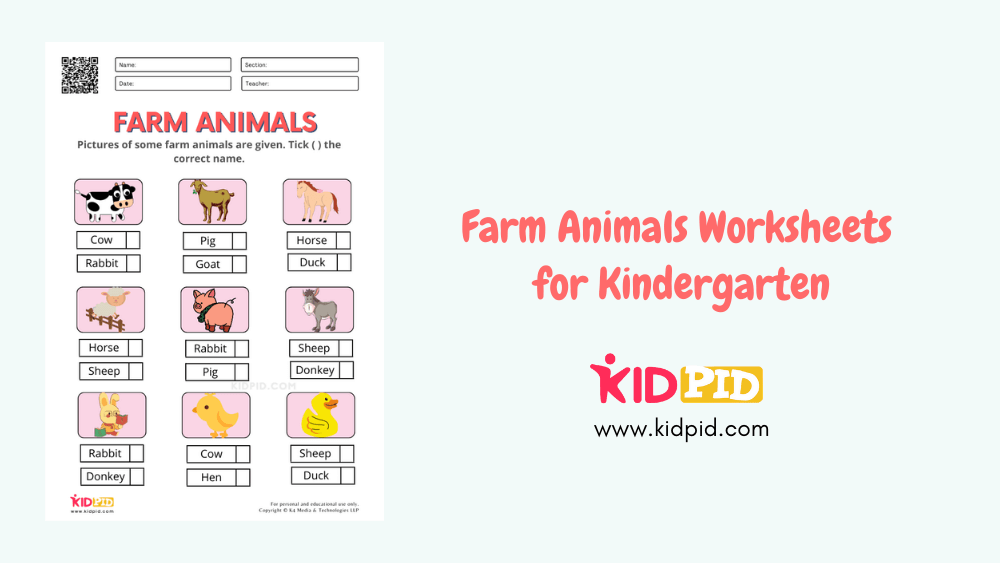
Farm animals are animals that are kept or raised on farms. A farm is an area of land that is used for growing crops and rearing animals. Farm animals help us to produce labour (physical work) and provide us with many things such as meat, eggs, milk, fur, leather, and wool. India is the country with the largest number of livestock.
Contents
- Examples of farm animals are –
- Farm Animals Worksheets for Kindergarten
- Key Facts About Farm Animals Worksheets for Kindergarten
- Parts/Types/Examples of Farm Animals Worksheets for Kindergarten
- How Do Farm Animals Worksheets for Kindergarten Work?
- Benefits of Learning About Farm Animals Worksheets for Kindergarten
- Learning Objectives
- Worksheet Instructions
- Interesting Facts About Farm Animals Worksheets for Kindergarten
- Real-Life Applications
- FAQs
- Q1. What age group are farm animal worksheets suitable for?
- Q2. What skills do these worksheets develop?
- Q3. Can farm animal worksheets be used at home?
- Q4. Why are farm animals important for kindergarten learning?
- Q5. Are farm animal worksheets useful for early reading development?
- Q6. Can teachers use these worksheets in classrooms?
- Q7. How often should children practice with these worksheets?
- Q8. Do these worksheets support STEM learning?
- Read More:
Examples of farm animals are –
Cattle
- It includes cows and bulls.
- They give us meat and milk.
- Common among villagers.
- We also worship the cow as our mother.
- Brazil has the largest cattle inventory in the world, followed by India and China.
Hen
- Comes under poultry.
- It is the most common type of poultry.
- They are easy to raise and are raised for their meat.
- It gives us Protein.
- China has the highest chicken population. It is also the leading producer of eggs worldwide.
Donkey
- It is used as a working animal.
- They are found throughout the world.
- They are social animals.
- Ethiopia has the most donkeys.
Sheep
- They are raised for their meat, milk, and mainly for wool.
- They are timid (shy) animals.
- Australia is the country with the highest sheep population.
Goat
- They are raised for their milk and meat.
- China is the leading country in goat meat production.
Duck
- They are raised for their feathers and eggs.
- They mostly come under wild animals.
- China has the most ducks.
Rabbit
- They are very easy to raise.
- They are raised for their wool, meat, and also to fertilise the crops.
- They are also raised as pets.
- China is the country with the largest volume of rabbit meat production.
Pig
- They are smart animals.
- Their skin is used for clothing, medical use, etc.
- China is home to the largest number of pigs.
Horse
- They are the fastest-running animal.
- They are raised for their meat.
- China has more horses.
We should remember that we are also protecting animals for our mother nature. So, while farming these animals, we should also take care of their health and food. We should also treat these animals with tenderness. We should provide the farm animals with clean water daily. As each animal has a different diet, we should accordingly give them sufficient food. We can keep their living area clean. Interact with your animals regularly so that they get used to you, and thus your bond will also become stronger.
Farm Animals Worksheets for Kindergarten

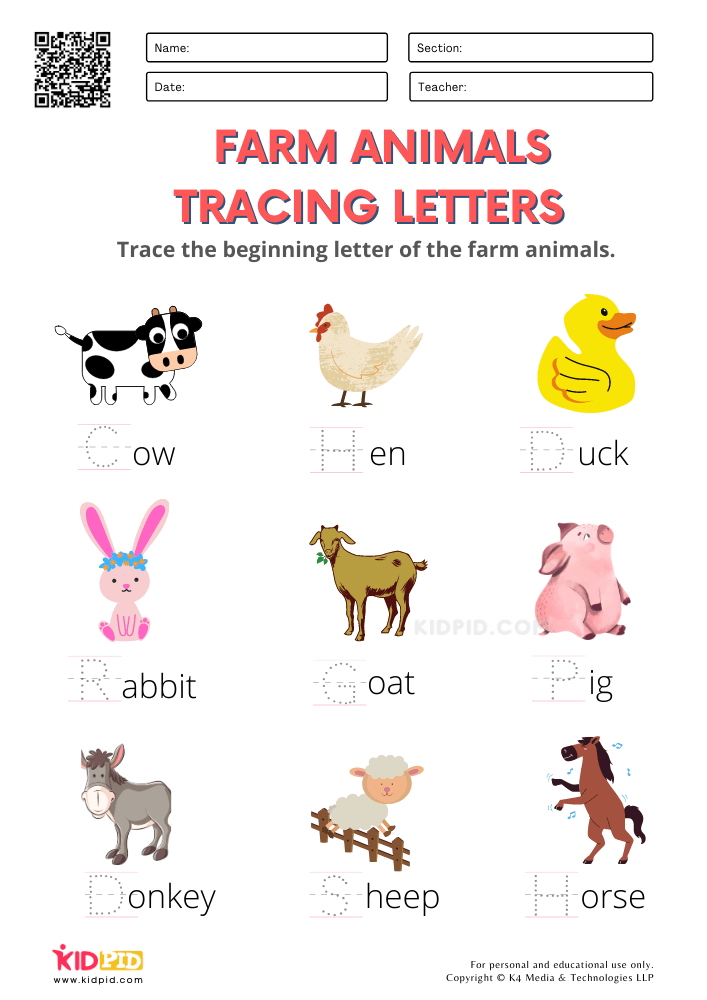
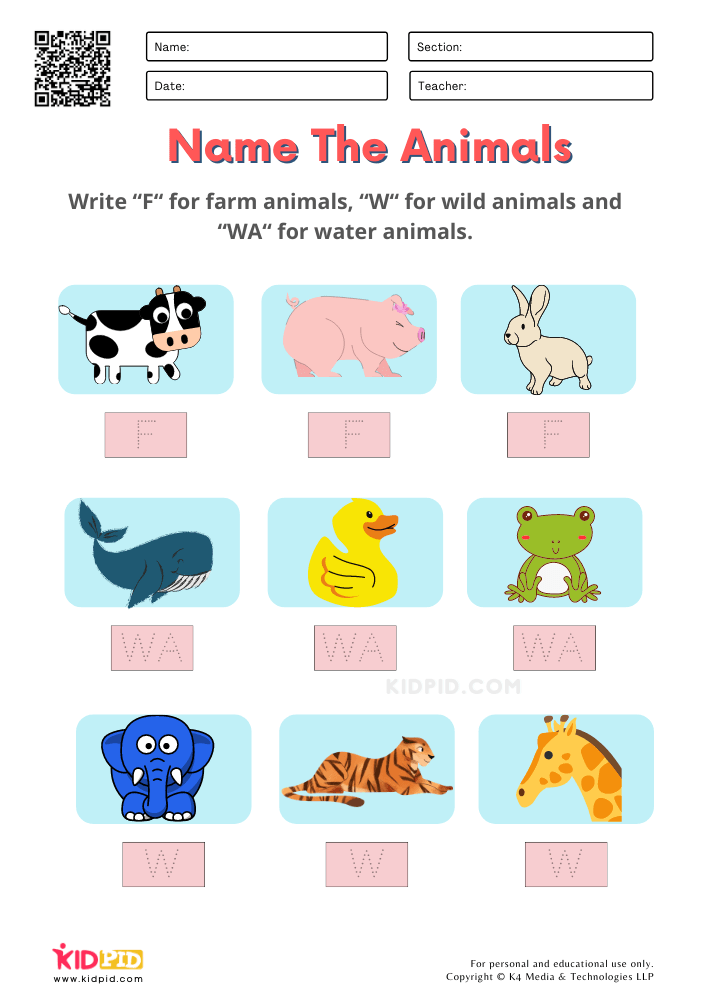
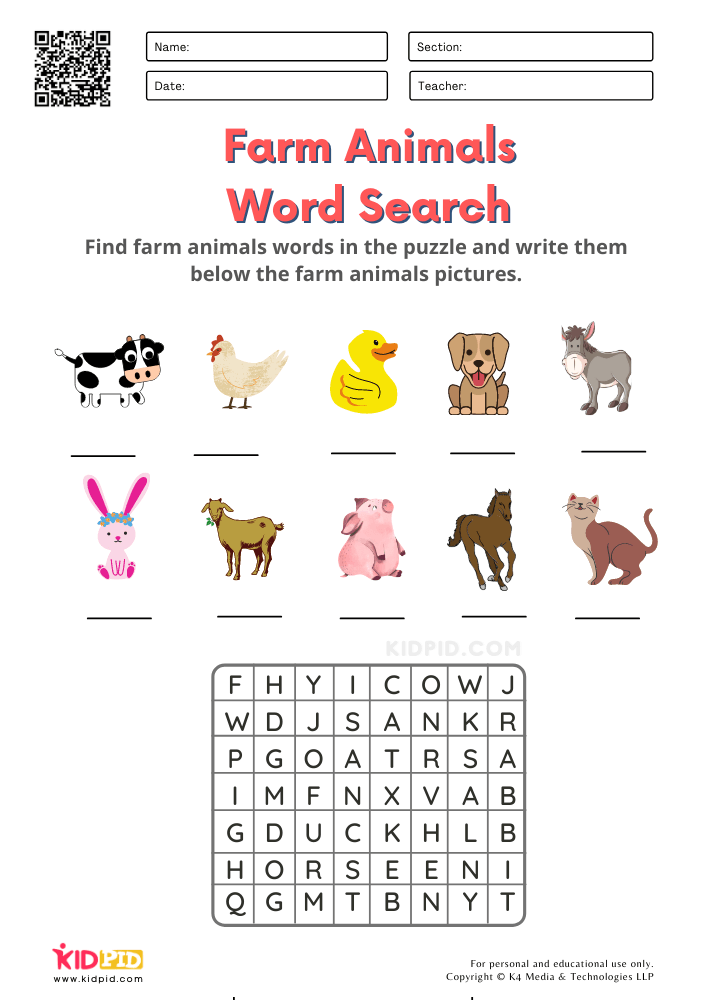
Key Facts About Farm Animals Worksheets for Kindergarten
Farm Animals Worksheets for Kindergarten are educational resources designed to introduce young children to common farm animals while developing foundational academic skills. These worksheets combine learning and fun through activities such as coloring, matching, tracing, counting, and identifying animals found on farms.
Key facts include:
- Suitable for kindergarten and preschool learners.
- Introduces common farm animals like cows, pigs, horses, sheep, chickens, and ducks.
- Supports vocabulary development and animal recognition.
- Enhances fine motor skills through tracing and coloring exercises.
- Encourages observation, critical thinking, and classification skills.
- Can be used at home, in classrooms, or during homeschooling sessions.
- Provides hands-on learning experiences that improve engagement and retention.
These worksheets help children build early science knowledge while strengthening literacy and numeracy skills in an age-appropriate way.
Parts/Types/Examples of Farm Animals Worksheets for Kindergarten
Farm animal worksheets come in various formats to support different learning objectives.
Common Types:
- Animal Identification Worksheets
- Farm Animal Coloring Pages
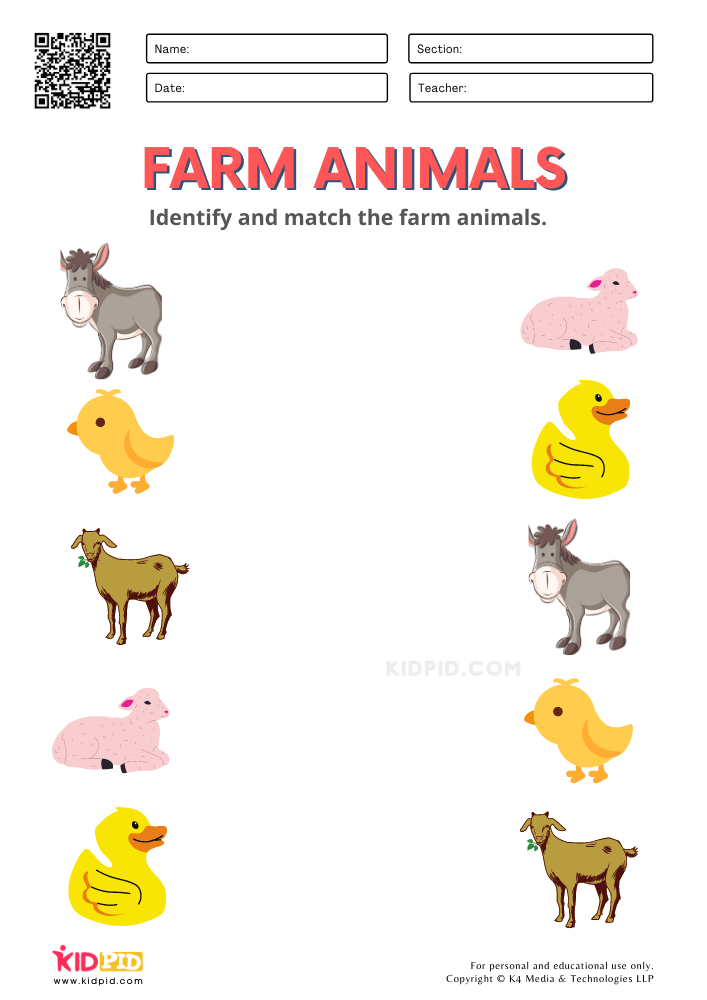
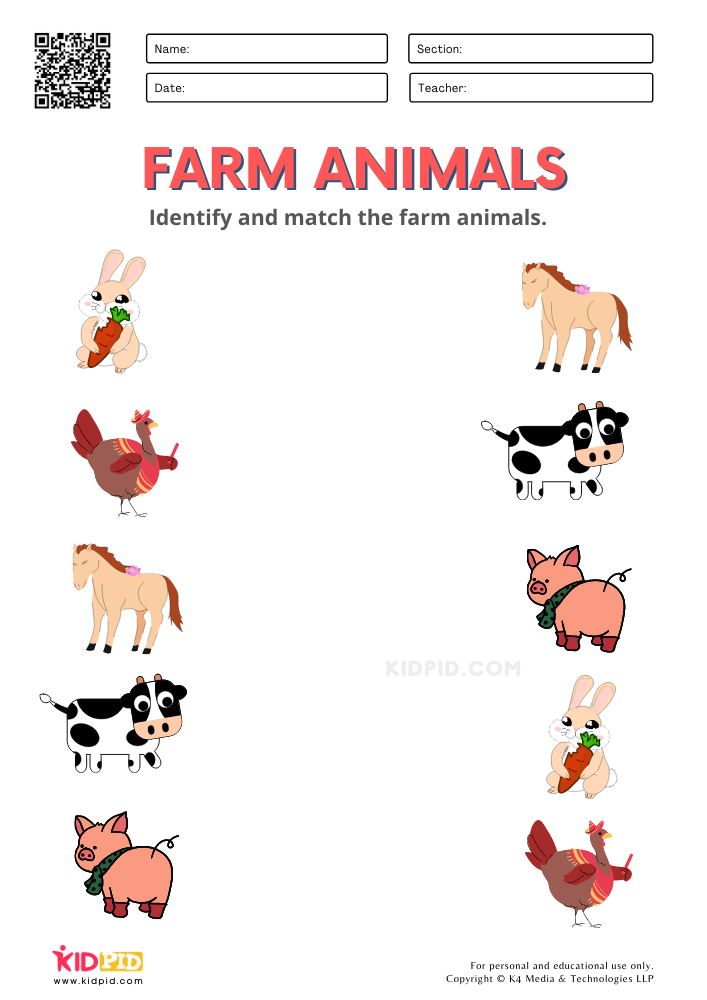
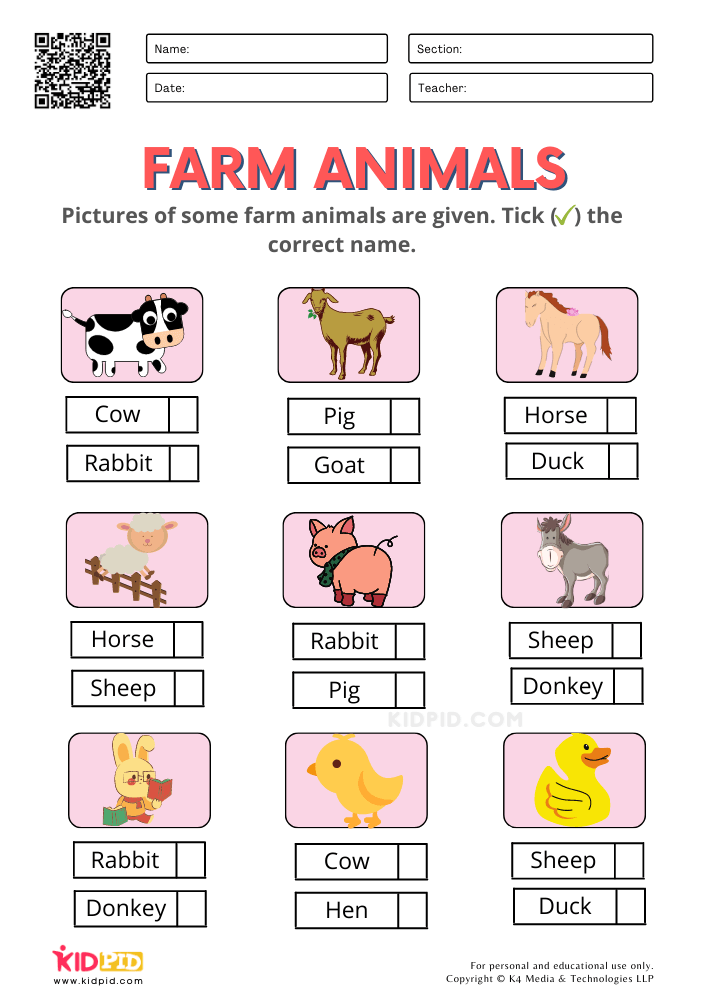
- Matching Animals to Names Activities
- Count the Farm Animals Worksheets
- Animal Sound Matching Worksheets
- Tracing Farm Animal Names
- Cut-and-Paste Farm Activities
- Farm Animal Sorting Worksheets
- Beginning Letter Recognition Activities
- Farm-Themed Mazes and Puzzles
Examples:
- Match a cow picture to the word “Cow.”
- Count the number of chickens in a picture.
- Trace the letters in the word “Horse.”
- Color all the farm animals brown or white.
- Connect animals with their babies.
These activities make learning interactive and enjoyable for young learners.
How Do Farm Animals Worksheets for Kindergarten Work?
Farm animal worksheets work by combining visual learning, hands-on practice, and repetition. Children interact with pictures, words, and activities that help them recognize and understand farm animals.
Learning Process:
- Observe pictures of farm animals.
- Identify and name each animal.
- Complete activities such as matching, tracing, counting, or coloring.
- Reinforce learning through repetition and review.
- Apply newly learned vocabulary in discussions and classroom activities.
The combination of visual and practical exercises helps children retain information more effectively while keeping them engaged.
Benefits of Learning About Farm Animals Worksheets for Kindergarten
Learning through farm animal worksheets offers multiple educational and developmental benefits.
Benefits Include:
- Improves animal recognition skills.
- Expands vocabulary and language development.
- Strengthens fine motor coordination.
- Encourages concentration and attention to detail.
- Develops early counting and math skills.
- Supports reading readiness through word recognition.
- Builds understanding of farms and agriculture.
- Enhances problem-solving and critical-thinking abilities.
- Promotes creativity through coloring and drawing activities.
- Makes science learning enjoyable and accessible.
These benefits contribute to a well-rounded early childhood education experience.
Learning Objectives
By completing Farm Animals Worksheets for Kindergarten, children should be able to:
- Identify common farm animals.
- Recognize animal names and sounds.
- Match animals with their babies.
- Improve counting and sorting abilities.
- Develop fine motor skills through tracing and coloring.
- Build basic reading and vocabulary skills.
- Understand the role of farm animals in daily life.
- Increase observation and classification skills.
- Follow directions independently.
- Strengthen cognitive and visual discrimination skills.
Worksheet Instructions
To complete the worksheets successfully, follow these simple instructions:
- Look carefully at each farm animal picture.
- Read or listen to the animal’s name.
- Follow the activity directions provided on the page.
- Trace letters and words neatly.
- Count animals carefully before writing answers.
- Match pictures with the correct names or sounds.
- Color within the lines when required.
- Ask for help if you do not recognize an animal.
- Review completed answers before moving to the next page.
- Practice regularly to improve learning outcomes.
Interesting Facts About Farm Animals Worksheets for Kindergarten
Farm animal worksheets introduce children to fascinating facts about animals and farming.
Interesting Facts:
- Cows can recognize familiar faces and remember them.
- Chickens communicate using different sounds.
- Sheep have excellent memories and can recognize faces.
- Horses can sleep both standing up and lying down.
- Ducks have waterproof feathers.
- Goats are naturally curious animals.
- Pigs are considered highly intelligent farm animals.
- Farm animals help provide food, clothing materials, and transportation in many parts of the world.
- Young children often learn animal sounds before reading animal names.
- Farm-themed learning activities increase engagement because children enjoy animals.
These facts make learning more exciting and meaningful.
Real-Life Applications
Farm animal knowledge helps children connect classroom learning to everyday life.
Real-Life Applications Include:
- Recognizing animals during farm visits.
- Understanding where food products originate.
- Learning about agriculture and farming communities.
- Identifying animal sounds in books and media.
- Building environmental awareness.
- Improving communication through animal-related vocabulary.
- Participating in science and nature lessons.
- Developing observation skills during outdoor activities.
- Enhancing storytelling and creative writing skills.
- Preparing for future lessons about ecosystems and animal habitats.
These practical connections help children understand the world around them.
FAQs
Q1. What age group are farm animal worksheets suitable for?
Answer: Farm animal worksheets are generally designed for children aged 4–6 years, including preschool and kindergarten learners.
Q2. What skills do these worksheets develop?
Answer: They develop vocabulary, animal recognition, counting, matching, tracing, coloring, and fine motor skills.
Q3. Can farm animal worksheets be used at home?
Answer: Yes. Parents can easily use these worksheets for homeschooling, homework, or additional practice.
Q4. Why are farm animals important for kindergarten learning?
Answer: Farm animals are familiar, engaging, and help introduce science, language, and math concepts enjoyably.
Q5. Are farm animal worksheets useful for early reading development?
Answer: Yes. Activities involving animal names, matching, and tracing help children recognize words and build reading readiness.
Q6. Can teachers use these worksheets in classrooms?
Answer: Absolutely. They are excellent for individual practice, group activities, learning centers, and thematic farm units.
Q7. How often should children practice with these worksheets?
Answer: Regular practice a few times each week helps reinforce concepts and improve skill development.
Q8. Do these worksheets support STEM learning?
Answer: Yes. They encourage observation, classification, counting, and scientific understanding of animals and farming environments.
Explore farm life with these Farm Animals Worksheets for Kindergarten. Fun printable activities help children identify common farm animals, expand vocabulary, strengthen observation skills, improve early science knowledge, and build confidence through interactive learning. Explore our growing library of educational paragraphs, essays, worksheets, flashcards, quizzes, and interactive learning content. Connect with us on YouTube & Facebook.
The Content Team developed this worksheet to reinforce academic growth.
Reviewed By Ishika
Read More:



