


Mastering the alphabet is a fundamental skill that underpins literacy development. This worksheet provides practice in identifying missing letter forms, helping to solidify your knowledge of the complete sequence of letters that make up the English writing system.
[Scroll Down for Download Link]
Contents
- Fill in the Blanks With Missing Letters
- Key Facts About Fill in Missing Alphabet Letters Worksheet
- Parts/Types/Examples of Fill in Missing Alphabet Letters Worksheet
- How Does the Fill-in Missing Alphabet Letters Worksheet Work?
- Benefits of Learning About Fill in Missing Alphabet Letters Worksheet
- Learning Objectives
- Worksheet Instructions
- Interesting Facts About Fill in Missing Alphabet Letters Worksheet
- Vocabulary Words
- Real-Life Applications
- FAQs
- Q1. What is a Fill in Missing Alphabet Letters Worksheet?
- Q2. Who can use this worksheet?
- Q3. Why are missing letter activities important?
- Q4. Can children complete these worksheets independently?
- Q5. Do these worksheets help with reading readiness?
- Q6. How often should children practice alphabet worksheets?
- Q7. Are these worksheets suitable for homeschooling?
- Q8. What skills are developed through these activities?
- You may like these:
- Shamrock Alphabet Hunt Worksheets for Kids
- Christmas Alphabet Rescue Sheets for Little Learners
- Alphabetical Order Word Sorting Fun
- ABC Posters to Decorate and Learn
- Colorful Alphabet Poster for Toddlers & Preschoolers
Fill in the Blanks With Missing Letters
Read More: Find the Letters Worksheets for Preschool


Key Facts About Fill in Missing Alphabet Letters Worksheet
The Fill in Missing Alphabet Letters Worksheet is an educational resource designed to help young learners recognize, recall, and sequence letters of the alphabet. Children identify missing letters in alphabetical order and complete the sequence correctly. These worksheets are commonly used in preschool, kindergarten, and early elementary classrooms to strengthen foundational literacy skills.
Key Facts:
- Focuses on alphabet recognition and sequencing.
- Suitable for preschool, kindergarten, and Grade 1 students.
- Supports early reading and writing development.
- Enhances memory, concentration, and letter identification.
- Can be used at home, in classrooms, or during homeschooling activities.
Parts/Types/Examples of Fill in Missing Alphabet Letters Worksheet
Parts of the Worksheet
- Alphabet sequences with missing letters.
- Uppercase letter practice.
- Lowercase letter practice.
- Mixed-case activities.
- Answer spaces for students to complete.
Types of Worksheets
- Uppercase Missing Letters
- Example: A, B, __, D, E
- Lowercase Missing Letters
- Example: a, __, c, d, e
- Mixed Alphabet Practice
- Example: A, __, C, d, __
- Beginning Letter Missing
- Example: __, B, C, D
- Multiple Missing Letters
- Example: A, __, __, D, E
How Does the Fill-in Missing Alphabet Letters Worksheet Work?
These worksheets present children with alphabet sequences that contain one or more missing letters. Students must identify the correct letter by recalling the alphabetical order. Through repeated practice, learners strengthen letter recognition and develop confidence in understanding alphabet patterns.
The activity encourages active participation and allows children to practice independently or with teacher guidance. As students progress, worksheets may include larger gaps or mixed uppercase and lowercase letters for added challenge.
Benefits of Learning About Fill in Missing Alphabet Letters Worksheet
- Improves alphabet recognition skills.
- Builds strong pre-reading foundations.
- Enhances memory retention.
- Develops sequencing and pattern recognition abilities.
- Increases confidence in literacy activities.
- Supports handwriting preparation.
- Encourages independent learning.
- Makes alphabet practice engaging and interactive.
Learning Objectives
By completing these worksheets, learners will:
- Identify uppercase and lowercase letters.
- Understand alphabetical order.
- Recognize missing letters within sequences.
- Improve visual discrimination skills.
- Develop concentration and attention to detail.
- Strengthen early literacy readiness.
- Build confidence in reading-related activities.
Worksheet Instructions
- Look carefully at the alphabet sequence.
- Find the letter that is missing.
- Write the correct letter in the blank space.
- Check the alphabetical order after completing the sequence.
- Repeat for all questions on the worksheet.
- Review your answers when finished.
Interesting Facts About Fill in Missing Alphabet Letters Worksheet
- The English alphabet contains 26 letters.
- Alphabet sequencing is one of the first literacy skills children learn.
- Recognizing letter order helps prepare children for dictionary and indexing skills later in life.
- Alphabet games and worksheets improve cognitive development in young learners.
- Early alphabet mastery contributes to stronger reading success in elementary school.
- Children often learn letters faster through visual and hands-on activities.
Vocabulary Words
Understanding these terms can help learners complete the worksheet successfully:
- Alphabet – A set of letters used in a language.
- Letter – A symbol representing a sound.
- Uppercase – Capital letters such as A, B, and C.
- Lowercase – Small letters such as a, b, and c.
- Sequence – An order in which items are arranged.
- Missing Letter – A letter that has been removed from a sequence.
- Recognition – Identifying something correctly.
- Pattern – A repeated arrangement or order.
Real-Life Applications
Learning alphabet sequences has many practical uses in everyday life:
- Finding names in alphabetical lists.
- Using dictionaries efficiently.
- Organizing books in libraries.
- Searching contacts in digital devices.
- Understanding classroom labels and charts.
- Improving reading and spelling skills.
- Completing forms and educational assessments.
Strong alphabet knowledge forms the foundation for future language learning and academic success.
FAQs
Q1. What is a Fill in Missing Alphabet Letters Worksheet?
Answer: It is an educational worksheet where students complete alphabet sequences by identifying and writing missing letters.
Q2. Who can use this worksheet?
Answer: Preschoolers, kindergarten students, Grade 1 learners, parents, teachers, and homeschool educators can use it.
Q3. Why are missing letter activities important?
Answer: They improve alphabet recognition, sequencing skills, memory, and early literacy development.
Q4. Can children complete these worksheets independently?
Answer: Yes. Most worksheets are designed for independent practice, though younger learners may benefit from guidance.
Q5. Do these worksheets help with reading readiness?
Answer: Absolutely. Understanding letter order and recognition is a key step toward reading and writing proficiency.
Q6. How often should children practice alphabet worksheets?
Answer: Regular short practice sessions, such as 10–15 minutes a few times per week, are effective for reinforcing learning.
Q7. Are these worksheets suitable for homeschooling?
Answer: Yes. They are excellent resources for homeschooling, classroom instruction, tutoring, and extra practice at home.
Q8. What skills are developed through these activities?
Answer: Students develop alphabet recognition, sequencing, concentration, visual discrimination, memory, and foundational literacy skills.

Filling in the blank spaces on the “Fill in Missing Alphabet Letters” worksheet has reinforced your familiarity with the full range of letters that comprise the alphabet. Strengthening this foundational language skill is an important step in building strong reading and writing abilities. Enhance every learning journey with engaging quizzes, worksheets, essays, flashcards, paragraphs, and interactive resources from our website. Follow us on YouTube & Facebook.
The Content Team prepared this worksheet to promote practice-focused learning.
Reviewed By Sheereen
You may like these:
Shamrock Alphabet Hunt Worksheets for Kids
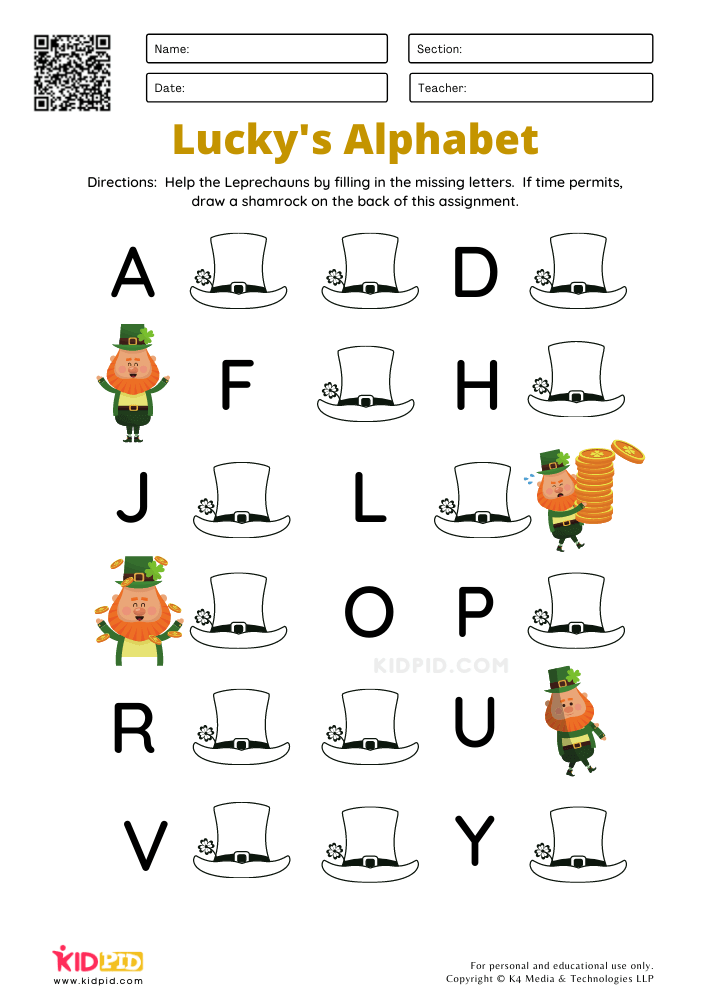
Kids find missing letters in a shamrock-themed adventure! A fun, festive way to practice the alphabet and bring a little St. Patrick’s luck to learning.
Christmas Alphabet Rescue Sheets for Little Learners
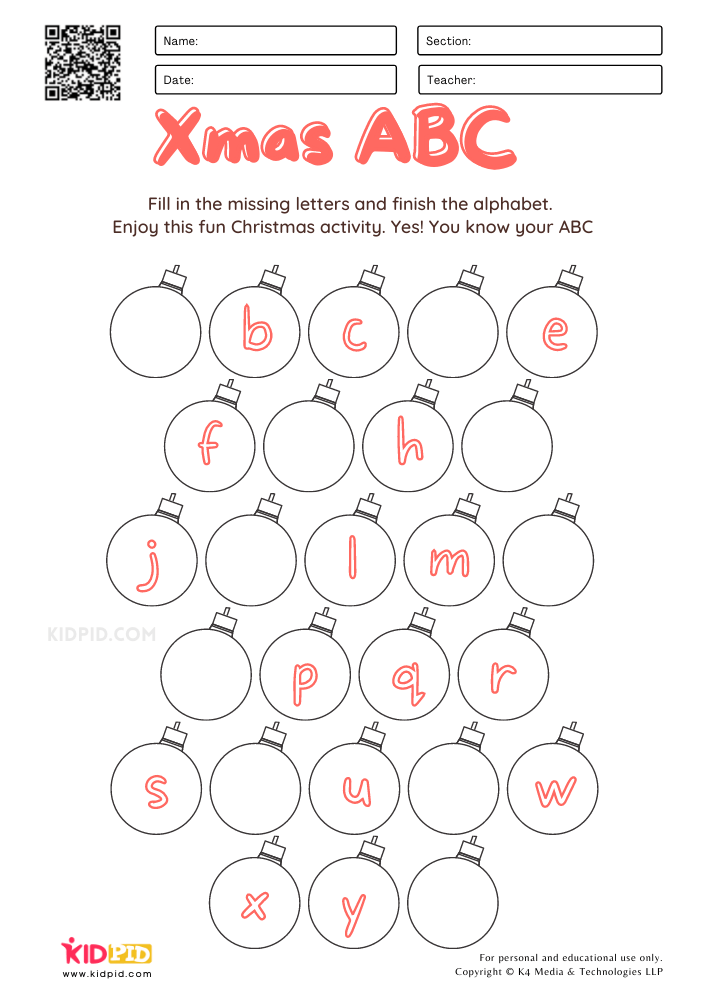
Santa needs help! Kids save the day by finding missing letters in this festive Christmas-themed worksheet—perfect for holiday fun and alphabet practice.
Alphabetical Order Word Sorting Fun
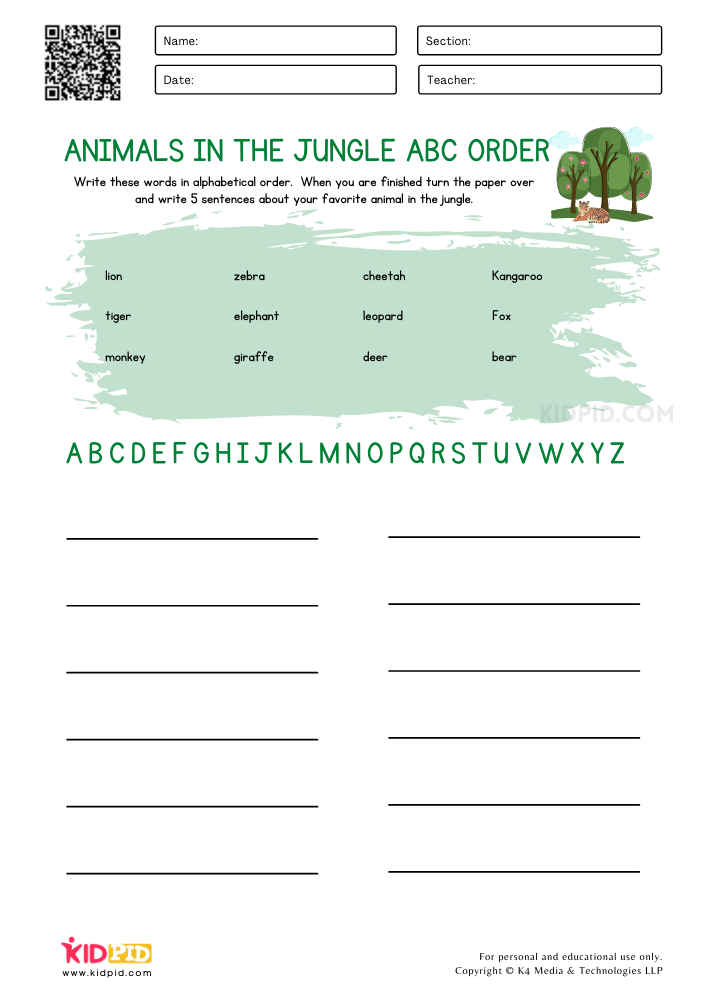
Sort words into order like a word detective! This activity makes organizing letters and words exciting, helping kids master alphabetical skills with ease.
ABC Posters to Decorate and Learn
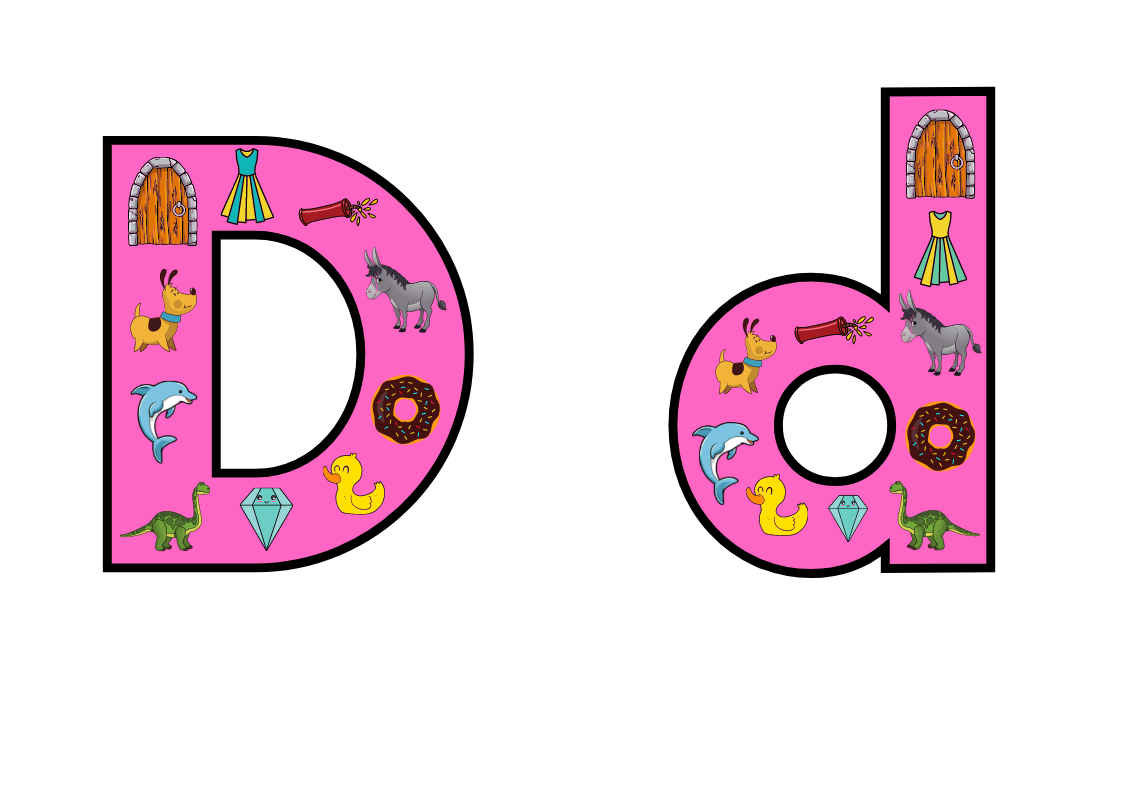
Bright, bold posters turn any space into an alphabet wonderland. Perfect for decorating while teaching kids their ABCs in a colorful, engaging way.
Colorful Alphabet Poster for Toddlers & Preschoolers

A vibrant poster to spark curiosity! Toddlers and preschoolers explore letters through colors, making A to Z as fun as playing with crayons.



