


Stars, galaxies, and the Milky Way are fascinating parts of our vast universe. Stars light up the sky, galaxies hold billions of stars, and the Milky Way is the galaxy we call home. Learning about them helps us understand space and our place in this endless cosmic journey.
[Scroll Down for Download Link]
Contents
Exploring Stars, Galaxies, and Our Milky Way – Science Journal for Kids
Read More: Paragraph on ‘What is the Milky Way Galaxy?’


Yesterday, after eating dinner, my mom and I went outside to look up at the sky.

It was amazing; there were many stars, some very big and others very small.

I wonder if the difference is because some stars are closer and others are farther away.

Well, not always, there can be two stars at the same distance, but maybe one is smaller than the other

So the biggest among them is the Sun because it’s huge?

No, we see it as the biggest because it is much closer to us than the other stars.

In fact, the stars can vary in size, some being larger or smaller than our Sun.
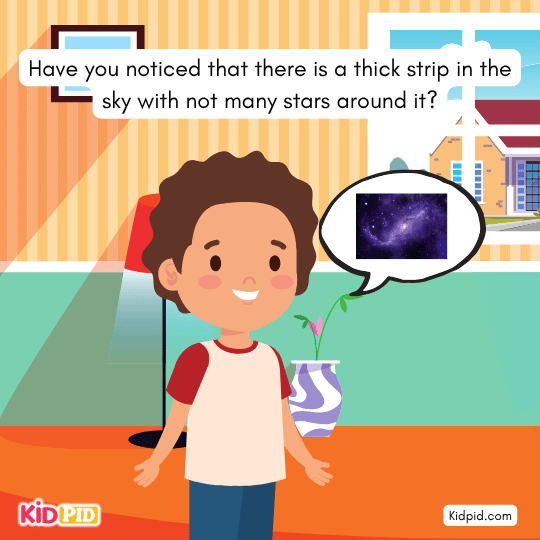
Have you noticed that there is a thick strip in the sky with not many stars around it?

I think you are talking about the Galaxy belt. Even though we cannot see them, there are millions of stars in seemingly empty areas.

I think it would be beneficial to remember the lessons learned in school regarding this topic.
We have already learned in previous classes that our solar system is made up of the Sun, the central star. Do you remember how many stars there are in the entire universe?
There are so many that it’s impossible to count them all.
The stars we can see are all part of the Milky Way galaxy, which is where our solar system is located. Galaxies are huge clusters of stars, dust, and gas that come in various sizes and shapes.

Some are of Elliptical galaxies

Others are irregular galaxies

And other galaxies are spiral like our Milky Way

Are all galaxies very far away from one another?

Since the universe is so big, we need to measure distances in light years instead of miles. Even if we could travel in a rocket, it is impossible to travel these distances.
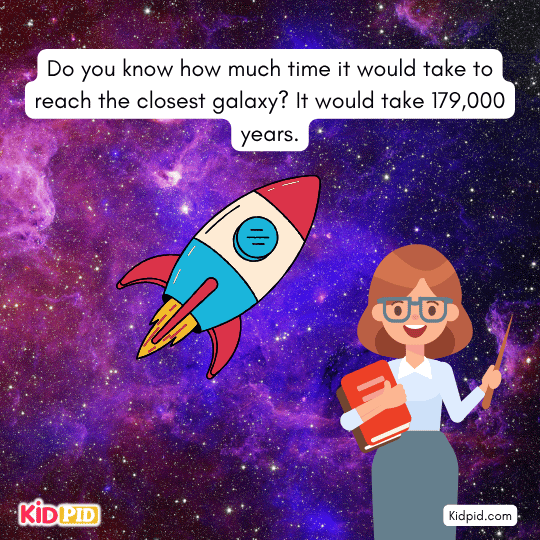
Do you know how much time it would take to reach the closest galaxy? It would take 179,000 years.

On a night with no clouds, you can see a large galaxy in the sky called Andrómeda. It is very big and can be seen easily, and looks like a small patch of light.

Did you know that the solar system is located close to the limits of our galaxy?

I understand why the sky was filled with a blue glow on that lovely evening.

Actually, as the solar system is on the limit of what we see is the arm of the galaxy
As the solar system is on the limit, what we see is the arm of the galaxy.

The universe is full of wonders like stars, galaxies, and the Milky Way. Stars shine brightly, galaxies hold countless stars, and the Milky Way is where our solar system lives. Understanding them helps us discover more about space and our place in this incredible and endless cosmic world.
You may like this:
Paragraph on ‘The Formation of Galaxies’

Informative paragraph on the formation of galaxies: explains gravity, star formation, clustering, cosmic evolution and structure. Keywords: galaxy formation, gravity, star formation, cosmic evolution.
How many stars are there?
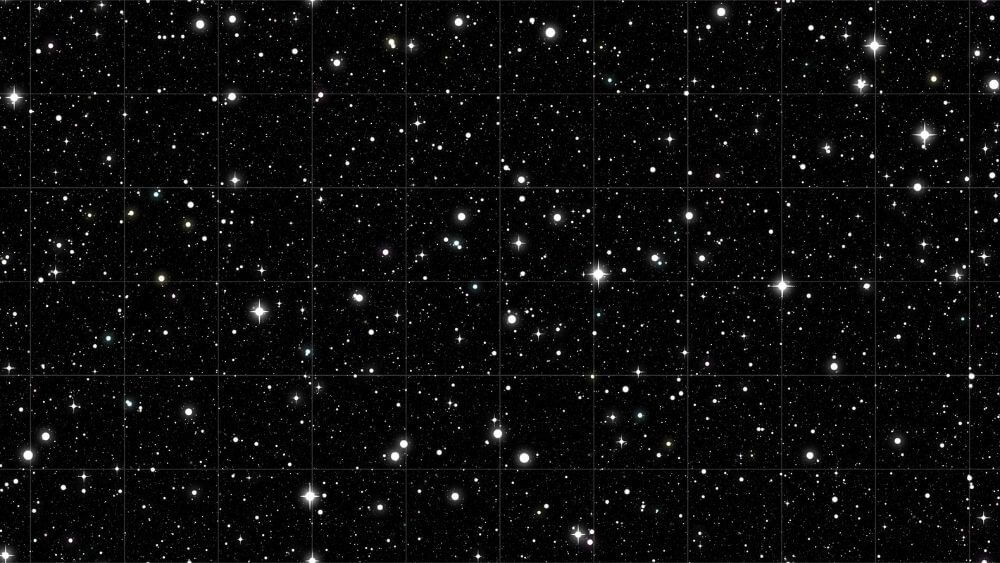
Informative article exploring how many stars exist: explains estimates, galaxy counts, astronomy methods, scale, and cosmic perspective. Keywords: stars, universe, astronomy.
Know About Your Solar System
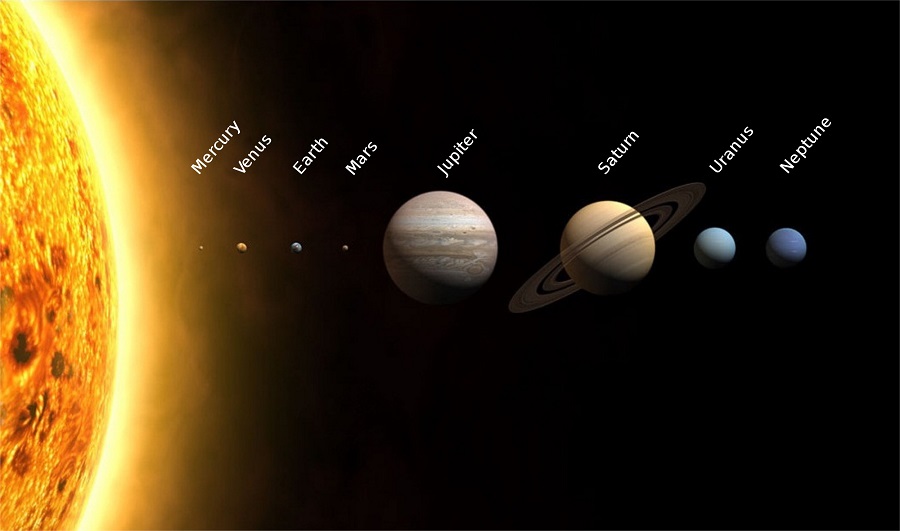
Engaging Solar System guide: explores planets, sun, moons, asteroids, comets, relative sizes—introduces space exploration basics. Keywords: solar system, planets, space.
Solar System Flashcard Sheets
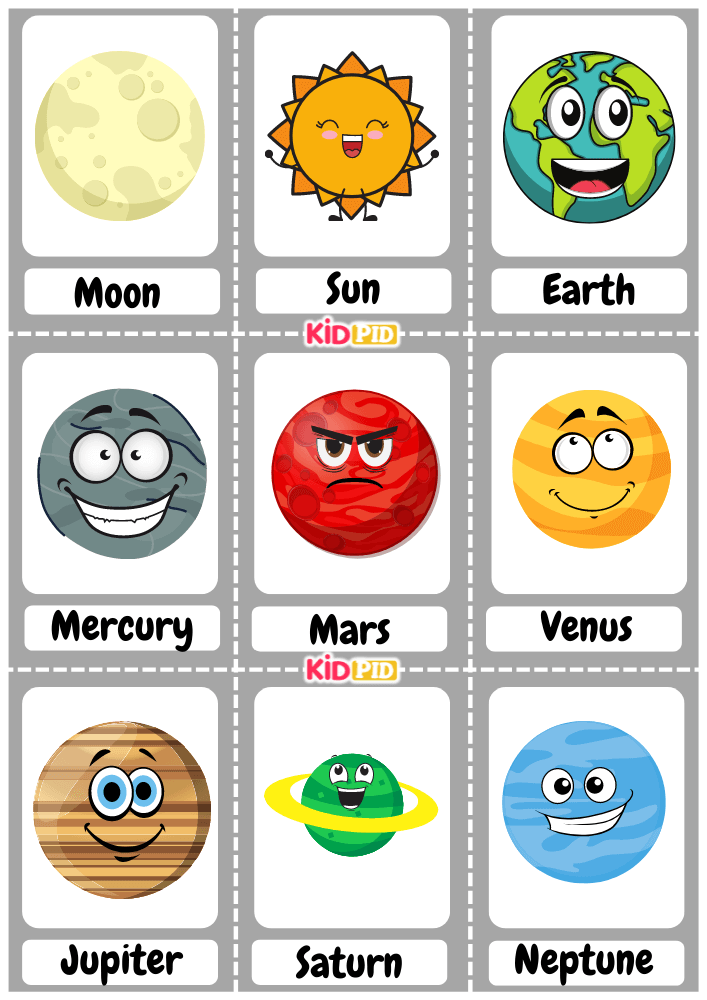
Engaging Solar System flashcard sheets: colorful visuals of planets, moons, sun, and asteroids for interactive learning. Keywords: solar system, flashcards, planets, space.
Paragraph on ‘What is a Black Hole?’

Informative paragraph explaining what a black hole is: gravity collapse, event horizon, singularity, light absorption, and astronomical phenomena. Keywords: black hole, gravity, singularity, event horizon.



