
Ants are fascinating creatures that live in large colonies and play important roles in nature. One interesting behavior of ants is called an ant mill, which happens when ants get stuck in a circle and can’t stop moving. Understanding how this happens and learning about the life cycle of ants can help us appreciate these tiny, hardworking insects.
- Ant Mills: Sometimes ants can get lost and follow each other in a never-ending circle, which is called an ant mill. This happens when ants rely too much on following the scent of other ants and lose track of their path.
- Life Cycle of Ants: Ants go through four stages in their life cycle:
- Egg: A tiny, round egg that hatches into a larva.
- Larva: The larva looks like a little worm and is fed by worker ants.
- Pupa: The pupa is a resting stage where the larva turns into an adult ant.
- Adult: Adult ants can be queens, workers, or males, each with different jobs in the colony.
- Ant Colony: Ants live in large colonies where each ant has a special job. Worker ants gather food, care for the queen, and protect the colony. The queen lays eggs, and male ants mate with her.
- Importance of Ants: Ants are helpful in nature because they clean up waste, help plants grow by spreading seeds, and break down organic matter in the soil.
Explore ant mills and the stages of an ant’s life.
Related MCQ’S
1. What is the first stage of an ant’s life?
a) Cocoon
b) Egg
c) Adult
d) Pupa
2. What do worker ants do during the larval stage?
a) Build nests
b) Care for and feed the larvae
c) Fight predators
d) Lay eggs
3. What happens when ants form an ant mill?
a) They gather food
b) They go to sleep
c) They form a loop or circle
d) They fight each other
4. Why should we avoid breaking an ant’s trail?
a) It can confuse them
b) It can cause an ant mill
c) It can hurt the ants
d) All of the above
5. What should you do if you see ants in a loop?
a) Leave them alone
b) Create a gap to break the loop
c) Kill the ants
d) Follow the ants
You may like these:
Why are ants so busy?
Ants are busy because they work collectively to build nests, gather food, care for young, and protect their colony, ensuring survival and efficiency.
How do ants communicate?
Ants communicate using pheromones, touch, and sound. These signals help them share information about food, danger, and navigation, fostering cooperation within the colony.
Frogs and Their Life Cycle
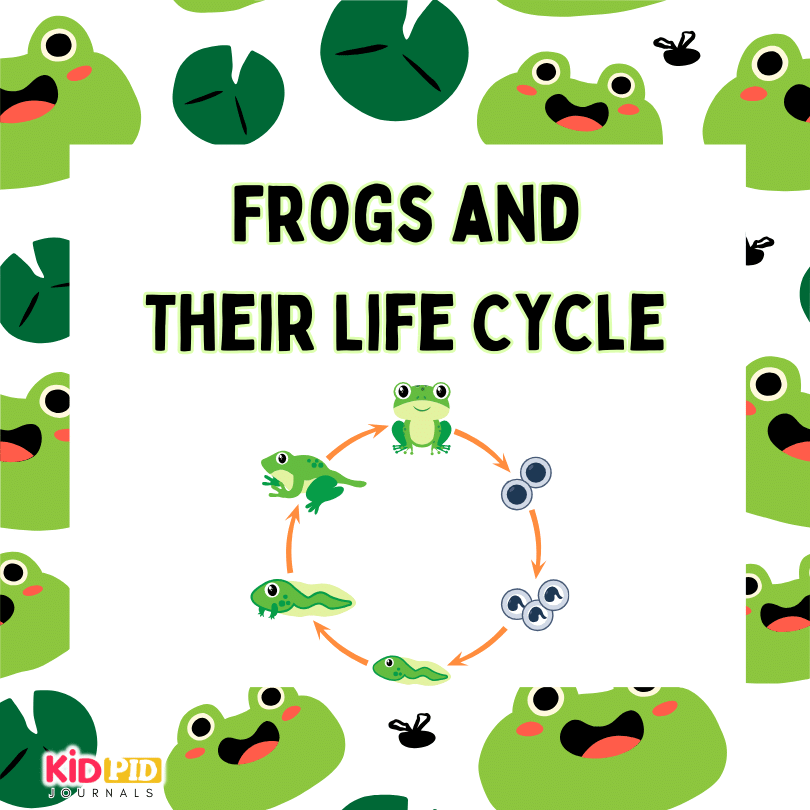
Frogs have a fascinating life cycle: eggs hatch into tadpoles, grow limbs, develop lungs, lose tails, and transform into adult frogs through metamorphosis.