Look at each picture and think of a word that means the opposite. Use the word bank to help you find the right antonym. Write the opposite word below each picture. This fun activity will help you learn about antonyms and improve your vocabulary. Get ready to challenge your mind and discover new words!

[Scroll Down for Download Link]

Look At The Picture and Write Their Antonyms

Read More: Alphabet Writing Practice Printables

Antonyms Writing Worksheet for Grade 1

  • unripe -> ripe
  • wrong -> right
  • ancient -> modern
  • weak -> strong
  • sour -> sweet
  • solid -> liquid

Antonyms Writing Worksheet for Grade 1

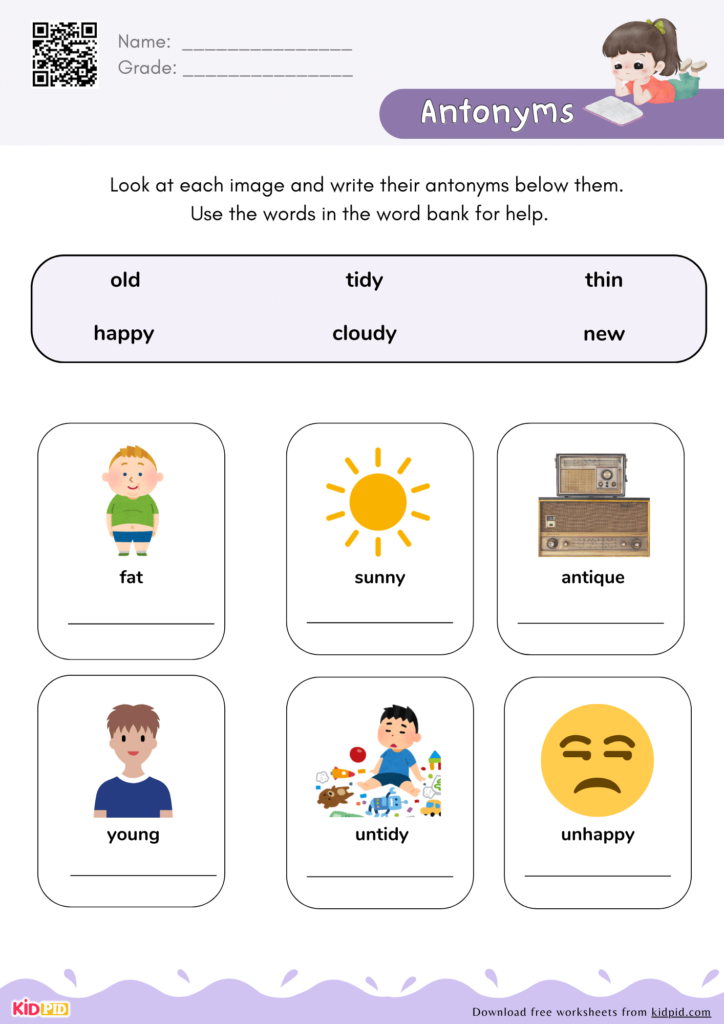
  • fat -> thin
  • sunny -> cloudy
  • antique -> new
  • young -> old
  • untidy -> tidy
  • unhappy -> happy

Antonyms Writing Worksheet for Grade 1

  • sharp -> dull
  • tiny -> giant
  • victory -> defeat
  • visible -> invisible
  • waste -> conserve
  • top -> bottom

Antonyms Writing Worksheet for Grade 1

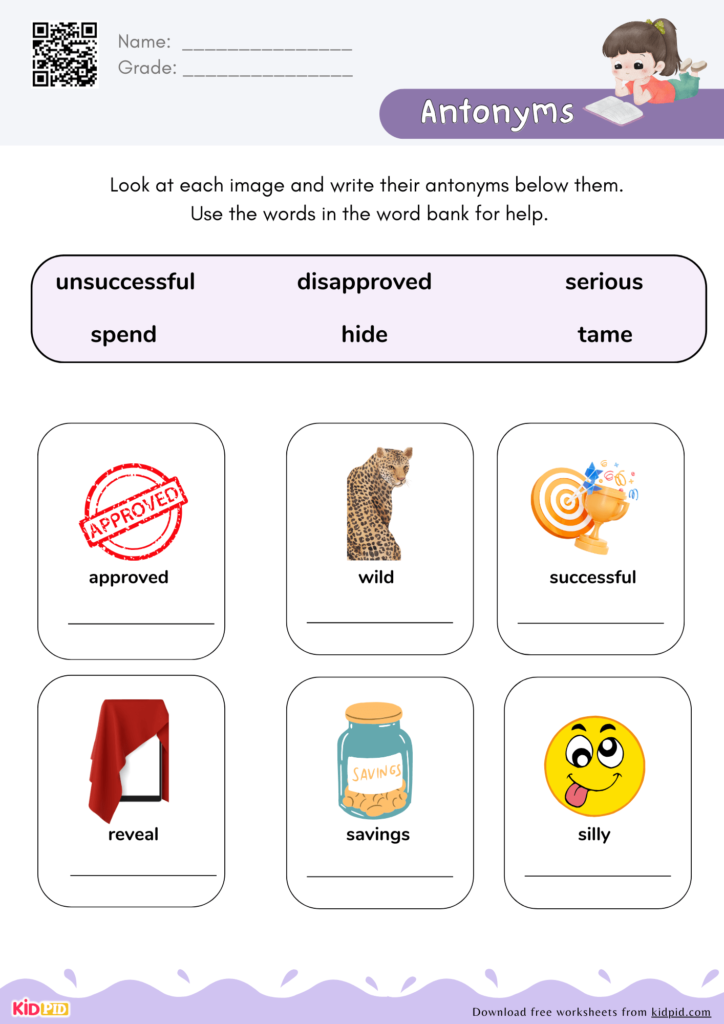
  • approved -> disapproved
  • wild -> tame
  • successful ->unsuccessful
  • reveal -> hide
  • savings -> spend
  • silly -> serious

Key Facts About Antonyms Writing Worksheet for Grade 1

The Antonyms Writing Worksheet for Grade 1 is designed to help young learners understand words with opposite meanings. Antonyms are an important part of vocabulary development because they improve reading comprehension, writing skills, and communication. Through engaging exercises, children learn to identify, match, and write opposite words such as hot–cold, big–small, and happy–sad. These worksheets support early language learning and encourage students to think critically about word meanings. Regular practice helps children expand their vocabulary and build confidence in both speaking and writing activities.

Parts/Types/Examples of Antonyms Writing Worksheet for Grade 1

The worksheet may include several activities that help students recognize and use antonyms effectively.

Types of Activities

  • Matching antonyms
  • Writing opposite words
  • Fill-in-the-blank exercises
  • Picture-based antonym identification
  • Sentence completion activities

Examples of Antonyms

  • Big – Small
  • Hot – Cold
  • Fast – Slow
  • Up – Down
  • Open – Closed
  • Happy – Sad
  • Day – Night
  • Clean – Dirty
  • Full – Empty
  • Tall – Short

These examples help children understand how opposite words are used in everyday language.

How Does the Antonyms Writing Worksheet for Grade 1 Work?

The worksheet introduces students to pairs of opposite words through simple exercises. Children may be asked to match words, identify antonyms from pictures, or write the opposite of a given word. As they complete each activity, they strengthen their understanding of word relationships and improve vocabulary retention. The gradual progression from recognition to writing helps students apply antonyms independently in sentences and conversations.

Benefits of Learning About Antonyms: Writing Worksheet for Grade 1

Learning antonyms provides several educational advantages for young learners:

  • Expands vocabulary and language skills
  • Improves reading comprehension
  • Enhances writing abilities
  • Develops critical thinking and word association skills
  • Strengthens communication and speaking confidence
  • Supports grammar and sentence construction
  • Encourages creative expression through varied word choices

Learning Objectives

By completing this worksheet, students will:

  • Identify common antonym pairs
  • Understand the meaning of opposite words
  • Use antonyms correctly in writing activities
  • Improve vocabulary development
  • Strengthen reading and comprehension skills
  • Build confidence in language usage
  • Apply opposite words in everyday conversations

Worksheet Instructions

  1. Read each word carefully.
  2. Think about the word with the opposite meaning.
  3. Match antonym pairs where required.
  4. Write the correct opposite word in the blank space.
  5. Use picture clues to identify antonyms.
  6. Complete all activities neatly.
  7. Review your answers after finishing the worksheet.

Interesting Facts About Antonyms Vocabulary Words

  • The word “antonym” comes from Greek words meaning “opposite name.”
  • Antonyms help readers understand word meanings more easily.
  • Many stories use antonyms to create contrast between characters or events.
  • Learning antonyms improves both speaking and writing skills.
  • Opposite words are commonly used in daily conversations.
  • Antonyms help children describe things more clearly and accurately.
  • Understanding antonyms strengthens overall language development.

Real-Life Applications

Antonyms are used in many everyday situations, including:

  • Describing weather conditions such as hot and cold
  • Giving directions like up and down
  • Comparing objects as big or small
  • Understanding classroom instructions
  • Improving storytelling and creative writing
  • Building stronger communication skills
  • Enhancing reading comprehension in books and passages

Learning antonyms helps children express ideas more clearly in school and daily life.

FAQs

Q1. What are antonyms?

Answer: Antonyms are words that have opposite meanings, such as happy and sad or fast and slow.

Q2. Why should Grade 1 students learn antonyms?

Answer: Learning antonyms helps children expand vocabulary, improve comprehension, and strengthen communication skills.

Q3. How do antonym worksheets help children?

Answer: They provide practice through engaging activities that reinforce word meanings and vocabulary development.

Q4. What are some easy antonyms for beginners?

Answer: Examples include big–small, hot–cold, day–night, open–closed, and tall–short.

Q5. Can antonyms improve writing skills?

Answer: Yes. Antonyms give students more word choices, making their writing clearer and more descriptive.

Q6. How often should children practice antonyms?

Answer: Regular practice through worksheets, reading, and conversations helps children remember and use antonyms effectively.

This Antonyms Writing Worksheet for Grade 1 helps children learn opposite words while improving vocabulary, spelling, and writing skills. It builds language confidence, strengthens word understanding, and makes early English practice fun, interactive, and educational. Find worksheets, flashcards, essays, quizzes, paragraphs, and interactive resources for kids on our website. Stay connected through YouTube & Facebook.

The Content Team developed this worksheet to encourage learning practice.

Reviewed By Manpreet Kaur

Read More:

About the Author

Content Team

Kidpid Content Team is a team of experienced educators, curriculum researchers, and child-focused content creators specializing in early childhood and primary education. The team develops high-quality, research-based worksheets, learning activities, and educational articles aligned with age-appropriate learning standards. Every resource is carefully reviewed to ensure accuracy, clarity, and educational value, making Kidpid a trusted platform for parents, teachers, and schools worldwide.

View All Articles