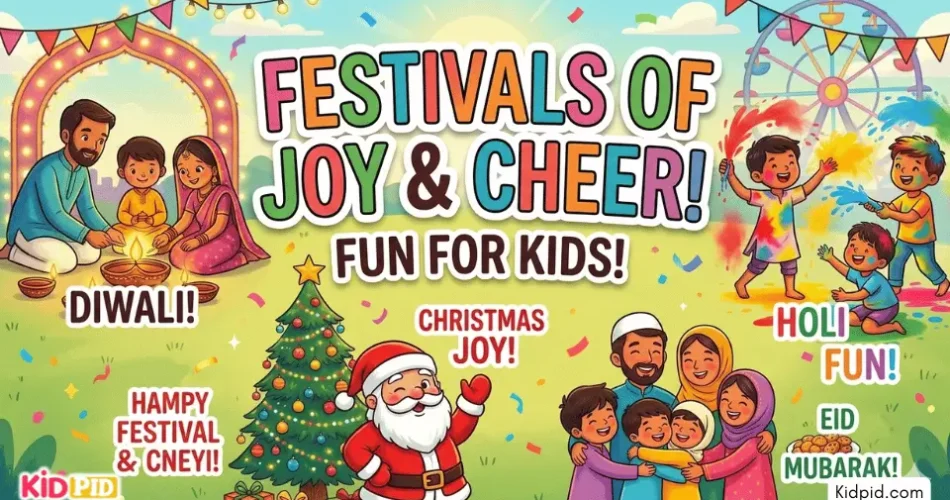
Festivals are special occasions that bring happiness, unity, and excitement to people around the world. They are an important part of cultural traditions and help families and communities celebrate together. Popular festivals such as Diwali, Holi, Christmas, and Eid are filled with colorful decorations, delicious food, music, gifts, and joyful gatherings. These celebrations teach children about love, kindness, sharing, and respect for different cultures. Festivals not only create beautiful memories but also strengthen relationships and spread positivity. In this poem, discover how different festivals fill our lives with joy, laughter, and togetherness throughout the year.
Contents
- Festivals of Joy & Cheer – Multicultural Festivals Rhyme for Kids
- Why Are Festivals Important?
- Benefits of Celebrating Festivals
- Popular Festivals Around the World
- FAQs
- Q1. What are festivals?
- Q2. Why are festivals important?
- Q3. What are some popular festivals celebrated around the world?
- Q4. How do festivals bring people together?
- Q5. What can children learn from festivals?
- Q6. Why do people wear new clothes during festivals?
- Q7. What foods are commonly enjoyed during festivals?
- Q8. How is Diwali celebrated?
- Q9. What is the significance of Holi?
Festivals of Joy & Cheer – Multicultural Festivals Rhyme for Kids
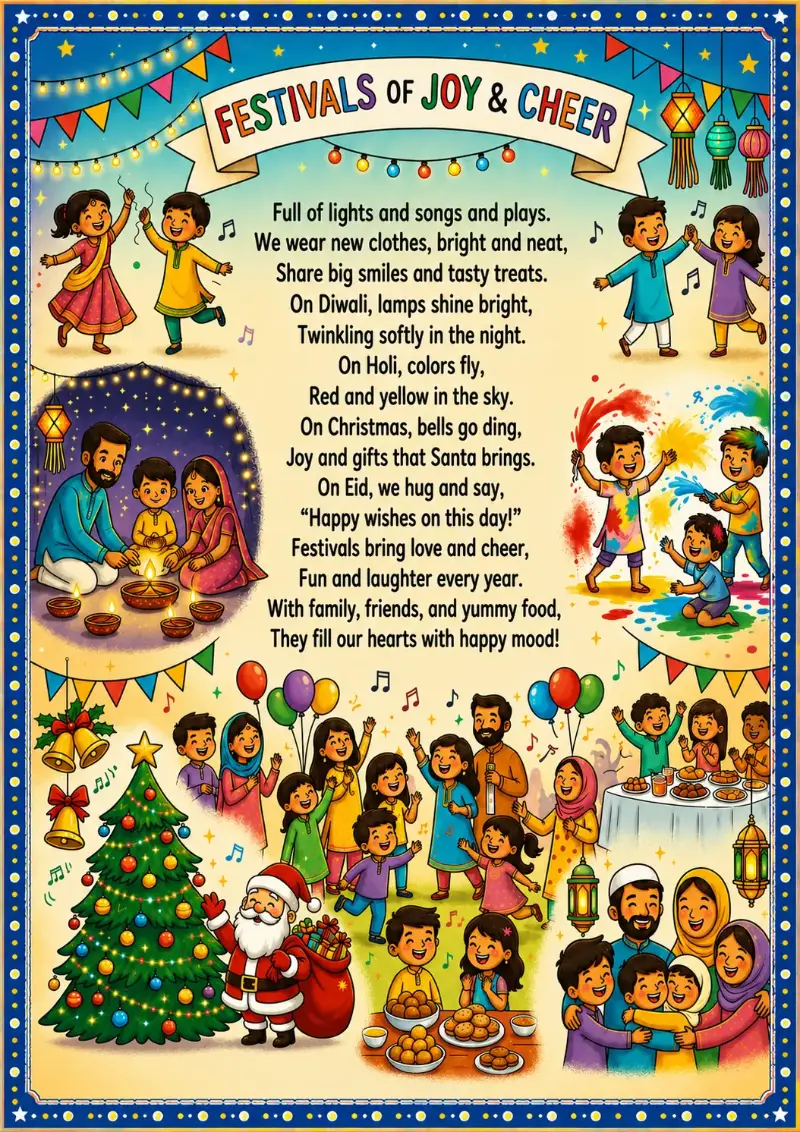
This cheerful festival rhyme introduces children to different cultural celebrations while building vocabulary, rhythm, and appreciation for diversity and togetherness.
A delightful rhyme that explores the joy and meaning of popular festivals celebrated by families worldwide. Kids discover traditions from Diwali, Holi, Christmas, and Eid through fun, colorful illustrations and easy-to-follow verses. The poem promotes cultural understanding, friendship, gratitude, and appreciation for different celebrations.
Why Are Festivals Important?
Festivals play a significant role in preserving cultural heritage and traditions. They bring families, friends, and communities together to celebrate important religious, cultural, and seasonal events. During festivals, people exchange gifts, prepare special meals, wear traditional clothing, and participate in community activities.
Benefits of Celebrating Festivals
- Promotes family bonding and social connections.
- Teaches children about cultural values and traditions.
- Encourages kindness, gratitude, and sharing.
- Creates happy memories and positive experiences.
- Helps people appreciate diversity and different cultures.
Popular Festivals Around the World
- Diwali is known as the Festival of Lights and symbolizes the victory of light over darkness.
- Holi is called the Festival of Colors and celebrates joy, friendship, and the arrival of spring.
- Christmas commemorates the birth of Jesus Christ and is celebrated with gifts, decorations, and festive gatherings.
- Eid is a special Islamic festival marked by prayers, charity, family meals, and sharing happiness with loved ones.
These festivals highlight the values of love, peace, unity, and celebration across different cultures and communities.
FAQs
Q1. What are festivals?
Answer: Festivals are special celebrations that mark important cultural, religious, seasonal, or historical events. They bring people together through traditions, food, music, and joyful activities.
Q2. Why are festivals important?
Answer: Festivals help preserve cultural traditions, strengthen family bonds, promote community unity, and teach values such as kindness, gratitude, and sharing.
Q3. What are some popular festivals celebrated around the world?
Answer: Some of the most popular festivals include Diwali, Holi, Christmas, Eid, Chinese New Year, Thanksgiving, and Hanukkah. Each festival has unique customs and traditions.
Q4. How do festivals bring people together?
Answer: Festivals encourage families, friends, and communities to gather, celebrate, share meals, exchange gifts, and participate in cultural activities, creating a sense of belonging and togetherness.
Q5. What can children learn from festivals?
Answer: Children learn about cultural heritage, respect for diversity, generosity, teamwork, and the importance of family and community through festival celebrations.
Q6. Why do people wear new clothes during festivals?
Answer: Many cultures wear new clothes during festivals to symbolize new beginnings, happiness, prosperity, and respect for the occasion.
Q7. What foods are commonly enjoyed during festivals?
Answer: Festival foods vary by culture and tradition. People often prepare special sweets, desserts, traditional meals, and festive treats to share with family and guests.
Q8. How is Diwali celebrated?
Answer: Diwali, also known as the Festival of Lights, is celebrated by lighting lamps, decorating homes, sharing sweets, exchanging gifts, and enjoying family gatherings.
Q9. What is the significance of Holi?
Answer: Holi is known as the Festival of Colors and celebrates the arrival of spring, friendship, joy, and the victory of good over evil.
Festivals bring joy, fun, and togetherness. They help us celebrate traditions, spend time with loved ones, learn important values, and create happy memories that make life more colorful and meaningful. Unlock endless learning fun with our collection of rhymes, paragraphs, essays, worksheets, flashcards, quizzes, and more. Follow us on YouTube & Facebook and visit our website for fresh educational content every day.