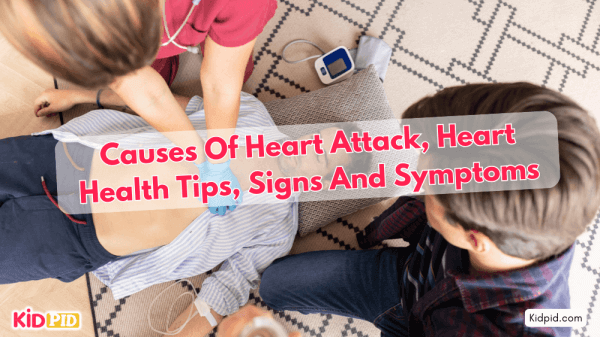
A heart attack is a serious problem that happens when the heart doesn’t get enough oxygen. It’s important to know what causes it, how to keep your heart healthy, and how to spot the signs. Here’s what you need to know!
- Causes of Heart Attack: Blockage in arteries that carry blood to the heart. Fatty deposits (plaque) can form in the arteries and cause blockage.
- Heart Health Tips: Eat healthy foods like fruits and vegetables. Exercise regularly to stay active. Avoid smoking and manage stress.
- Signs and Symptoms of Heart Attack: Chest pain or discomfort. Pain spreading to the arm, neck, jaw, or back. Shortness of breath, nausea, or cold sweats.
Contents
- Heart Attack Causes, Tips for Heart Health, Symptoms and Signs
- Related MCQ’S
- 1. What is the main cause of a heart attack?
- 2. What happens when fatty plaque develops in the arteries?
- 3. What can happen if a fatty plaque ruptures in the artery?
- 4. Which of the following is a common sign of a heart attack?
- 5. Which of these factors increases the risk of having a heart attack?
- 6. What can doctors do if they find a blockage in the heart?
- 7. What is a “silent heart attack”?
- You may like these:
Heart Attack Causes, Tips for Heart Health, Symptoms and Signs

Related MCQ’S
1. What is the main cause of a heart attack?
A) Lack of sleep
B) Blockage in coronary arteries
C) Lack of exercise
D) Eating too much food
Answer: B) Blockage in coronary arteries
Explanation: A heart attack happens when there is a blockage in the coronary arteries that supply oxygenated blood to the heart, preventing it from getting enough oxygen.
2. What happens when fatty plaque develops in the arteries?
A) It makes the heart pump faster
B) It causes a partial blockage of blood flow
C) It increases oxygen supply to the heart
D) It helps the heart get stronger
Answer: B) It causes a partial blockage of blood flow
Explanation: Fatty plaques build up in the arteries, which can partially block blood flow, reducing the amount of oxygen that reaches the heart.
3. What can happen if a fatty plaque ruptures in the artery?
A) The heart will start pumping harder
B) A blood clot can form, causing complete blockage
C) The artery will expand and let more blood flow
D) The oxygen supply will increase
Answer: B) A blood clot can form, causing complete blockage
Explanation: If the fatty plaque ruptures, the body reacts by forming blood clots around it, which can completely block the artery and cause a heart attack.
4. Which of the following is a common sign of a heart attack?
A) Sudden weight gain
B) Crushing chest pain spreading to the arm or neck
C) High energy levels
D) Feeling extremely cold
Answer: B) Crushing chest pain spreading to the arm or neck
Explanation: A common heart attack symptom is crushing chest pain that can spread to the left arm, neck, jaw, or back.
5. Which of these factors increases the risk of having a heart attack?
A) Eating fruits and vegetables
B) Regular exercise
C) Smoking
D) Getting enough sleep
Answer: C) Smoking
Explanation: Smoking is a major risk factor for heart attacks, along with high blood pressure, high cholesterol, diabetes, and lack of physical activity.
6. What can doctors do if they find a blockage in the heart?
A) Recommend more food intake
B) Perform a bypass surgery or angioplasty
C) Increase the person’s blood pressure
D) Advise the person to rest more
Answer: B) Perform a bypass surgery or angioplasty
Explanation: Doctors can clear blockages using angioplasty or perform bypass surgery to reroute blood flow around the blockage.
7. What is a “silent heart attack”?
A) A heart attack that is noticed immediately
B) A heart attack with no noticeable symptoms
C) A heart attack that happens at night
D) A heart attack that occurs in the chest only
Answer: B) A heart attack with no noticeable symptoms
Explanation: A silent heart attack occurs without noticeable symptoms and is sometimes referred to as the “silent killer.”
You may like these:
Essay on Smoking in public places should be banned
Smoking in public places poses health risks to non-smokers, contributes to air pollution, and negatively impacts the environment. A ban promotes cleaner, safer spaces.
What happens during a heart attack?
A heart attack occurs when blood flow to the heart is blocked, causing damage to the heart muscle. This leads to chest pain and potential organ failure.
Label The Parts of Human Heart Worksheet


A worksheet designed to identify and label key components of the human heart, including the atria, ventricles, valves, and major blood vessels involved in circulation.
What happens during a stroke?
A stroke occurs when blood flow to the brain is interrupted, causing brain cells to die. Symptoms may include sudden weakness, confusion, and loss of coordination.