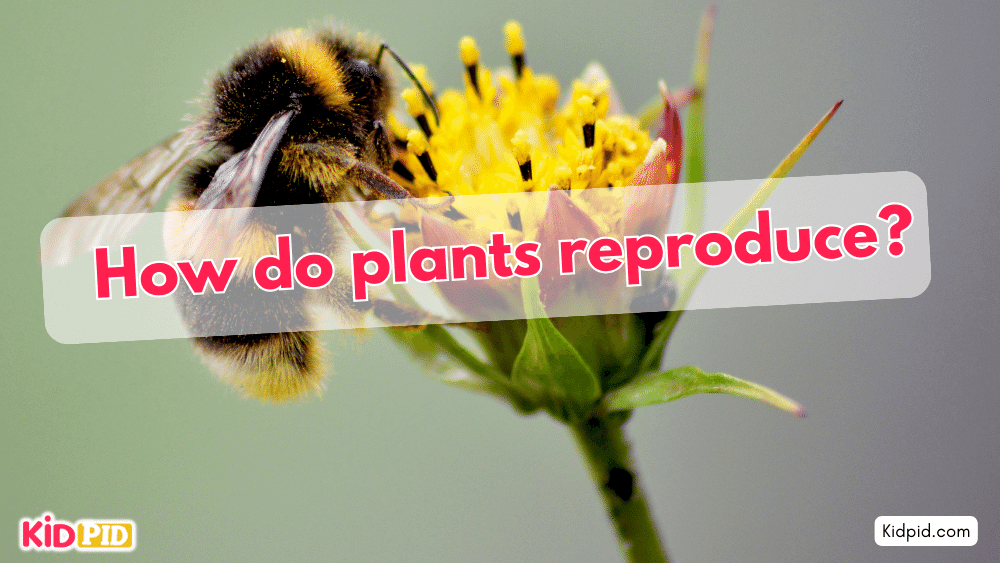
Plants reproduce through two main methods: sexually and asexually. In sexual reproduction, plants produce seeds through the fertilization of an egg by pollen, involving flowers or cones in many species. Asexually, plants can reproduce through methods like budding, cuttings, and division, where new plants grow from parts of the parent plant without the need for seed formation.
Contents
MCQs
1. How do flowers get pollinated?
A) By wind
B) By water
C) By animals
D) All of the above
Answer: D) All of the above
Explanation: Flowers can be pollinated in several ways including by the wind, water, and animals like bees, birds, and butterflies. These agents help transfer pollen from one flower to another, facilitating fertilization.
2. What is the process called when a seed starts to grow?
A) Pollination
B) Germination
C) Fertilization
D) Photosynthesis
Answer: B) Germination
Explanation: Germination is the process by which a seed begins to grow into a new plant. This process starts when the seed absorbs water, swells, and then breaks through its outer shell.
3. Which part of the plant produces pollen?
A) Petal
B) Stamen
C) Pistil
D) Sepal
Answer: B) Stamen
Explanation: The stamen is the male fertilizing organ of a flower, typically consisting of a pollen-containing anther and a filament. It produces pollen, which is necessary for the fertilization of the ovules.
4. What is the female part of the flower called?
A) Pistil
B) Stamen
C) Petal
D) Sepal
Answer: A) Pistil
Explanation: The pistil is the female reproductive part of a flower. It typically consists of an ovary, style, and stigma. The ovary contains ovules, which develop into seeds upon fertilization.
Read More