
In this worksheet, students will learn about the parts of a fish and how to label them. It’s a fun way to explore fish anatomy and understand where each part is located. Perfect for Grade 2 and Grade 3 students, this activity encourages curiosity about marine life. Hope you like it. You can download this worksheet (PDF) using the link at the worksheet’s end.
Join our Telegram channel for free books, journals, quizzes, and printable worksheets.
Contents
- Label The Parts Of a Fish Worksheet
- Label Parts of the Fish
- Key Facts About Label the Fish Worksheets
- Parts/Types/Examples of Fish Anatomy
- How Does the Label the Fish Worksheet Work?
- Benefits of Learning About Fish Anatomy
- Learning Objectives
- Worksheet Instructions
- Interesting Facts About Fish Vocabulary Words
- Real-Life Applications
- FAQs
Label The Parts Of a Fish Worksheet
Read More: Why are fish fish-shaped?
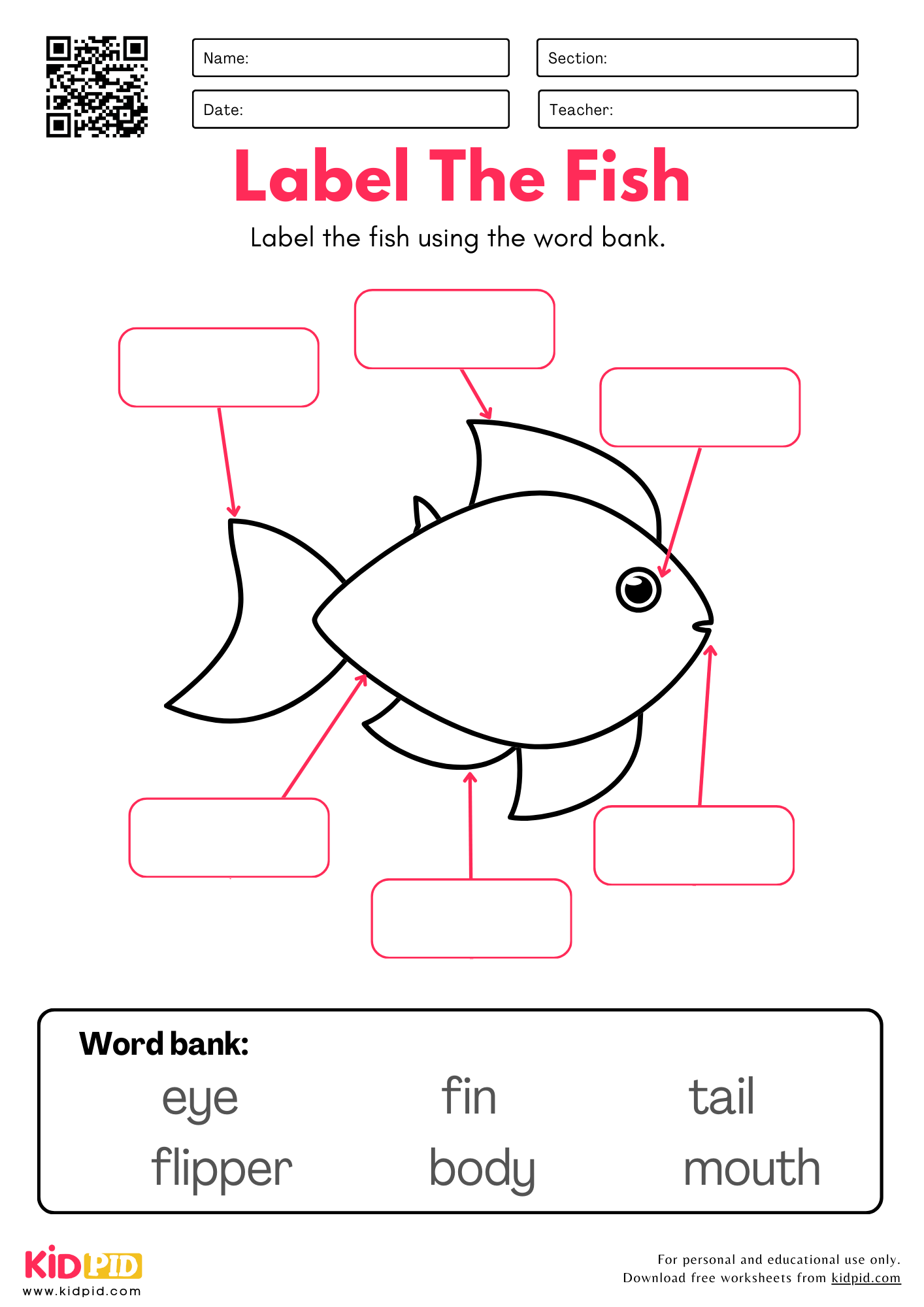
A fish is an aquatic animal with a streamlined body, fins, and gills for breathing underwater. It uses its tail to swim, eyes to see, and mouth to feed. Fish are vital to ecosystems, providing food and maintaining balance in aquatic environments.
Label Parts of the Fish
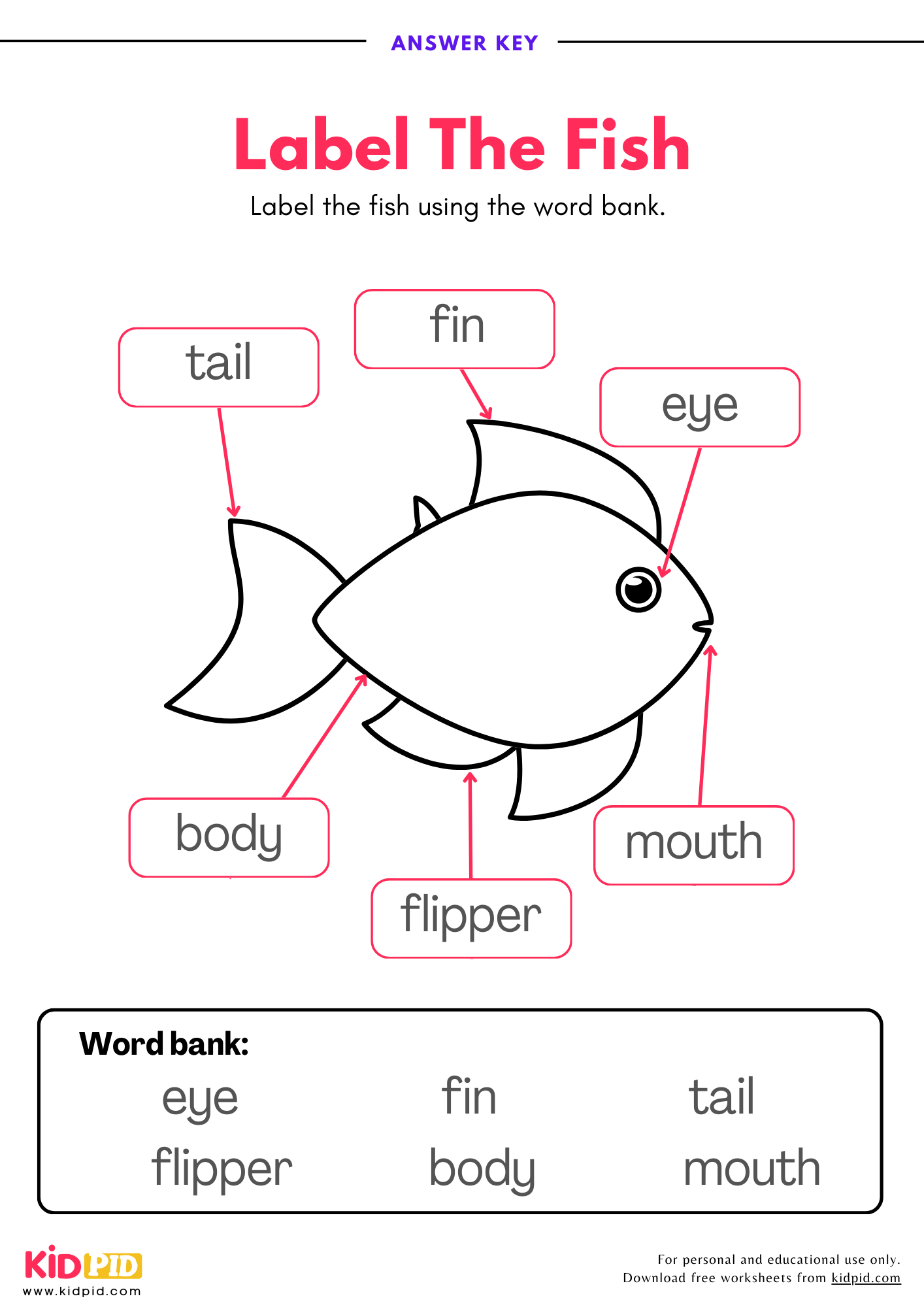
1. Eye: The fish’s eye helps it see in the water, detecting light and movement. It provides vision, allowing the fish to find food and avoid predators. Fish eyes are adapted for underwater vision, often with a wide field of view.
2. Fin: Fins are appendages that help the fish swim. The dorsal fin stabilizes the fish while swimming; the pectoral fins help steer, and the pelvic fins aid in balance. Fins are essential for movement and direction in the water.
3. Tail: The tail, called the caudal fin, is the main part that propels the fish forward. It moves side to side, creating thrust for swimming. The tail allows fish to change direction and speed in the water.
4. Flippers: Flippers are broad, flat appendages found on some fish, like rays and penguins. They help with steering, balance, and propulsion. While fish typically use fins for movement, aquatic animals often use flippers for gliding or swimming.
5. Body: The fish’s body is streamlined, allowing it to move efficiently through water. It is covered in scales that protect the fish and help reduce friction as it swims. The body houses vital organs like the heart, stomach, and intestines.
6. Mouth: The mouth of a fish is used to capture food and take in water for breathing. The shape and size of the mouth vary depending on the fish’s diet, with some fish having specialized mouths for filter feeding or hunting.
Understanding fish anatomy is a foundational step in early biology education. These worksheets provide a structured way for young learners to engage with marine science.
To master this worksheet, students should become familiar with the following core anatomical structures:
This worksheet functions as an interactive visual guide. By pairing the visual representation of a fish with corresponding labels, students utilize dual-coding theory—learning by seeing both the image and the word simultaneously.
Studying the physical structure of fish offers several developmental advantages:
By completing this worksheet, students will be able to:
Follow these steps to maximize the learning experience:
The knowledge gained from this worksheet extends beyond the classroom:
Answer: This worksheet is ideal for children in Grades 2 and 3 (ages 7–9), though it can be adapted for younger learners with parental guidance.
Answer: Absolutely. These printables are designed by educators to be flexible, making them an excellent resource for both classroom settings and home-based science curricula.
Answer: Yes. You can explore our library for further resources, including farm animals, dinosaur body parts, and plant anatomy, to continue the learning journey.
Key Facts About Label the Fish Worksheets
Parts/Types/Examples of Fish Anatomy
How Does the Label the Fish Worksheet Work?
Benefits of Learning About Fish Anatomy
Learning Objectives
Worksheet Instructions
Interesting Facts About Fish Vocabulary Words
Real-Life Applications
FAQs
Q1. At what age should a child start using this worksheet?
Q2. Can I use this for homeschooling?
Q3. Are there more worksheets available?

Encourage children to learn about aquatic life with the Label the Fish Worksheet. This interactive activity strengthens body part recognition, builds science vocabulary, improves observation skills, and makes learning about fish enjoyable. Enjoy printable paragraphs, quizzes, worksheets, essays, flashcards, and interactive resources that inspire classroom success. Follow us on Pinterest, Facebook, YouTube & Telegram.
This student worksheet was developed by our Content Team for learning support.
Reviewed By Sansriti Pandey
Read More: