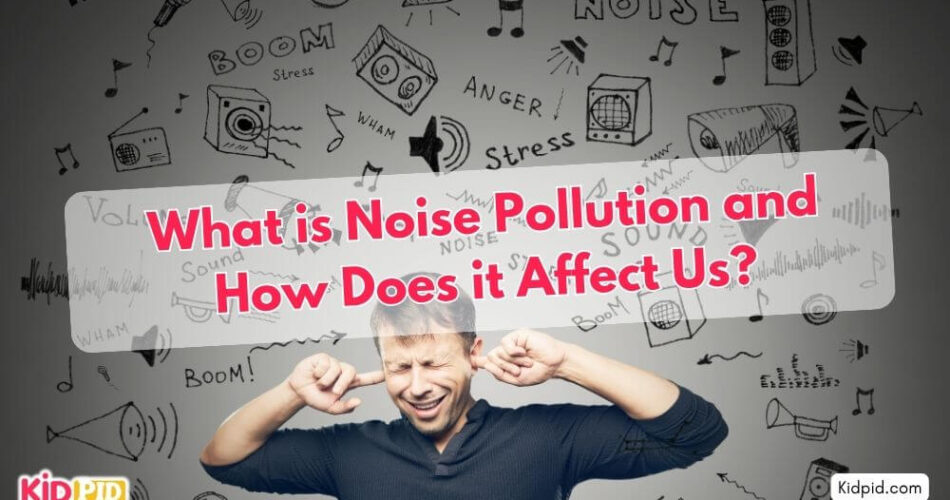
Noise pollution refers to harmful or annoying levels of noise in the environment. It affects us by causing health issues such as hearing loss, stress, and sleep disturbances, and can also negatively impact wildlife and the natural environment.

Contents
- MCQs
- Fill in The Blanks
- 1. Noise pollution is the presence of excessive or disruptive __________ in the environment.
- 2. What are some sources of noise pollution, such as traffic, construction, and loud __________.
- 3. Prolonged exposure to noise pollution can lead to __________ loss.
- 4. What are some negative effects of noise pollution on our health and well-being, such as stress, sleep disturbances, and impaired cognitive __________.
- True / False
MCQs
1. Which of the following can be a source of noise pollution?
A) Whispering in a library
B) Traffic noise from a busy road
C) Falling snow
D) A gently flowing river
Answer: B) Traffic noise from a busy road
Explanation: Traffic noise from a busy road is loud and continuous, making it a common source of noise pollution that can disrupt both humans and wildlife.
2. How can noise pollution affect humans?
A) Improve concentration
B) Increase in stress levels
C) Enhance sleeping patterns
D) Strengthen hearing ability
Answer: B) Increase in stress levels
Explanation: Noise pollution can lead to increased stress levels, sleep disturbances, and even hearing loss, negatively impacting human health.
3. What is the possible effect of noise pollution on animals?
A) Change in migratory patterns
B) Brighter colors
C) Faster running speeds
D) Improved vision
Answer: A) Change in migratory patterns
Explanation: Noise pollution can interfere with the communication and navigation of animals, leading to changes in their migratory patterns and affecting their survival.
4. Which action can help reduce noise pollution?
A) Increasing the volume of your music
B) Planting more trees
C) Using more vehicles
D) Building more highways
Answer: B) Planting more trees
Explanation: Trees can act as natural sound barriers, absorbing and blocking noise, thus helping to reduce noise pollution.
Fill in The Blanks
Choose from These Words: noise, music, hearing, function.
1. Noise pollution is the presence of excessive or disruptive __________ in the environment.
Answer: noise
2. What are some sources of noise pollution, such as traffic, construction, and loud __________.
Answer: music
3. Prolonged exposure to noise pollution can lead to __________ loss.
Answer: hearing
4. What are some negative effects of noise pollution on our health and well-being, such as stress, sleep disturbances, and impaired cognitive __________.
Answer: function
True / False
1. Noise pollution can lead to hearing loss. (True / False)
True: Excessive exposure to loud noise can damage the delicate hair cells in our ears, leading to hearing loss over time.
2. Noise pollution only affects our physical health. (True / False)
Answer: False. Noise pollution can also have negative effects on our mental health, causing stress, anxiety, and sleep disturbances.
3. Loud music from headphones is a common source of noise pollution. (True / False)
Answer: True. Listening to music at high volumes through headphones can contribute to noise pollution and potentially damage our hearing.
4. Noise pollution can interfere with communication. (True / False)
Answer: True. Excessive noise can make it difficult to hear and understand others, leading to communication breakdowns and misunderstandings.
Read More: