

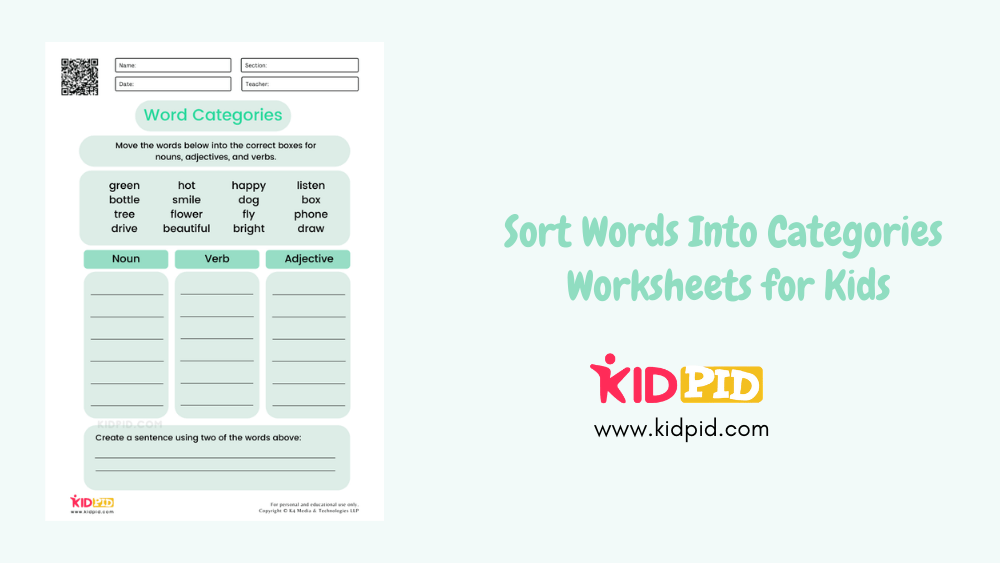
In this edition, we have brought some worksheets that are going to help your child learn about nouns, Verbs, and Adjectives. This worksheet will help your kids to memorize new words correlated to each other, like happy, sad, fast, school, etc. These worksheets are easy to understand, and if you want, they can be printed out as well.
Contents
- Word Sorting Practice Worksheets
- Key Facts About Sort Words Into Categories Worksheets for Kids
- Parts/Types/Examples of Sort Words Into Categories Worksheets
- How Does the ” Sort Words Into Categories ” Worksheet Work?
- Benefits of Learning About Sorting Words Into Categories Worksheets
- Learning Objectives
- Worksheet Instructions
- Interesting Facts About Sort Words Into Categories Worksheets
- Vocabulary Words
- Real-Life Applications
- FAQs
- Q1. What are Sort Words Into Categories Worksheets?
- Q2. What age group are these worksheets suitable for?
- Q3. How do these worksheets improve vocabulary?
- Q4. Can these worksheets be used at home?
- Q5. What skills do children develop through word sorting?
- Q6. Are category-sorting worksheets aligned with literacy learning?
- Q7. How often should children practice word sorting activities?
- Read More:
Word Sorting Practice Worksheets

The first worksheet will ask the child to move the words given into the correct boxes for nouns, adjectives, and verbs. And then using those words, create a new sentence. It can be a little tricky for the child to understand what these things actually mean, but once he does, it will be a piece of cake for him. It is perfect for children who have started to go to school.
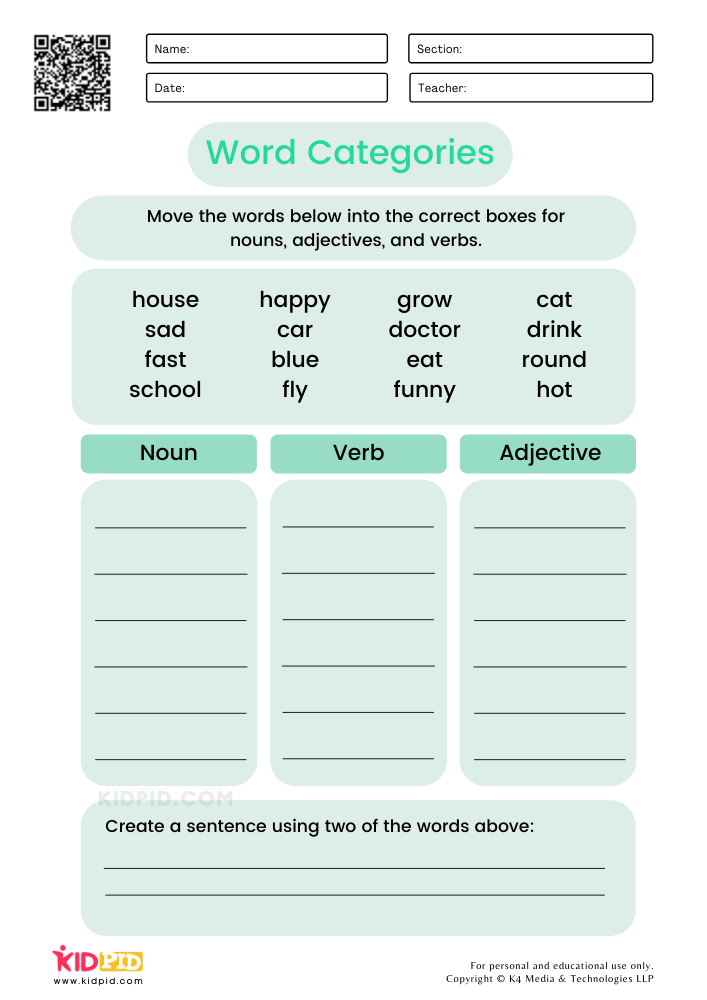
The second worksheet will work on words like green, hot, happy, listen, etc. Once the child knows what each word stands for, he’ll easily put them into the boxes. As a parent, it is important not to let your child break concentration, because these are some of the most important concepts of the English Language.
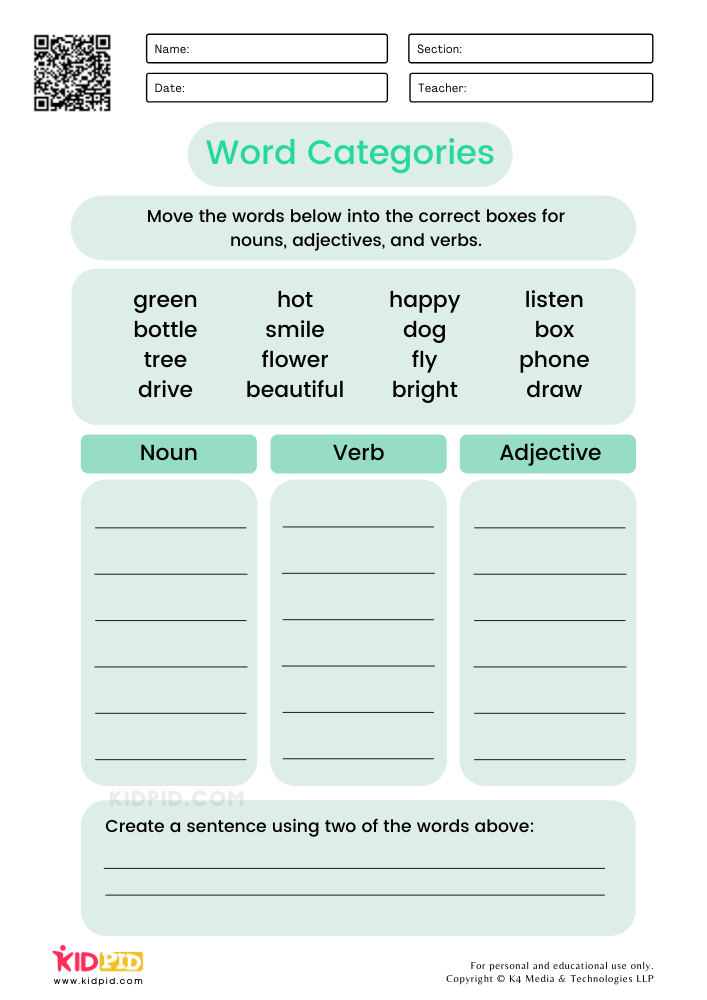
Creating a sentence out of these jumbled words is never going to be easy. This is where the child needs help; the parents need to help them with these worksheets and analyze how the kid approaches these words. It is very important to help children introduce the basic concepts and to develop their intellectual abilities.
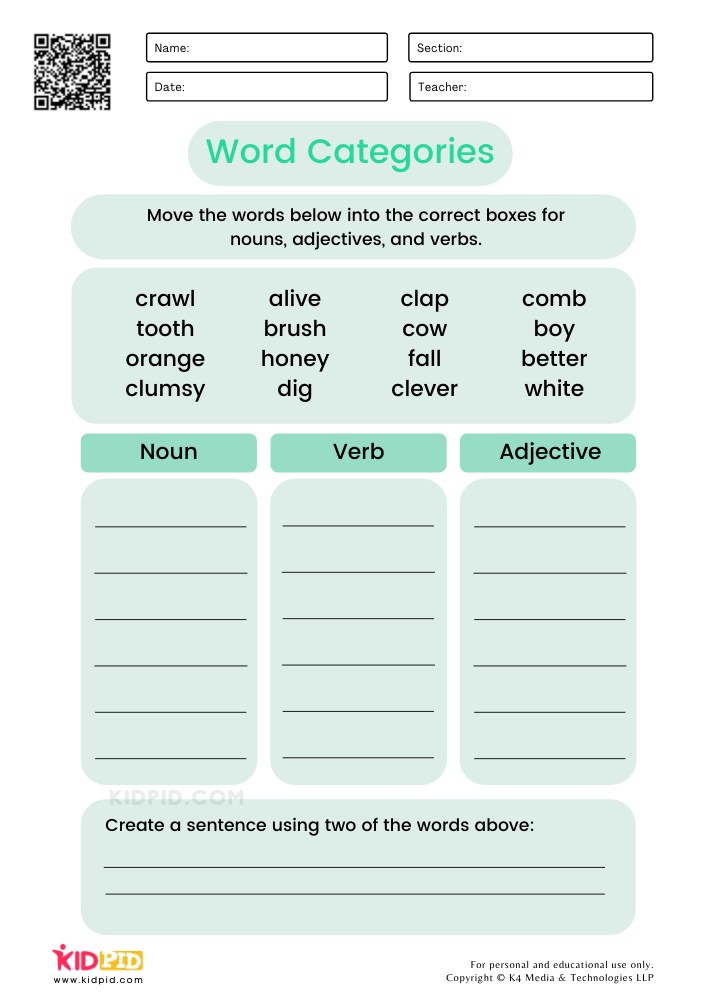
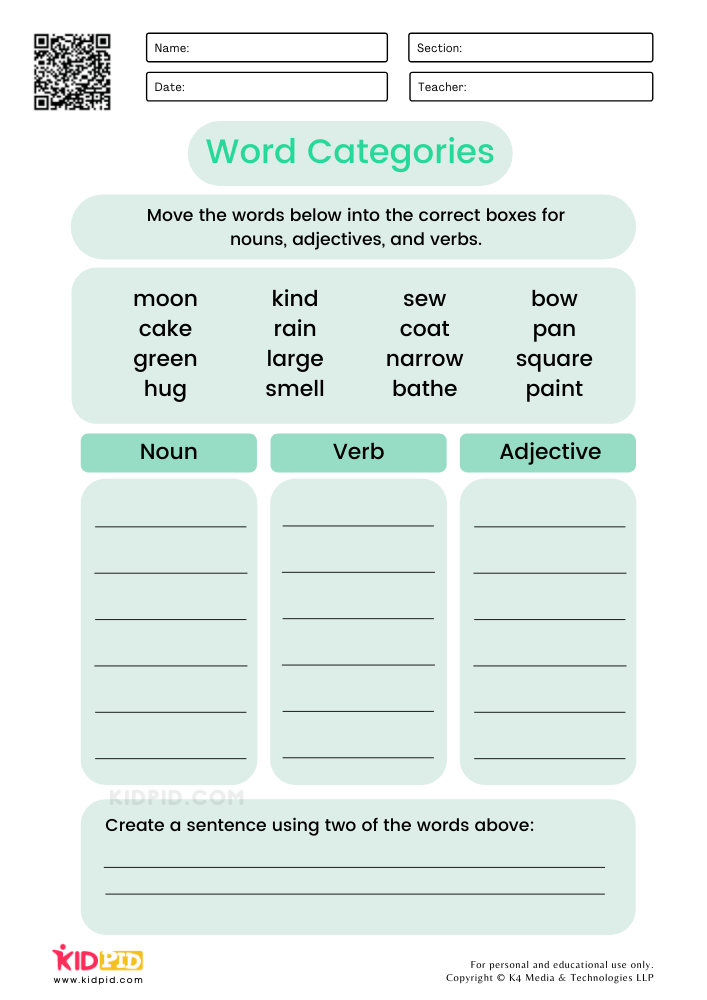
This fourth worksheet is the same as the above ones. It has words like a bow, pan, square, large, etc. Some of them are even repeated from the above worksheets. So, in a way, the kid’s memory skills can be tested with ease. As parents, the kid needs to be looked at, so this is a basic level worksheet that leads the kid if they make a mistake.
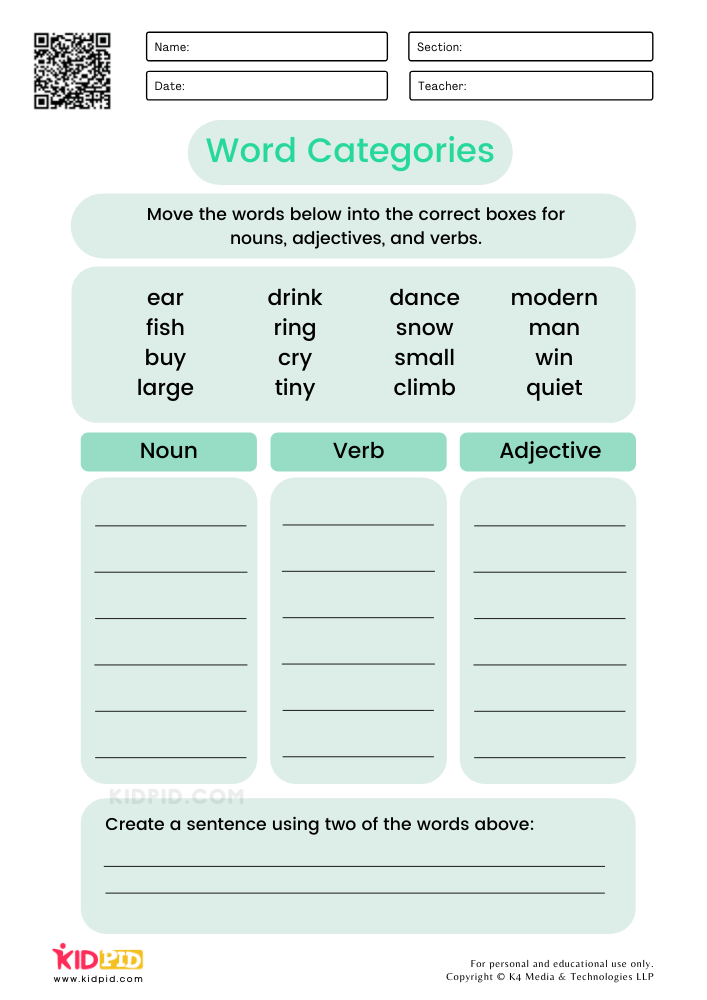
The fifth worksheet has new words like a drink, dance, modern, etc. Help the kid understand the concepts and then make him finish the task. When the first few worksheets are completed, the rest will be done in the same manner. The parents can even get a printout of the worksheet if their child needs some more preparation.
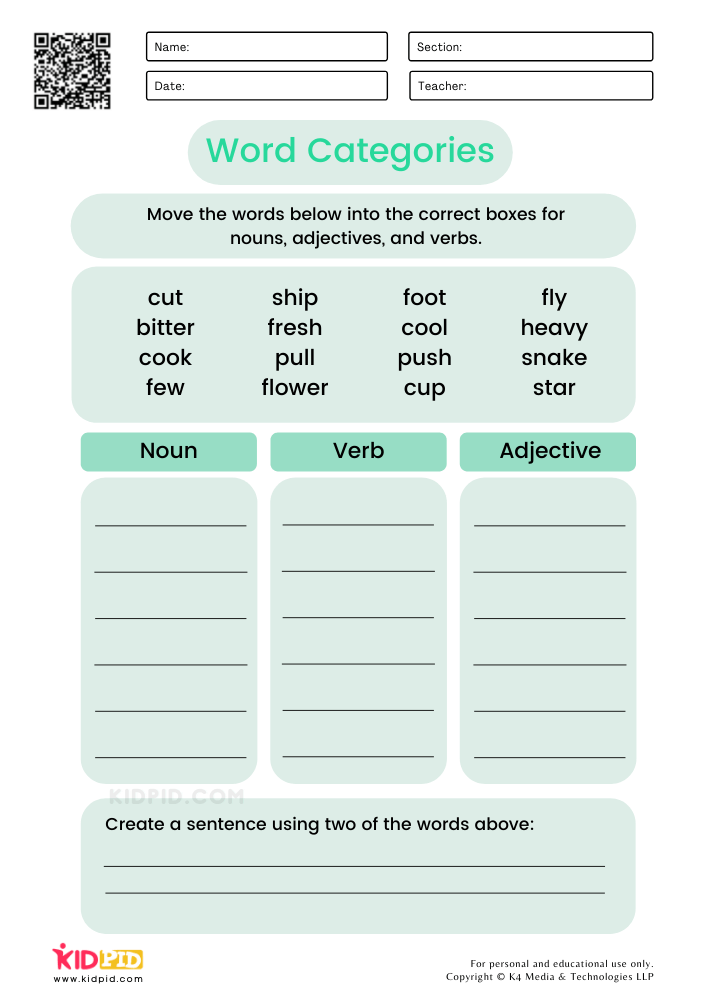
In the sixth worksheet, we have words like cut, foot, fly, etc. Then use the words to create a new sentence. Creating a sentence could be difficult for the child, and that is understandable. And when they find such difficulties, the child’s queries need to be answered. That is very essential.
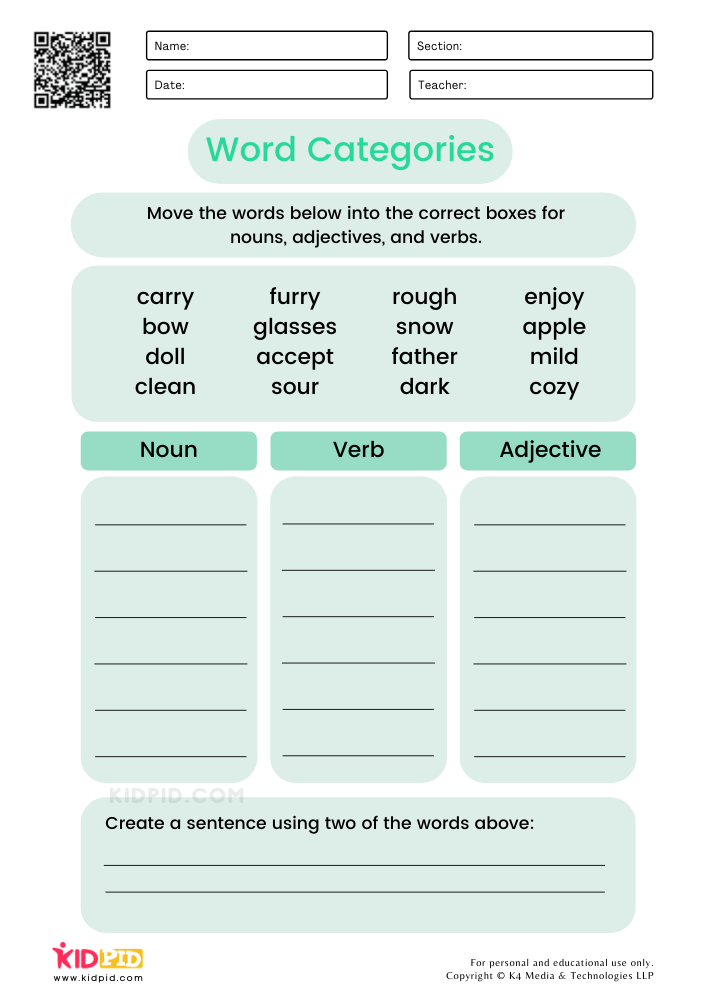
Another worksheet will help the child to understand and recognize the importance of nouns, verbs, and adjectives. Along with working on English Language skills, the attention of the child is very necessary. Fortunately, these worksheets include and cover that portion as well.
The eighth worksheet will have the same impact as the above-given worksheets. It has words like late, baby, rabbit, table, ground, etc. The good thing about these worksheets is that the kids will not get bored at any stage. To make things interesting, the tables are designed.
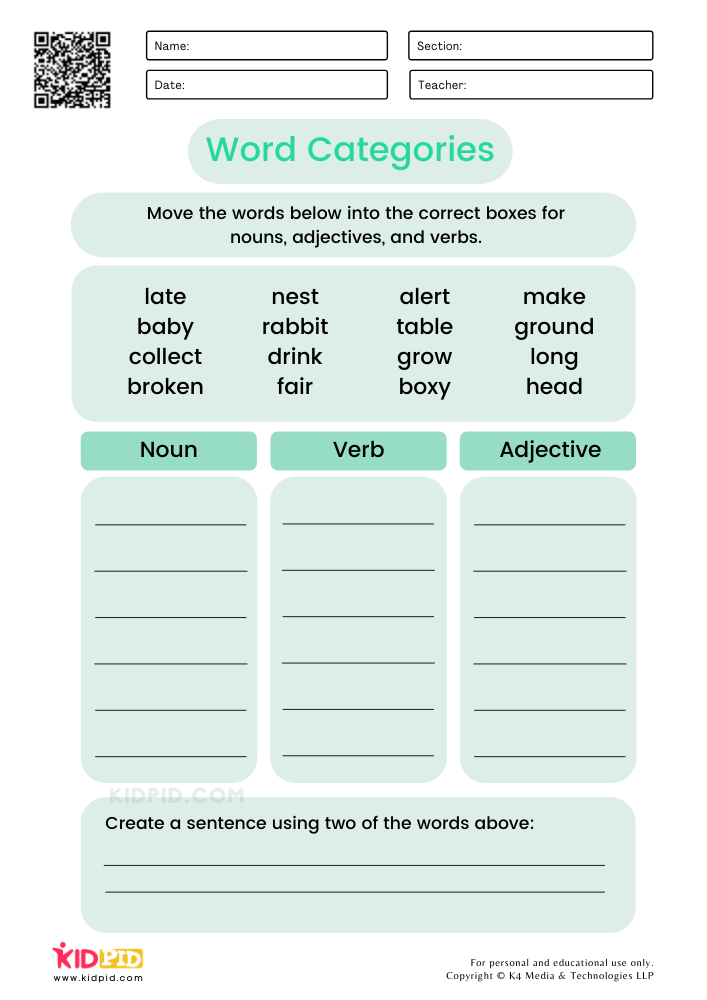
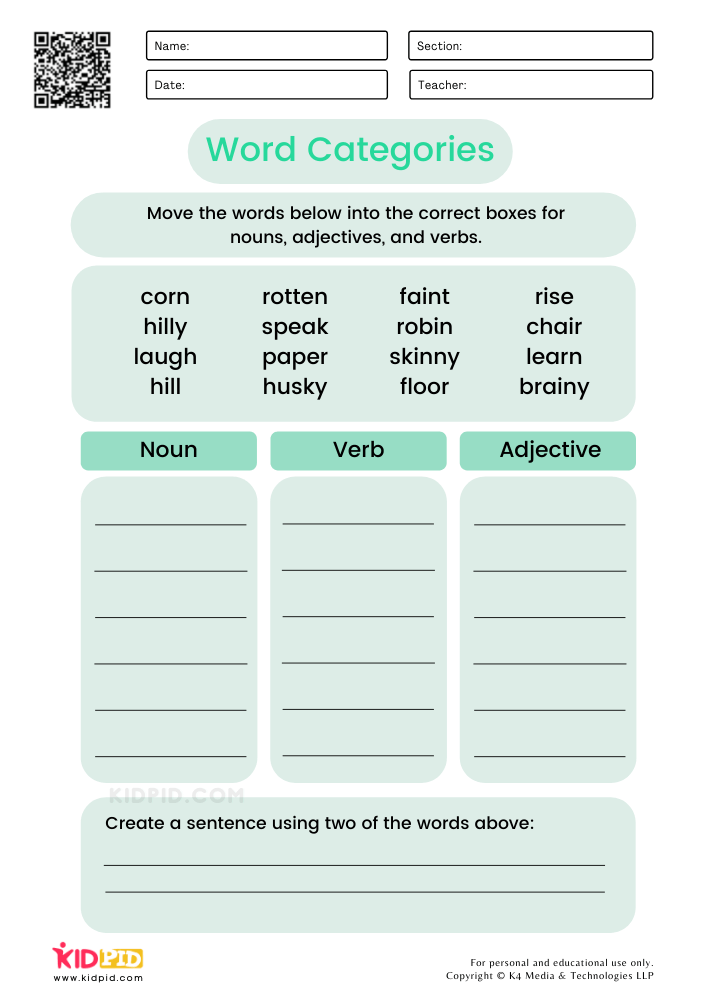
In the final two worksheets, try to test the child’s knowledge by asking him to solve the entire worksheet by himself. In this way, the kid will feel more confident and adapt to the English language concepts with ease and comfort. The child must know the importance of these worksheets and how this is going to help him develop his mental abilities. That is very essential.
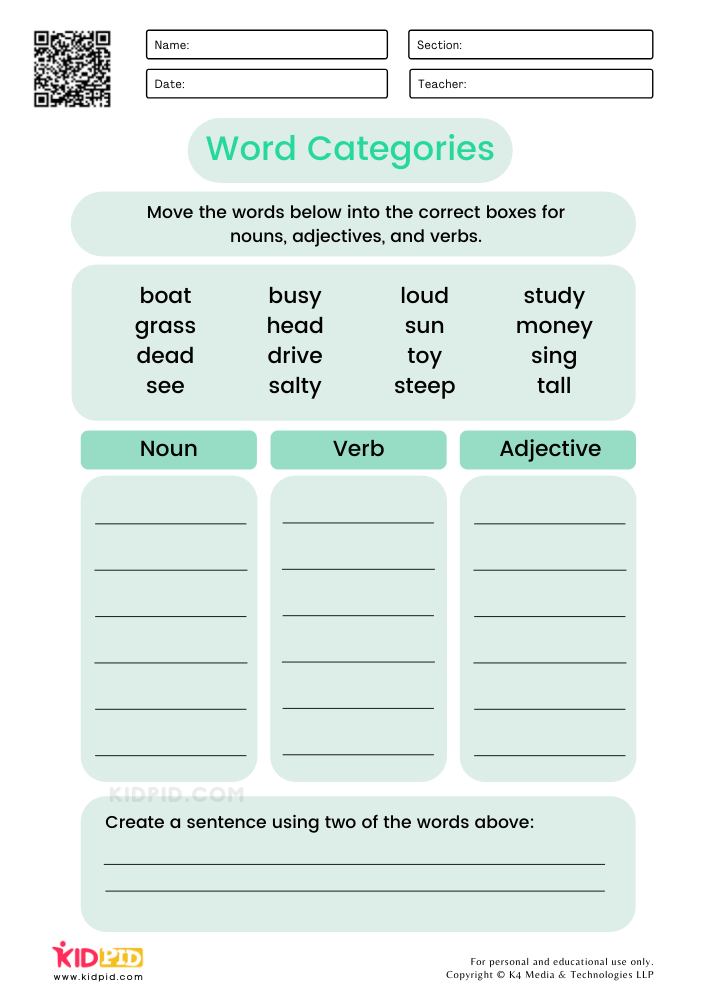
The final worksheet involves words like boat, busy, study, sing, etc. Once the child has finished the above-given worksheets, it will become easy for him to solve this one. It has the same concept, but like every worksheet, the words that are presented here are different to bring modification in education and not turn into something usual and predictable.
Key Facts About Sort Words Into Categories Worksheets for Kids
Sort Words Into Categories Worksheets help children organize vocabulary words into meaningful groups based on common characteristics. These worksheets strengthen language development, reading comprehension, critical thinking, and classification skills. Students learn to identify relationships between words, recognize patterns, and expand their vocabulary through engaging sorting activities. They are commonly used in kindergarten, first grade, second grade, and elementary language arts lessons to build foundational literacy skills.
Key Facts:
- Enhances vocabulary and word recognition.
- Develops categorization and analytical thinking skills.
- Supports reading comprehension and language development.
- Suitable for classroom learning and homeschooling.
- Encourages independent and interactive learning.
Parts/Types/Examples of Sort Words Into Categories Worksheets
These worksheets come in various formats to suit different learning levels and objectives.
Common Parts:
- Word bank
- Category labels
- Sorting boxes or tables
- Instructions section
- Answer space
Types of Worksheets:
- Animal and habitat categories
- Food group sorting
- Transportation word sorting
- Noun, verb, and adjective classification
- Living and non-living things categories
- Seasonal vocabulary sorting
- School and home object classification
Examples:
- Sort words into “Fruits” and “Vegetables.”
- Group words under “Animals,” “Plants,” and “Objects.”
- Categorize words as “Action Words” or “Describing Words.”
How Does the ” Sort Words Into Categories ” Worksheet Work?
These worksheets provide a collection of words that students must analyze and place into the correct category. Children read each word, identify its meaning, compare it with other words, and determine the most appropriate group. This process encourages logical thinking and helps learners understand how vocabulary words are connected.
Students may:
- Read the given words carefully.
- Identify category names.
- Match each word with its correct category.
- Review their answers for accuracy.
- Discuss why each word belongs in a particular group.
Regular practice improves classification abilities and strengthens language comprehension.
Benefits of Learning About Sorting Words Into Categories Worksheets
Using categorization worksheets offers numerous educational advantages.
Major Benefits:
- Expands vocabulary knowledge.
- Improves reading and comprehension skills.
- Strengthens memory retention.
- Develops critical thinking and reasoning abilities.
- Encourages problem-solving skills.
- Enhances understanding of word relationships.
- Supports early language development.
- Builds confidence in language arts activities.
These benefits contribute to stronger literacy foundations and academic success.
Learning Objectives
By completing these worksheets, children will be able to:
- Identify similarities and differences among words.
- Classify vocabulary into appropriate categories.
- Improve reading fluency and word recognition.
- Expand their understanding of language concepts.
- Strengthen critical thinking and analytical skills.
- Develop organizational and sorting abilities.
- Enhance communication and vocabulary usage.
Worksheet Instructions
Follow these simple steps to complete the worksheet:
- Read all the words provided in the word bank.
- Look at the category headings carefully.
- Determine which category each word belongs to.
- Write or place the word under the correct category.
- Check your answers after completing the activity.
- Discuss any challenging words with a teacher or parent.
- Practice additional sorting activities to reinforce learning.
Interesting Facts About Sort Words Into Categories Worksheets
- Categorization is one of the earliest cognitive skills children develop.
- Word sorting activities help improve long-term vocabulary retention.
- Grouping related words makes learning new vocabulary easier.
- Categorization exercises support both reading and writing development.
- These activities help children recognize patterns in language.
- Sorting games are widely used in modern literacy instruction.
- Word classification strengthens connections between concepts and language.
Vocabulary Words
Here are some useful vocabulary terms related to categorization activities:
| Word | Meaning |
|---|---|
| Category | A group of items sharing common features |
| Classify | To arrange items into groups |
| Vocabulary | A collection of words known by a person |
| Sort | To organize items into categories |
| Similarity | A shared characteristic |
| Difference | A feature that makes things unlike |
| Noun | A word that names a person, place, or thing |
| Verb | A word showing action |
| Adjective | A word describing a noun |
| Group | A collection of related items |
Real-Life Applications
Categorization skills learned through these worksheets are valuable in everyday life.
Examples Include:
- Organizing books by genre in a library.
- Sorting groceries into food categories.
- Arranging classroom supplies by type.
- Organizing digital files into folders.
- Classifying animals and plants in science studies.
- Sorting household items during cleaning and organization.
- Grouping products in stores and supermarkets.
These practical applications demonstrate the importance of classification skills beyond the classroom.
FAQs
Q1. What are Sort Words Into Categories Worksheets?
Answer: They are educational activities that help children organize words into groups based on shared characteristics or themes.
Q2. What age group are these worksheets suitable for?
Answer: They are ideal for kindergarten through elementary school students, typically ages 4–10.
Q3. How do these worksheets improve vocabulary?
Answer: Children learn word meanings, relationships, and categories, helping them remember and use vocabulary more effectively.
Q4. Can these worksheets be used at home?
Answer: Yes, they are excellent for homeschooling, homework practice, and supplemental learning activities.
Q5. What skills do children develop through word sorting?
Answer: Students improve vocabulary, reading comprehension, critical thinking, classification, reasoning, and organizational skills.
Q6. Are category-sorting worksheets aligned with literacy learning?
Answer: Yes, they support foundational language arts standards by strengthening vocabulary acquisition and comprehension skills.
Q7. How often should children practice word sorting activities?
Answer: Regular practice, even a few times per week, can significantly improve vocabulary development and language understanding.
Hope you liked these ‘Sort Words Into Categories Worksheets for Kids‘ edition. Here you can find all types of worksheets that will make the study and education of your child fascinating. Unlock more learning opportunities with our collection of worksheets, essays, flashcards, paragraphs, Quizzes, and interactive resources. Follow us on YouTube & Facebook for fresh content daily.
This worksheet was created by the Content Team to encourage academic attainment.
Reviewed By Ishika
Read More:



