


In this hands-on activity, you will practice identifying singular and plural nouns by cutting out noun words and sorting them into the correct columns. This kinesthetic exercise will reinforce your understanding of the difference between nouns representing one item versus multiple items.
[Scroll Down for Download Link]
Contents
- Cut Out & Sort The Singular & Plural Sorting Words
- Key Facts About the Singular and Plural Noun Cut & Paste Worksheet
- Parts, Types, and Examples Found in the Worksheet
- How Does the Cut & Paste Noun Worksheet Work?
- Benefits of Learning with this Grammar Worksheet
- Learning Objectives
- Worksheet Instructions for Teachers and Parents
- Interesting Facts About Noun Vocabulary Words
- Real-Life Applications
- FAQs
- Q1. At what age should children start learning about singular and plural nouns?
- Q2. Why does my child struggle with irregular plurals like “mice” or “wolves”?
- Q3. Can this worksheet be reused for multiple classroom sessions?
- Q4. How do I support a child who is struggling to read the vocabulary words on the tiles?
- You may like these:
Cut Out & Sort The Singular & Plural Sorting Words
Read More: Find Singular and Plural Nouns Printable Worksheets for Grade 1

- Table
- Fish
- Actor
- Chair
Plural
- Pens
- Cats
- Lions
- Men
- Actors

Singular
- Dog
- House
- Shoe
- Sheep
- Mouse
Plural
- Cars
- Children
- Books
- Women

Singular
- Flower
- Tooth
- Tree
- City
- Friend
Plural
- Deer
- Babies
- People
- Geese

Singular
- Fox
- Parent
- Student
- Bird
- Tiger
Plural
- Wolves
- Singers
- Doctors
- Bees

Singular
- Farmer
- Frog
- Horse
- Actress
Plural
- Teachers
- Writers
- Ants
- Cows
- Pigs

Singular
- Monkey
- Bat
- Glove
- Shirt
Plural
- Snakes
- Foxes
- Pencils
- Coats
- Phones

Singular
- Spider
- Dress
- Bag
- Ring
- Chicken
Plural
- Ducks
- Keys
- Hats
- Boots

Singular
- Rabbit
- Sock
- Beer
- Pillow
Plural
- Dolphins
- Spoons
- Cameras
- Whales
- Beds

Singular
- Giraffe
- Shark
- Cup
- Fork
- Blanket
Plural
- Belts
- Shoes
- Knives
- Plates

Singular
- Zebra
- Crab
- Park
- Wall
- Floor
Plural
- Snails
- Lamps
- Clocks
- Laptops

Singular
- Roof
- Desk
- Garden
- Ceiling
Plural
- Beaches
- Windows
- Rooms
- Doors
- Kitchens

Singular
- Forest
- Planet
- Street
- Tunnel
Plural
- Rivers
- Moons
- Suns
- Roads
- Trains

Singular
- Lake
- Ship
- Star
- Ocean
Plural
- Colleges
- Bridges
- Boats
- Buses
- Schools

Singular
- Highway
- Car
- Boy
- Store
- Post Office
Plural
- Galaxies
- Planes
- Zoo
- Bicycles

Singular
- University
- Museum
- Stadium
- Desert
- Cafe
Plural
- Boys
- Gyms
- Pools
- Fields

Singular
- Bakery
- Hotel
- Bedroom
- Restaurant
Plural
- Banks
- Elephants
- Markets
- Computers
- Salons

Singular
- Country
- Kangaroo
- Taxi
- Spa
- Helicopter
Plural
- Resorts
- Butterflies
- Airports
- Motorcycles

Singular
- Island
- Mountain
- Cinema
- Hospital
- Jellyfish
Plural
- Universes
- Libraries
- Rockets
- Subways

Singular
- Knife
- Camera
- Bridge
- Salon
- Bank
Plural
- Walls
- Mountains
- Highways
- Tunnels

Singular
- Boot
- Baby
- Zoo
- Child
Plural
- Planets
- Islands
- Sharks
- Gardens
- Tables
Key Facts About the Singular and Plural Noun Cut & Paste Worksheet
Early language acquisition thrives on interactive learning. This printable resource is meticulously structured to transition early learners from simple noun identification to proper grammatical categorization.
- Target Grade Levels: Ideal for Preschool, Kindergarten, Grade 1, and Grade 2.
- Format: High-quality, downloadable PDF printables consisting of multiple themed sorting pages.
- Core Subject: English Language Arts (ELA) – Grammar and Conventions.
- Activity Type: Kinesthetic / Tactile (Cut-and-paste sorting activity).
- Pedagogical Alignment: Aligned with foundational literacy standards focusing on common noun inflections and standard English conventions.
Parts, Types, and Examples Found in the Worksheet
The Kidpid worksheet package features a diverse matrix of nouns to challenge a child’s recognition skills. It covers several structural categories of nouns, moving from straightforward rules to more complex linguistic patterns:
-
- Regular Nouns (Adding -s or -es):
- Examples: Chair → Chairs, Pen → Pens, Dog → Dogs, Fox → Foxes, Beach → Beaches.
- Nouns Ending in -y (Changing to -ies):
- Examples: Baby → Babies, City → Cities.
- Irregular Nouns (Internal Vowel Changes):
- Examples: Man → Men, Woman → Women, Goose → Geese, Mouse → Mice.
- Mutating Irregular Endings (Ending in -f or -fe changing to -ves):
- Examples: Knife → Knives, Wolf → Wolves.
- Base Plurals (No Change in Form):
- Examples: Sheep, Deer, Fish.
- Regular Nouns (Adding -s or -es):
How Does the Cut & Paste Noun Worksheet Work?
This worksheet acts as a tactile sorting game that transforms abstract grammar rules into a physical concept.
The page layout is split into two distinct areas: the Sorting Grid at the top (divided into a “Singular” column and a “Plural” column) and the Vocabulary Bank at the bottom. Children first read the isolated words in the vocabulary bank. Using safety scissors, they clip out the individual word tiles.
The child must evaluate each word tile by asking: “Does this name one thing, or more than one thing?” Once determined, they apply a small dab of glue to paste the word into its rightful column. This physical action pairs visual reading with mechanical execution, helping the brain build stronger neural pathways for memory retention.
Benefits of Learning with this Grammar Worksheet
Utilizing interactive printables offers deep developmental advantages over standard repetitive handwriting drills:
- Simultaneous Cognitive and Motor Training: It blends grammatical logic with fine motor skill development (pincher grasp, scissor control, and spatial alignment).
- Self-Correction Opportunities: Because children physically lay out the tiles before gluing them down, they can easily rearrange their answers if they notice an asymmetry or error in their columns.
- Reduced Cognitive Load for Reluctant Writers: Young learners who struggle with fine-motor exhaustion from writing can focus 100% of their mental energy on the grammar rule rather than the mechanics of handwriting.
- Enhanced Visual Tracking: Sorting columns trains left-to-right scanning and organizational thinking, which directly aids early reading fluency.
Learning Objectives
By completing this interactive sorting curriculum, students will achieve the following academic milestones:
- Differentiate accurately between singular objects (one) and plural entities (more than one).
- Recognize both regular and irregular plural spelling patterns across common nouns.
- Apply foundational phonics and decoding skills to read everyday vocabulary words.
- Develop spatial reasoning and motor coordination through precise cutting, sorting, and pasting steps.
Worksheet Instructions for Teachers and Parents
To set your young learners up for absolute success, follow these simple, step-by-step assembly and teaching instructions:
- Prepare Your Supplies: Gather a pair of child-safe scissors, a non-toxic glue stick, a pencil, and your printed Kidpid worksheet pages.
- Name and Date First: Have the child write their name at the top of the worksheet to establish routine ownership of their schoolwork.
- Review the Concept: Briefly remind the learner that singular means single (one) and plural means plural (more than one.
- Cut the Tile Bank: Guide the child to cut off the bottom strip containing the word tiles. Then, have them cut along the dotted lines to separate the word boxes.
- Sort Before Sticking: Pro-Tip! Instruct the student to sort all the word tiles into the correct columns without glue first. Check their work together, read the words out loud, and then let them glue the tiles down permanently once verified.
Interesting Facts About Noun Vocabulary Words
Grammar isn’t just a set of rigid rules; it’s a window into the history of how we talk! Share these fun linguistic facts with your students while they work on their sheets to spark their curiosity:
- The Shape-Shifters: Words like sheep, deer, and fish are called “invariant plurals.” Long ago in Old English, these words belonged to a specific group of nouns that didn’t take an extra ending when they became plural, and we still use them that way today!
- The German Connection: Why does a mouse turn into mice and a foot turn into feet? This is due to an ancient linguistic process called “i-mutation.” Instead of adding an ending, the speakers changed the internal vowel sound to make it faster to say.
- The Tricky “Fish”: While the plural of fish is usually fish, it is actually grammatically correct to say fishes if you are talking about multiple different species of fish swimming in the same tank!
Real-Life Applications
Grammar rules aren’t just for tests—they help us understand the world around us every single day! Mastering singular and plural nouns helps children navigate real-world scenarios seamlessly:
- Reading Signs and Labels: Understanding signs in public places (e.g., recognizing the difference between “Restroom” for one single person versus “Restrooms” for multiple stalls).
- Following Multi-Step Recipes: Correctly measuring items when helping parents bake (knowing the vast difference between adding one lemon versus three lemons to a recipe).
- Accurate Social Communication: Expressing wants, needs, and stories clearly to peers and adults (e.g., telling a doctor if you hurt your tooth or all your teeth).
FAQs
Q1. At what age should children start learning about singular and plural nouns?
Answer: Children naturally speak in singular and plural forms around age 2 or 3. However, formal recognition of the spelling patterns and structural concepts typically begins in Kindergarten and Grade 1 (ages 5 to 7).
Q2. Why does my child struggle with irregular plurals like “mice” or “wolves”?
Answer: This is a completely natural developmental stage called overgeneralization. When children learn a primary rule (like “add -s to make it plural”), their brains logically try to apply it to everything (resulting in “mouses” or “wolfs”). Consistent exposure through sorting activities helps their brains map out the rule exceptions.
Q3. Can this worksheet be reused for multiple classroom sessions?
Answer: Yes! To make this resource reusable for literacy centers, print the sheets on heavy cardstock, laminate both the main board and the tiles, and use sticky hook-and-loop (Velcro) dots instead of glue.
Q4. How do I support a child who is struggling to read the vocabulary words on the tiles?
Answer: Encourage them to look for visual cues or decode the phonics sounds step-by-step. You can also pre-read the word bank together as a group warm-up before handing out the scissors, ensuring no child feels stuck by the reading level while trying to learn the grammar rule.

The “Singular and Plural Noun Cut and Paste” worksheet has provided you with an engaging way to apply your knowledge of distinguishing singular and plural noun forms. This interactive experience will help cement this important grammatical concept as you continue developing your language skills. Browse fun educational resources, including worksheets, essays, paragraphs, flashcards, quizzes, and interactive resources designed for children of all ages. Follow YouTube & Facebook for more.
The Content Team created this worksheet to support scholastic success.
Reviewed By Riten
You may like these:
Worksheets for Identifying Singular and Plural Nouns
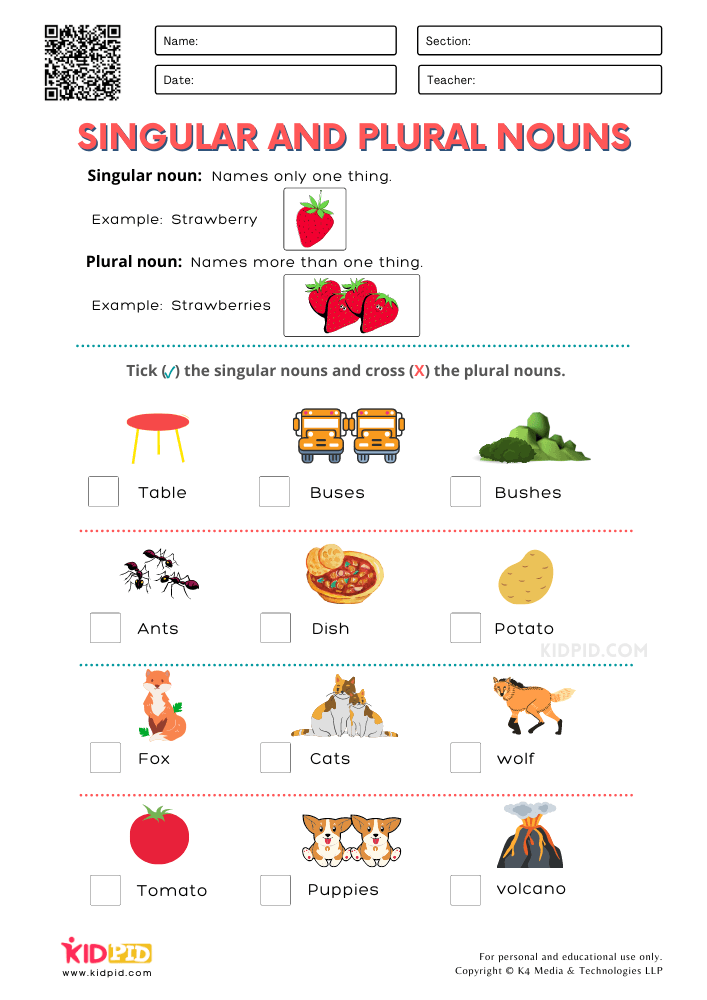
These worksheets help students recognize and differentiate between singular and plural nouns, enhancing their understanding of noun forms and building a strong grammatical foundation through targeted exercises.
Worksheet on Differentiating Between Singular and Plural Nouns

This worksheet focuses on teaching students to distinguish singular from plural nouns, improving their grammar skills and language proficiency through structured and engaging practice activities.
Sorting Worksheet for Singular and Plural Nouns

Designed to categorize nouns, this worksheet reinforces the distinction between singular and plural forms, promoting critical thinking and organizational skills in an interactive format.
Exercises on Singular and Plural Nouns for Grade 2
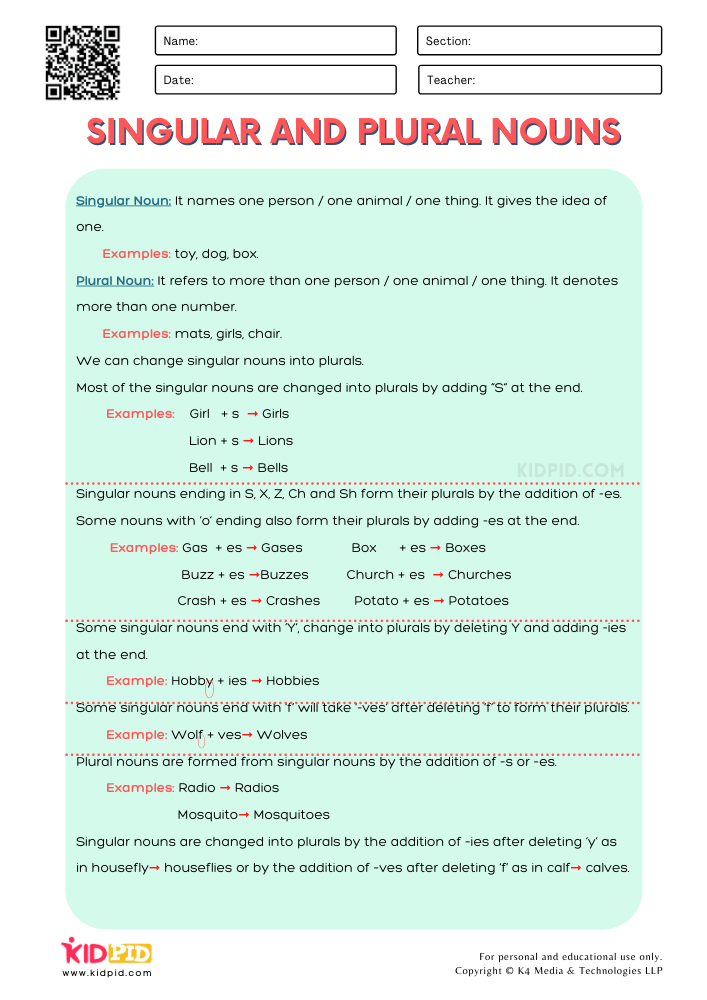
Tailored for second graders, these exercises strengthen understanding of singular and plural nouns, enhancing vocabulary and grammatical accuracy through systematic and age-appropriate practice.
Printable Worksheets for Matching Singular and Plural Nouns for Grade 1
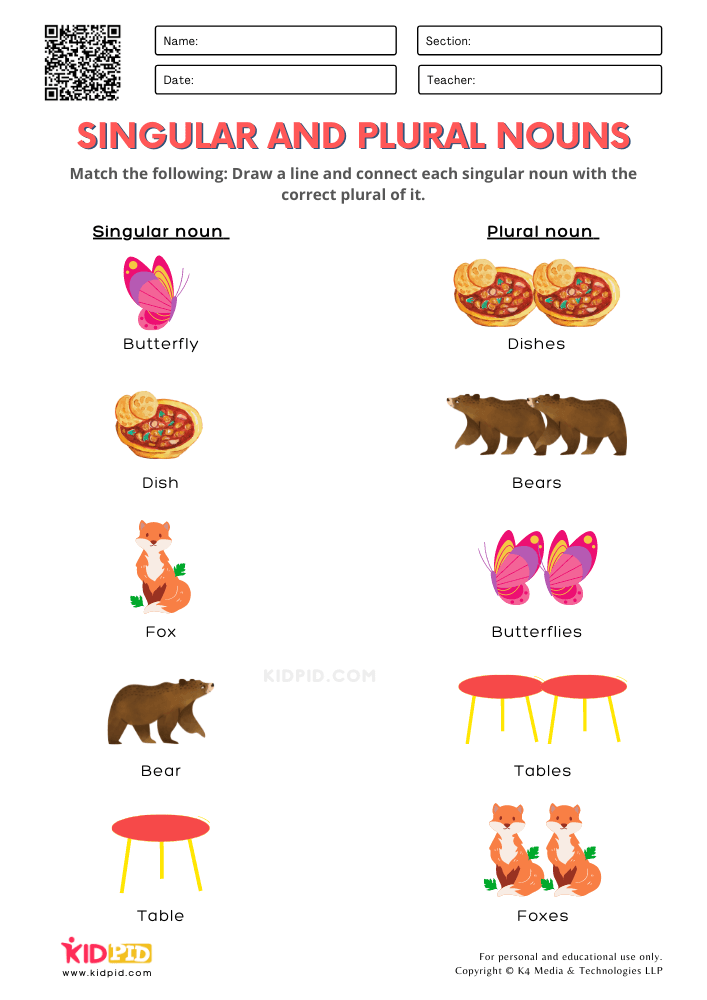
These printable worksheets engage first graders in matching singular nouns with their plural forms, fostering comprehension of noun transformations and reinforcing foundational language skills effectively.



