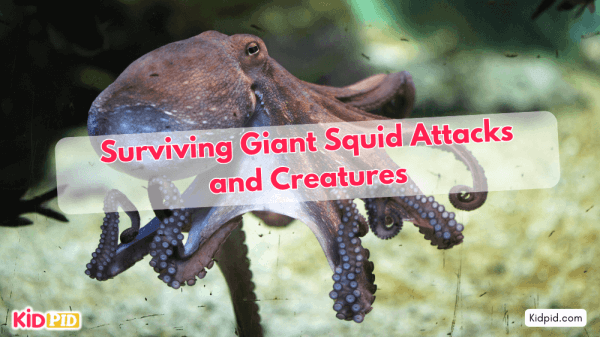
In the deep sea, there are many amazing creatures, like the giant squid. Although they might seem scary, they’re usually not dangerous to humans. However, it’s always good to know how to stay safe if you ever come across one. This guide will teach you how to survive a giant squid attack and stay safe from other deep-sea creatures.
- Giant squids can grow up to 43 feet long and have large eyes.
- They are usually calm and don’t attack humans unless they feel threatened or mistake someone for food.
- Always wear a wet suit, fins, and carry a knife when diving in the ocean.
- If you see a giant squid, stay calm and don’t make fast movements.
- If attacked, protect yourself by aiming for the squid’s eyes or beak.
- Giant squids can only stay underwater for a few minutes, so you can outlast them by holding your breath.
- The best way to stay safe is to learn about deep-sea creatures and respect their space.
Contents
- Surviving A Giant Squid Attack And Other Deep-Sea Creatures.
- Related MCQ’S
- 1. What is the main reason giant squids rarely attack humans?
- 2. What should you always have when exploring the ocean to stay safe?
- 3. How big can a giant squid grow?
- 4. What part of the giant squid is most sensitive and should be targeted for self-defense?
- 5. What should you do if a giant squid grabs you by your feet?
- 6. How long can a giant squid survive underwater without air?
- 7. What is a special ability of giant squid tentacles?
- 8. What is the safest way to avoid dangerous encounters with giant squids?
- You may like these:
Surviving A Giant Squid Attack And Other Deep-Sea Creatures.

Related MCQ’S
1. What is the main reason giant squids rarely attack humans?
A) They are afraid of humans
B) They only attack if they feel threatened or mistake someone for food
C) They are vegetarian
D) They are too busy hunting other animals
Answer: B) They only attack if they feel threatened or mistake someone for food
Explanation: Giant squids are generally calm and only become aggressive if they feel threatened or mistake humans for food.
2. What should you always have when exploring the ocean to stay safe?
A) A map
B) A wet suit, fins, and a knife
C) A flashlight
D) A fishing rod
Answer: B) A wet suit, fins, and a knife
Explanation: To be prepared for deep-sea creatures, it’s important to have the proper equipment, including a wet suit, fins, and a knife.
3. How big can a giant squid grow?
A) 5 feet
B) 15 feet
C) 43 feet
D) 100 feet
Answer: C) 43 feet
Explanation: Giant squids can grow up to 43 feet in length, making them one of the largest creatures in the ocean.
4. What part of the giant squid is most sensitive and should be targeted for self-defense?
A) Its tentacles
B) Its eyes
C) Its arms
D) Its beak
Answer: B) Its eyes
Explanation: The eyes of a giant squid are its most sensitive part, so striking them can help in self-defense.
5. What should you do if a giant squid grabs you by your feet?
A) Try to swim faster
B) Stay calm and try to strike its eyes or beak
C) Panic and scream
D) Play dead
Answer: B) Stay calm and try to strike its eyes or beak
Explanation: If a giant squid grabs you, you should remain calm and use a knife or your thumb to strike its eyes or beak, which are vulnerable.
6. How long can a giant squid survive underwater without air?
A) Few hours
B) Few days
C) Few minutes
D) Few weeks
Answer: C) Few minutes
Explanation: Giant squids have enough air in their bodies to last only a few minutes, so you can potentially outlast them if you’re able to hold your breath.
7. What is a special ability of giant squid tentacles?
A) They can fly
B) They can regenerate
C) They glow in the dark
D) They can turn invisible
Answer: B) They can regenerate
Explanation: Giant squid tentacles have the ability to regenerate, which is a remarkable feature for survival.
8. What is the safest way to avoid dangerous encounters with giant squids?
A) Swim in shallow waters
B) Educate yourself about the creatures and their behavior
C) Always swim in groups
D) Swim quickly
Answer: B) Educate yourself about the creatures and their behavior
Explanation: Learning about giant squids and their behaviors, habitats, and how to react can help you avoid dangerous encounters.
You may like these:
What animals live in the deep sea?
Discover the fascinating world of deep-sea creatures like anglerfish, giant squid, and bioluminescent jellyfish thriving in the ocean’s darkest depths.
Label The Sea Turtle Worksheet


A fun educational worksheet where kids label sea turtle parts, enhancing marine biology knowledge and improving fine motor skills through interactive learning.
Sea Creatures Handdrawn Flashcard Sheets
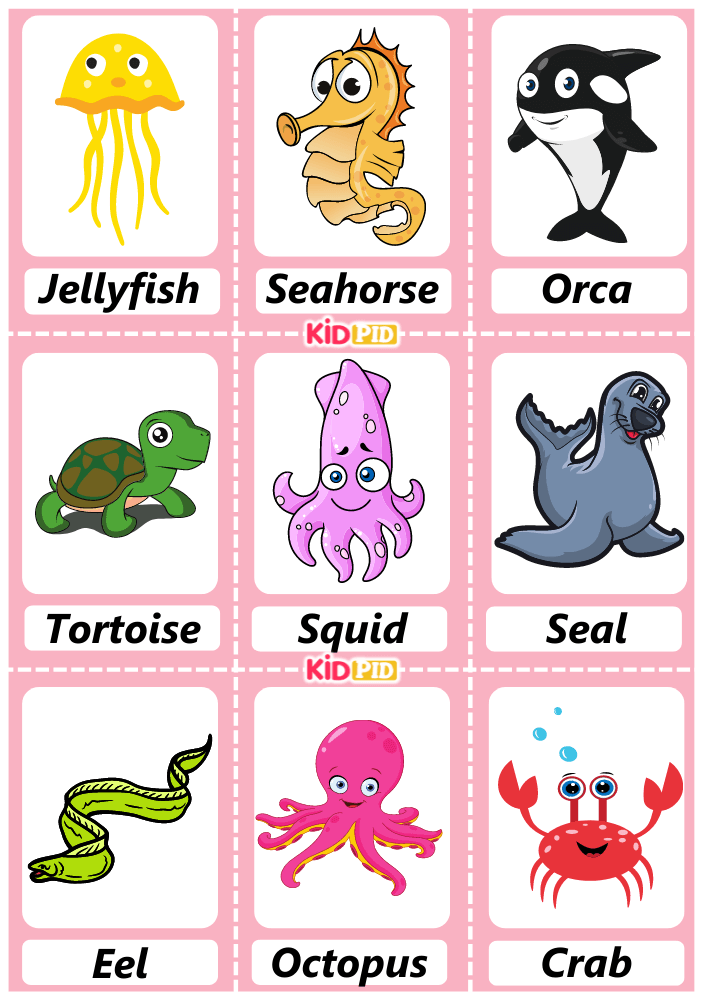
Beautifully hand-drawn flashcards featuring diverse sea creatures, ideal for teaching marine life to kids or enhancing classroom activities with artistic flair.
Sea Animals Worksheets for Kindergarten
Engaging worksheets designed for kindergarteners, featuring fun activities like matching, coloring, and identifying sea animals to develop early learning and observation skills.