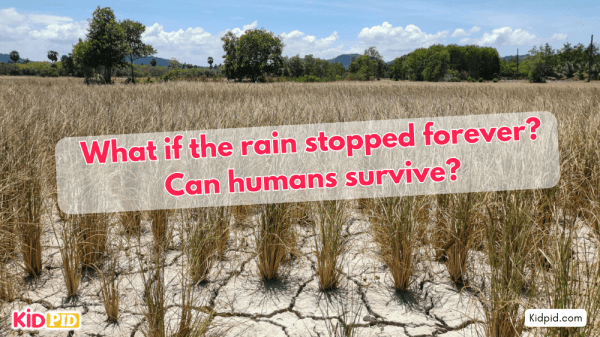
Water is very important for life on Earth. We need water to drink, plants need it to grow, and animals need it to survive. But what would happen if it stopped raining forever? Let’s explore what might happen if there was no more rain and how it would affect humans and the planet.
- Rain and Water: Rain gives us fresh water, which is essential for drinking, farming, and keeping nature alive.
- Impact on Plants and Animals: Without rain, plants would dry up, and animals that rely on water would struggle to survive.
- Water Shortages: Humans would face serious water shortages for drinking and farming.
- Food Scarcity: With no water, crops would not grow, leading to less food for people and animals.
- Temperature Changes: Lack of rain could make the Earth hotter, affecting weather and causing deserts to expand.
- Can We Survive: Humans might try to store or recycle water, but without rain, it would be extremely hard to survive in the long run.
Contents
- What if the rain stopped forever? Can humans survive?
- Related MCQ’s
- 1. What would happen to our water sources if it never rained again?
- 2. How does rain help cool the Earth?
- 3. What would happen to crops if it never rained?
- 4. What is one method humans could use to get fresh water without rain?
- 5. What effect would no rain have on global temperatures?
- 6. How much of Earth’s water is fresh and usable?
- 7. What is one way we can conserve water?
- You may like these:
What if the rain stopped forever? Can humans survive?

Related MCQ’s
1. What would happen to our water sources if it never rained again?
a) They would stay the same
b) They would dry up
c) They would overflow
d) They would freeze
Answer: b) They would dry up
Explanation: Without rain, rivers, lakes, and reservoirs would dry up, causing severe water shortages.
2. How does rain help cool the Earth?
a) By creating clouds
b) By increasing sunlight
c) By providing shade
d) By cooling the land
Answer: d) By cooling the land
Explanation: Rain cools the land and helps maintain a balanced temperature on Earth.
3. What would happen to crops if it never rained?
a) Crops would grow faster
b) Crops would grow taller
c) Crops would fail without rainwater
d) Crops would grow without any water
Answer: c) Crops would fail without rainwater
Explanation: Without rain, crops that depend on natural water would fail, leading to food shortages.
4. What is one method humans could use to get fresh water without rain?
a) Boiling saltwater
b) Desalination of seawater
c) Melting ice
d) Storing clouds
Answer: b) Desalination of seawater
Explanation: Desalination is a process that turns seawater into fresh water, helping with water shortages.
5. What effect would no rain have on global temperatures?
a) Temperatures would get colder
b) Temperatures would stay the same
c) Temperatures would rise
d) Temperatures would drop rapidly
Answer: c) Temperatures would rise
Explanation: Without rain, global temperatures would rise, worsening global warming and leading to more heatwaves and wildfires.
6. How much of Earth’s water is fresh and usable?
a) 10%
b) 5%
c) 1%
d) 0.5%
Answer: d) 0.5%
Explanation: Only 0.5% of the water on Earth is usable and available as fresh water.
7. What is one way we can conserve water?
a) Take longer showers
b) Leave the tap on while brushing your teeth
c) Turn off the tap while brushing your teeth
d) Use more water for gardening
Answer: c) Turn off the tap while brushing your teeth
Explanation: Turning off the tap while brushing your teeth is a simple way to conserve water and help save this valuable resource.
You may like these:
Water
Water is a vital natural resource essential for all life forms, playing a crucial role in ecosystems, agriculture, industry, and sustaining biodiversity.
Crop Production and Management
Crop production involves cultivating plants for food, fiber, or other uses. Effective management includes soil preparation, irrigation, pest control, and harvesting to ensure optimal yields.
How does Water Reach the Top of the Tree from the Roots?
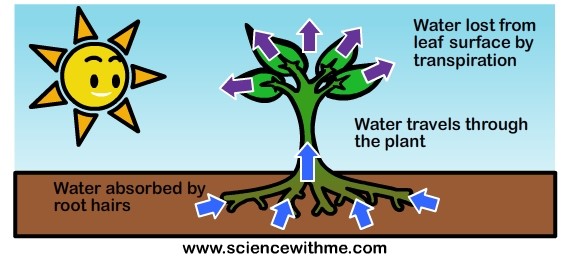

Water reaches the top of a tree through capillary action, root pressure, and transpiration, driven by cohesion, adhesion, and evaporation from leaf surfaces.