


Welcome to our Two-Letter Blends Worksheet for Grade 2! This activity helps young learners trace, write, and spell words with common two-letter blends. By practicing these blends, children will improve their reading and writing skills, making it easier for them to recognize and spell words accurately. Let’s get started on this fun and educational journey to master two-letter blends!
[Scroll Down for Download Link]
Contents
- Trace, Write, and Spell Two-Letter Blend Words Worksheet For Grade 2
- Key Facts About Two Letter Blends Worksheet for Grade 2
- Parts/Types/Examples of Two-Letter Blends Worksheet for Grade 2
- How Does the Two-Letter Blends Worksheet for Grade 2 Work?
- Benefits of Learning About Two-Letter Blends Worksheet for Grade 2
- Learning Objectives
- Worksheet Instructions
- Interesting Facts About Two-Letter Blends Worksheet for Grade 2
- Vocabulary Words
- Real-Life Applications
- FAQs
- Q1. What are two-letter blends?
- Q2. How are blends different from digraphs?
- Q3. Why are two-letter blends important for Grade 2 students?
- Q4. What are some common beginning blends?
- Q5. How often should students practice blend worksheets?
- Q6. Can blended worksheets improve reading confidence?
- Q7. What age group benefits most from these worksheets?
- Q8. Are two-letter blends used in everyday language?
- Read More:
Trace, Write, and Spell Two-Letter Blend Words Worksheet For Grade 2
Read More: Word Blends Printable Worksheets for Kids
‘ad’ – Letter Blend Words
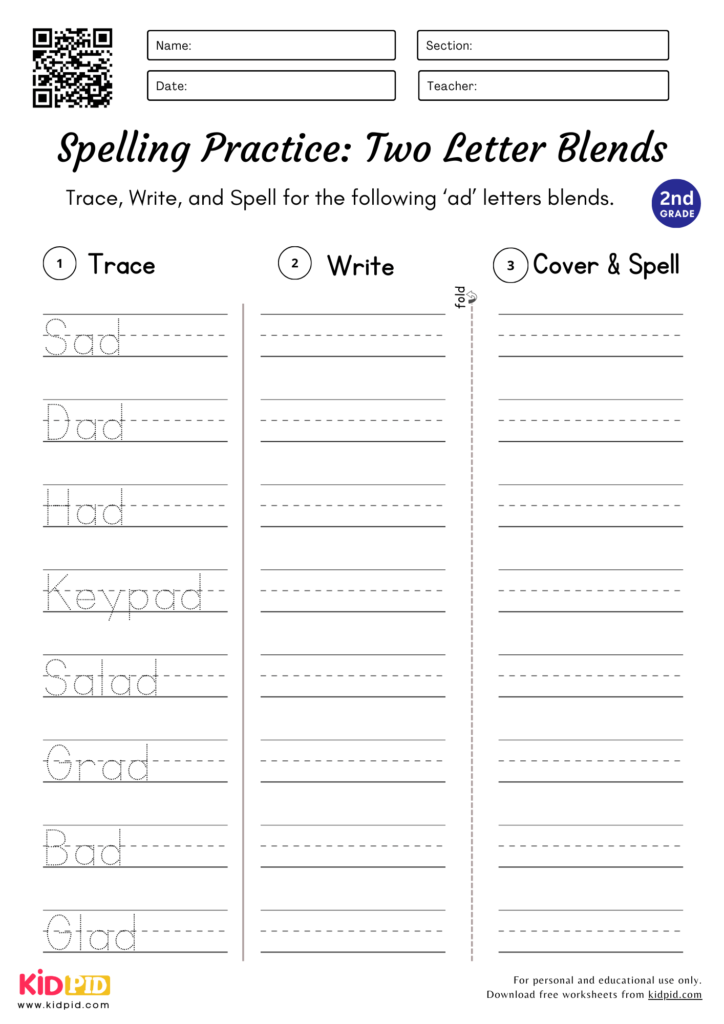
‘ai’ – Letter Blend Words
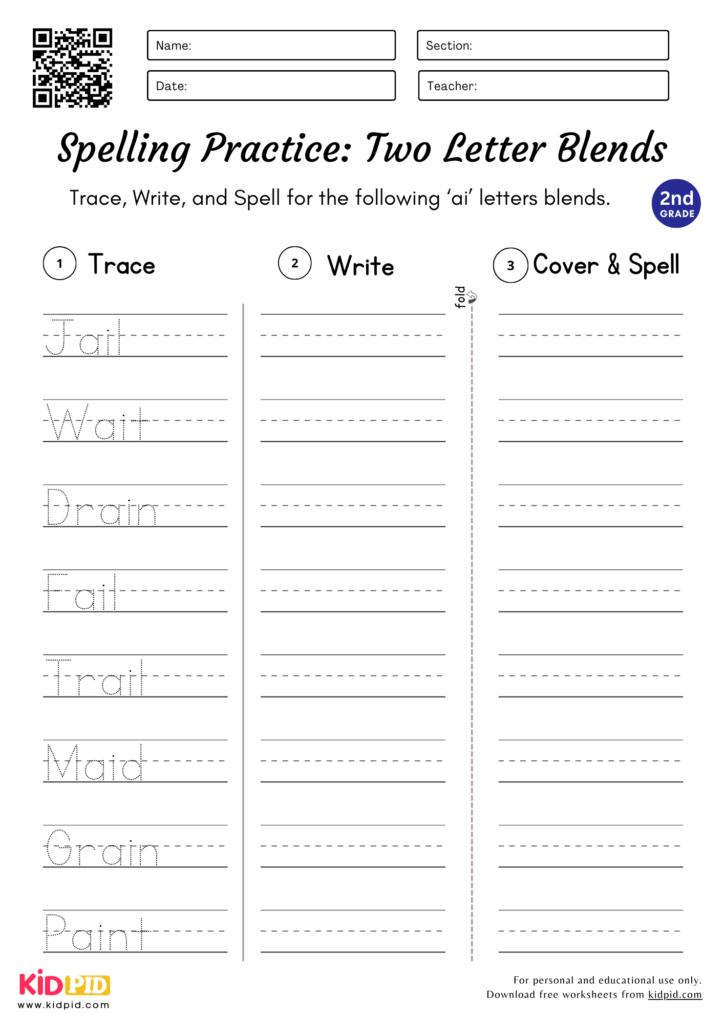
‘aw’ – Letter Blend Words
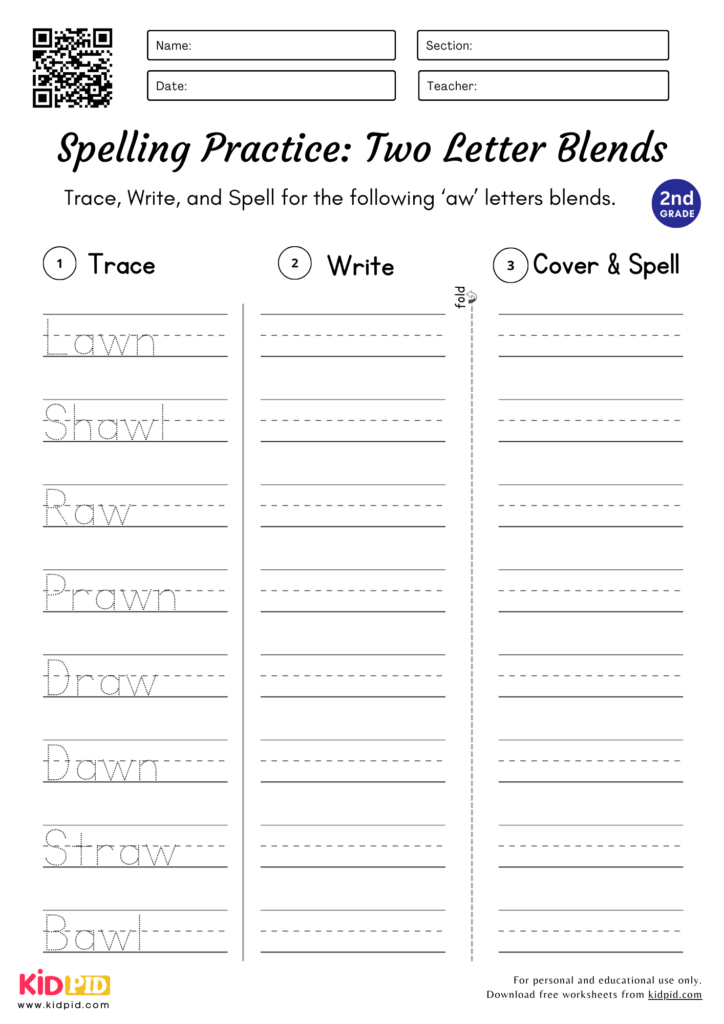
‘ch’ – Letter Blend Words
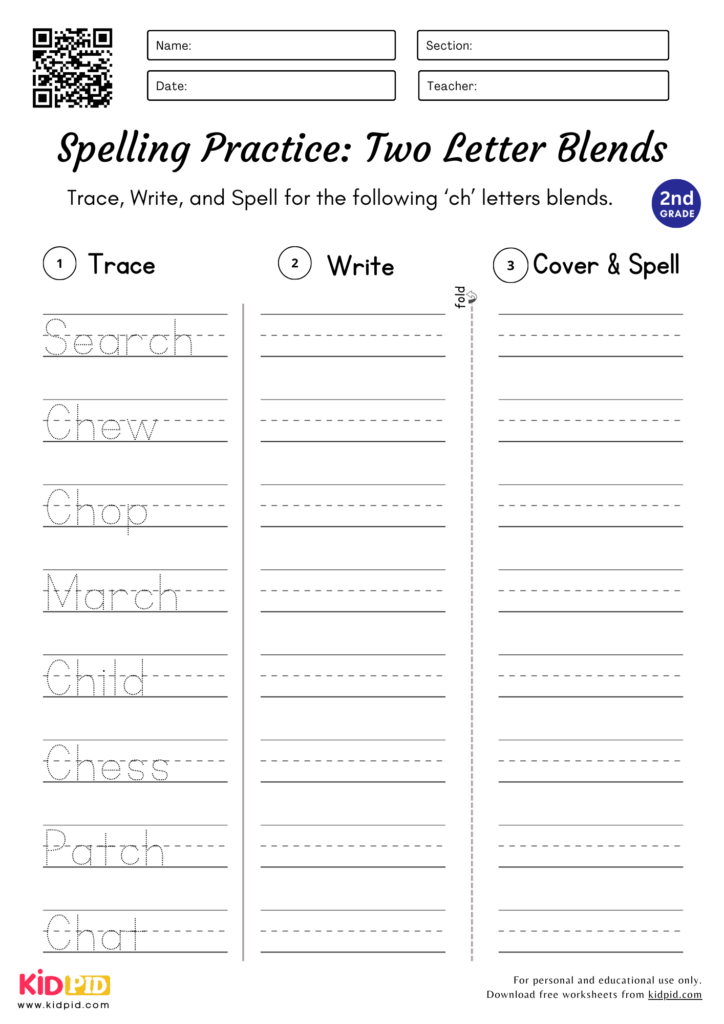
‘ck’ – Letter Blend Words
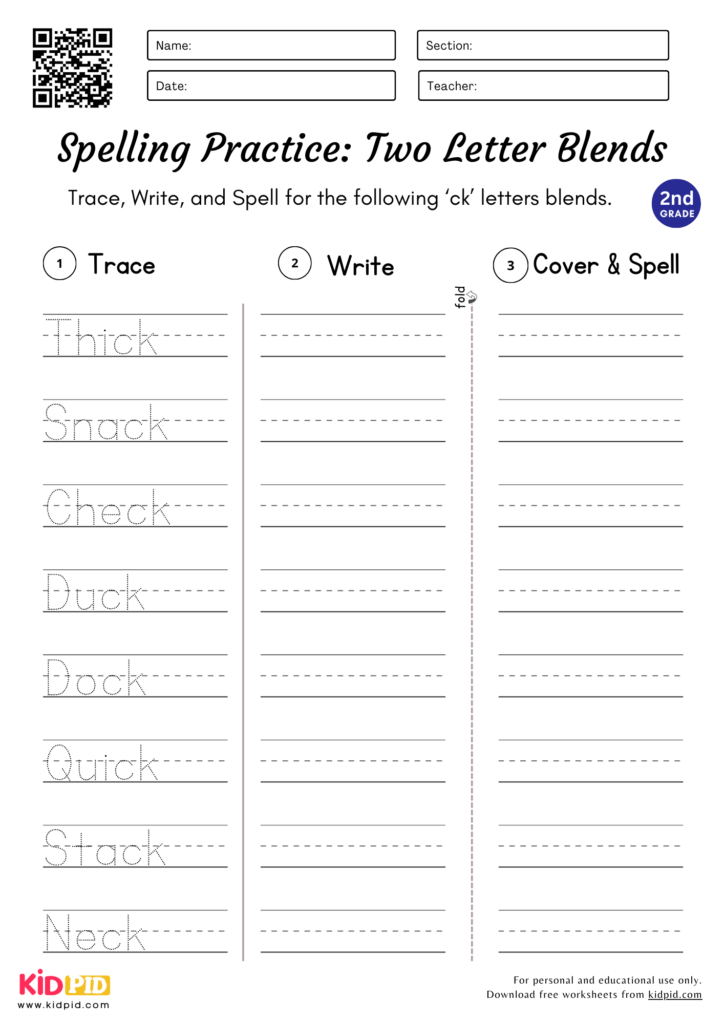
Key Facts About Two Letter Blends Worksheet for Grade 2
The Two Letter Blends Worksheet for Grade 2 helps children develop essential phonics skills by practicing words that contain two consonants blended together. In these blends, both consonant sounds are heard, making them different from digraphs, where two letters create a single sound. This worksheet includes engaging activities such as matching, word completion, reading exercises, and spelling practice. Grade 2 students use these worksheets to improve word recognition, pronunciation, reading fluency, and writing accuracy. Common blends covered include bl, cl, fl, gl, br, cr, dr, fr, gr, pr, tr, sc, sk, sl, sm, sn, sp, st, sw, and tw. Regular practice helps children become more confident readers while strengthening their vocabulary and language comprehension skills.
Parts/Types/Examples of Two-Letter Blends Worksheet for Grade 2
Initial Blends
These blends appear at the beginning of words.
Examples:
- bl – black, blue
- cr – crab, crown
- st – star, stick
- gr – green, grass
Ending Blends
These blends appear at the end of words.
Examples:
- nd – hand, sand
- mp – jump, camp
- lt – belt, melt
- sk – desk, task
Fill-in-the-Blank Activities
Students complete missing blend letters.
Example:
- __ock → block
- __een → green
Matching Activities
Match blend words to corresponding pictures.
Reading Practice
Read sentences containing blended words for fluency development.
How Does the Two-Letter Blends Worksheet for Grade 2 Work?
The worksheet introduces students to common consonant blends through structured activities. Children first identify blend sounds, then practice reading words that contain them. Activities may include tracing words, circling correct blends, matching pictures, completing missing letters, and writing sentences. As students progress, they learn to recognize blend patterns automatically while reading. Repeated exposure strengthens phonemic awareness and helps learners decode unfamiliar words more efficiently. The combination of visual, auditory, and written exercises makes learning interactive and effective for young readers.
Benefits of Learning About Two-Letter Blends Worksheet for Grade 2
- Improves phonics and decoding skills.
- Enhances reading fluency and pronunciation.
- Builds stronger spelling abilities.
- Expands vocabulary through new word exposure.
- Increases confidence in reading independently.
- Supports writing and sentence construction skills.
- Develops phonemic awareness and sound recognition.
- Prepares students for more advanced reading concepts.
- Encourages active participation in literacy activities.
- Strengthens overall language development.
Learning Objectives
By completing this worksheet, students will be able to:
- Identify common two-letter consonant blends.
- Distinguish blend sounds from other phonics patterns.
- Read words containing beginning and ending blends.
- Spell blend words correctly.
- Use blended words in sentences.
- Improve pronunciation and oral reading skills.
- Strengthen vocabulary and comprehension.
- Develop greater confidence in reading and writing.
Worksheet Instructions
- Read each word carefully.
- Identify the two-letter blend in the word.
- Complete missing letters where required.
- Match words to the correct pictures.
- Circle the correct blend in each exercise.
- Read blend words aloud for pronunciation practice.
- Write the words neatly in the provided spaces.
- Use selected blend words to create simple sentences.
- Review answers and correct mistakes.
- Practice regularly to improve reading fluency.
Interesting Facts About Two-Letter Blends Worksheet for Grade 2
- Consonant blends keep the sound of each letter.
- English contains dozens of common two-letter blends.
- Blend words are among the first complex words children learn to read.
- Learning blends improves decoding speed and reading accuracy.
- Many everyday words contain consonant blends.
- Blends appear at the beginning, middle, and end of words.
- Strong blend recognition helps students tackle longer words.
- Phonics instruction often includes blend practice after basic letter sounds.
- Blend activities support both reading and spelling development.
- Early mastery of blends contributes to stronger literacy outcomes.
Vocabulary Words
BL Blend
- Blue
- Block
- Black
- Blend
BR Blend
- Brown
- Bread
- Branch
- Brick
CL Blend
- Clock
- Clap
- Clip
- Cloud
CR Blend
- Crab
- Crown
- Cry
- Crayon
DR Blend
- Drum
- Drop
- Dress
- Dragon
FR Blend
- Frog
- Fruit
- Frame
- Fresh
GR Blend
- Grass
- Green
- Grow
- Great
ST Blend
- Star
- Stick
- Stop
- Store
TR Blend
- Tree
- Train
- Truck
- Trip
SW Blend
- Swim
- Sweet
- Swing
- Sweep
Real-Life Applications
Two-letter blends appear in many words children encounter every day. Students use blend recognition while reading storybooks, classroom materials, signs, menus, labels, and instructions. Strong blend skills help children communicate more clearly when speaking and writing. They also support success in other academic subjects where reading comprehension is important. As literacy develops, recognizing blends allows students to read faster and understand more complex texts with greater ease.
FAQs
Q1. What are two-letter blends?
Answer: Two-letter blends are combinations of two consonants where both sounds are heard when spoken, such as bl, cr, and st.
Q2. How are blends different from digraphs?
Answer: In blends, each consonant keeps its own sound. In digraphs, two letters combine to make one sound, such as sh or ch.
Q3. Why are two-letter blends important for Grade 2 students?
Answer: They help improve phonics skills, reading fluency, spelling, and vocabulary development.
Q4. What are some common beginning blends?
Answer: Common beginning blends include bl, cl, fl, br, cr, dr, fr, gr, pr, tr, sc, sk, sl, sm, sn, sp, st, sw, and tw.
Q5. How often should students practice blend worksheets?
Answer: Regular practice, even for 10–15 minutes several times a week, helps strengthen reading and spelling skills.
Q6. Can blended worksheets improve reading confidence?
Answer: Yes. As students become familiar with blend patterns, they can decode words more easily, leading to greater reading confidence and independence.
Q7. What age group benefits most from these worksheets?
Answer: These worksheets are ideal for Grade 2 learners, typically ages 7–8, but can also help struggling readers in higher grades.
Q8. Are two-letter blends used in everyday language?
Answer: Yes. Many common English words contain consonant blends, making them an important part of daily reading and communication.
Two-letter blends give Grade 2 students the phonics practice needed for stronger reading foundations. These worksheets improve decoding, spelling, pronunciation, vocabulary growth, and confidence while mastering everyday words through regular practice. Explore our website for creative worksheets, essays, paragraphs, flashcards, quizzes, and interactive learning resources. Follow us on YouTube & Facebook for more educational fun.
The Content Team designed this worksheet to promote academic clarity.
Reviewed By Sandra K Udayan
Read More:



