Soluble and insoluble substances in water help us understand how things mix with water. Some substances dissolve completely, like sugar and salt, while others, like sand and oil, do not. Learning about soluble and insoluble substances is fun and useful in daily life, cooking, and simple science experiments.
[Scroll Down for Download Link]
Contents
Learn About Water Soluble and Water Insoluble

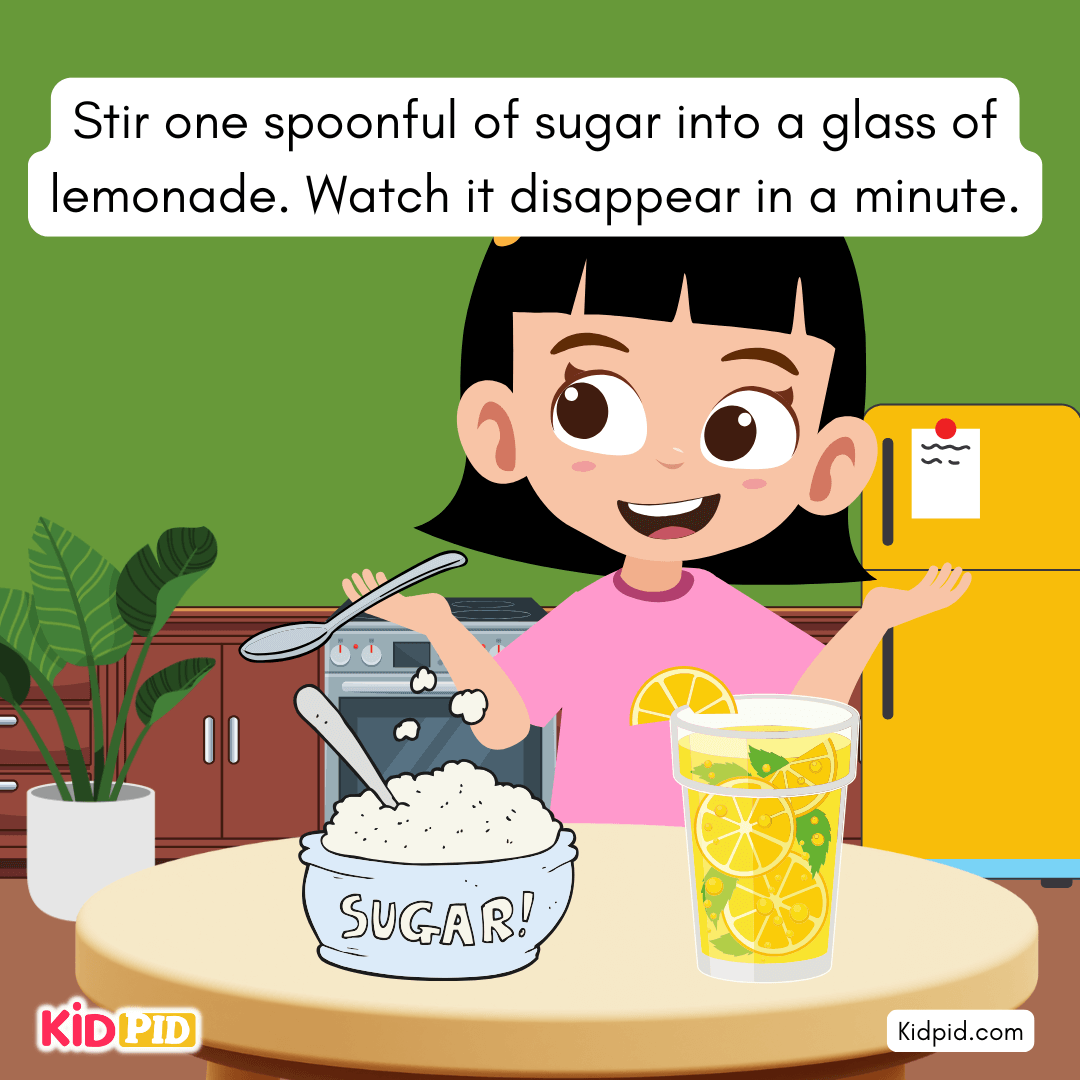
Stir one spoonful of sugar into a glass of lemonade. Watch it disappear in a minute.
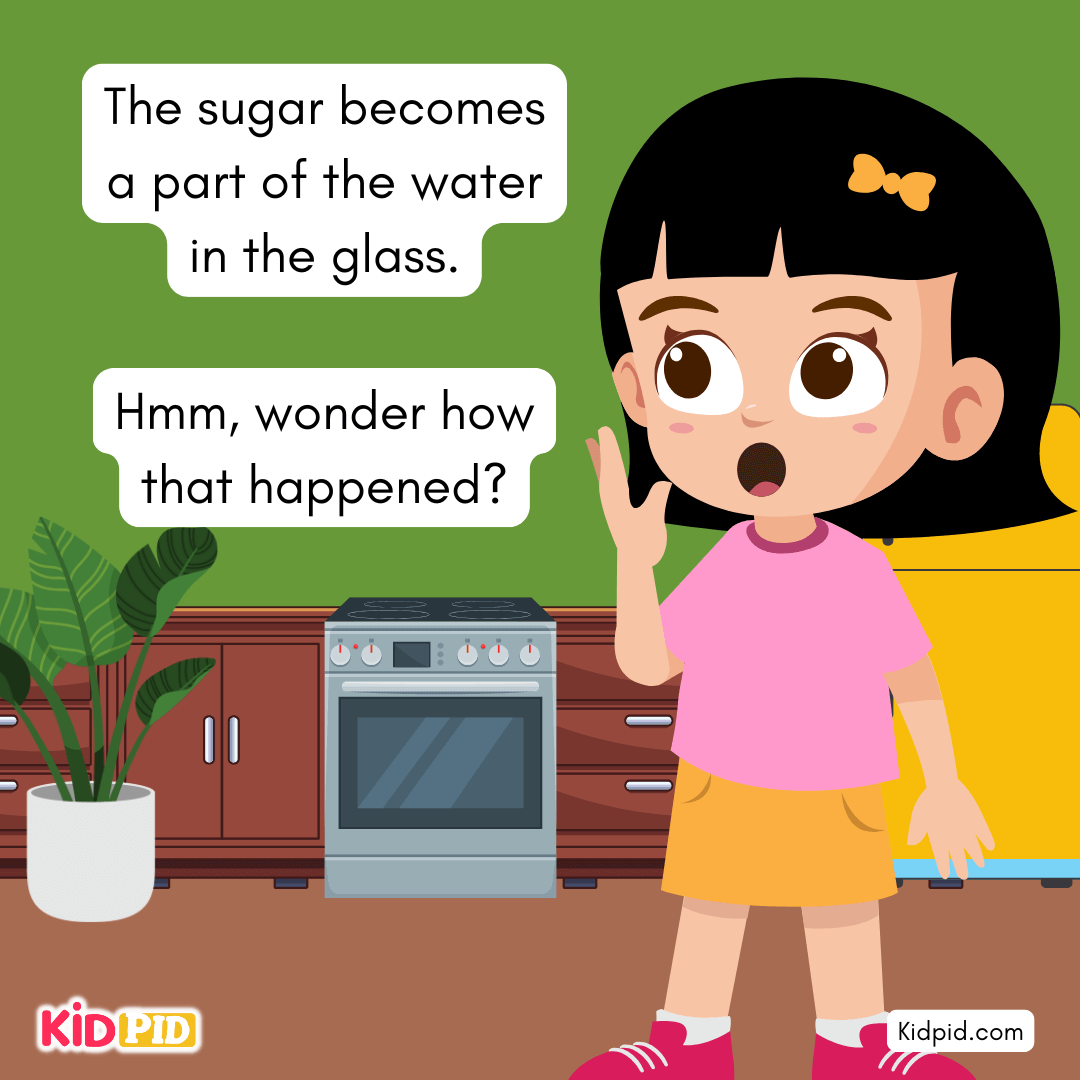
The sugar becomes a part of the water in the glass. Hmm, wonder how that happened?
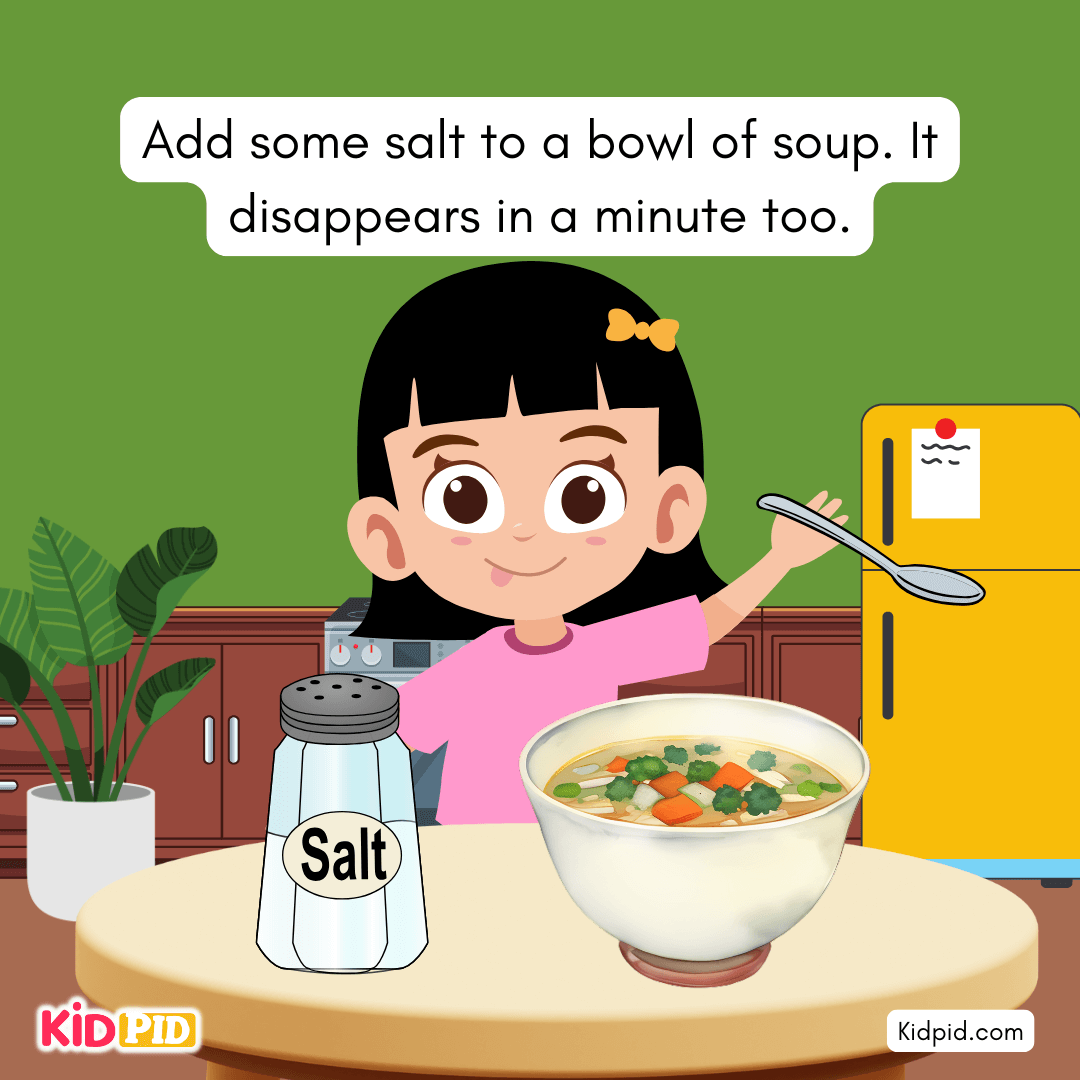
Add some salt to a bowl of soup. It disappears in a minute, too.
You can’t even tell if you added salt. Hmm, wonder how that happened?
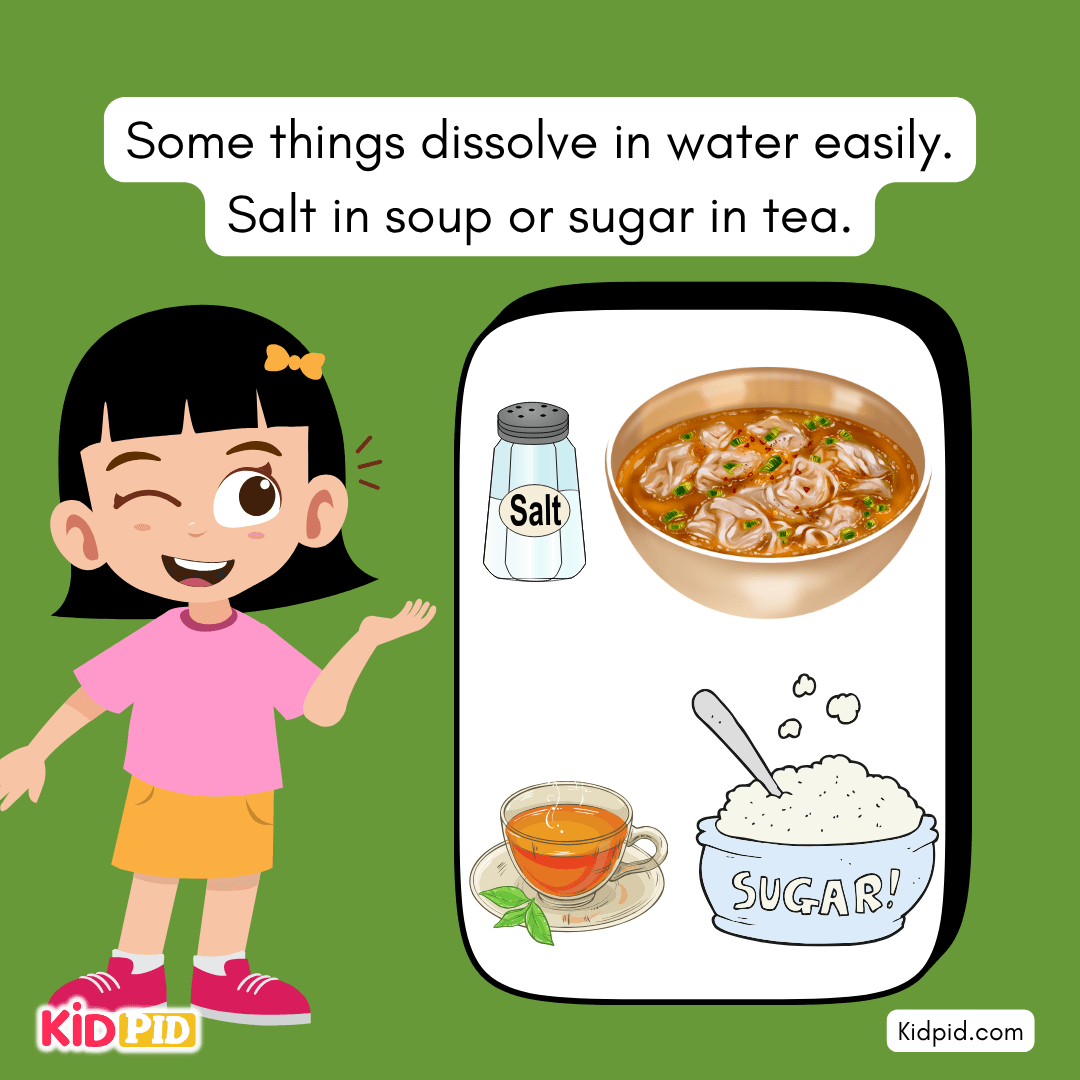
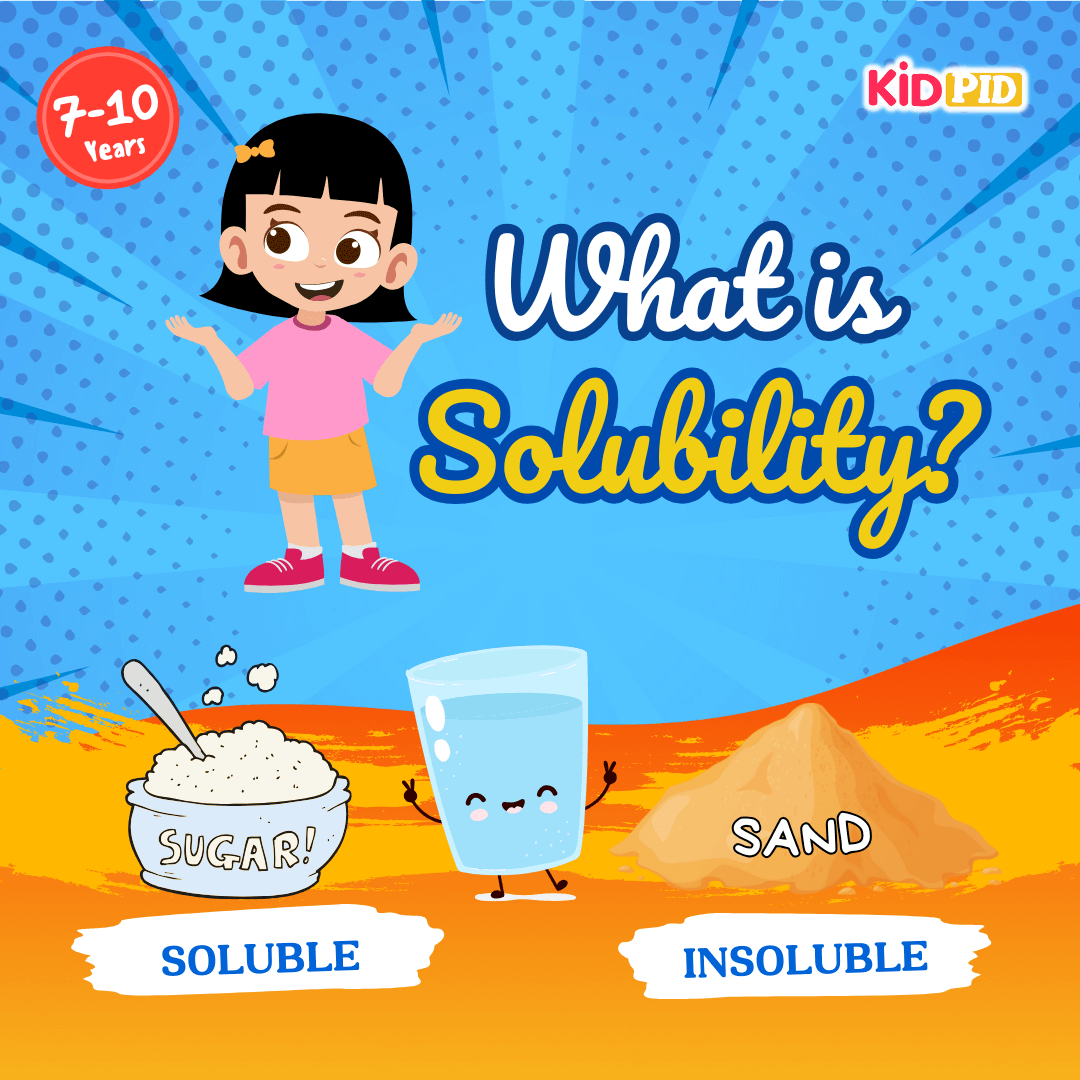
Some things dissolve in water easily. Salt in soup or sugar in tea.
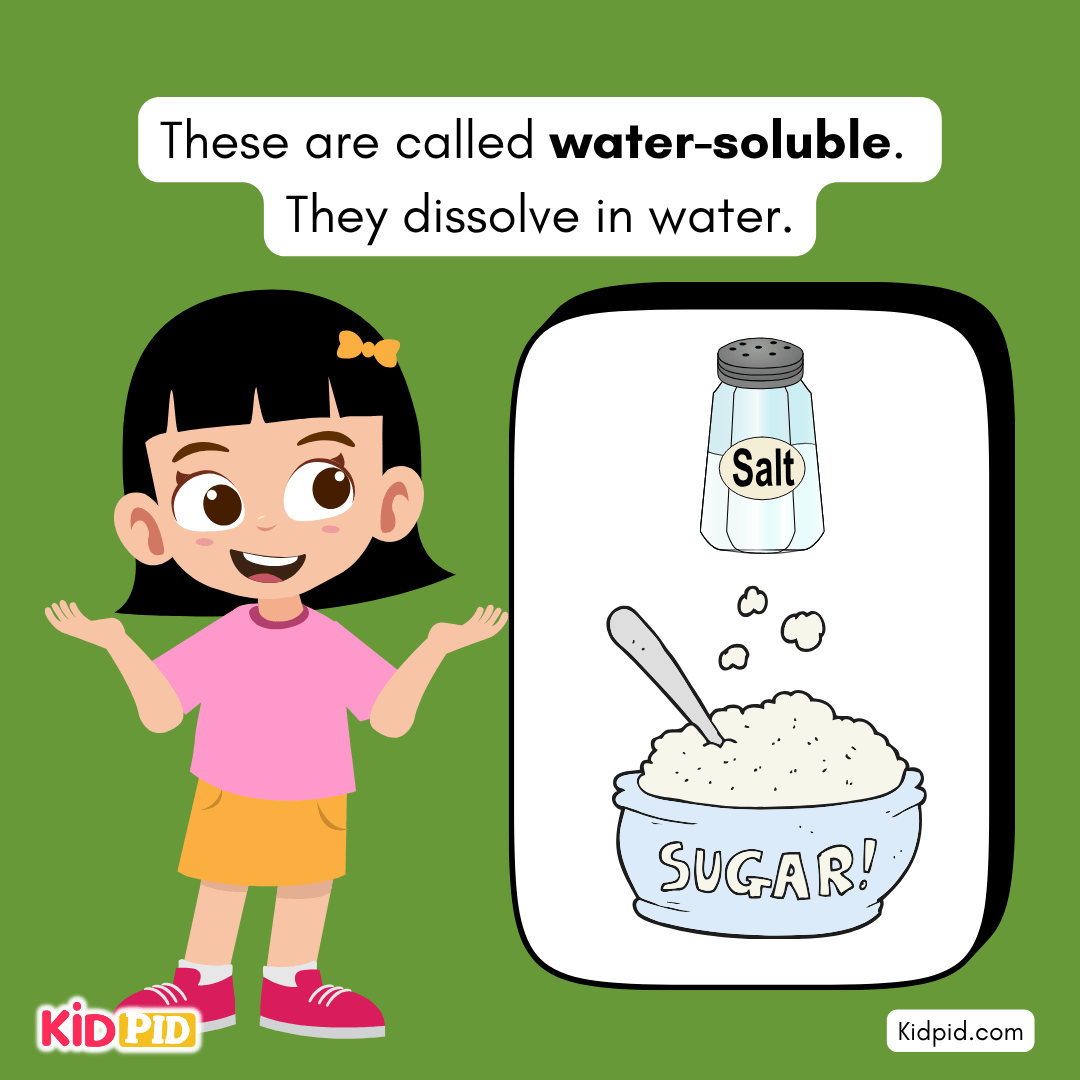
These are called water-soluble. They dissolve in water.
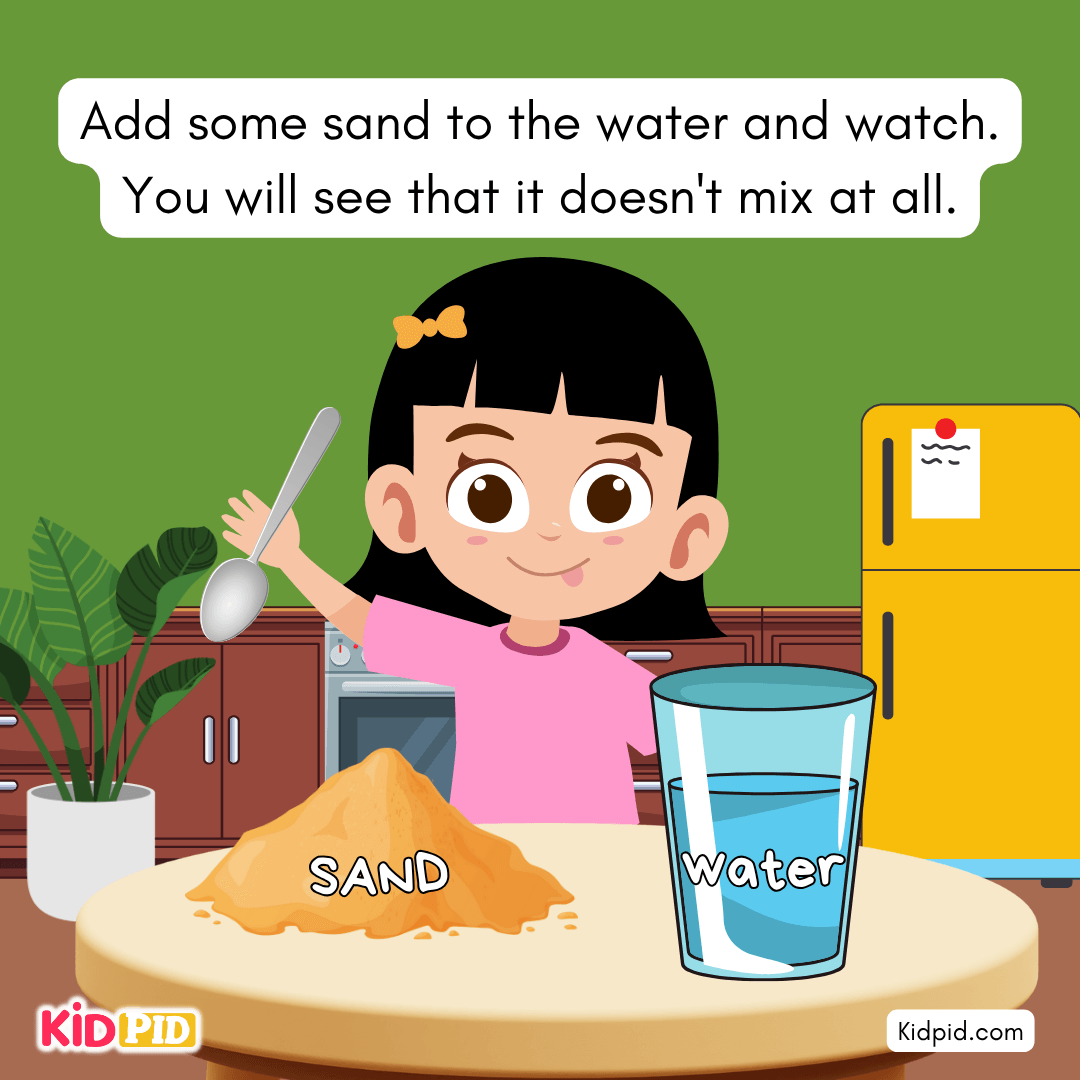
Add some sand to the water and watch. You will see that it doesn’t mix at all.
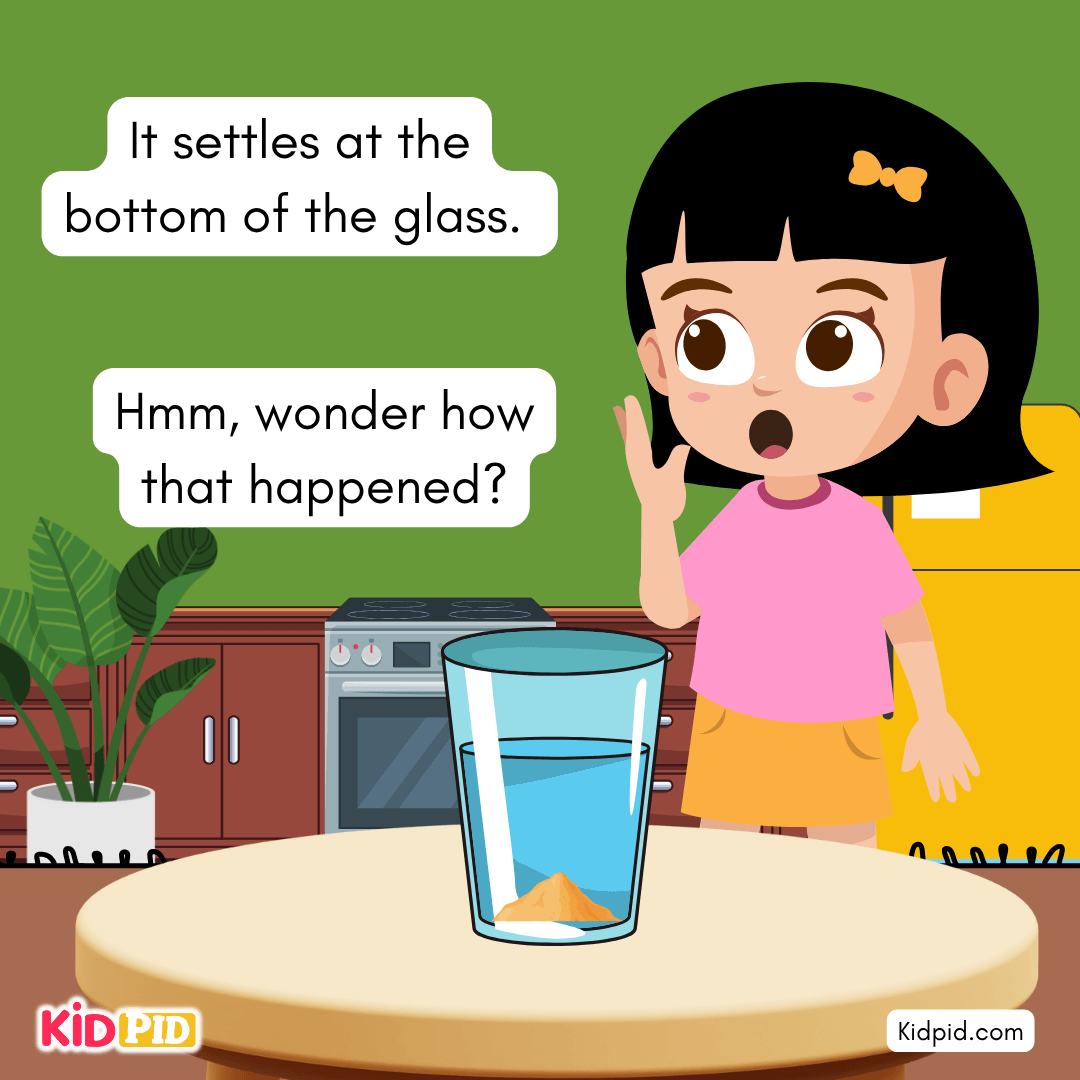
It settles at the bottom of the glass. Hmm, wonder how that happened?
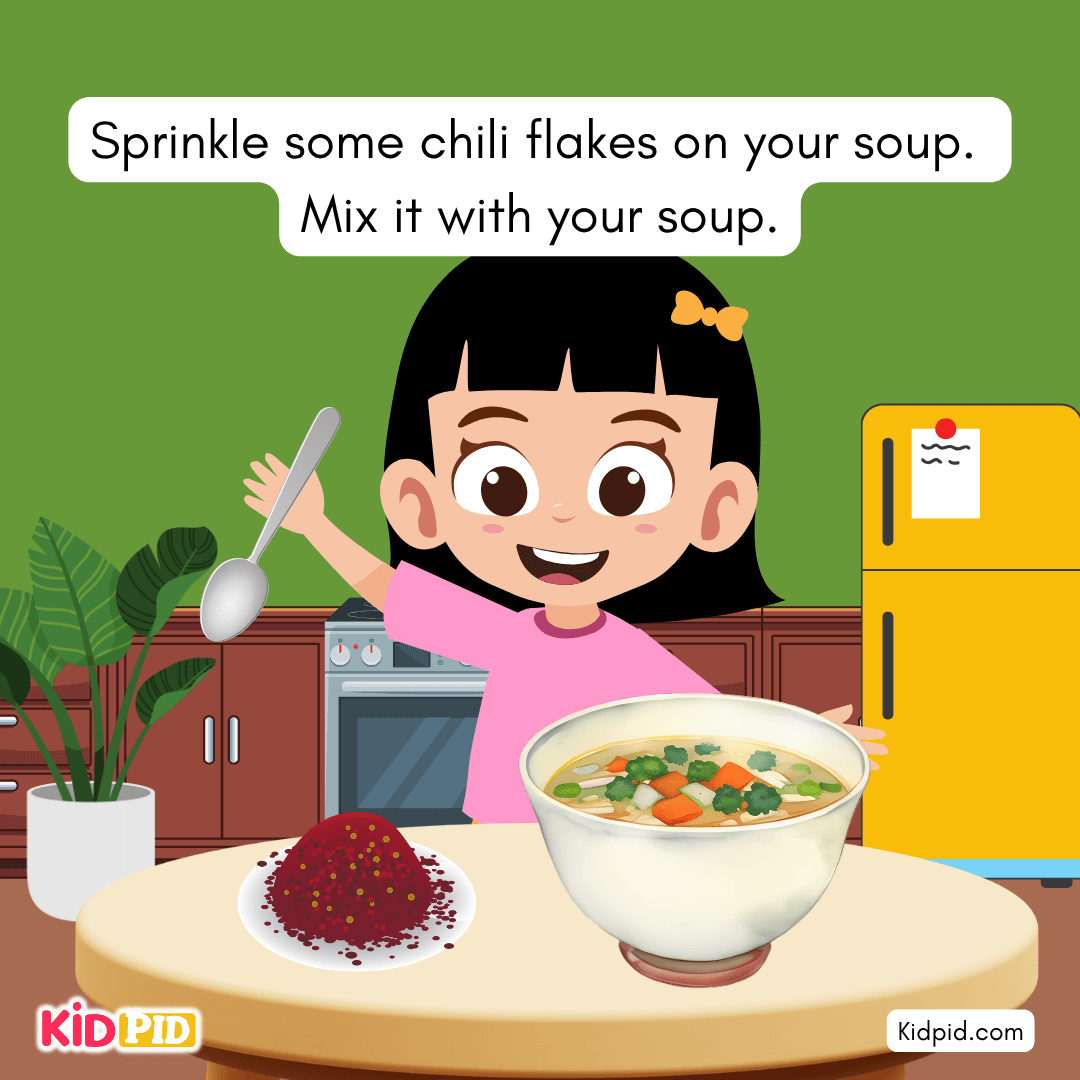
Sprinkle some chili flakes on your soup. Mix it with your soup.
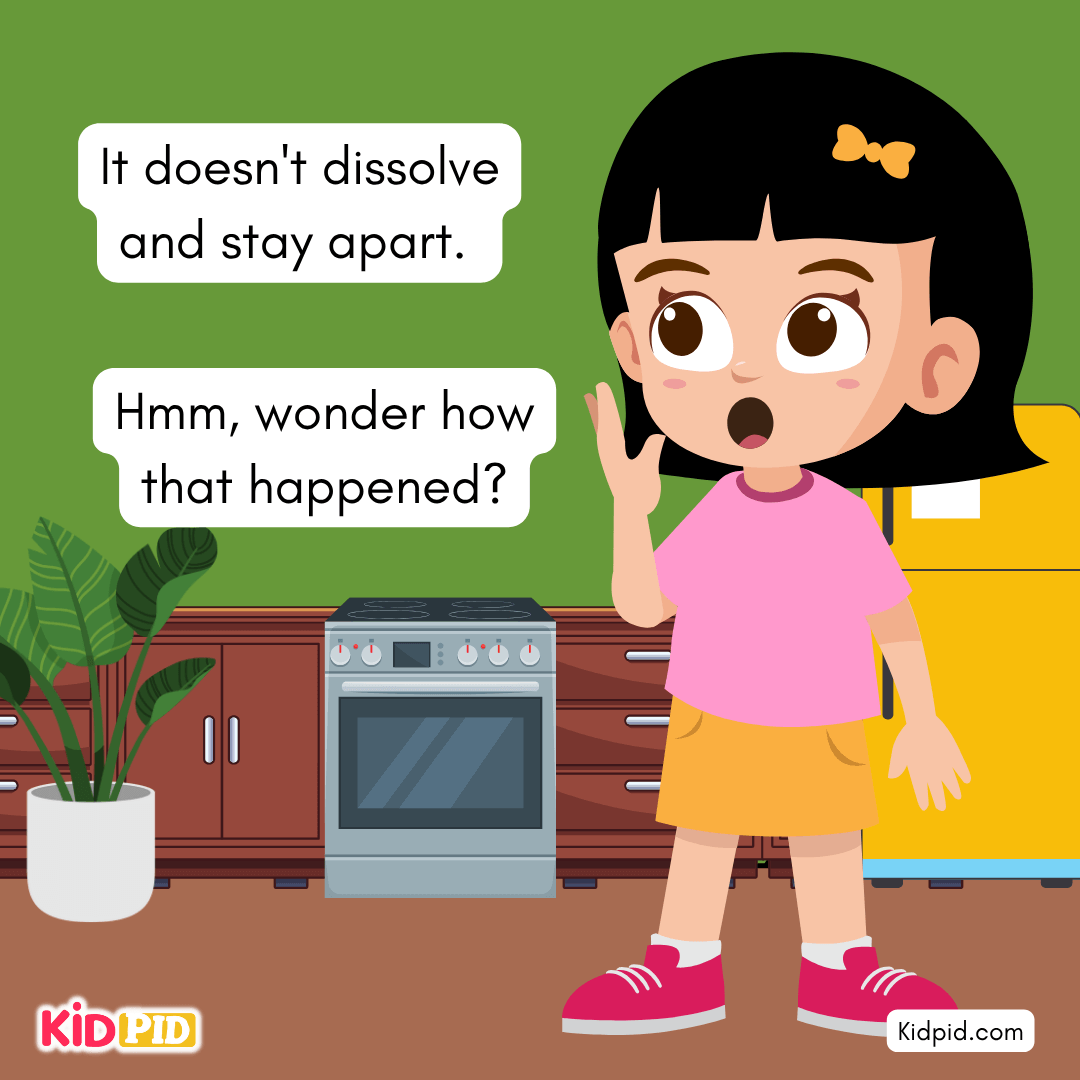
It doesn’t dissolve and stay apart. Hmm, wonder how that happened?
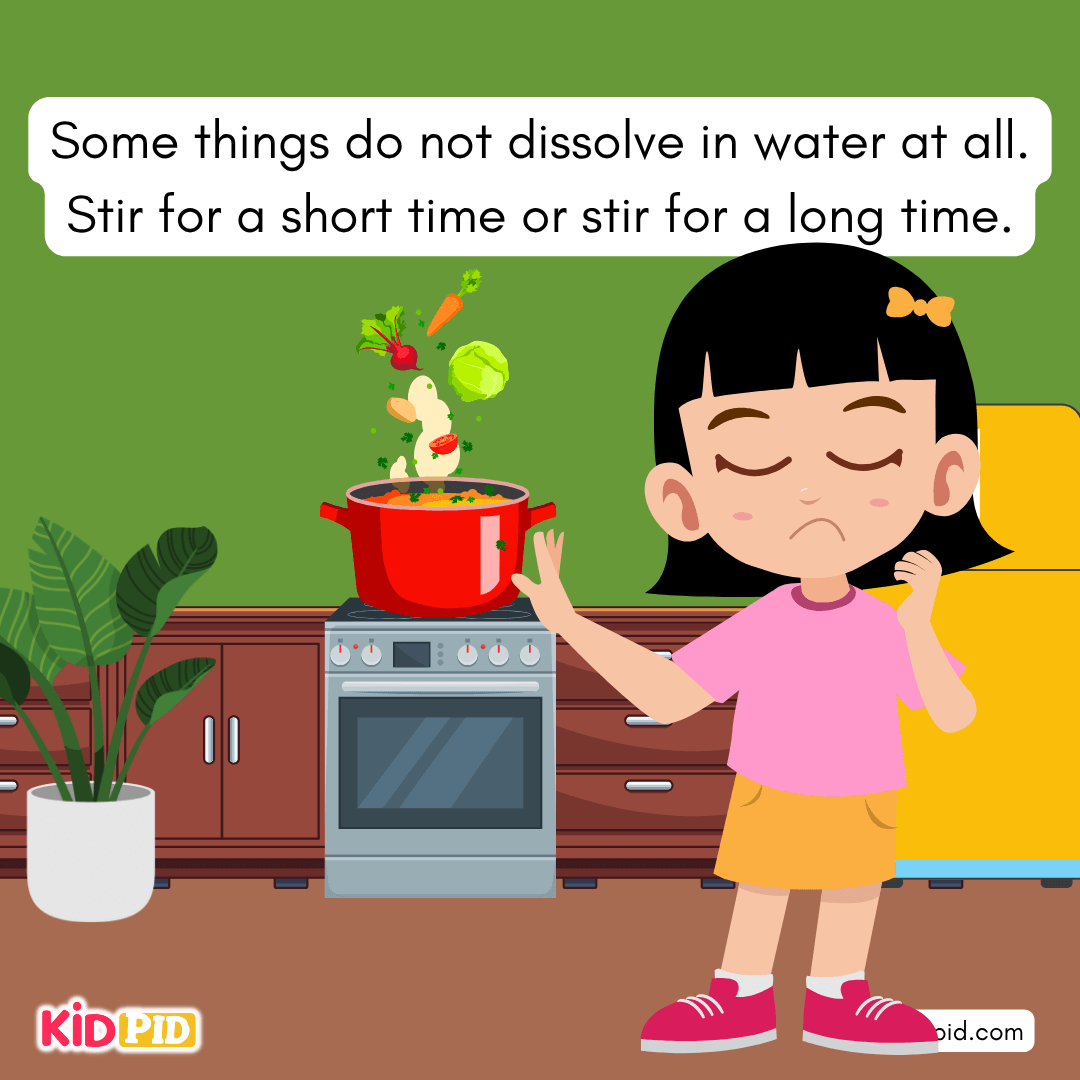
Some things do not dissolve in water at all. Stir for a short time or stir for a long time.
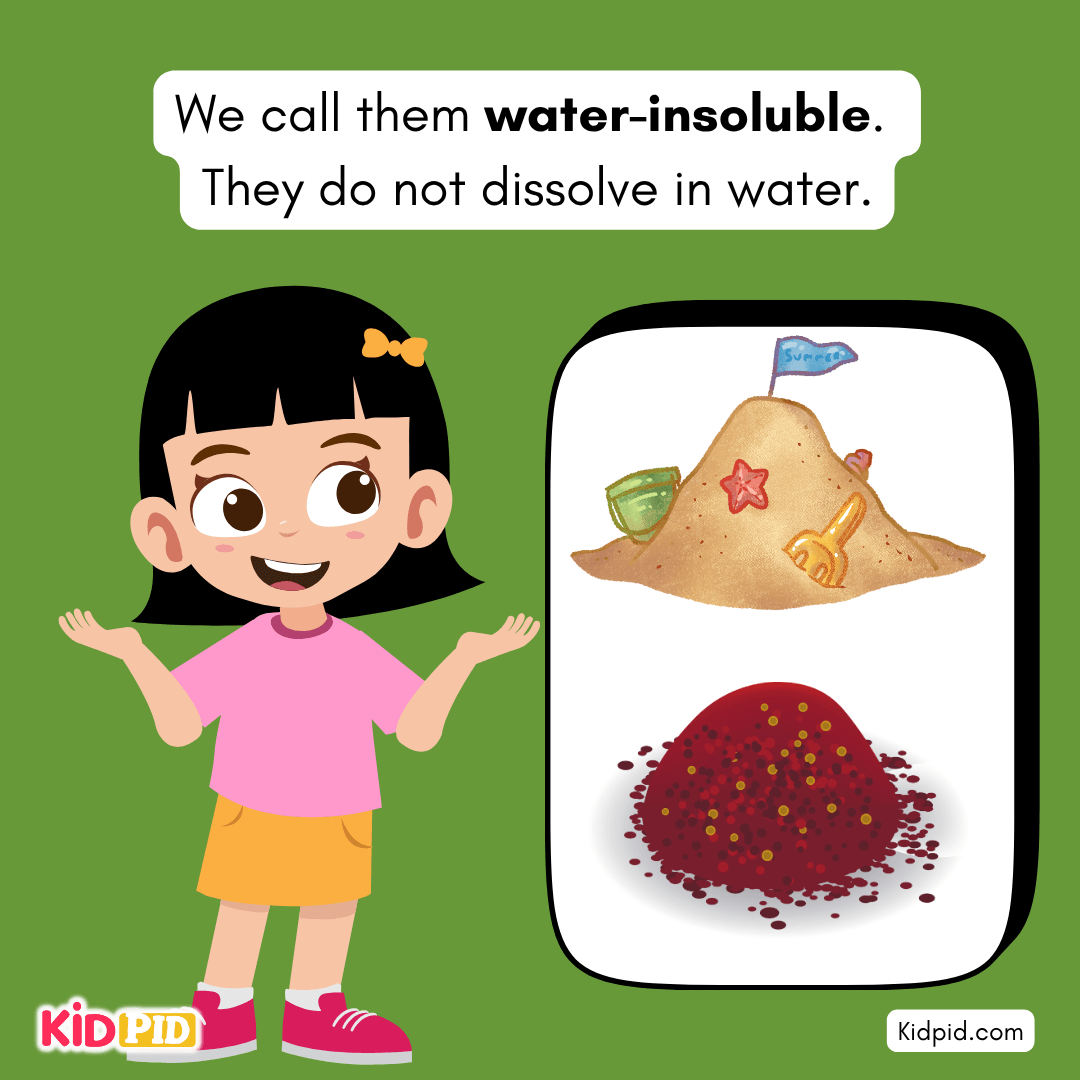
We call them water-insoluble. They do not dissolve in water.
Knowing the difference between water-soluble and water-insoluble substances helps children learn how materials interact with water. It builds curiosity and encourages simple experiments. This basic science concept teaches kids how to observe, compare, and understand the world around them through easy, hands-on learning and real-life examples.

You may like this:
Experiments With Water
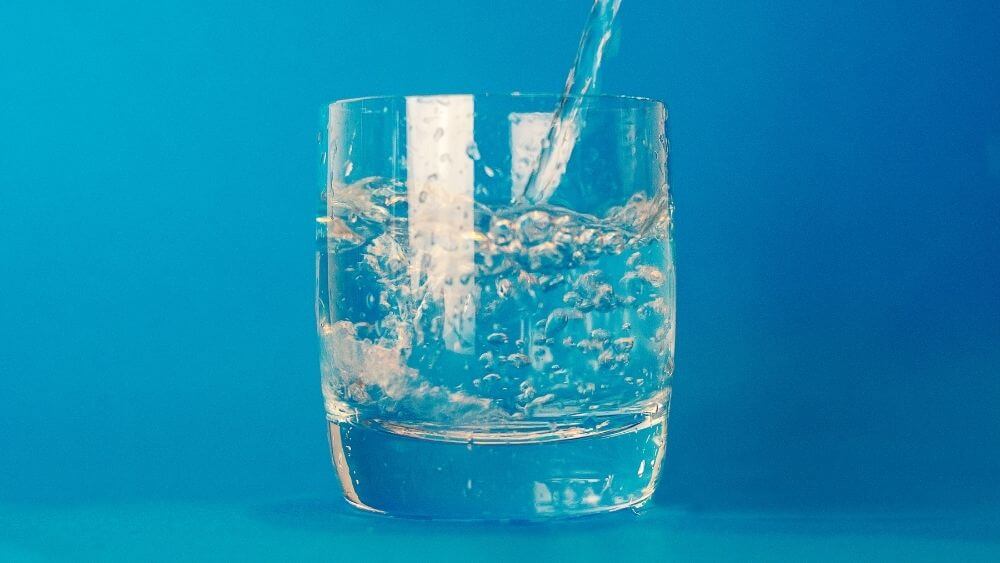

This article shares fun and easy water experiments for kids. These simple activities help children learn science concepts like floating, sinking, and mixing, using water and common household items at home.
States of Water


This article explains the three states of water—solid, liquid, and gas—in a simple way. It helps kids understand how water changes form through heating or cooling using fun examples.
Why is Ice Solid & Water is Liquid?
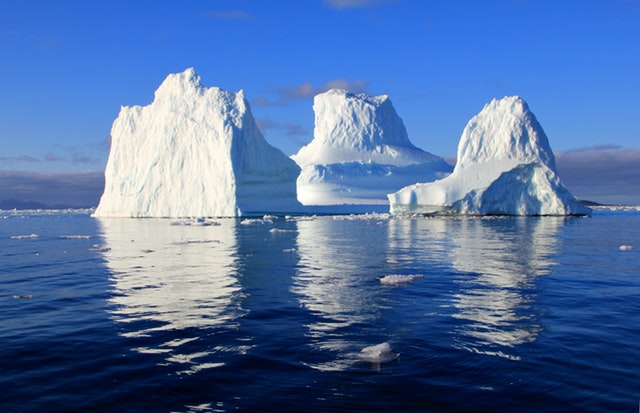

This article explains why ice is solid and water is liquid. It helps kids understand how temperature changes the form of water using simple words and real-life examples.
Sorting Materials into Groups
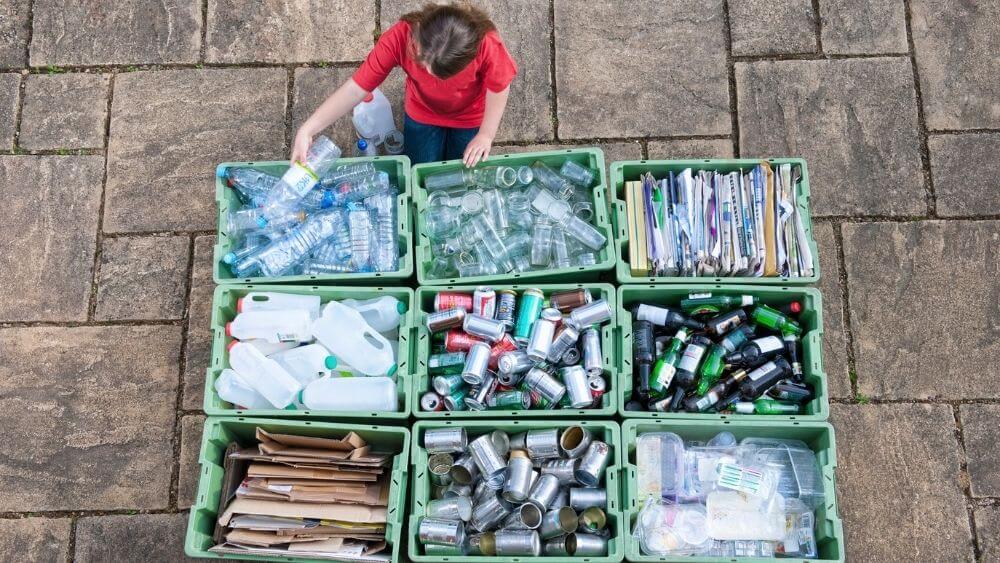
This article helps kids learn how to sort different materials into groups based on their properties, like shape, color, texture, or use. It’s a fun and simple way to understand classification.
Paragraph on ‘Water’


This article explains the importance of water in our daily life. It helps kids understand how water is used, why we should save it, and how it keeps us healthy.