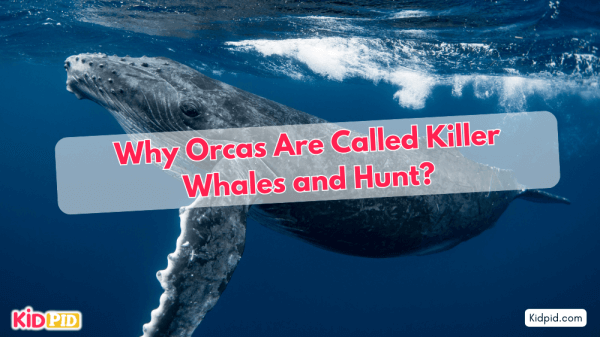
Orcas, also called killer whales, are the biggest members of the dolphin family. Despite their name, they aren’t dangerous to humans, but they are skilled hunters in the ocean. Orcas have special ways of catching food that make them one of the top predators in the sea.
- Orcas are called “Killer Whales” because they hunt large animals, but they aren’t dangerous to humans.
- They are actually part of the dolphin family, not whales.
- Orcas live in groups called pods, which help them hunt better.
- They use teamwork and smart hunting techniques to catch prey like fish, seals, and even sharks.
- Orcas communicate with each other through sounds and signals during a hunt.
Why Orcas Are Called Killer Whales and Hunt?

Related MCQ’s
1. Why are orcas called “killer whales”?
a) They attack humans
b) They hunt large animals like whales
c) They are the biggest fish in the ocean
d) They don’t like other animals
Answer: b) They hunt large animals like whales
Explanation: Orcas are called “killer whales” because they hunt large marine animals like whales, not because they harm humans.
2. How do orcas hunt seals and sea lions?
a) By chasing them quickly
b) By using wave-washing to push them off ice
c) By waiting patiently
d) By hiding underwater
Answer: b) By using wave-washing to push them off ice
Explanation: Orcas use a hunting technique called wave-washing to knock seals and sea lions off ice, making it easier to catch them.
3. Which family do orcas belong to?
a) Whale family
b) Dolphin family
c) Shark family
d) Fish family
Answer: b) Dolphin family
Explanation: Although called killer whales, orcas are actually the largest members of the dolphin family.
4. What is a pod?
a) A group of orcas that hunt together
b) A type of food orcas eat
c) A type of fish orcas catch
d) A large wave in the ocean
Answer: a) A group of orcas that hunt together
Explanation: Orcas live in groups called pods, which help them hunt more effectively by working together.
5. What is the Spanish name for killer whales?
a) El Whale Grande
b) Balena Assassina
c) El Delfín
d) Orca Gigante
Answer: b) Balena Assassina
Explanation: The Spanish term for killer whales is “Balena Assassina,” which translates to “Assassin Whale.”
6. Why is it important to protect orcas and their natural environment?
a) They help keep the marine ecosystem balanced
b) They are scary animals
c) They don’t need our help
d) They live alone
Answer: a) They help keep the marine ecosystem balanced
Explanation: Orcas play a key role in maintaining the balance of marine ecosystems, so it’s important to protect them.
7. How do orcas communicate with each other?
a) By jumping in the water
b) Through clicks, whistles, and other sounds
c) By swimming fast
d) By waving their fins
Answer: b) Through clicks, whistles, and other sounds
Explanation: Orcas use different sounds, like clicks and whistles, to communicate with each other. They even have unique languages in different pods.
You may like these:
How many whales are there in the ocean?
Estimates suggest millions of whales live in oceans, with populations varying by species. Conservation efforts aim to protect endangered species like blue and right whales.
Circle the Picture Beginning Sounds Worksheets for Kids
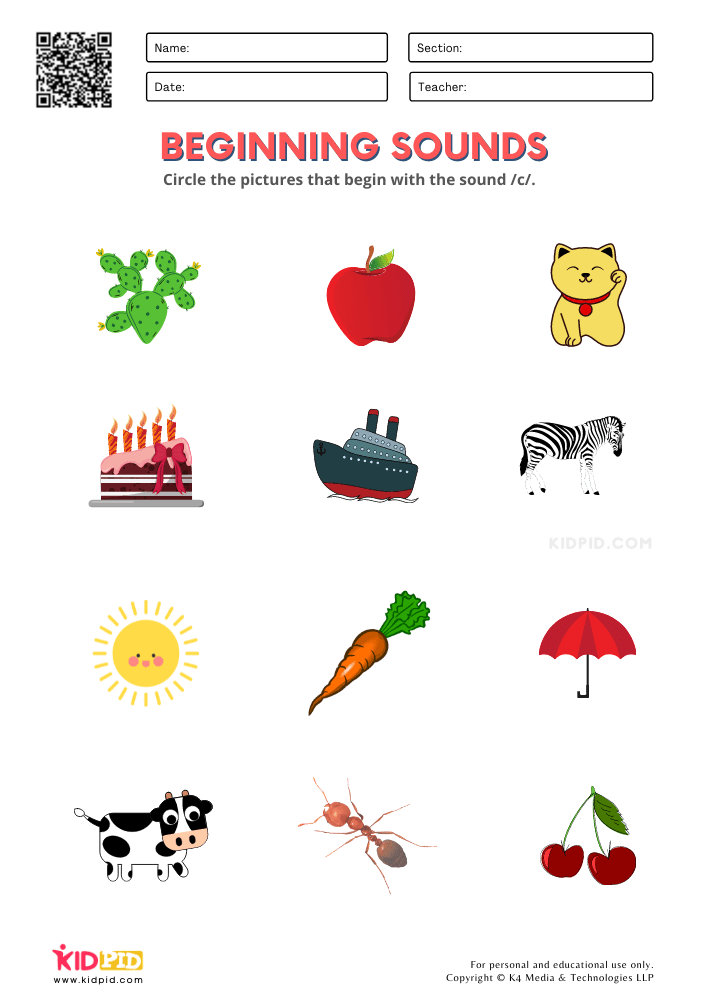

These worksheets help kids learn phonics by circling pictures matching the beginning sounds of letters, improving their listening, comprehension, and early reading abilities.
Why do whales sing?
Whales sing to communicate, navigate, and attract mates. Their songs travel vast ocean distances, playing crucial roles in social bonding and territorial displays.