


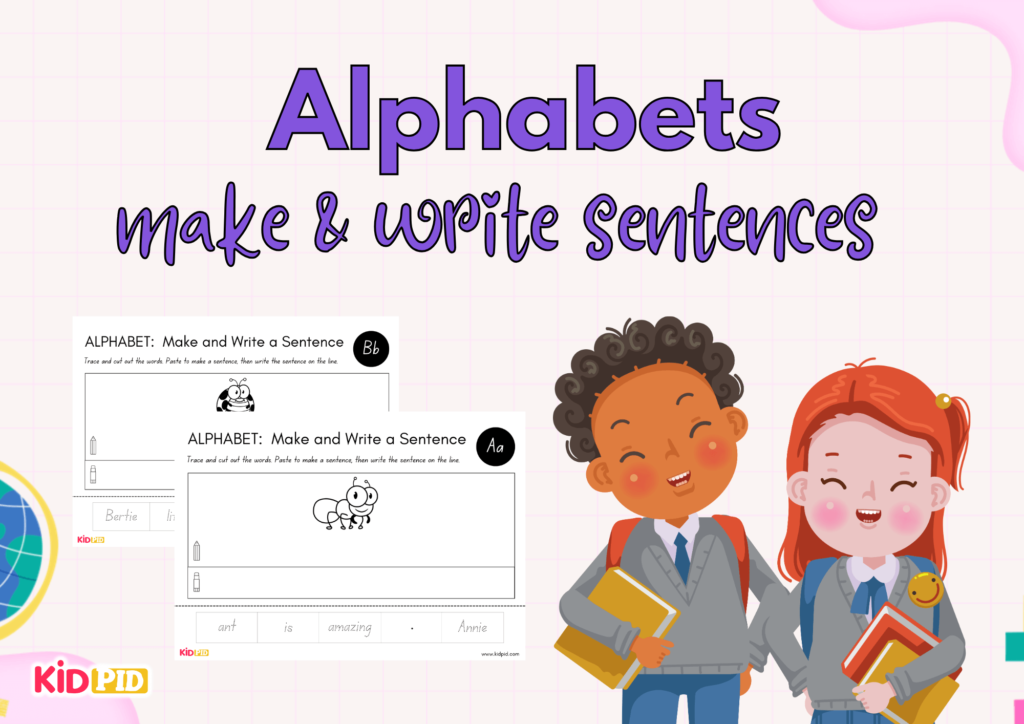
Creating an engaging and educational activity for children can be both fun and beneficial for their language development. In this exercise, children will trace and cut out words to form a sentence. They’ll then paste these words in the correct order to create a coherent sentence. Finally, they’ll write the sentence on a provided line. This activity helps improve fine motor skills, word recognition, and sentence construction abilities.
[Scroll Down for Download Link]
Contents
- Alphabet Make & Write Sentences Worksheet
- Key Facts About Alphabet Handwriting and Sentence Structure Worksheets
- Parts, Types, and Examples of Sentence Structure Worksheets
- How Does an Alphabet Handwriting and Sentence Structure Worksheet Work?
- Benefits of Learning About Alphabet Handwriting and Sentence Structure
- Learning Objectives
- Worksheet Instructions
- Interesting Facts About Writing and Handwriting Worksheets
- Vocabulary Words
- Real-Life Applications
- FAQs
Alphabet Make & Write Sentences Worksheet
Read More: Alphabet Handwriting Printable Worksheets
Alphabet Handwriting and Sentence Structure Book Cover
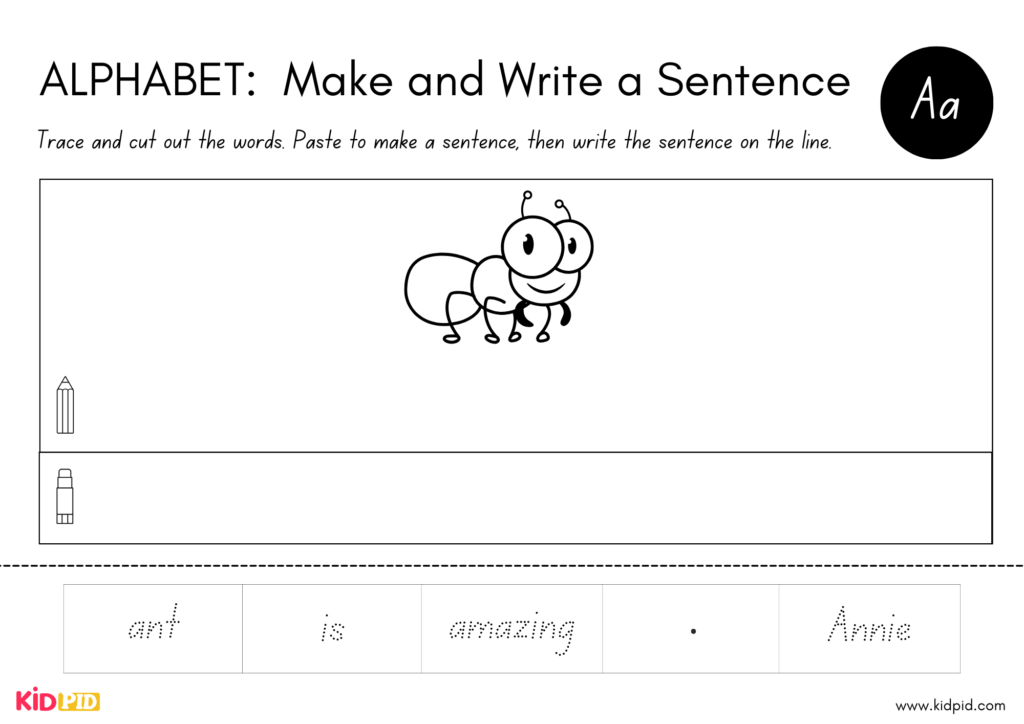
- Annie is amazing.

- Bertie is a little bug.
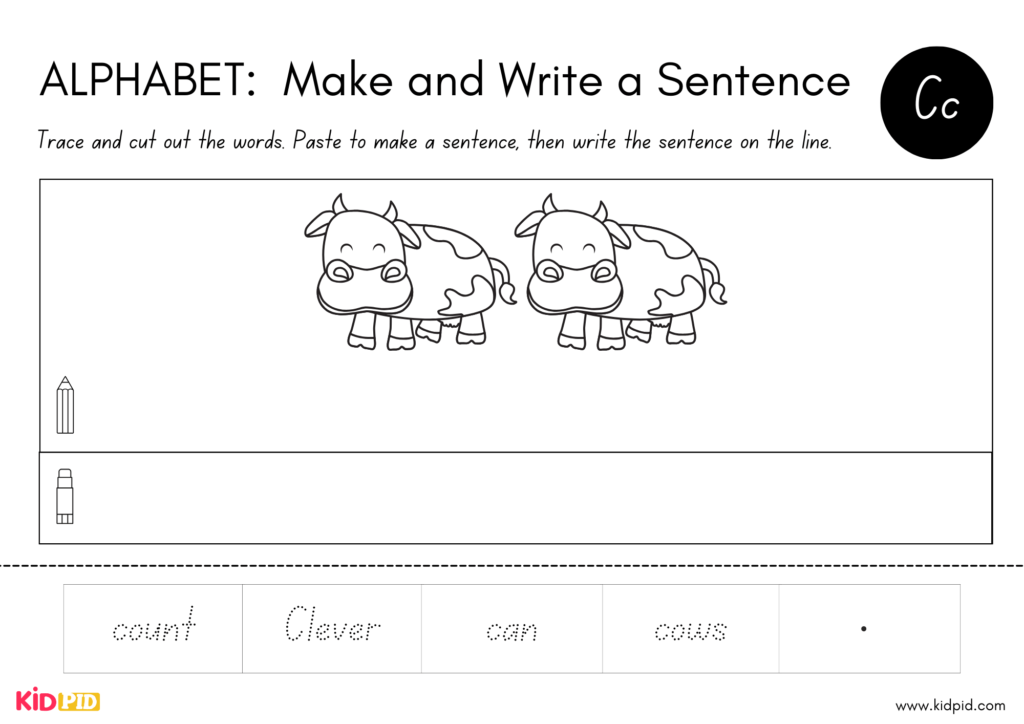
- Clever can count cows.
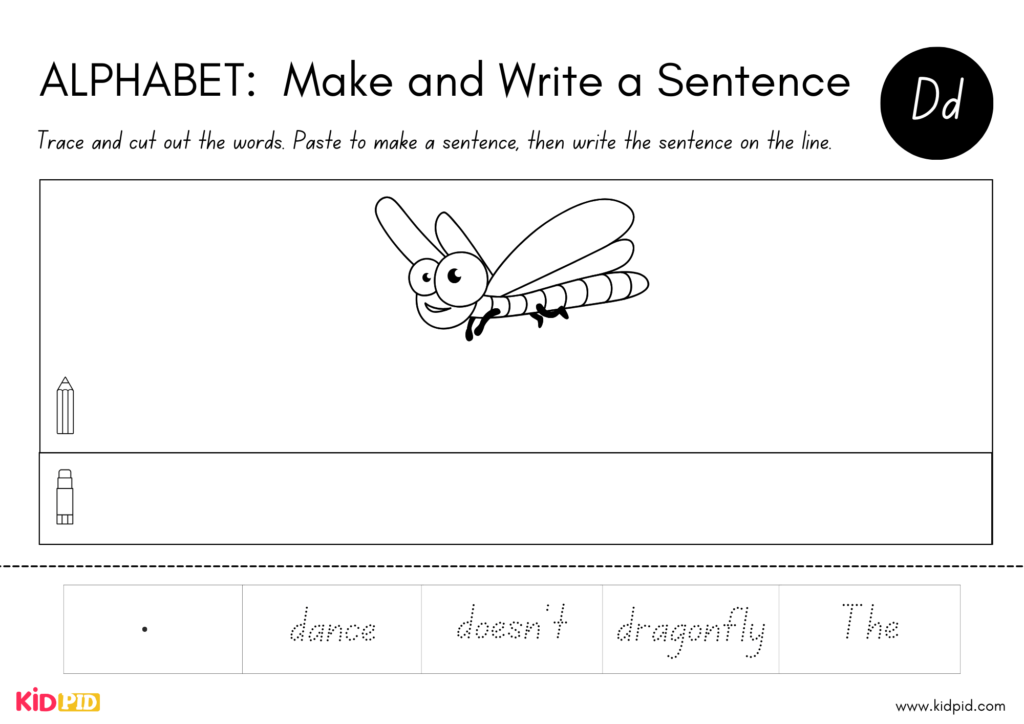
- The dragonfly doesn’t dance.
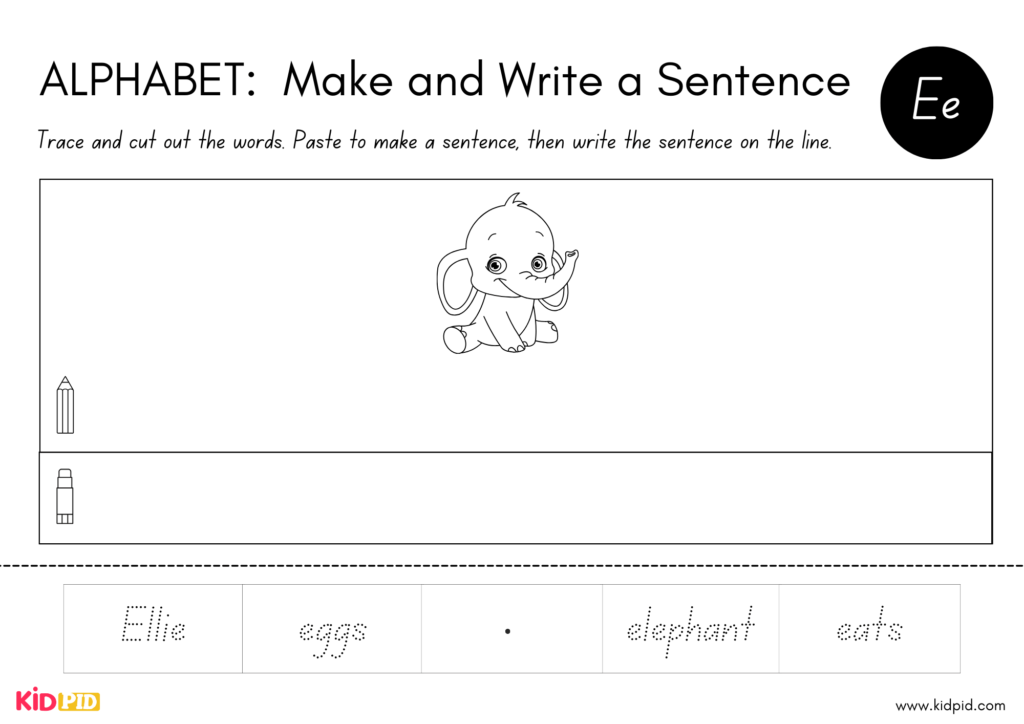
- Ellie the elephant eats eggs.
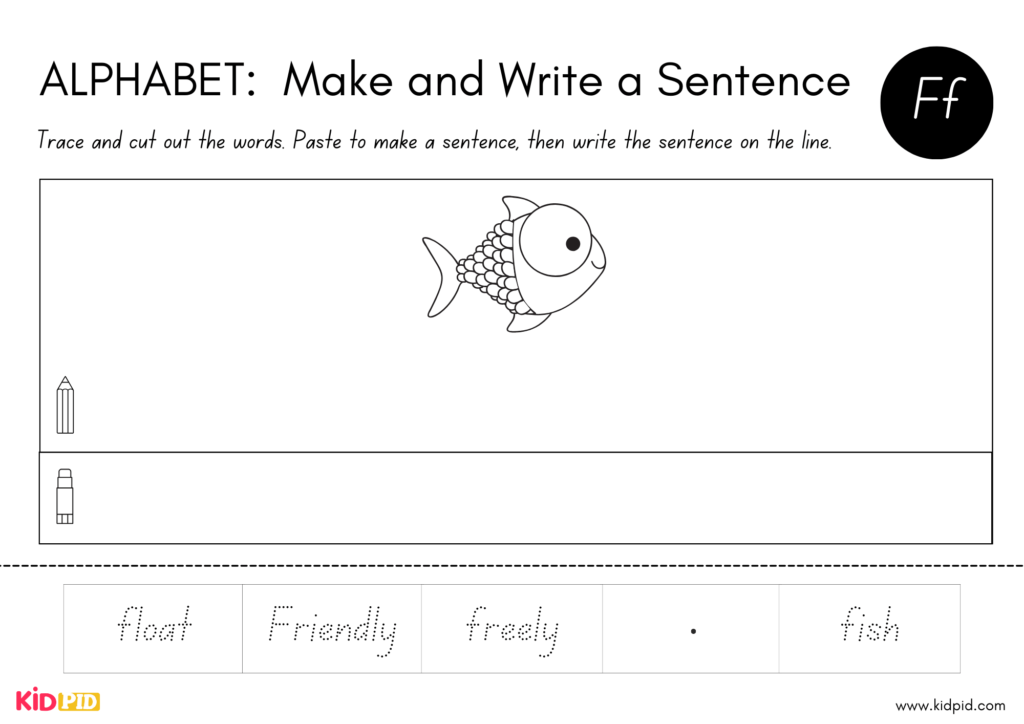
- Friendly fish float freely.
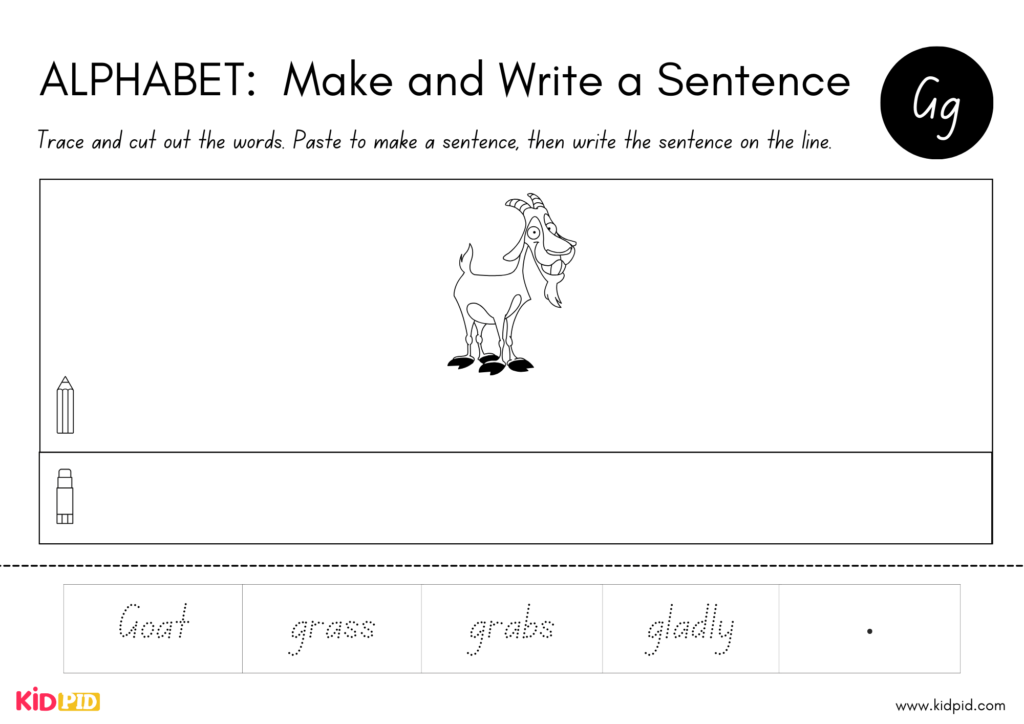
- The goat grabs grass gladly.
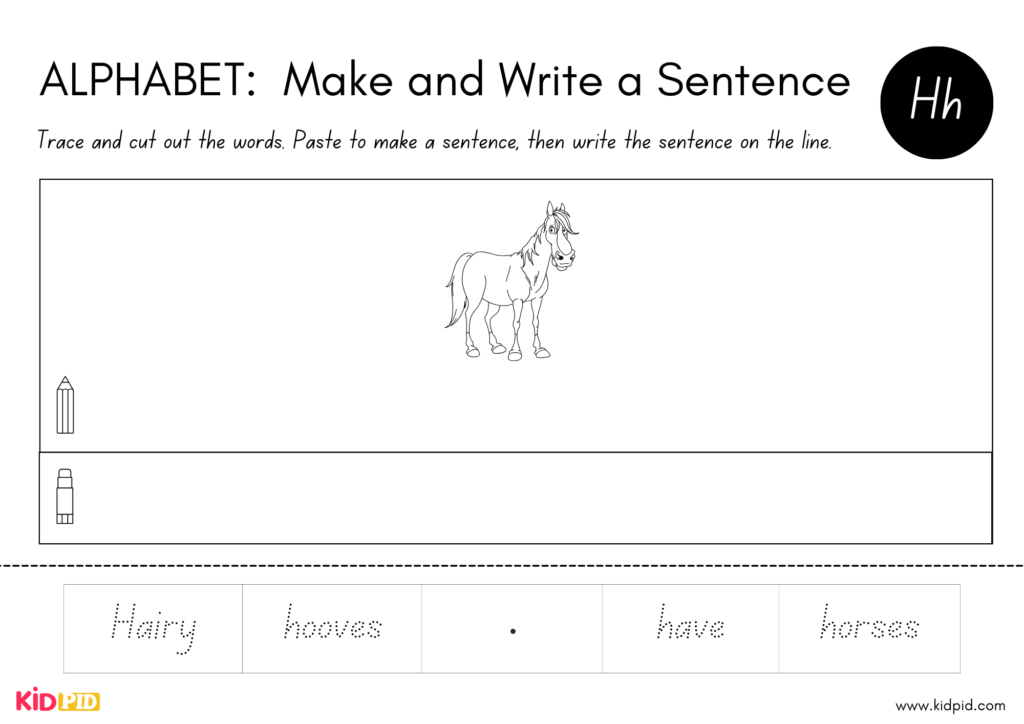
- Hairy horses have hooves.
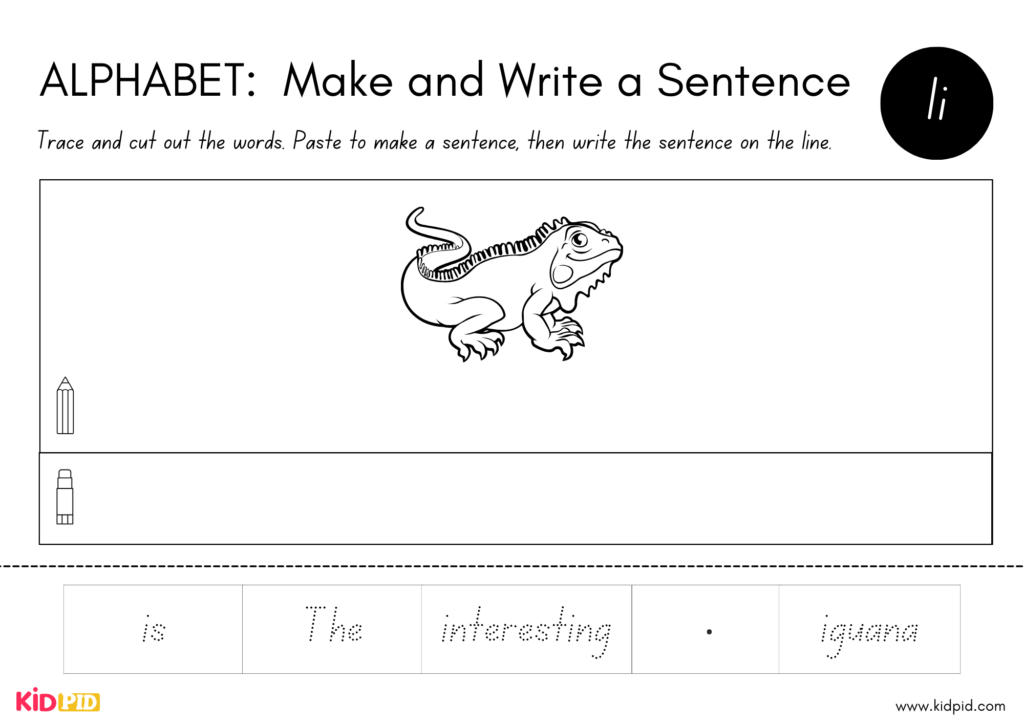
- The iguana is interesting.
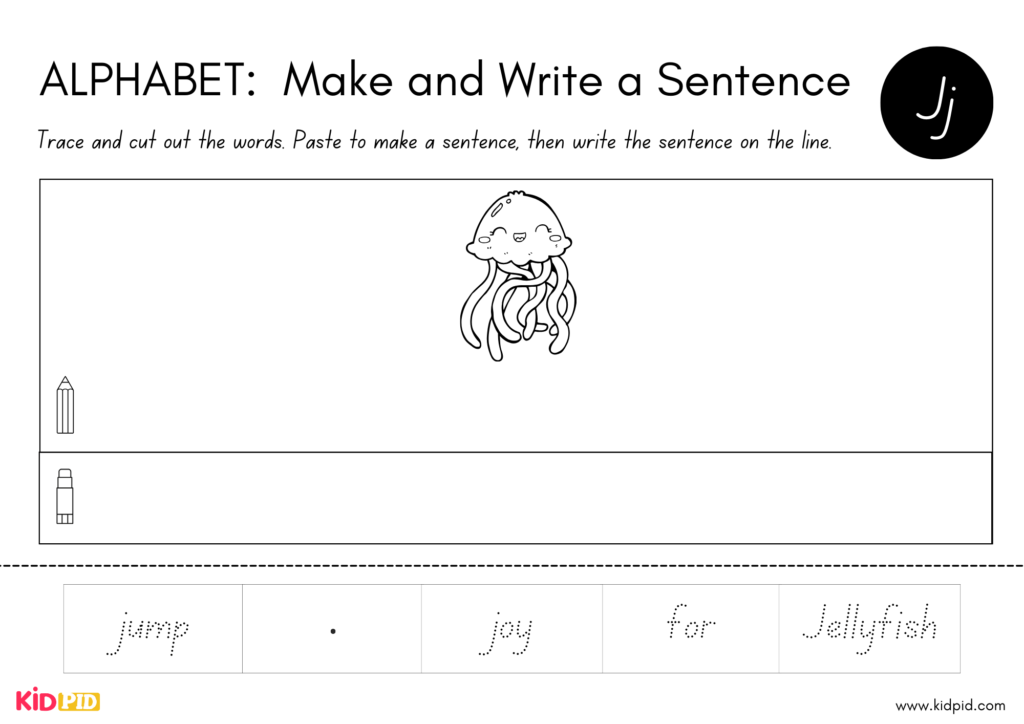
- Jellyfish jump for joy.
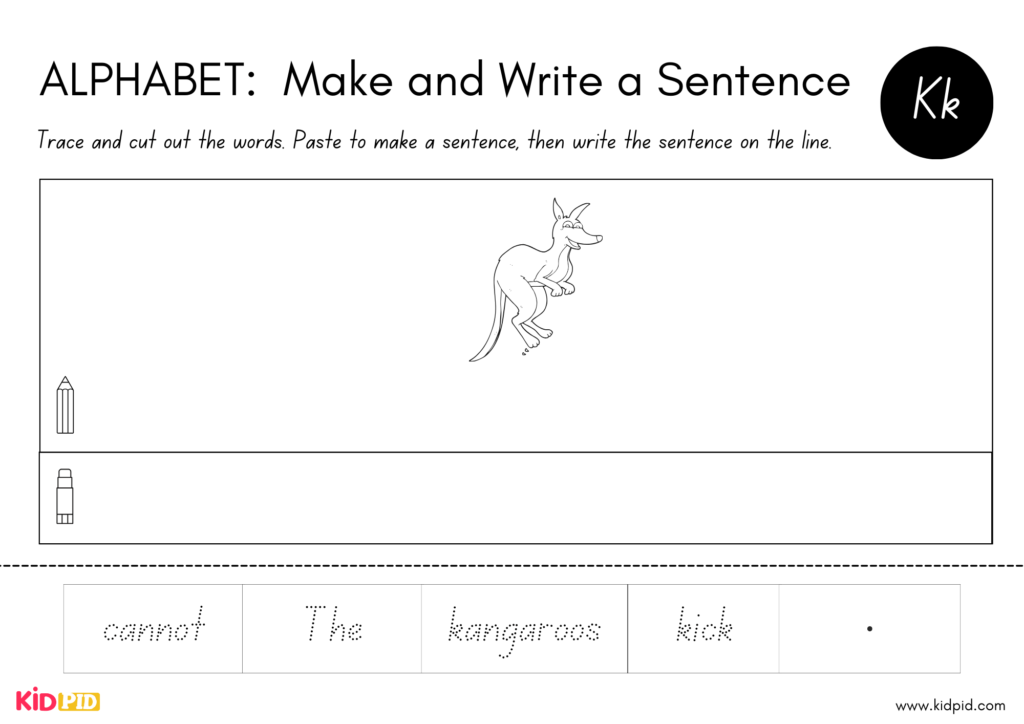
- The kangaroos cannot kick.
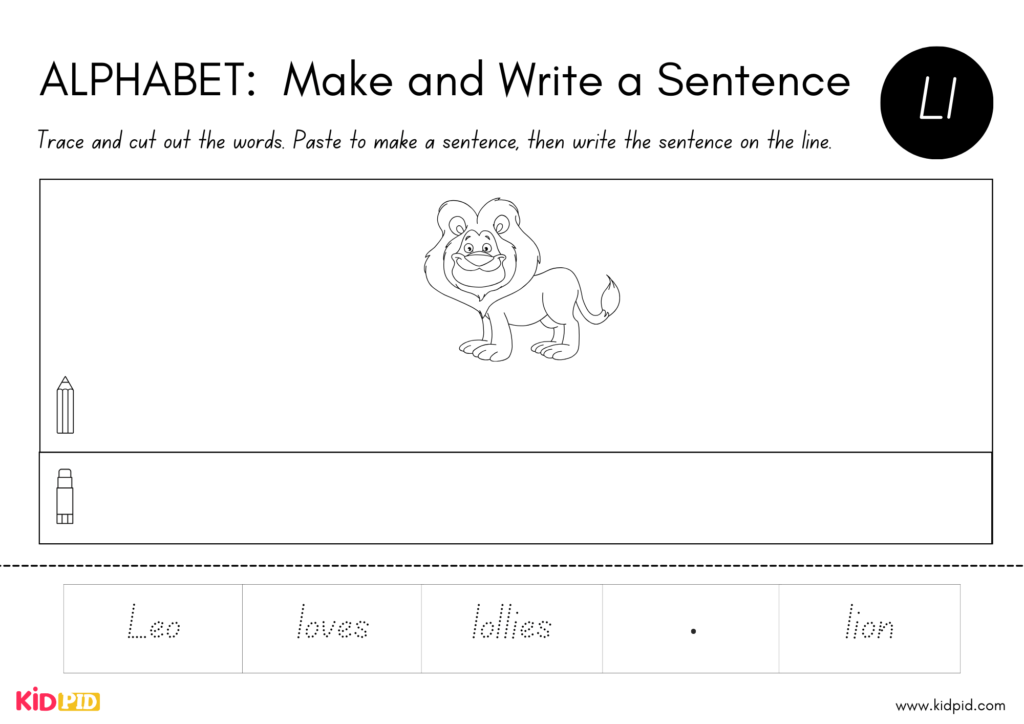
- Leo loves lion lollies.
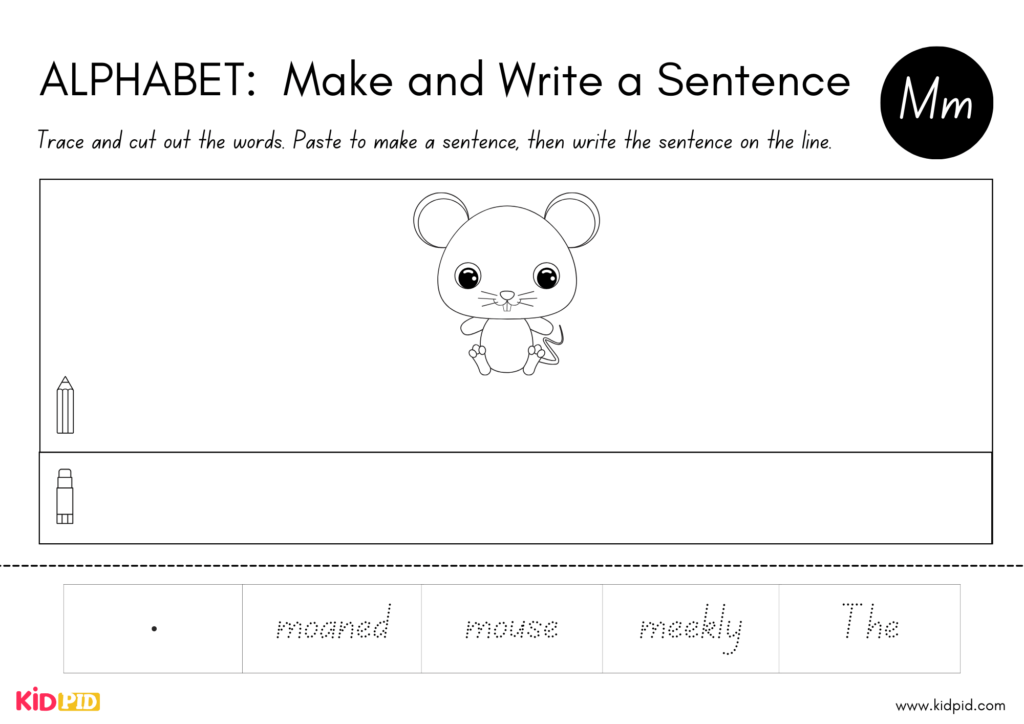
- The mouse moaned meekly.
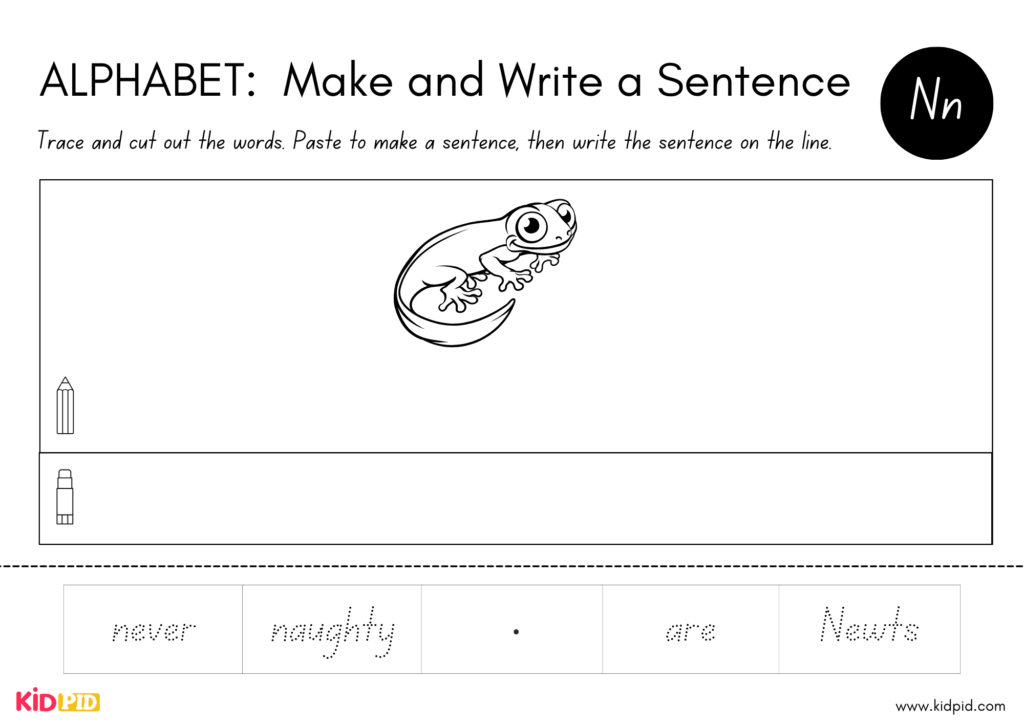
- Newts are never naughty.
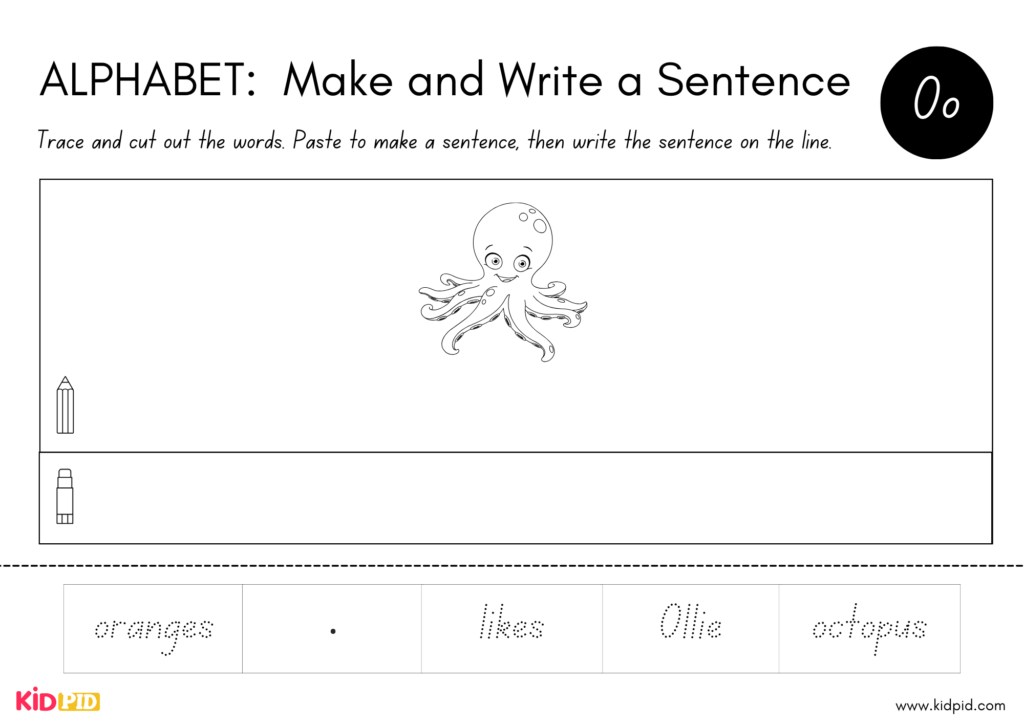
- Ollie the octopus likes oranges.
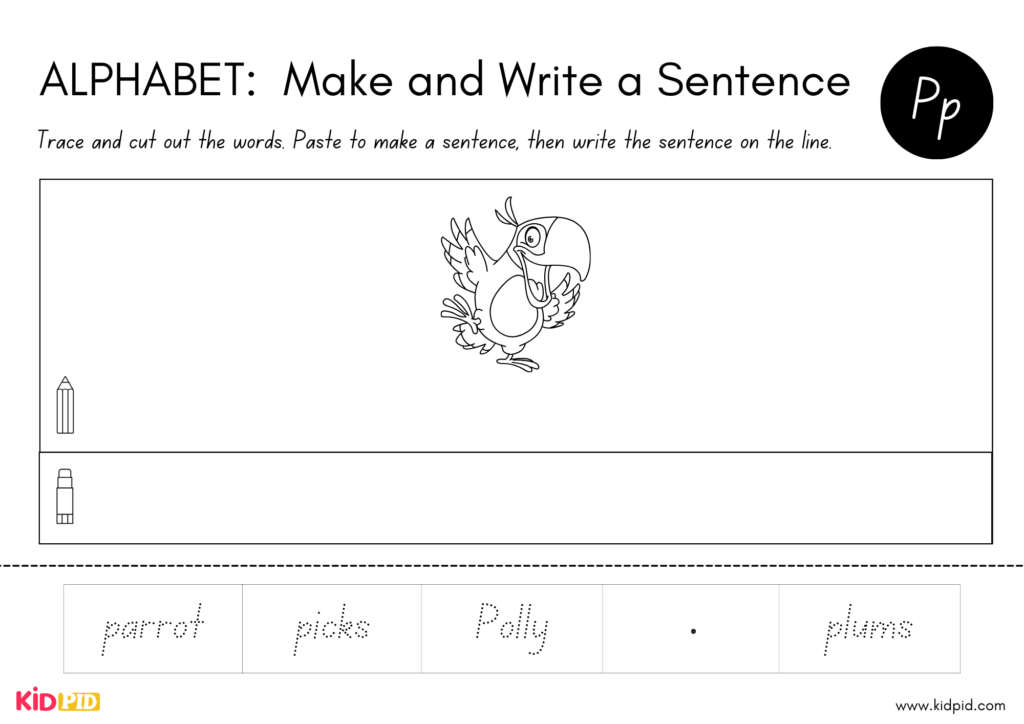
- Polly parrot picks plums.
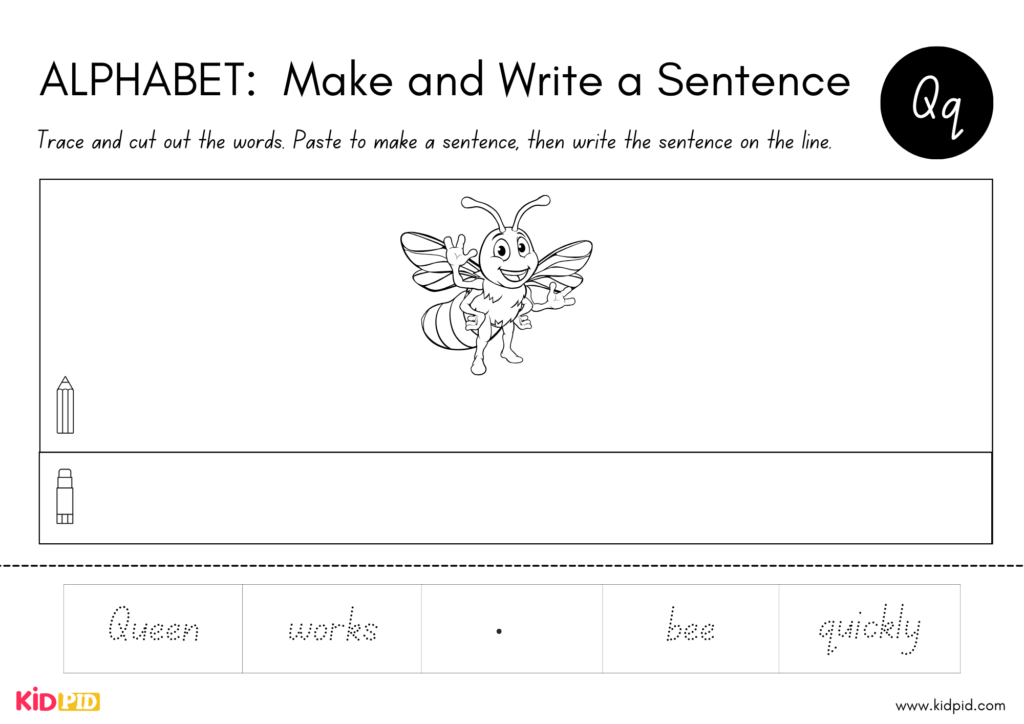
- Queen bee works quickly.
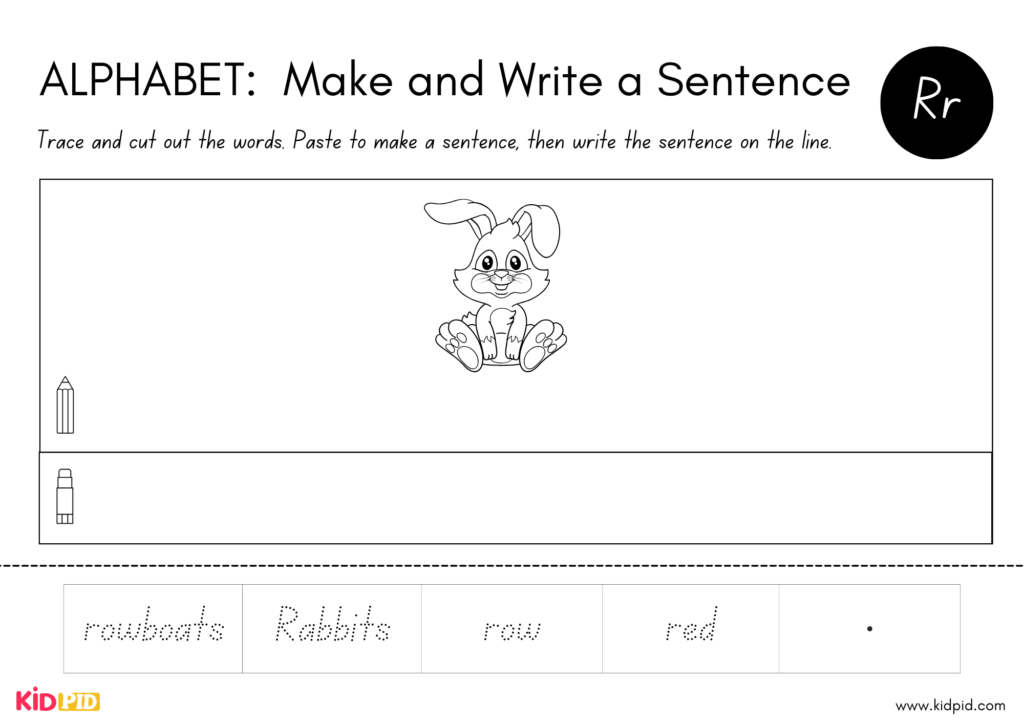
- Rabbits row red rowboats.
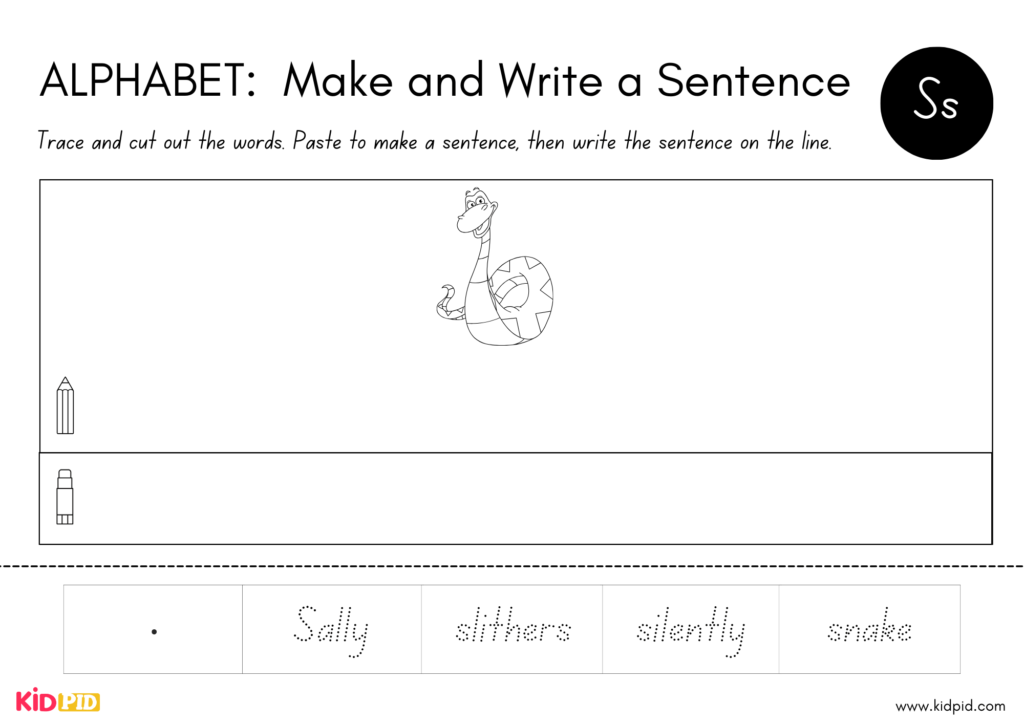
- Sally snake slithers silently.
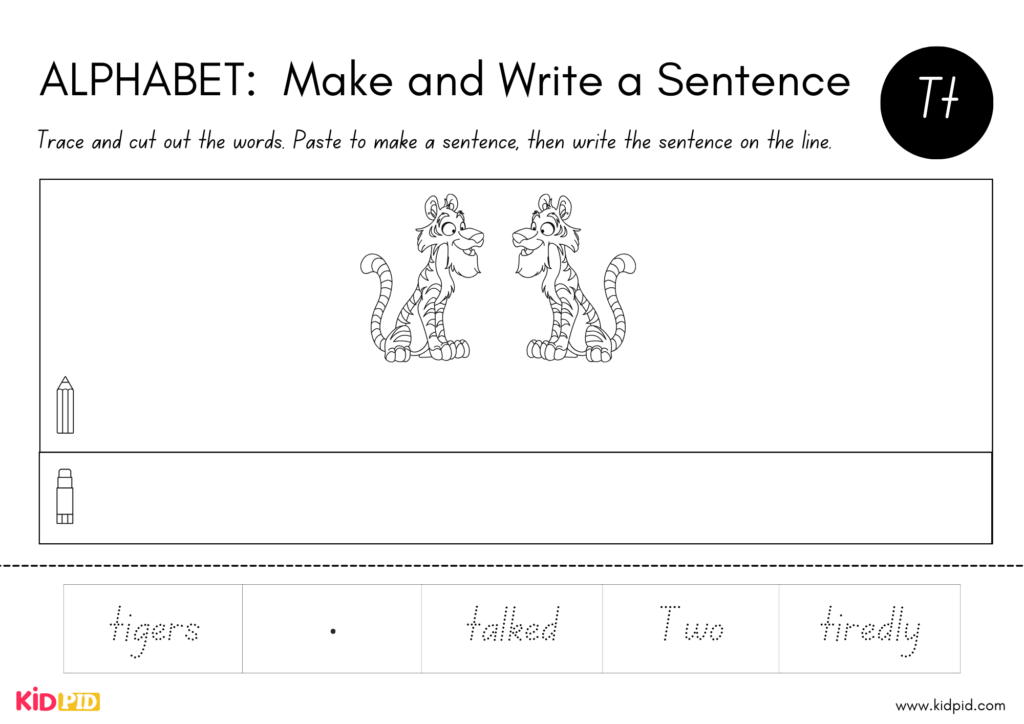
- Two tigers talked tiredly.
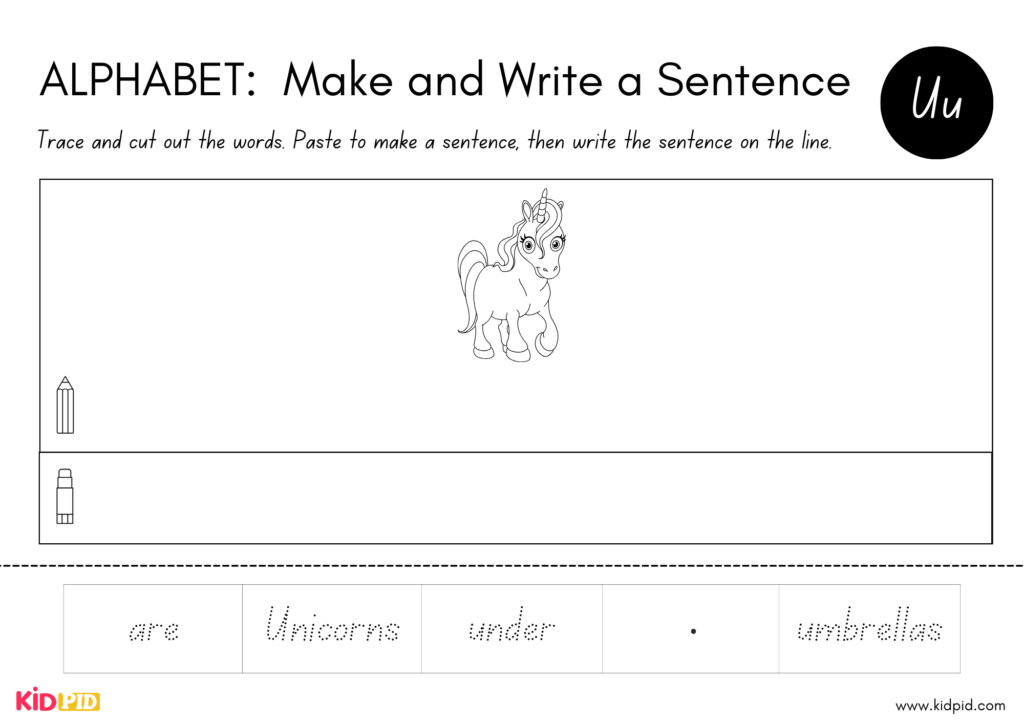
- Unicorns are under umbrellas.
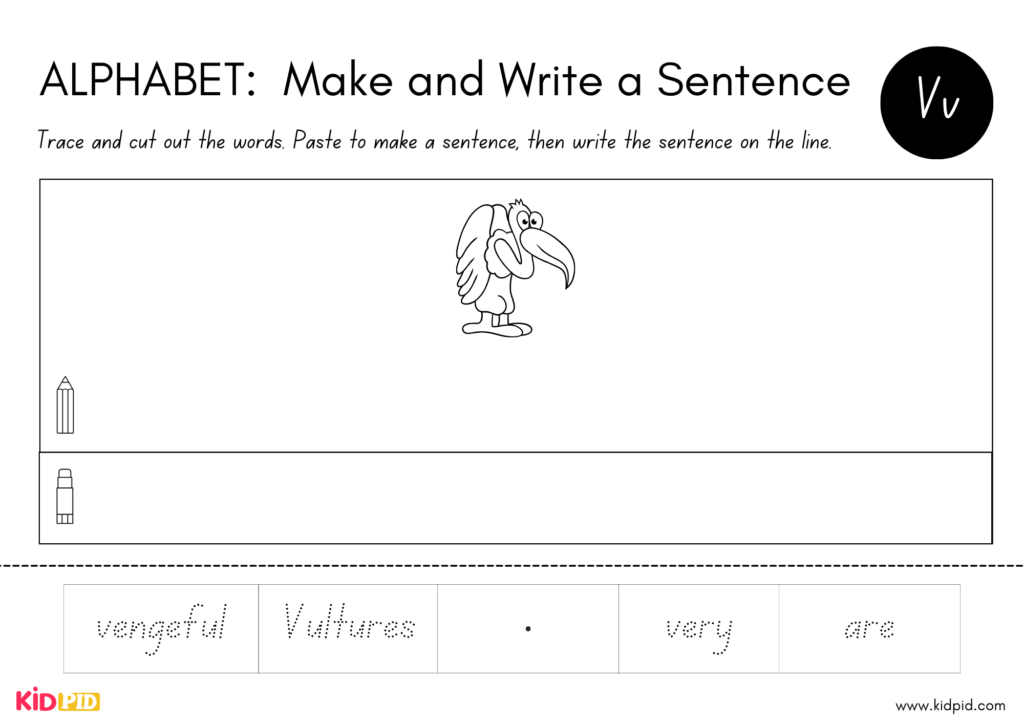
- Vultures are very vengeful.
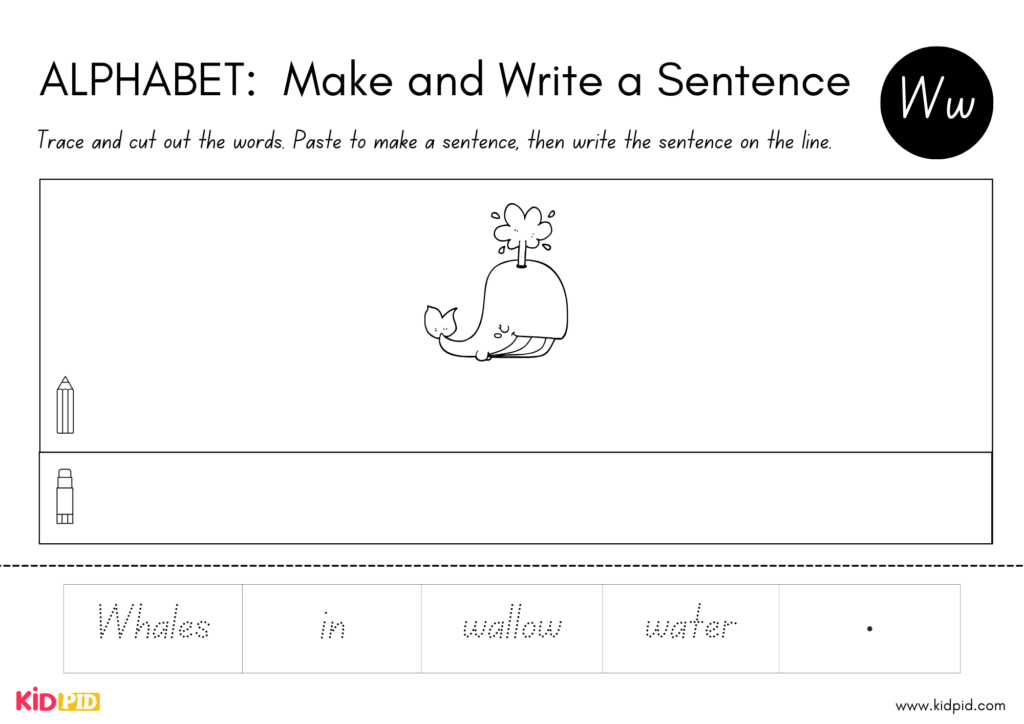
- Whales wallow in water.
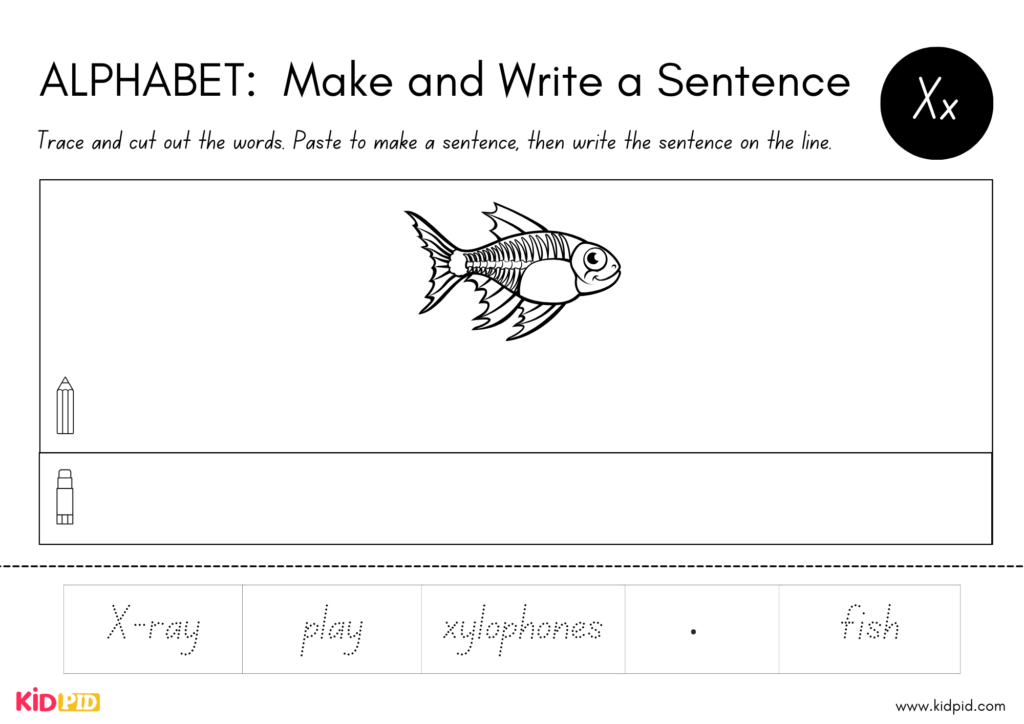
- X-ray fish play xylophones.
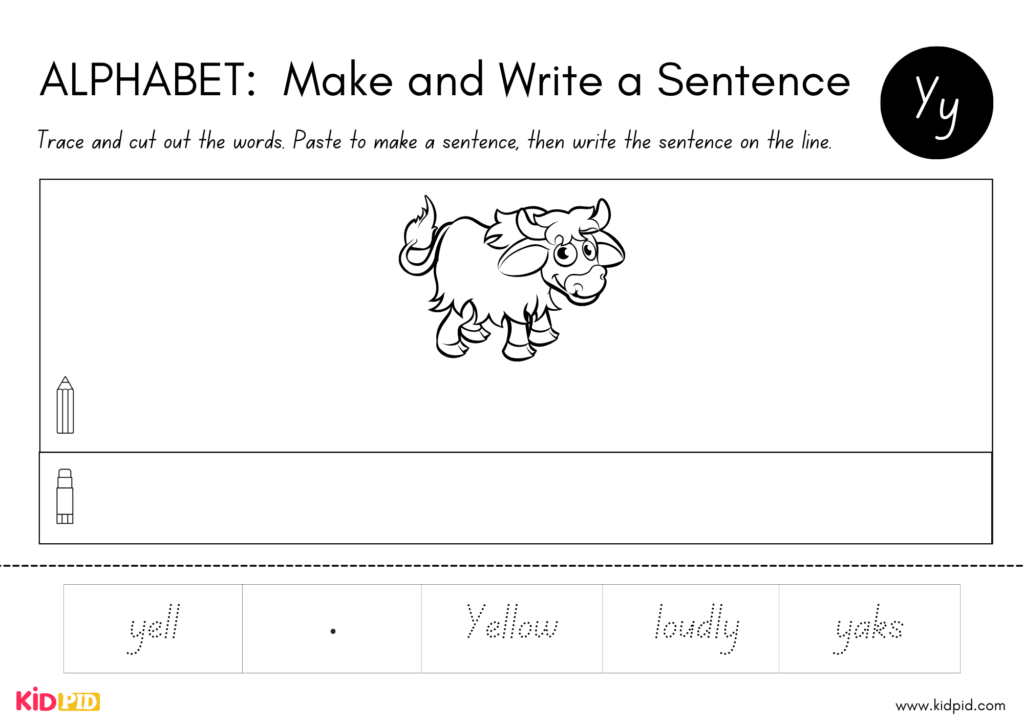
- Yellow yaks yell loudly.
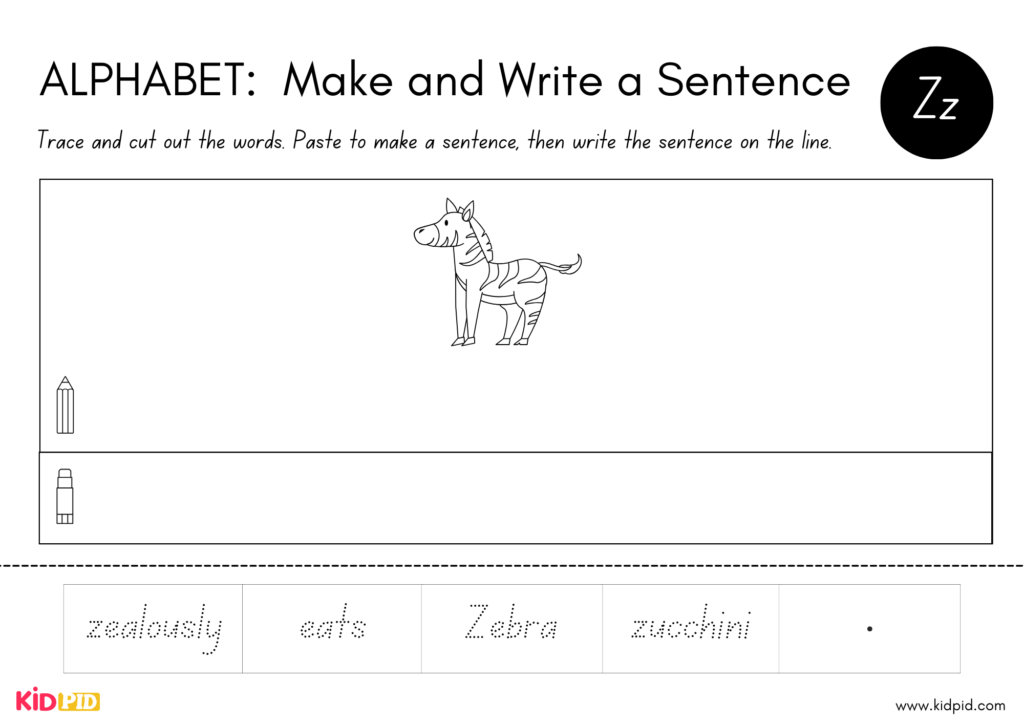
- Zebra eats zucchini zealously.
Key Facts About Alphabet Handwriting and Sentence Structure Worksheets
- Target Age Group: Best suited for children in Preschool, Kindergarten, and Grade 1 (ages 4–7).
- Skills Addressed: Letter formation, fine motor skills (via tracing and cutting), basic syntax, capitalization, and punctuation.
- Activity Mechanics: A tactile, multi-step process combining letter tracing, word scrambling, physical “cut-and-paste” alignment, and independent handwriting.
- Educational Philosophy: Rooted in the Orton-Gillingham approach and multi-sensory learning principles, which state that combining touch, sight, and writing significantly speeds up literacy acquisition.
Parts, Types, and Examples of Sentence Structure Worksheets
An effective early-literacy resource targets multiple cognitive pathways at once. These worksheets are divided into structural segments, using alliterative, kid-friendly examples:
- The Tracing & Letter Zone: Children trace capital and lowercase target letters to build muscle memory.
- The Tactile Word Scramble: A mixed-up series of words located at the bottom of the page, waiting to be snipped out.
- The Pasting Strip: A physical box where cut-out words are arranged sequentially to form a grammatically correct thought.
- The Final Write-Out Line: A guided handwriting line where the child transcribes their newly built sentence.
Worksheet Content Examples:
- Letter A: “Annie is an amazing ant.” (Focus: Capitalization of proper nouns, basic sentence rhythm)
- Letter B: “Bertie is a little bug.” (Focus: Adjective placement before a noun)
- Letter C: “Clever cats can count cows.” (Focus: Plural nouns and alliteration)
How Does an Alphabet Handwriting and Sentence Structure Worksheet Work?
These printables take an abstract concept—grammar and letter composition—and turn it into a concrete, interactive puzzle.
- Visual Decoding: The child reads individual words out of order, stimulating word recognition outside of context clues.
- Kinesthetic Editing: By physically moving cut-out words around on the desk, the child experiments with syntax. They learn that a sentence must start with a capital letter (“Annie”) and end with a punctuation mark (“.”).
- Synthesis & Fine Motor Practice: Once the sentence structure makes sense logically and visually, pasting it locks the pattern down. The final step of rewriting the sentence transforms the child’s short-term recognition into long-term handwriting mastery.
Benefits of Learning About Alphabet Handwriting and Sentence Structure
Early mastery of these skills provides foundational benefits that carry over into a child’s entire academic journey:
- Accelerated Fine Motor Control: Scissors work and tracing develop the intrinsic hand muscles needed for fluid, long-form writing later in life.
- Elimination of “Letter Reversals”: Structured tracking prevents common early-reading hurdles like mixing up b and d or p and q.
- Boosted Reading Comprehension: When kids understand how sentences are constructed physically, their oral reading fluency and paragraph comprehension jump exponentially.
- Independent Creative Confidence: Mastering basic sentence frameworks takes the anxiety out of early creative writing or journaling.
Learning Objectives
By completing these comprehensive alphabet worksheets, young learners are projected to meet the following developmental milestones (aligned with core early-childhood literacy benchmarks):
- Objective 1: Correctly identify and construct uppercase and lowercase letters using standardized stroke orders.
- Objective 2: Demonstrate spatial awareness by maintaining uniform letter size and appropriate spacing between words on a guided line.
- Objective 3: Identify the structural boundaries of a sentence (starting with a capital letter and ending with a period).
- Objective 4: Arrange scrambled nouns, verbs, and adjectives into a logical, grammatically correct sequence.
Worksheet Instructions
Parents and educators can read these explicit steps directly to young learners to ensure a successful, tear-free practice session:
- Trace It: Take your favorite sharp pencil and carefully trace the letters at the top of the page. Make sure to follow the dotted lines from top to bottom!
- Read the Blocks: Look at the mixed-up word blocks at the bottom of the page. Try reading each word out loud.
- Snip with Care: Using child-safe safety scissors, carefully cut out each word box along the dashed lines.
- Solve the Sentence Puzzle: Arrange your cut-out words in the blank pasting box. Hint: Look for the word that starts with a big capital letter—that goes first! Look for the word with a period attached—that goes last.
- Paste and Lock It: Once your sentence makes sense, use a glue stick to paste the words down permanently.
- Write Your Masterpiece: Using your best handwriting, copy the completed sentence onto the blank line at the very bottom. Don’t forget your finger spaces between words!
Interesting Facts About Writing and Handwriting Worksheets
- The Brain Sync: Neuroscientific studies show that brain activation during handwriting is far more complex and interconnected than typing on a tablet or keyboard, fundamentally changing how memory retention works.
- The “Alliteration Advantage”: Worksheets that use phrases like “Clever cats count cows” use a phonetic trick called alliteration. The repetition of initial sounds makes it easier for a young brain’s working memory to spell and store words.
- Ancient Roots: The practice of tracing letters to learn an alphabet dates back thousands of years. Archaeologists have discovered ancient Roman and Greek wax tablets where children used styluses to follow lines carved by their teachers!
Vocabulary Words
Introduce these key terms to your students or children to build their foundational grammar vocabulary:
- Alphabet: The complete set of 26 letters (from A to Z) used to write words in the English language.
- Trace: To draw over existing dotted or light lines with a writing tool to learn shape and direction.
- Sentence: A complete group of words that expresses a whole thought. It always contains a subject (who or what) and an action.
- Capital Letter: The large version of a letter (like A, B, C) used at the start of names and sentences. Also called an uppercase letter.
- Punctuation: Marks like periods (.), question marks (?), and exclamation points (!) that tell a reader when to pause or stop.
Real-Life Applications
Handwriting and understanding sentence structure aren’t just classroom chores—they unlock everyday real-world interactions for a child:
- Sending Letters and Cards: Crafting legible birthday cards for family or writing a letter to Santa Claus.
- Reading Signs and Labels: Instantly identifying safety signs (“STOP”), grocery labels, or book titles out in public.
- Creative Expression: Keeping an early journal or writing captions underneath drawings they create at home.
- Organized Communication: Leaving short, legible notes for parents on the fridge or color-coding school bins.
FAQs
Q1. At what age are sentence structure worksheets?
Answer: These worksheets are ideal for children aged 4 to 7 years old (typically Preschool, Kindergarten, and 1st Grade). If a child knows their basic letter sounds and is beginning to blend words, they are ready for these activities.
Q2. How do cut-and-paste exercises help with reading?
Answer: Cutting and moving words around makes grammar tactile. Children are physically building a sentence piece-by-piece, which helps them notice capital letters, word spaces, and ending periods much better than a static reading page.
Q3. My child struggles with holding scissors. Can they still do this worksheet?
Answer: Absolutely! If their scissor skills are still developing, a parent or teacher can cut out the word blocks for them. The child can still do the arranging, pasting, tracing, and handwriting parts of the activity.
Q4. How long should a child spend on handwriting practice per day?
Answer: For early learners, short and frequent sessions are best. Spending 10 to 15 minutes a day on a single worksheet prevents hand fatigue and keeps learning fun rather than overwhelming.

Alphabet handwriting and Sentence Structure Worksheets help children improve letter formation, handwriting, grammar, and sentence-building skills. These engaging activities strengthen early literacy, writing confidence, writing sentences, and communication through consistent daily practice. Learn through our collection of worksheets, essays, paragraphs, flashcards, quizzes, and interactive resources. Visit our website and follow us on YouTube & Facebook.
The worksheet is thoughtfully crafted by the Content Team to improve academic understanding.
Reviewed By Ishika
Read More:



