

Use these fruits to connect the dots worksheets for kids to understand how much they have learned about fruits and to encourage creativity. Fruits are very beneficial for our body, and consuming them on a daily basis can help our body in various ways by enriching it with all the essential nutrients. Therefore, today in this article, we have brought you a wide collection of connect-the-dots worksheets that will result in the creation of some beautiful and healthy fruits. So, let’s get started.
[Scroll Down for Download Link]
Contents
- Fruits Connect the Dot Worksheets
- Key Facts About Fruits Connect the Dot Worksheets
- Parts, Types, and Examples of Worksheets Included
- How Do Fruits Connect the Dot Worksheets Work?
- Benefits of Learning About Fruits via Dot-to-Dots
- Learning Objectives
- Worksheet Instructions
- Interesting Facts About Fruits
- Vocabulary Words
- Real-Life Applications
- FAQs
Fruits Connect the Dot Worksheets
Apple
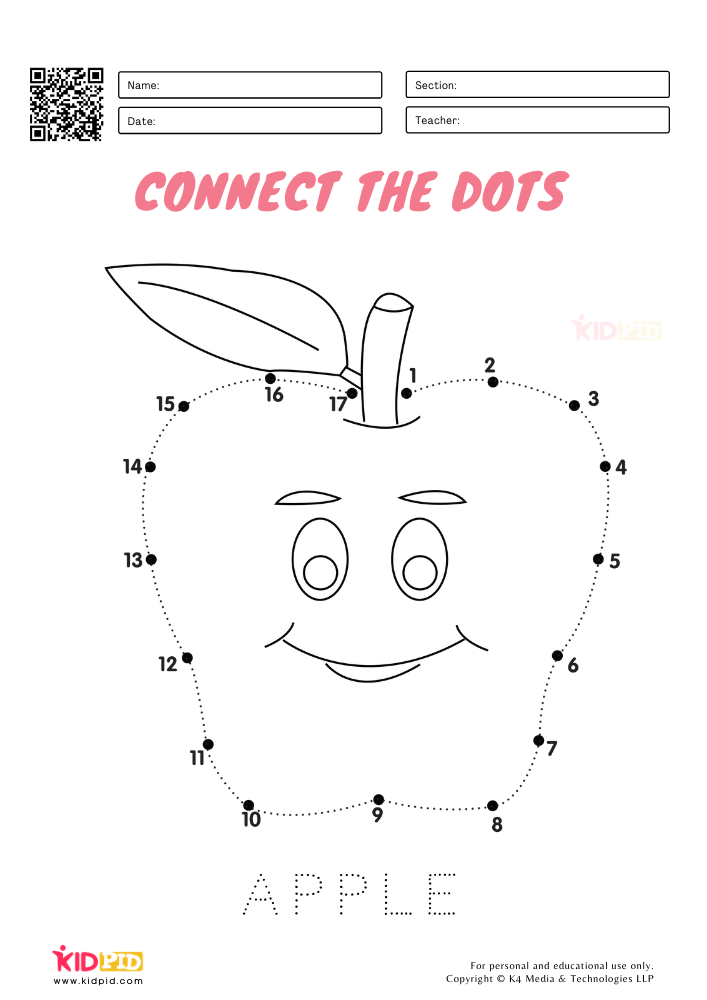
Apple is a very nutritious food that helps keep the body healthy. Help your kid familiarize themselves with the famous quote, ‘an apple a day keeps the doctor away,’ with a fun connecting-the-dots worksheet. This will let the creativity in your kid out, and they can enjoy doing this.
Apricot
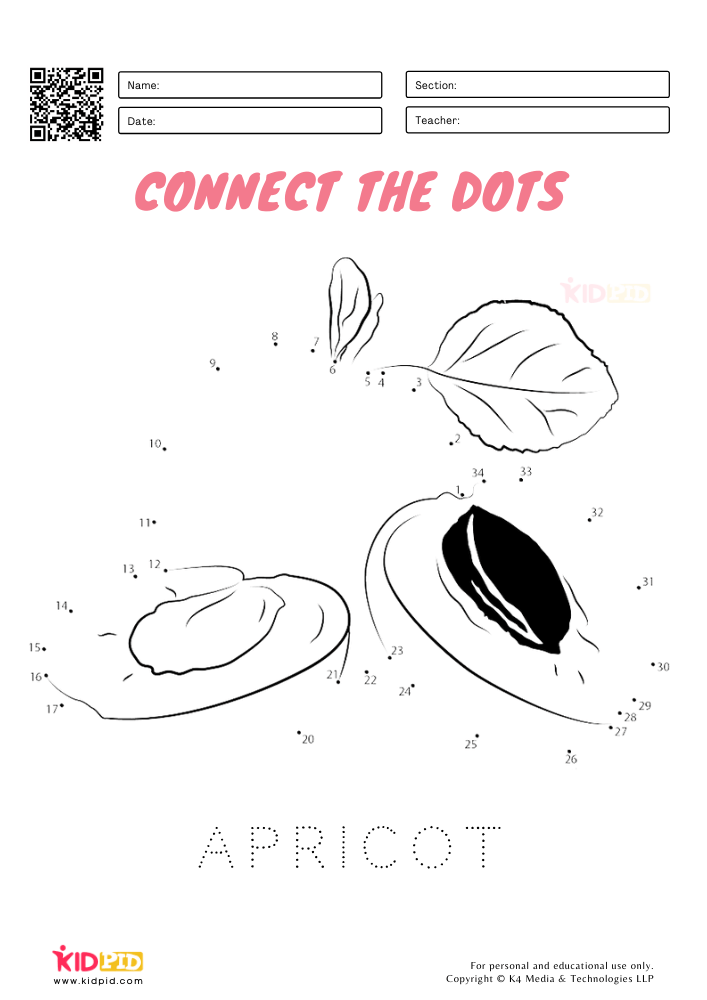
Apricots are rich in vitamins that will help in promoting eye health, along with providing some essential hydration. Apricots are also high in antioxidants and potassium. Therefore, teach your kid how consuming apricots is necessary for health and help them understand this connect-the-dots worksheet.
Avocado
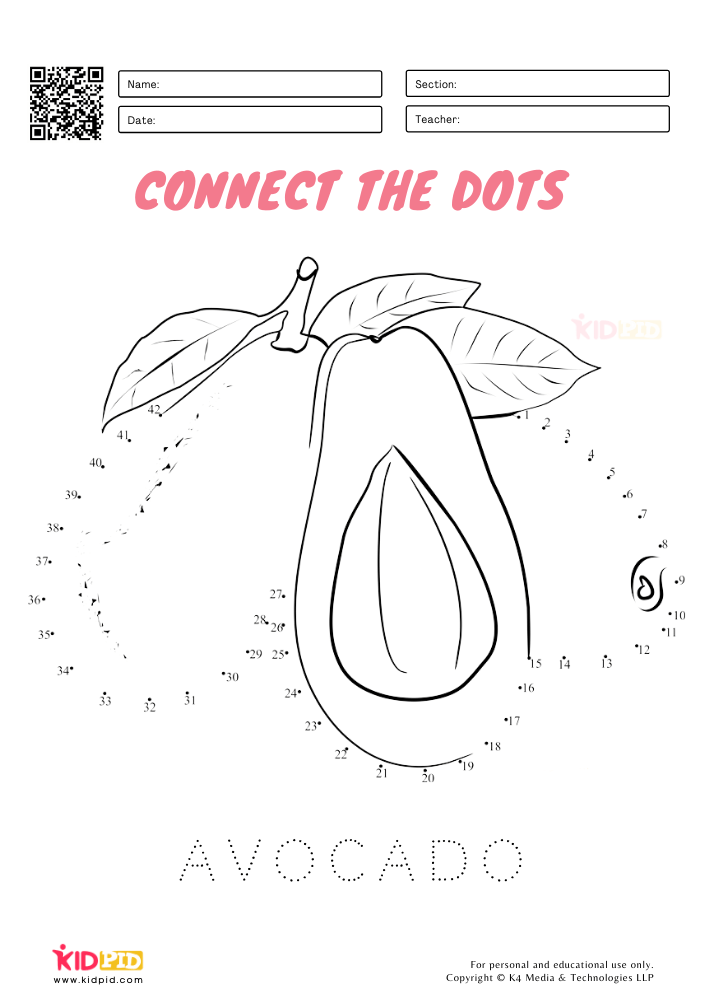
Avocados are the right source of fiber, and it is insanely nutritious. They even have more potassium than bananas themselves. So, helping your kid understand the benefits and the miracles of avocados
can do for skin will really prove fruitful, but do that with some creativity with the connect-the-dots sheet provided above.
Banana
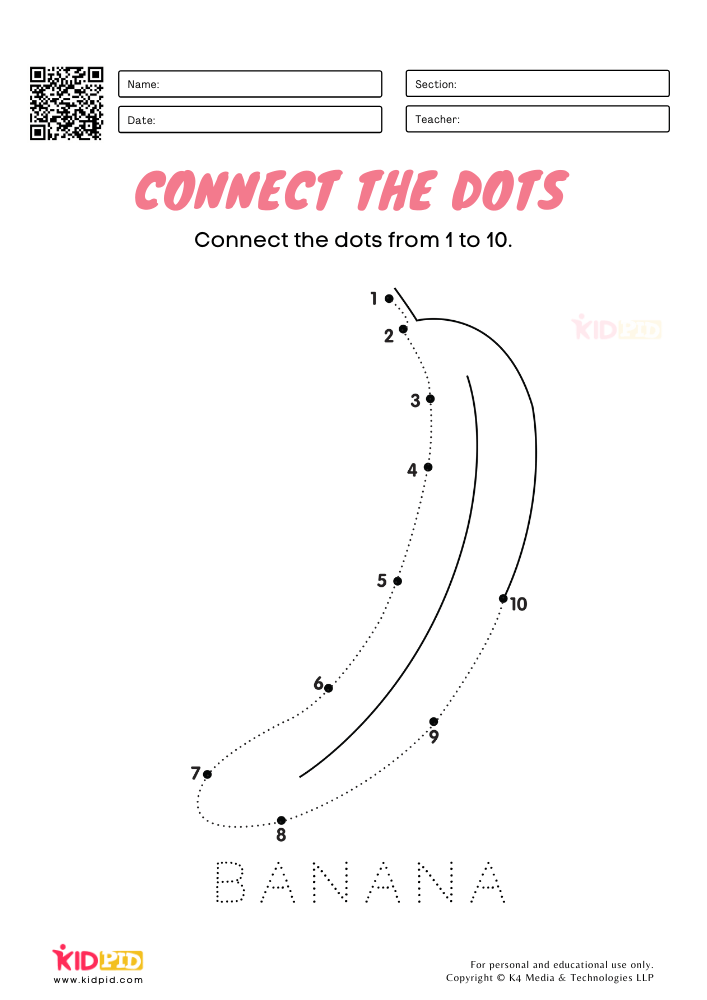
Bananas are great supporters for a healthy heart, and they contain some pretty powerful antioxidants. Bananas play their respective part in providing energy for doing the work. You can use these metrics to teach your kid the importance of having bananas on an average daily basis by helping him connect the dots worksheet and explaining the process along the way.
Blackberry
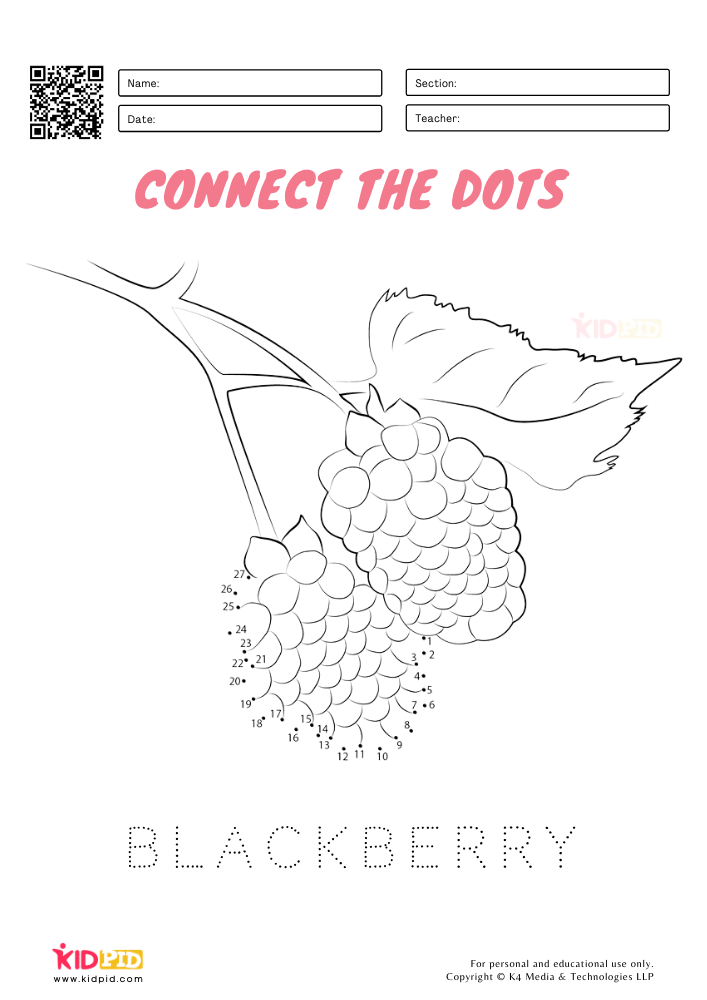
Blackberries provide vitamin K, and it is also rich in manganese. Additionally, having blackberries can promote oral health to a very good level. These fruits, too, are rich in fiber and are packed with Vitamin C. So, these are benefits you can teach your kid while he is connecting the dots.
Blueberry
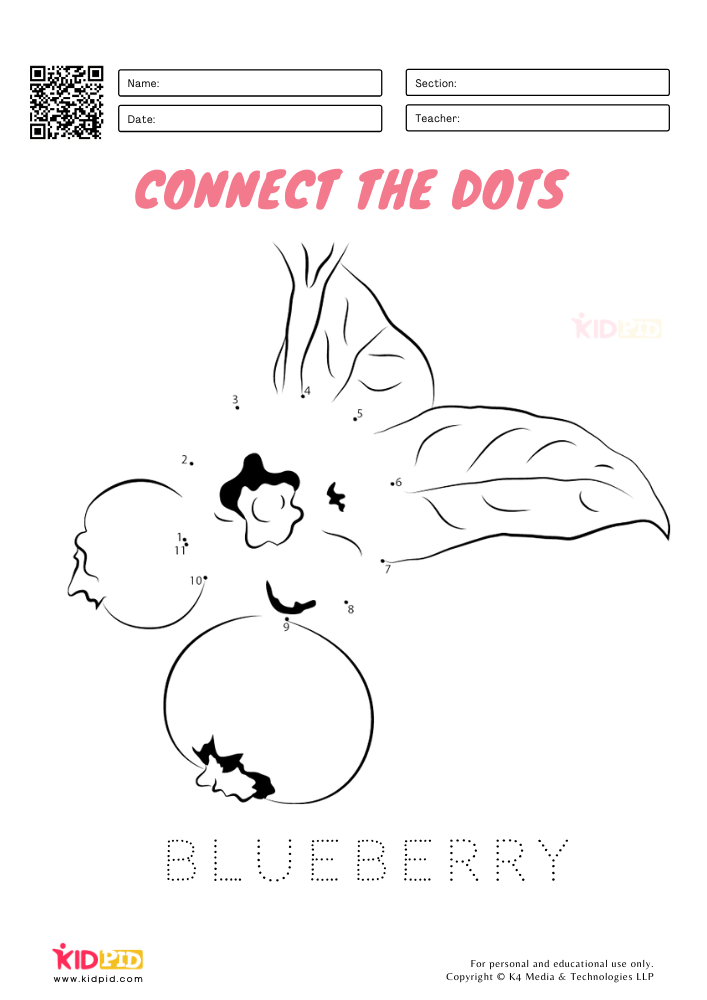
These are antioxidant-rich fruits that are also rich in potassium and vitamin C. Consuming these will also lower the risk of deadly diseases such as heart disease and cancer. They will increase metabolism if they are consumed in small portions. So, play connect the dots with your kid and help him draw the blueberry, and make sure you are teaching your kid all the beautiful benefits of having these.
Bread Fruit
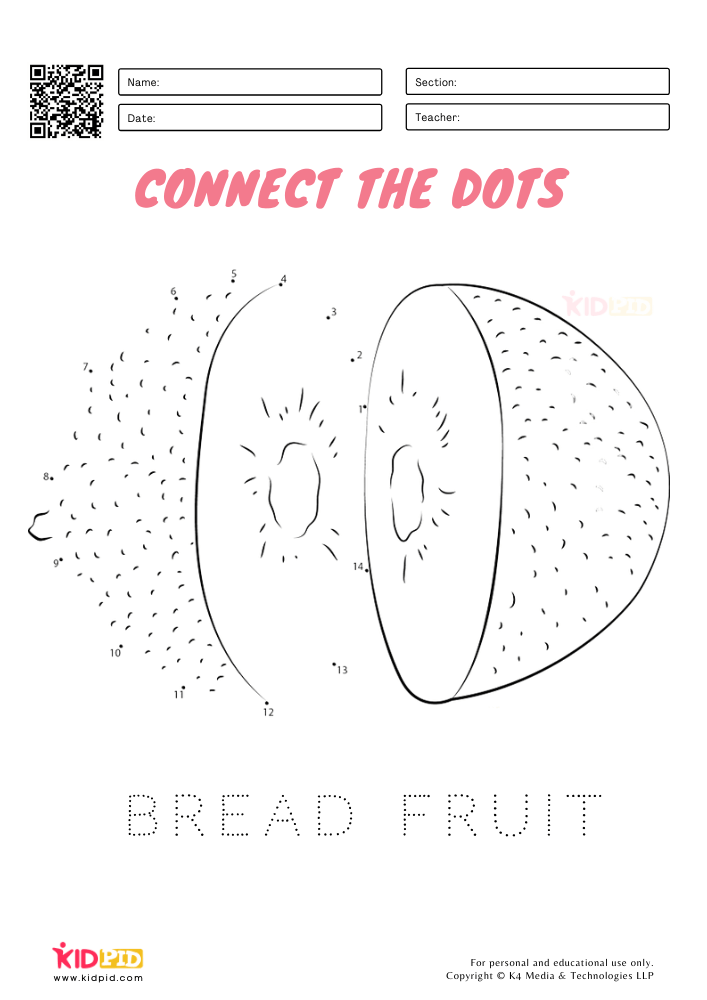
Breadfruit is composed of all kinds of good nutrients such as calcium, magnesium, carbohydrates, potassium, and more. In a way, breadfruit is a total package of all the right and needed nutrients. Since these are so good, you need to help your kid familiarize themselves with this fruit.
Carambola Starfruit
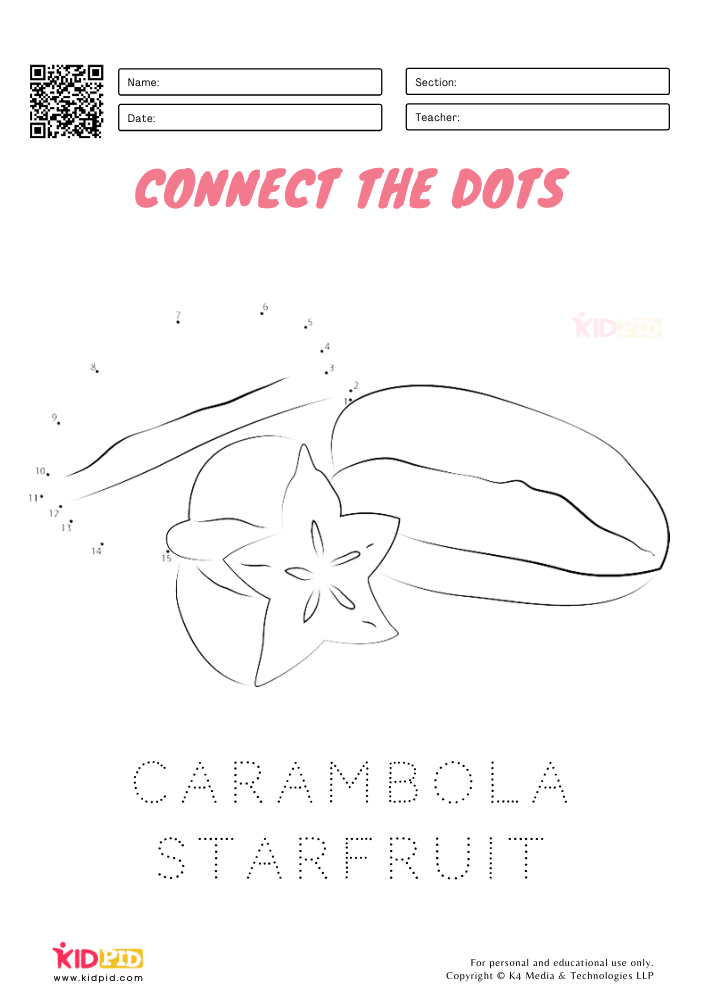
This is a type of fruit that will help in providing a good night’s sleep, and it contains low calories, carbs, and sugar, making it right for consumption. So, teach your kid about carambola starfruit through the above connect-the-dots worksheet.
Cherry
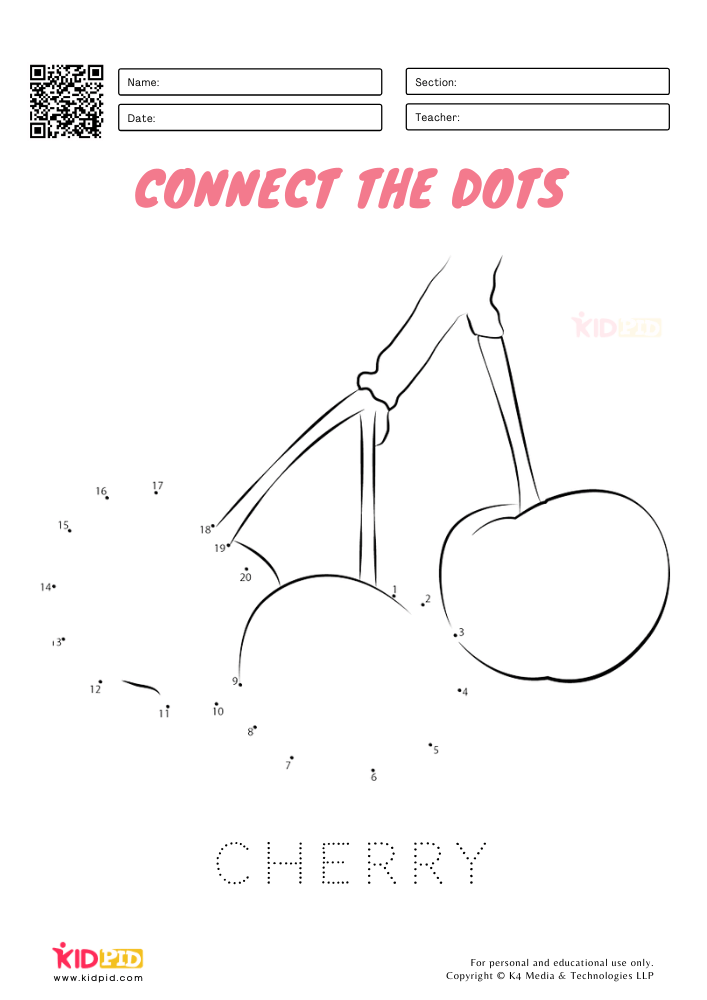
Cherries are very nutritious for the body and are a good source of fibre, minerals, and vitamins. Along with that, cherries are also known to have antioxidant properties. You can use these points to help your kid understand, and along with this, you can seek a creative way by handing a connect-the-dots worksheet of a cherry to your kid.
Cranberry
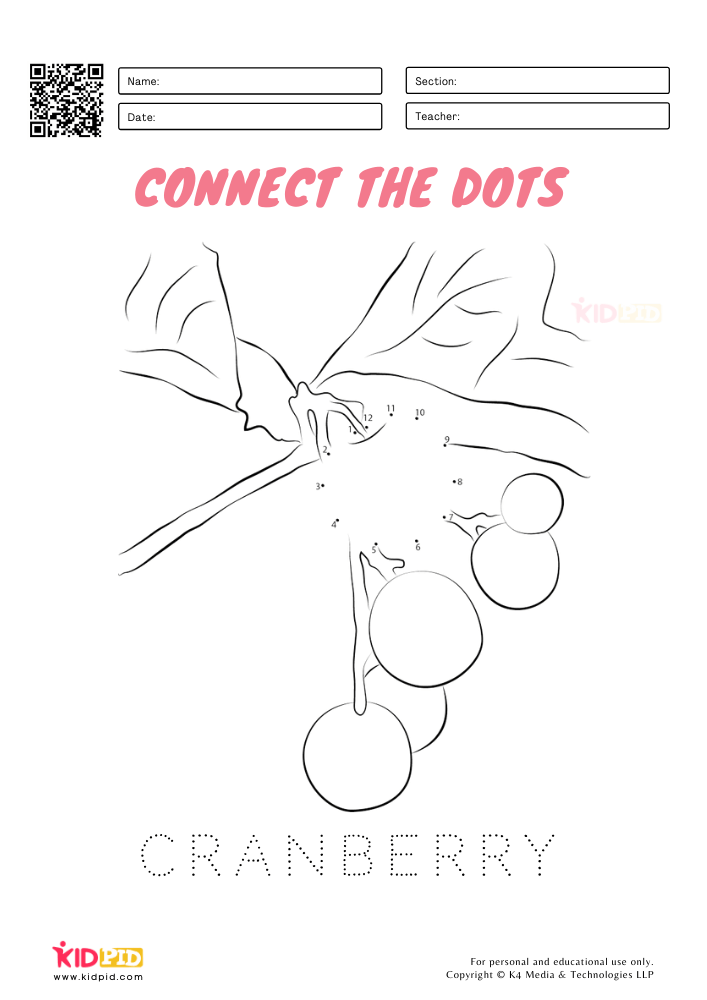
Cranberries are an ace in improving eyesight. So when your kid has good eyesight, he will be able to read and hence correct. Explain it to him or her while you are helping him connect the dots on the worksheet of cranberries, just like the one above.
Coconut
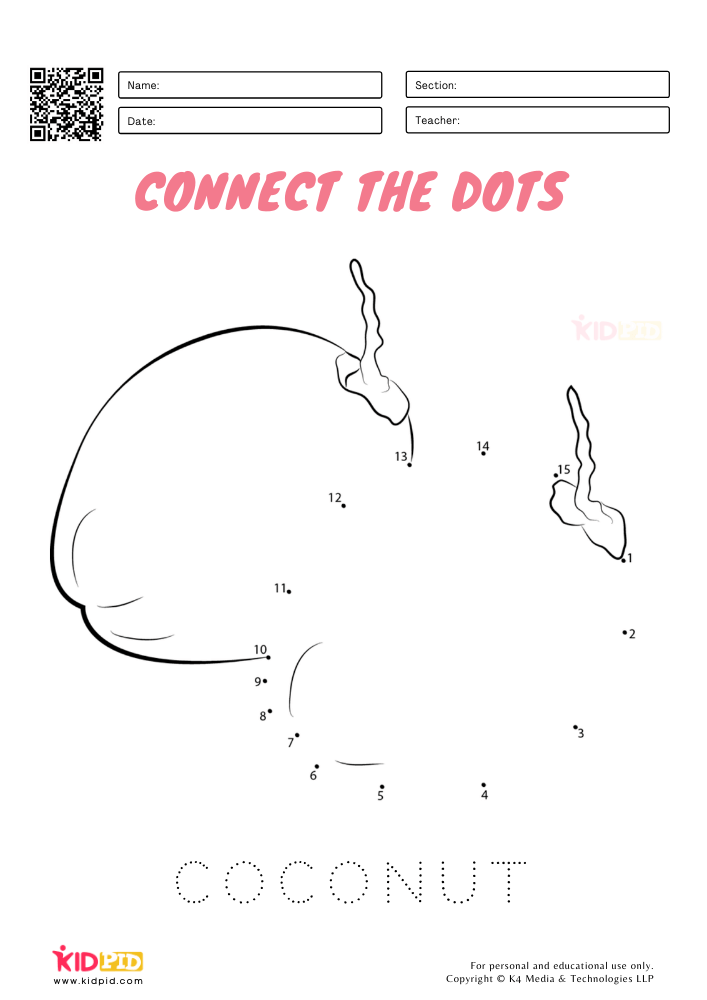
Coconut is another essential that your kid should consume constantly to attain a healthy body. Print out the above connect-the-dot worksheet and use it to teach your child the benefits of coconut.
Date
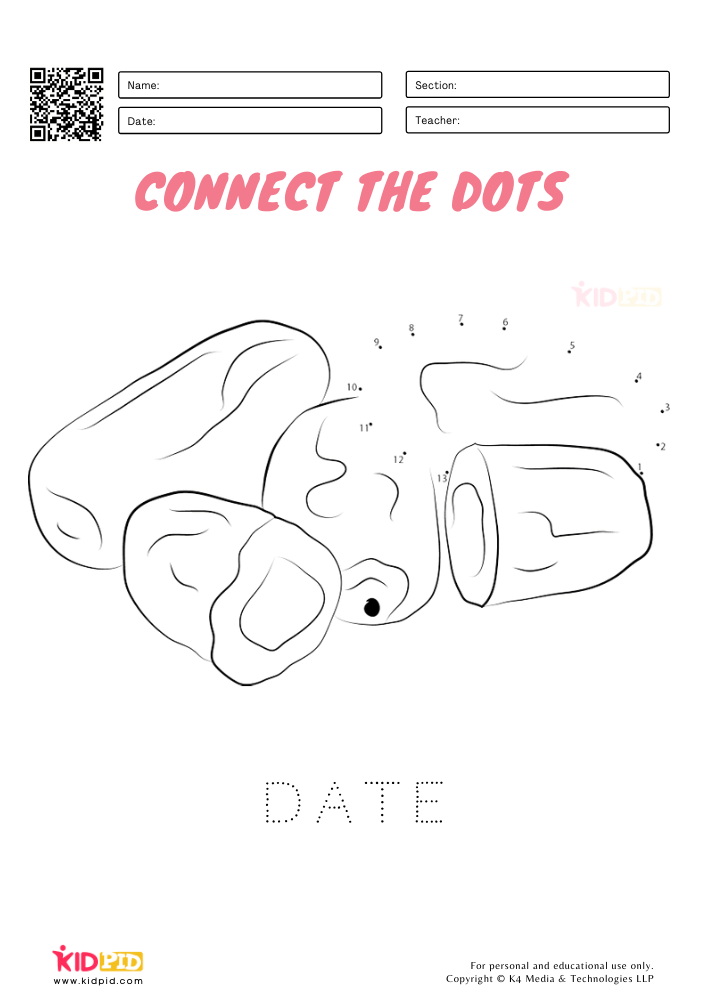
These are easy to consume and strengthen bones. Apart from that, they also help in the promotion of brain health and fighting against disease. These are some solid points that you can use to explain while you hand over the printable connect-the-dot page of the fruit date to your kid.
Dragon Fruit
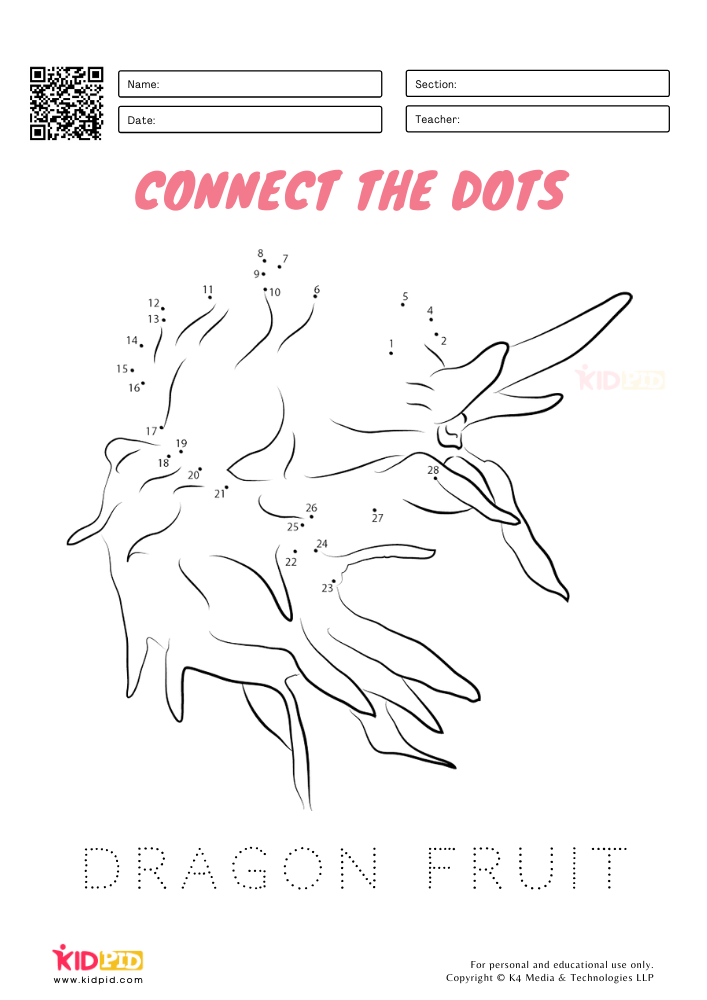
This is a fat-free fruit that strengthens the immune system and keeps the body healthy by acting as a source of fiber. Since it is a very healthy fruit, you can use it as a reference to create a connect-the-dots date worksheet just like the above image to teach your kid.
Durian

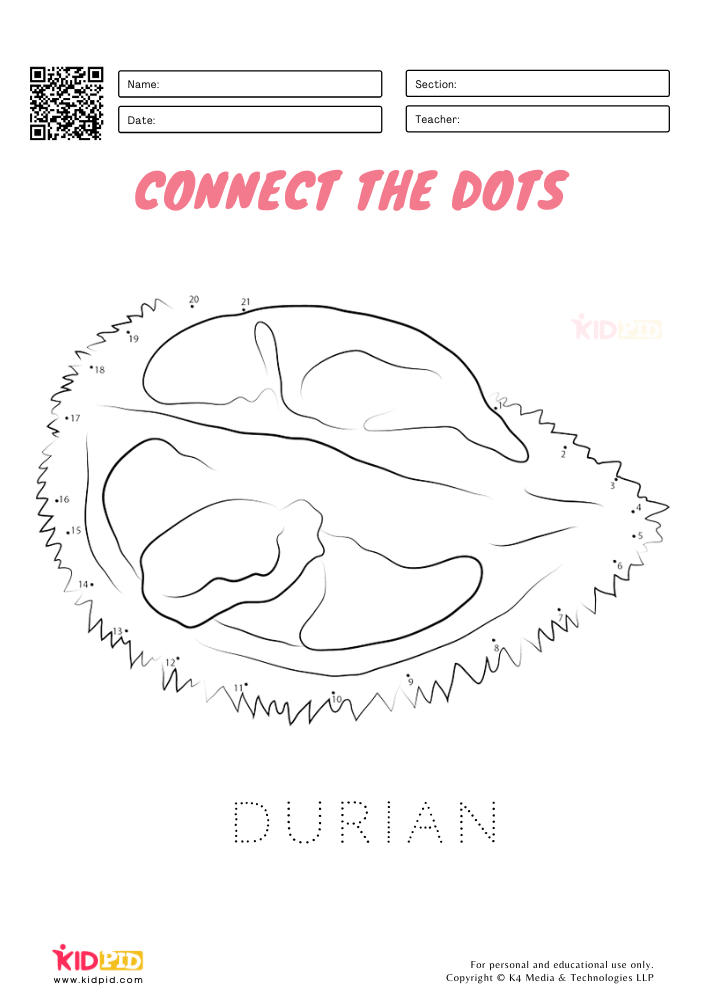
Help your kid play connect the dots of the fruit durian because it is a fruit that helps in preventing the cause of most kinds of disease, such as cardiovascular disease and all. The fruit also helps
in strengthening the bones and improving digestion.
Elderberry
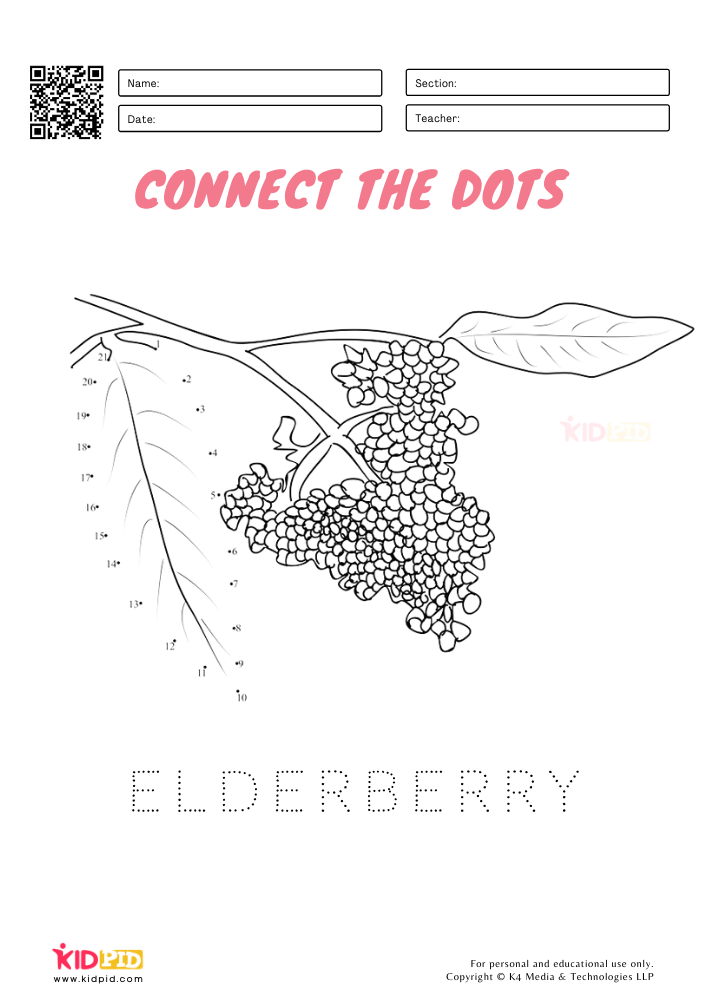
The next connect-the-dots idea in the fruit category is the elderberry. The elderberry helps in taming inflammation; along with this, it has some exceptional antioxidant and vitamin properties. Elderberries are also known to prevent the symptoms of cold and flu.
Fig

These fruits are known to be an ace source of calcium and potassium. These are soluble types of fibre too, along with the sugars and minerals. So, you can choose figs as the next idea for connecting the dots creativity for your kid.
Gooseberry
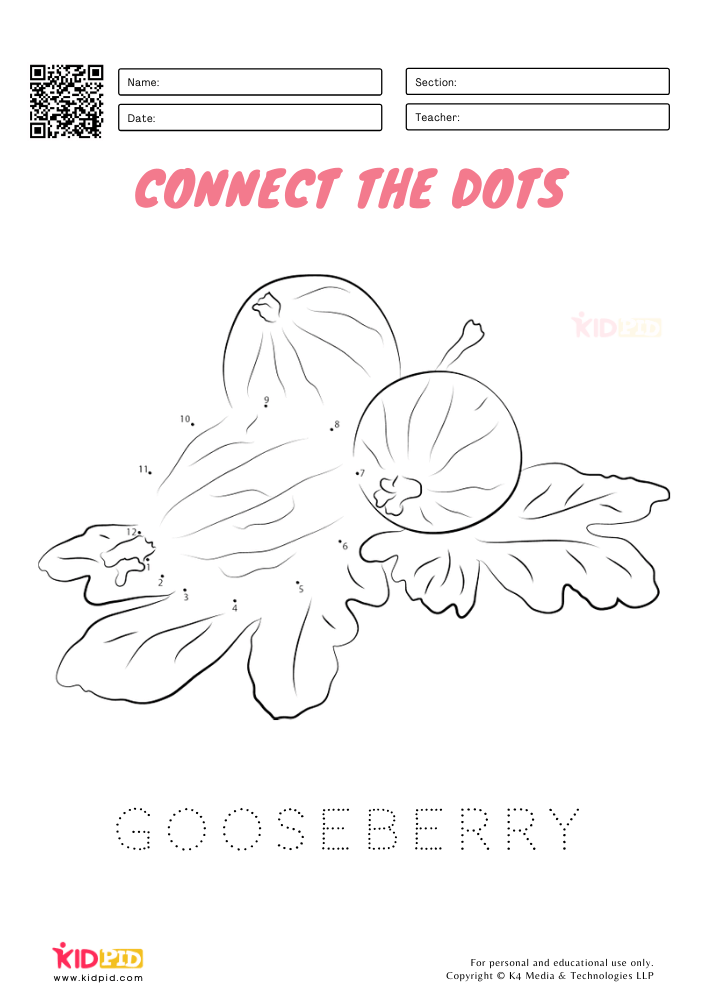
Gooseberries are another idea that you can use for a connect-the-dots worksheet because it protects the brain and are rich in antioxidants. Gooseberries are also good for the heart, and so you need to make them understand why it is good to consume these daily through some creativity, such as performing a connect-the-dots worksheet.
Grape
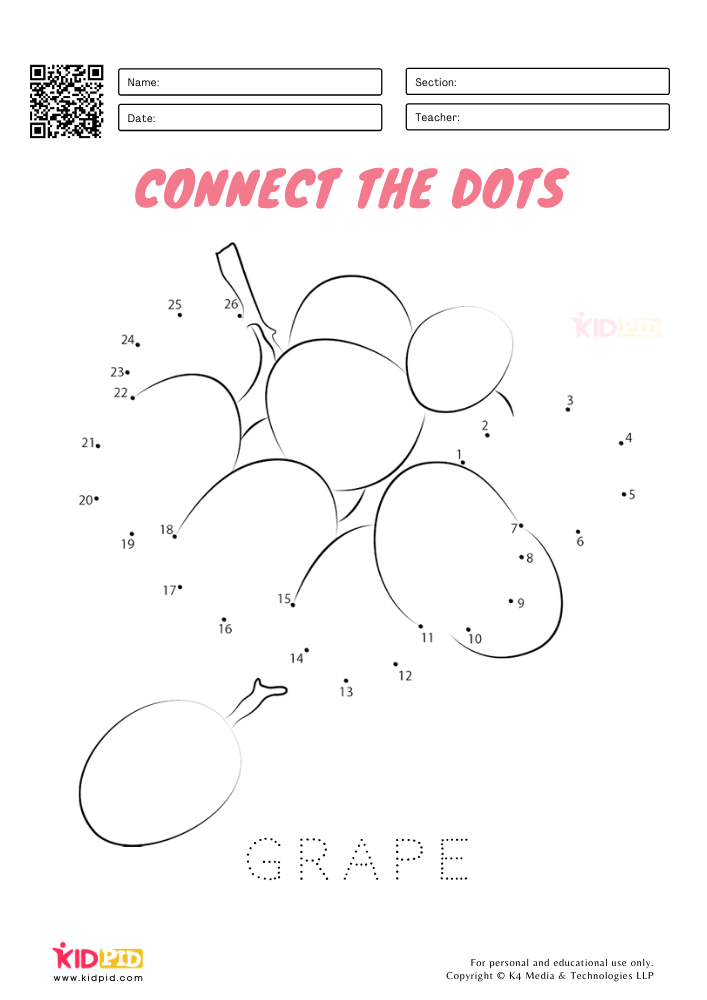
Grapes have vitamin C and K intact in them. They have other characteristics that help in fighting deadly diseases, and this is the reason why it is necessary to teach kids about the beauty and effects of grapes. So get ready with a connect-the-dots worksheet to teach your kid about the same.
Grapefruit
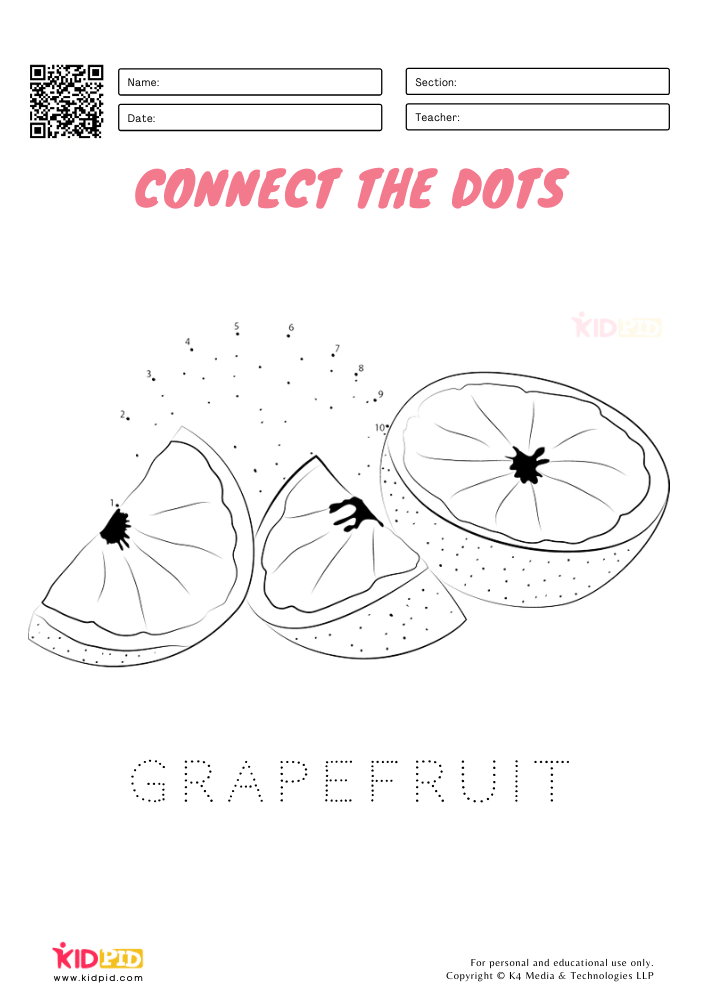
Grapefruit is another fruit idea that you can use for the connecting-the-dots challenge. Grapefruit is rich in vitamin C and is low in calories, which makes it right for consumption. It promotes an efficient working of the immune system, too, besides controlling the appetite in the right way.
Guava
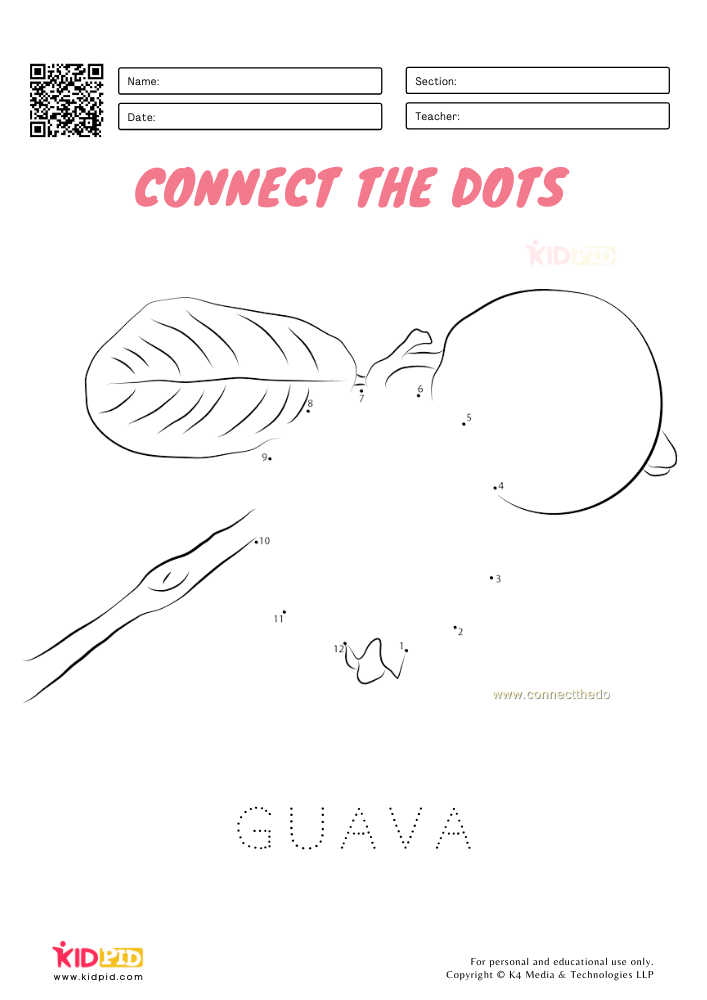
Guava is the right product for boosting immunity, along with improving the digestive system. It also boosts a healthy heart, and this is why you should teach your kid about this exceptionally great fruit. Do so by connecting the dots worksheet with your child with some fun.
This collection features a rich variety of fruit profiles, ranging from backyard staples to exotic varieties. The printable bundle includes:
Connect-the-dot worksheets function on the principle of guided visual discovery. The page displays a series of numbered dots scattered across the canvas in a specific sequence.
Integrating cross-disciplinary learning helps young children retain information much more effectively.
By completing this printable educational worksheet packet, young learners should be able to:
For teachers and parents looking to run a smooth activity session:
Introduce these terms during the lesson to boost early language acquisition:
Answer: These printables are ideally designed for children aged 3 to 6 years old (Preschool, Pre-K, and Kindergarten).
Answer: Yes. The PDF printouts work wonderfully for structured classroom centers, quiet-time activities, homeschooling units, or supplemental occupational therapy exercises.
Answer: Dot-to-dot games force small hand muscles to make sudden shifts in direction, trace curved boundaries, and stop at exact coordinates. This directly translates to the physical control needed to write letters and numbers within standard lined paper.
Key Facts About Fruits Connect the Dot Worksheets
Parts, Types, and Examples of Worksheets Included
How Do Fruits Connect the Dot Worksheets Work?
Benefits of Learning About Fruits via Dot-to-Dots
Learning Objectives
Worksheet Instructions
Interesting Facts About Fruits
Vocabulary Words
Real-Life Applications
FAQs
Q1. What age group is best suited for these fruit connect-the-dot pages?
Q2. Can these worksheets be used for remote learning or classroom environments?
Q3. How do connect-the-dots help with actual handwriting skills?
These engaging activities teach kids when to use uppercase letters and help them recognize and differentiate between alphabet letters with ease. Continue the learning journey with our worksheets, essays, paragraphs, flashcards, quizzes, and interactive resources. Join us on YouTube & Facebook.
The worksheet is created by the Content Team to foster academic growth.
Reviewed By Shreyasi Desai
Read More:

Nice