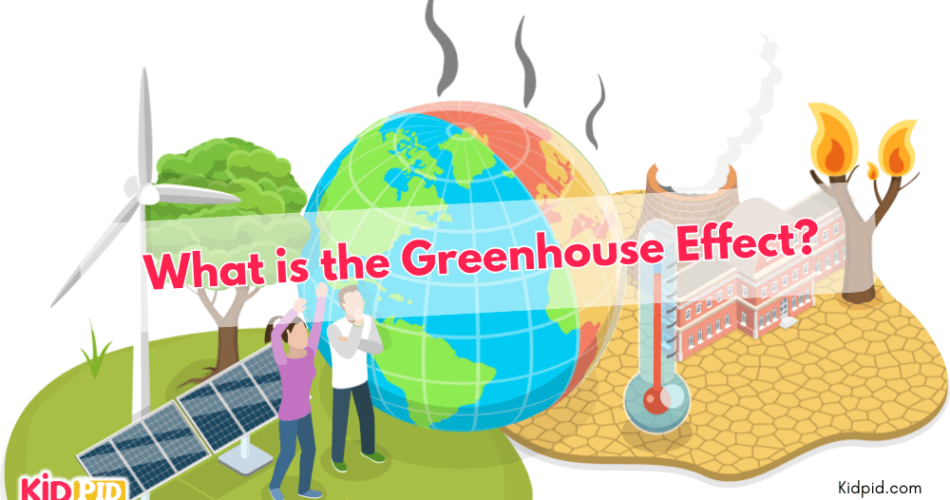
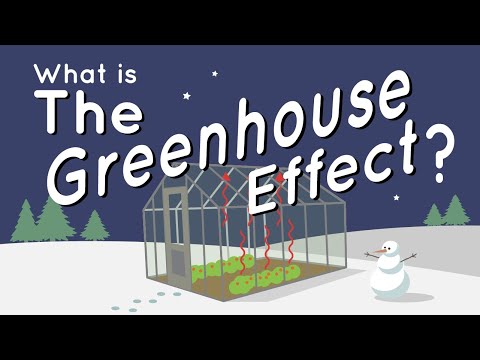
The greenhouse effect is a natural process where certain gases in Earth’s atmosphere, such as carbon dioxide and methane, trap heat from the sun, keeping the planet warm enough to support life.
MCQs
1. Which gas is most responsible for the greenhouse effect?
A) Oxygen
B) Carbon dioxide
C) Nitrogen
D) Hydrogen
Answer: B) Carbon dioxide
Explanation: Carbon dioxide is one of the key greenhouse gases that trap heat in the Earth’s atmosphere.
2. What natural process is similar to the greenhouse effect?
A) Photosynthesis
B) Respiration
C) Evaporation
D) Heating a greenhouse
Answer: D) Heating a greenhouse
Explanation: The greenhouse effect is similar to how a greenhouse works, trapping heat inside to keep plants warm.
3. How does the greenhouse effect benefit the Earth?
A) It keeps the Earth warm enough to support life.
B) It cools the Earth down.
C) It adds more oxygen to the atmosphere.
D) It removes all the pollutants.
Answer: A) It keeps the Earth warm enough to support life.
Explanation: Without the greenhouse effect, Earth would be too cold for life as we know it.
4. Which of the following is not a greenhouse gas?
A) Water vapor
B) Methane
C) Ozone
D) Helium
Answer: D) Helium
Explanation: Helium is not a greenhouse gas. The main greenhouse gases include water vapor, methane, carbon dioxide, and ozone.
Fill in The Blanks
Choose from these words: magnetoreception, landmarks, internal compass.
Answer: magnetoreception
2. In addition to magnetoreception, birds also rely on __________ to find their way during migration.
Answer: landmarks
3. Migration allows birds to travel thousands of miles each year using their own __________.
Answer: internal compass
True / False
1. Birds rely solely on their instincts to know where to migrate (True/False)
False: Birds use a combination of instinct, genetics, and environmental cues to know where to migrate.
2. Birds follow the same migration routes every year (True/False)
True: Many bird species follow the same migration routes year after year, often returning to the same breeding and wintering grounds.
True: Birds rely on a variety of environmental cues to navigate during migration, including landmarks, the position of the sun and stars, and the Earth’s magnetic field.
Read More: