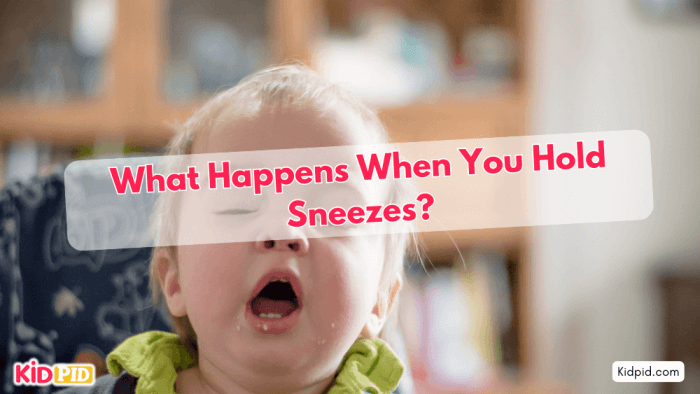
Have you ever tried to hold in a sneeze? Sneezing is something our bodies do naturally, but sometimes we might want to stop it. Let’s explore what happens if you hold in a sneeze, whether it can be harmful, and why we sneeze in the first place!
- What is Sneezing Sneezing is a way for our body to clear our nose and throat when something irritates them, like dust or a cold.
- What Happens When You Hold in a Sneeze If you hold in a sneeze, it can build up pressure in your body.
- Is Sneezing Harmful Sneezing is actually healthy! It helps get rid of germs and irritants from your nose.
- Why Do We Sneeze Sneezing helps protect our bodies from getting sick by removing things that shouldn’t be there.
- How to Sneeze Safely If you need to sneeze, try to do it into a tissue or your elbow to keep germs from spreading.
Contents
What Occurs When You Hold in Sneezes? Is Sneezing Dangerous? Why do We Sneeze?

Fun Fact:
“Did you know? Sneezing can travel farther than a car driving at 60 mph!”
Tip for Kids:
“If you feel a sneeze coming, step away from others and sneeze into your elbow to keep everyone safe.”
Related MCQ’S
1. Why is it not a good idea to hold in your sneezes?
A) It can cause broken glass
B) It can lead to injuries like ruptured eardrums or sinus damage
C) It helps to prevent illness
D) It makes you feel better
Answer: B) It can lead to injuries like ruptured eardrums or sinus damage
Explanation: Holding in a sneeze can create pressure in your body, which can cause injuries like ruptured eardrums or sinus damage.
2. What happens when you hold in a sneeze?
A) You make a loud sound
B) Pressure builds up inside your respiratory system
C) You stop feeling the tickle in your nose
D) You feel relaxed
Answer: B) Pressure builds up inside your respiratory system
Explanation: Holding in a sneeze increases the pressure inside your respiratory system, which can lead to injuries or complications.
3. How fast can droplets from a sneeze travel?
A) 10 mph
B) 20 mph
C) 40 mph
D) 100 mph
Answer: C) 100 mph
Explanation: Sneezes can propel droplets of mucus at a speed of up to 100 miles per hour, which is why it’s important to cover your nose and mouth when sneezing.
4. What is the best way to sneeze safely?
A) Hold it in until it goes away
B) Sneeze loudly
C) Cover your nose and mouth and let the sneeze happen
D) Sneeze in the direction of other people
Answer: C) Cover your nose and mouth and let the sneeze happen
Explanation: The best way to sneeze is to cover your nose and mouth, allowing your body to sneeze naturally, which helps avoid harm.
5. What is a “fings”?
A) A part of the throat
B) A tube connecting your mouth and nose to your stomach
C) A part of your brain
D) A type of sneeze reflex
Answer: B) A tube connecting your mouth and nose to your stomach
Explanation: The “fings” is a tube that connects your mouth and nose to your stomach, and it can be torn if you hold in a sneeze.
6. How many droplets can a single sneeze produce?
A) 10,000
B) 20,000
C) 30,000
D) 40,000
Answer: D) 40,000
Explanation: A single sneeze can produce up to 40,000 droplets, which is why it’s important to sneeze carefully.
You may like these:
Why do I sneeze?
Sneezing is the body’s way of clearing irritants like dust, pollen, or germs from the nose to keep your airways clean and healthy.
Why do we see our breath when it’s cold?
Cold air condenses water vapor in your warm breath into tiny droplets, creating a visible mist, similar to how clouds or fog form.
The Amazing Science of… Dust?
Dust is a fascinating mix of particles like skin cells, dirt, pollen, and cosmic debris, impacting everything from allergies to climate and even astronomy!
Label Parts of Nose Worksheet
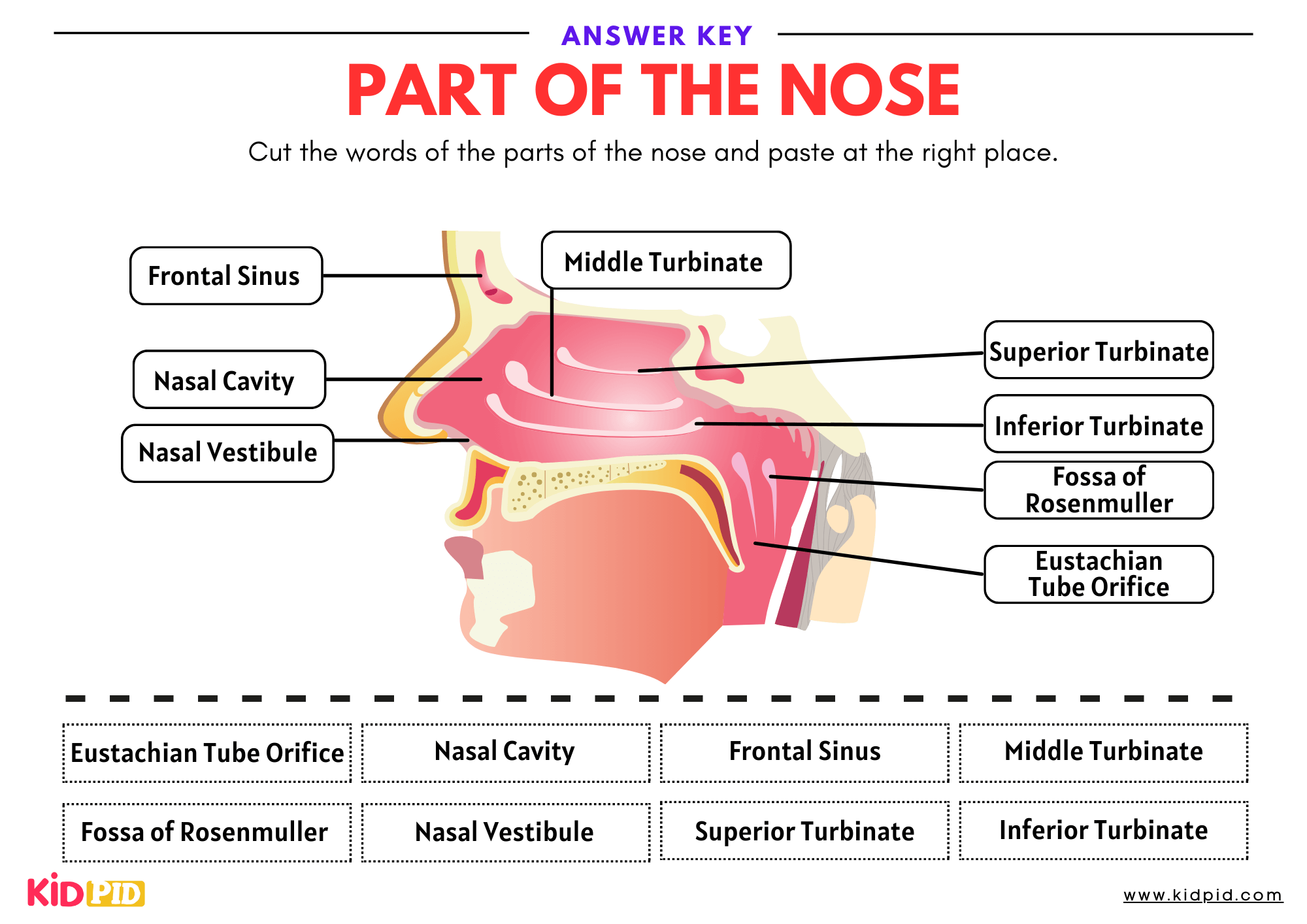

A fun, interactive worksheet for kids to learn about the nose’s anatomy, including nostrils, septum, nasal cavity, and their roles in breathing and smelling.