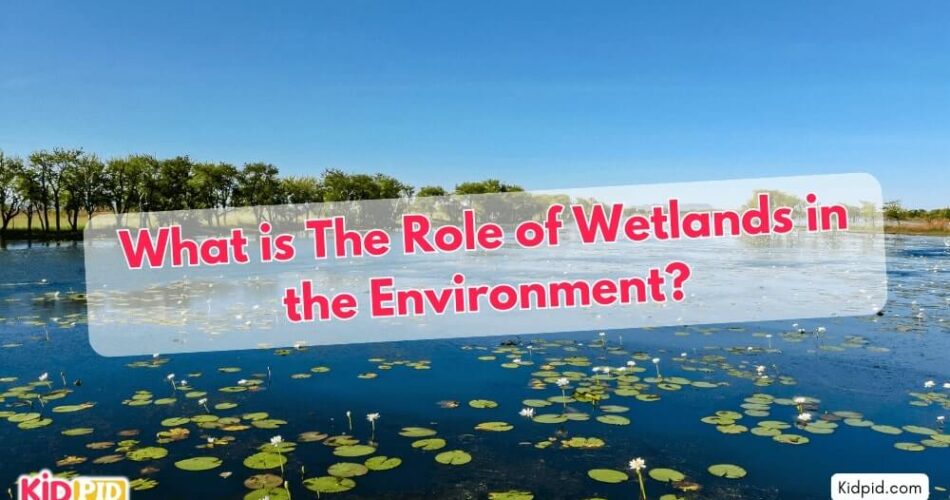
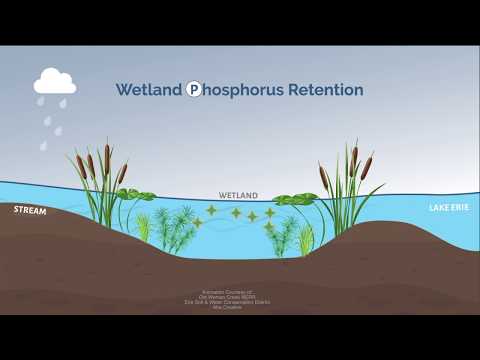
Wetlands play a crucial role in the environment by acting as natural water filters, reducing pollution by trapping sediments, and absorbing pollutants from the water. They also serve as important wildlife habitats, supporting a diverse range of plant and animal species. Additionally, wetlands help to control floods by absorbing excess rainwater and providing areas for people to enjoy.
MCQs
1. Wetlands are important habitats for:
A) Fish and birds
B) Lions and tigers
C) Cacti and succulents
D) Rocks and minerals
Answer: A) Fish and birds
Explanation: Many species of fish and birds rely on wetlands for food, shelter, and breeding grounds.
2. What is one-way wetlands improve water quality?
A) By adding pollutants
B) By filtering pollutants
C) By heating the water
D) By freezing the water
Answer: B) By filtering pollutants
Explanation: Wetlands act as natural filters, trapping pollutants such as sediment and chemicals, which improves water quality.
3. Wetlands are often referred to as:
A) The lungs of the Earth
B) The kidneys of the landscape
C) The heart of the forest
D) The brains of the ecosystem
Answer: B) The kidneys of the landscape
Explanation: Just like kidneys filter blood, wetlands filter and clean the water that flows through them, removing impurities.
4. Why are wetlands important for combating climate change?
A) They release carbon dioxide
B) They store carbon dioxide
C) They produce oxygen
D) They increase temperatures
Answer: B) They store carbon dioxide
Explanation: Wetlands store large amounts of carbon dioxide in their plant life and soil, helping to reduce greenhouse gases in the atmosphere.
5. How do wetlands contribute to the economy?
A) By being perfect sites for skyscrapers
B) By providing resources for industries like fishing and tourism
C) By serving as a major transportation routes
D) By producing electronic goods
Answer: B) By providing resources for industries like fishing and tourism
Explanation: Wetlands support industries such as fishing and tourism by providing fish, shellfish, and beautiful landscapes for people to enjoy.
Fill in The Blanks
Choose From These Words: filters, plant, animal, flooding, organisms.
1. Wetlands act as natural ___________ to improve water quality.
Answer: filters
2. Wetlands provide habitats for a wide range of ________ and ________ species.
Answer: plant, animal
3. Wetlands help to regulate water flow and reduce the risk of _________.
Answer: flooding
4. Wetlands are a valuable source of food and resources for many __________.
Answer: organisms
True / False
1. Wetlands are only found in tropical regions (True / False)
False: Wetlands can be found in a variety of climates and regions around the world.
2. Wetlands help to filter pollutants from water (True / False)
True: Wetlands act as natural filters, removing pollutants and improving water quality.
3. Wetlands do not provide habitat for plants and animals (True / False)
False: Wetlands provide crucial habitat for a wide variety of plant and animal species.
4. Wetlands play a role in regulating water levels during flooding (True / False)
True: Wetlands can absorb and store excess water, helping to prevent flooding in surrounding areas.
Read More