
These are the sight word worksheets for second-grade students. Sight words are the most frequently used words, and students should gain knowledge about these words, as they will become helpful for them to communicate and write. Check out these worksheets to enhance the child’s fluency in vocabulary.
[Scroll Down for Download Link]
Contents
- Learn Sight Words Spelling Worksheet For Grade 2
- Key Facts About Sight Words Spelling List Worksheet for Grade 2
- Parts/Types/Examples of Sight Words Spelling List Worksheet for Grade 2
- How Does the Sight Words Spelling List Worksheet for Grade 2 Work?
- Benefits of Learning About Sight Words: Spelling List Worksheet for Grade 2
- Learning Objectives
- Worksheet Instructions
- Interesting Facts About Sight Words Vocabulary Words
- Real-Life Applications
- FAQs
- Q1. What are sight words?
- Q2. Why are sight words important for Grade 2 students?
- Q3. How often should children practice sight words?
- Q4. Can sight word worksheets improve spelling?
- Q5. What are some examples of Grade 2 sight words?
- Q6. How do sight words support reading comprehension?
- Q7. Are sight words different from vocabulary words?
- Q8. Who can use these worksheets?
- Read More:
Learn Sight Words Spelling Worksheet For Grade 2
Read More: Sight Words Lime List Flashcards
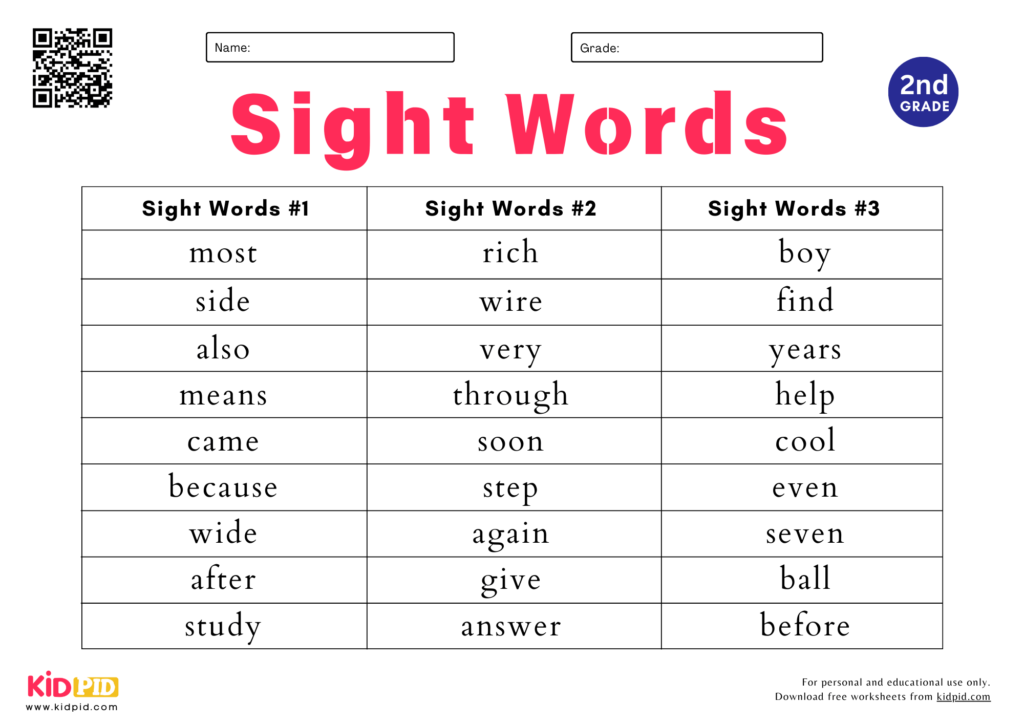
In this worksheet, three columns include sight words. Grade 2 students will practice them by writing and spelling these words regularly. Engage your child in these activities so that they will know what sight words are and what we mean by them.

This is the second worksheet for Grade 2 students to learn sight words effectively and gain knowledge about them. They will know how to identify them. For example, some words are live, rest, sent, etc.

This is the three-sight word worksheet for the students to learn about them and their importance. This worksheet includes three columns containing sight words. So practice them, make the basic things stronger, and get fluent in the English language as soon as possible.
Key Facts About Sight Words Spelling List Worksheet for Grade 2
The Sight Words Spelling List Worksheet for Grade 2 is a valuable literacy resource designed to help young learners recognize, read, spell, and use frequently occurring words in everyday reading and writing. Sight words are often words that children should recognize instantly without sounding them out. These worksheets strengthen foundational language skills and improve reading fluency.
Grade 2 students encounter more advanced sight words than in earlier grades, helping them expand vocabulary and comprehension abilities. Regular practice with sight word spelling lists encourages confidence in independent reading and supports stronger writing development. The worksheet typically includes activities such as tracing, writing, matching, and sentence-building exercises that reinforce word recognition and retention.
Parts/Types/Examples of Sight Words Spelling List Worksheet for Grade 2
Sight word worksheets can include several engaging formats that target different learning styles and literacy skills.
Common Parts:
- Sight word lists
- Tracing activities
- Copy-and-write exercises
- Sentence completion tasks
- Word matching sections
- Reading practice activities
Types of Sight Word Worksheets:
- Fill-in-the-blank worksheets
- Word search activities
- Sentence-building worksheets
- Matching exercises
- Spelling practice sheets
- Reading comprehension worksheets
Examples of Grade 2 Sight Words:
- Always
- Around
- Because
- Before
- Found
- Green
- Light
- Right
- Together
- Would
These activities help students recognize words quickly and use them accurately in context.
How Does the Sight Words Spelling List Worksheet for Grade 2 Work?
The worksheet introduces students to a set of sight words that are commonly used in Grade 2 reading materials. Learners first read and identify the words, then practice spelling them through repetition and interactive exercises.
Students may:
- Read the sight words aloud.
- Trace and write each word multiple times.
- Match words with pictures or meanings.
- Complete sentences using the correct sight words.
- Use the words in their own writing.
Repeated exposure helps transfer these words into long-term memory, enabling faster reading and improved comprehension.
Benefits of Learning About Sight Words: Spelling List Worksheet for Grade 2
Practicing sight words offers numerous academic advantages for young learners.
Major Benefits:
- Improves reading fluency
- Enhances spelling accuracy
- Builds vocabulary knowledge
- Strengthens writing skills
- Increases reading confidence
- Supports comprehension development
- Encourages independent learning
- Helps students recognize high-frequency words instantly
These skills contribute to overall language proficiency and academic success.
Learning Objectives
By completing this worksheet, students will be able to:
- Identify common Grade 2 sight words.
- Spell frequently used words correctly.
- Read sight words automatically and fluently.
- Use sight words appropriately in sentences.
- Improve reading comprehension through word recognition.
- Develop stronger vocabulary and writing skills.
- Increase confidence in reading and communication.
Worksheet Instructions
Follow these simple steps to complete the worksheet successfully:
- Read each sight word carefully.
- Trace the words if tracing activities are provided.
- Write each word neatly on the practice lines.
- Complete matching or fill-in-the-blank exercises.
- Read all completed sentences aloud.
- Check spelling for accuracy.
- Practice the words daily for better retention.
Take your time and focus on correct spelling and pronunciation.
Interesting Facts About Sight Words Vocabulary Words
- Sight words make up a large percentage of words found in children’s books.
- Many sight words cannot always be easily sounded out using phonics rules.
- Instant recognition of sight words improves reading speed.
- Learning sight words reduces the cognitive effort required during reading.
- Strong sight word knowledge helps children become more confident readers.
- Sight words are often among the first words students learn to read independently.
- Consistent practice helps learners retain words for long-term use.
Real-Life Applications
Sight words are used daily in both academic and real-world situations.
Examples of Real-Life Use:
- Reading storybooks and classroom texts
- Following written instructions
- Writing sentences and short paragraphs
- Completing homework assignments
- Reading signs, labels, and notices
- Communicating through notes and messages
- Participating in classroom discussions
Mastering sight words enables children to read more efficiently and engage confidently with written language.
FAQs
Q1. What are sight words?
Answer: Sight words are commonly used words that readers should recognize instantly without needing to sound them out.
Q2. Why are sight words important for Grade 2 students?
Answer: They improve reading fluency, comprehension, spelling, and overall literacy development.
Q3. How often should children practice sight words?
Answer: Daily practice for 10–15 minutes can significantly improve recognition and retention.
Q4. Can sight word worksheets improve spelling?
Answer: Yes, repeated writing and reading activities help students remember correct spellings.
Q5. What are some examples of Grade 2 sight words?
Answer: Examples include because, before, around, always, together, right, and would.
Q6. How do sight words support reading comprehension?
Answer: When students recognize words automatically, they can focus more on understanding the meaning of the text.
Q7. Are sight words different from vocabulary words?
Answer: Sight words are high-frequency words recognized instantly, while vocabulary words include all words students learn and understand.
Q8. Who can use these worksheets?
Answer: Grade 2 students, parents, teachers, tutors, and homeschool educators can all use these worksheets to support literacy learning.
Building a strong sight words vocabulary helps Grade 2 students improve spelling, increase reading fluency, strengthen word recognition, and develop greater confidence in everyday reading and writing through regular practice. Find high-quality essays, quizzes, worksheets, flashcards, paragraphs, and interactive resources that support children’s learning. Stay updated on YouTube & Facebook.
The Content Team creates the worksheet to encourage skill practice.
Reviewed By Sanjana
Read More: