This article explores the various types of doctors that are available in the medical field. It explains the different specializations that doctors can pursue and the different roles that come with them. It also covers the continuing education requirements for each type of doctor and the salary range for each profession.
Contents
Learn Medical Practitioner Names
Read More: Common Mistakes in English-Speaking
Attending Doctor


Attending doctor offering patient consultation
An attending doctor is a senior medical professional who supervises and treats patients in a hospital.
They are responsible for diagnosing illnesses, prescribing treatments, and guiding junior doctors and interns.
Role: Oversees patient care and leads the medical team.
Consulting Doctor
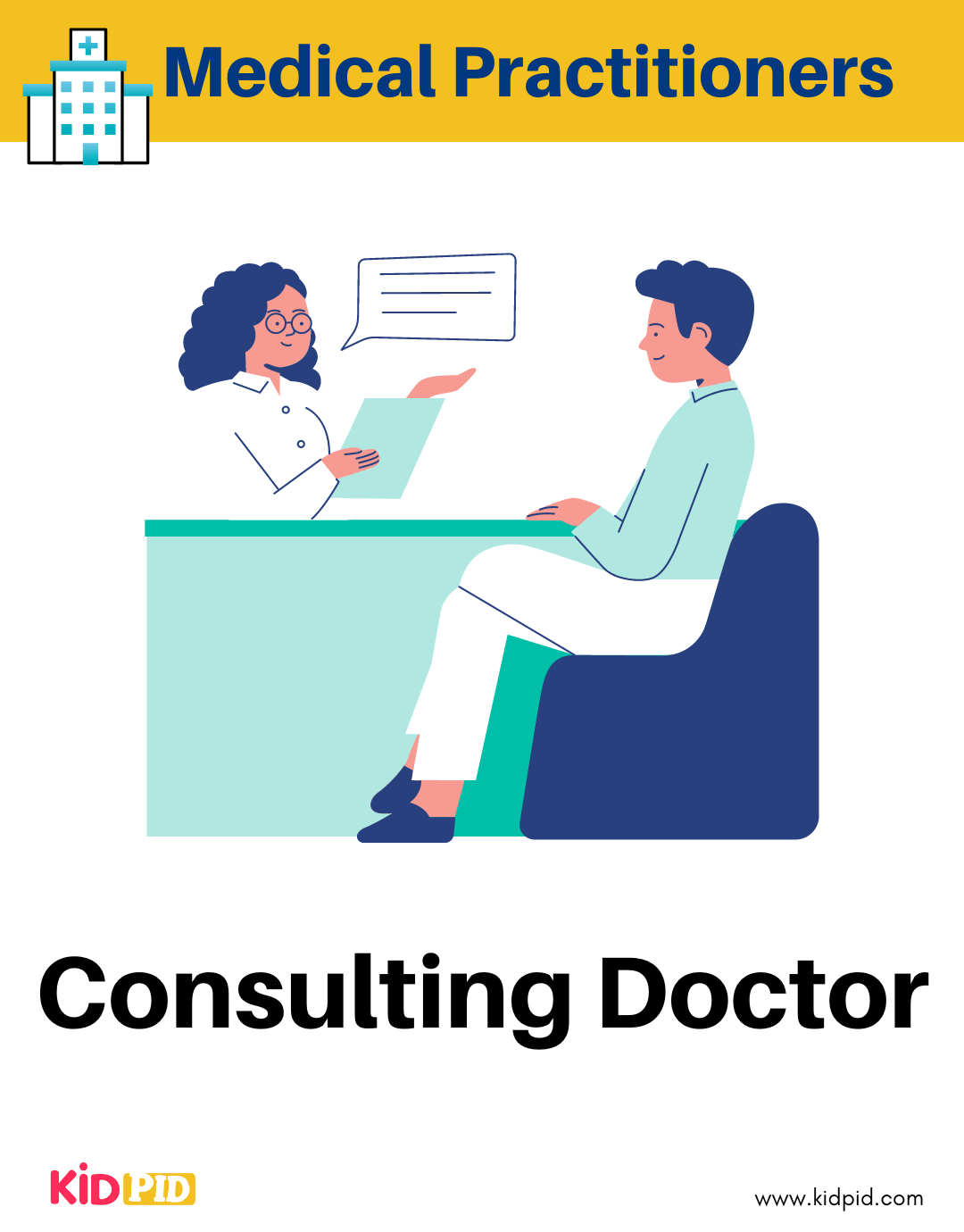
Consulting doctor guiding patient with care
A consulting doctor is a specialist who provides expert advice on specific health problems.
They usually do not handle daily treatment but give opinions to help other doctors make decisions.
Role: Offers expert medical opinions and advanced diagnoses.
Dentist

Dentist checking patient’s oral health
A dentist takes care of teeth, gums, and mouth health.
They treat cavities, clean teeth, fix braces, and help prevent oral diseases.
Role: Maintains oral hygiene and performs dental treatments.
Duty Doctor
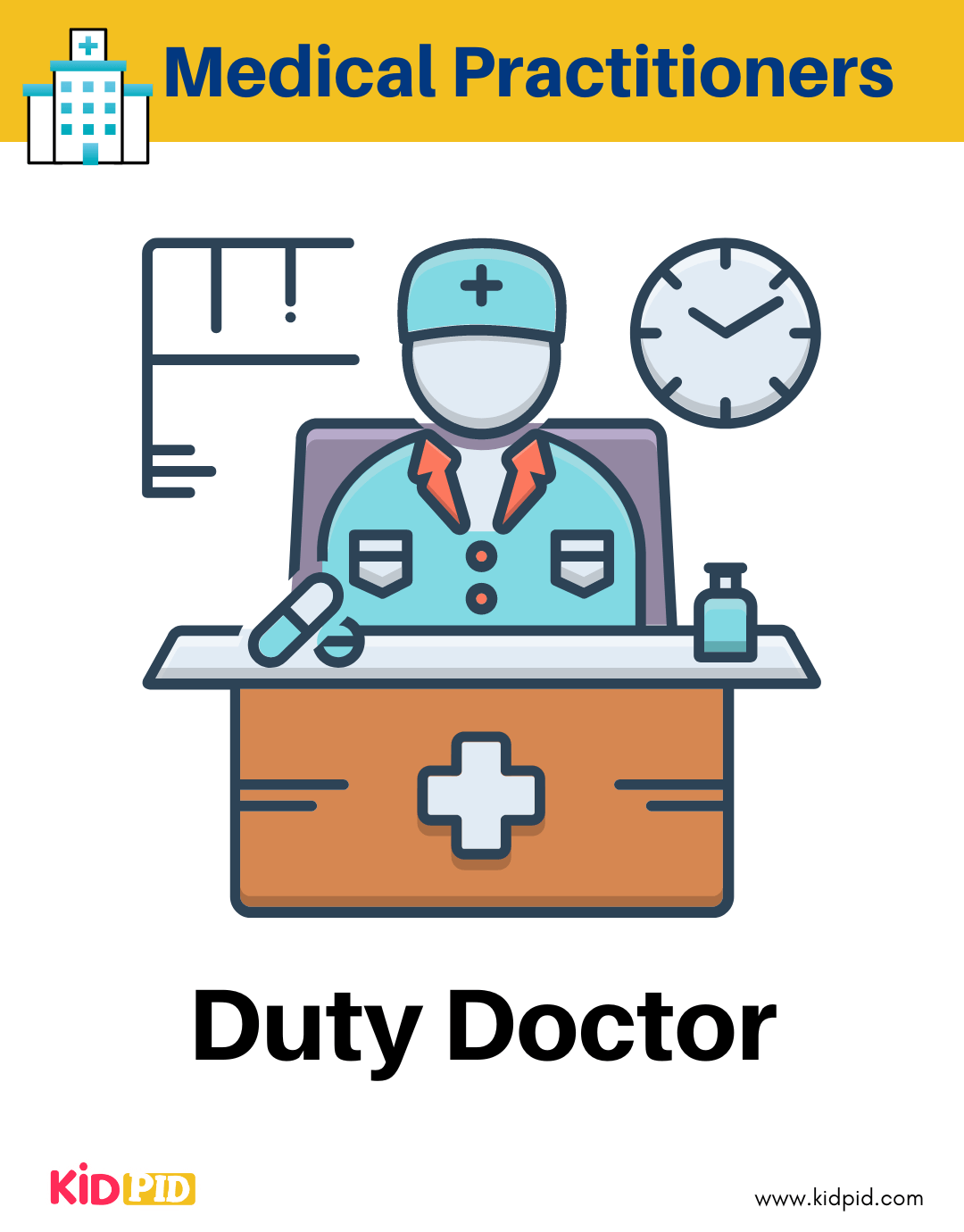
Duty doctor monitoring patients on shift
A duty doctor is usually present in hospitals 24/7 to handle emergency or general cases.
They check patients, provide first aid, and stabilize conditions before specialists arrive.
Role: Provides immediate medical care in hospitals.
ENT Doctor
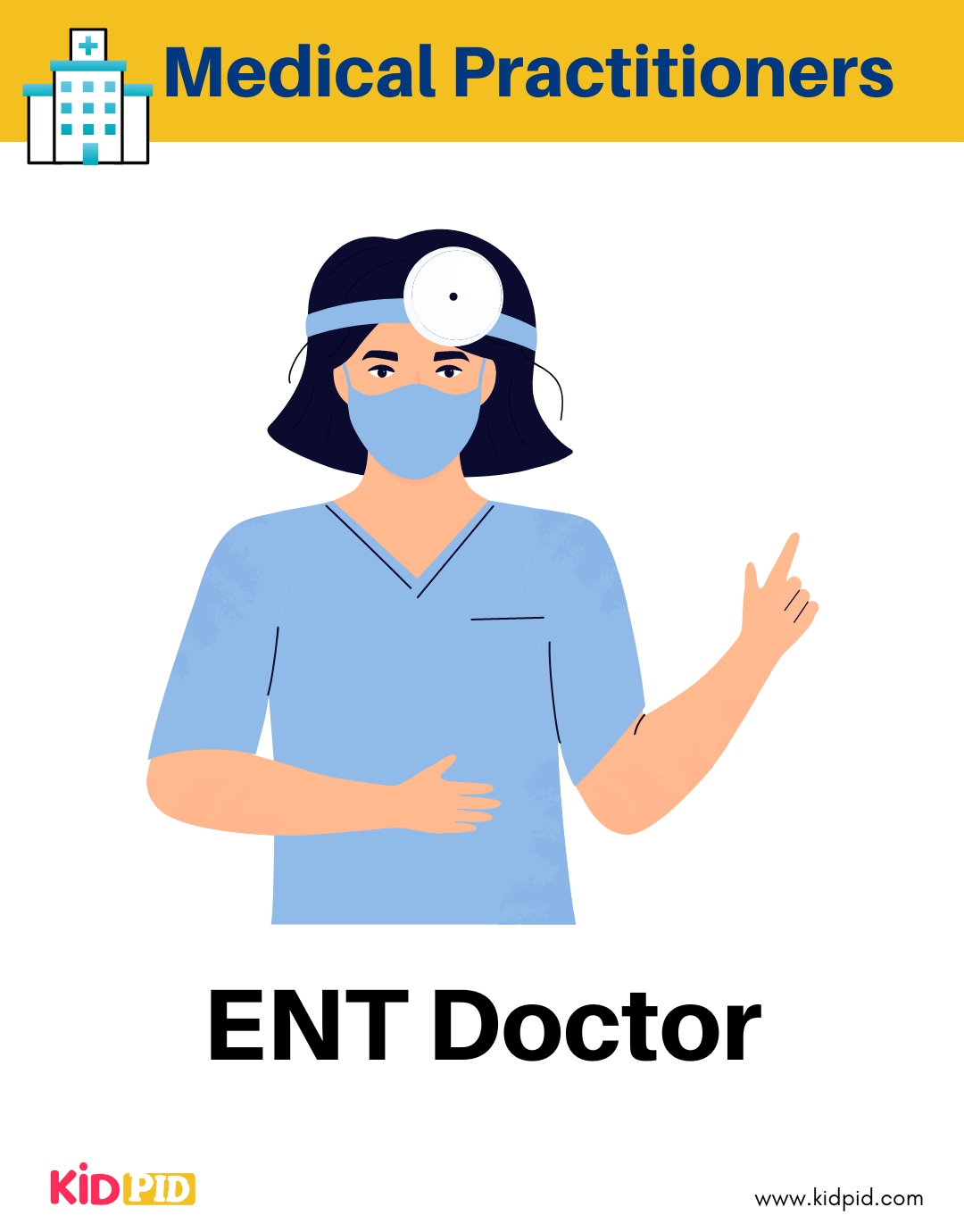
ENT specialist examining ear nose throat
An ENT doctor treats problems related to the ear, nose, throat, and neck.
They help with hearing loss, sinus infections, sore throats, and speech issues.
Role: Treats ear, nose, and throat conditions.
Family Doctor

Family doctor caring for all members
A family doctor (also called a general practitioner) provides healthcare for people of all ages.
They diagnose common illnesses, prescribe medicines, and guide patients to specialists if needed.
Role: Provides general and long-term care for families.
Nurse

Nurse providing essential patient support
Nurses support doctors and take care of patients before, during, and after treatment.
They check vital signs, give medicines, and ensure patient comfort.
Role: Provides care, comfort, and medical assistance to patients.
Paramedic
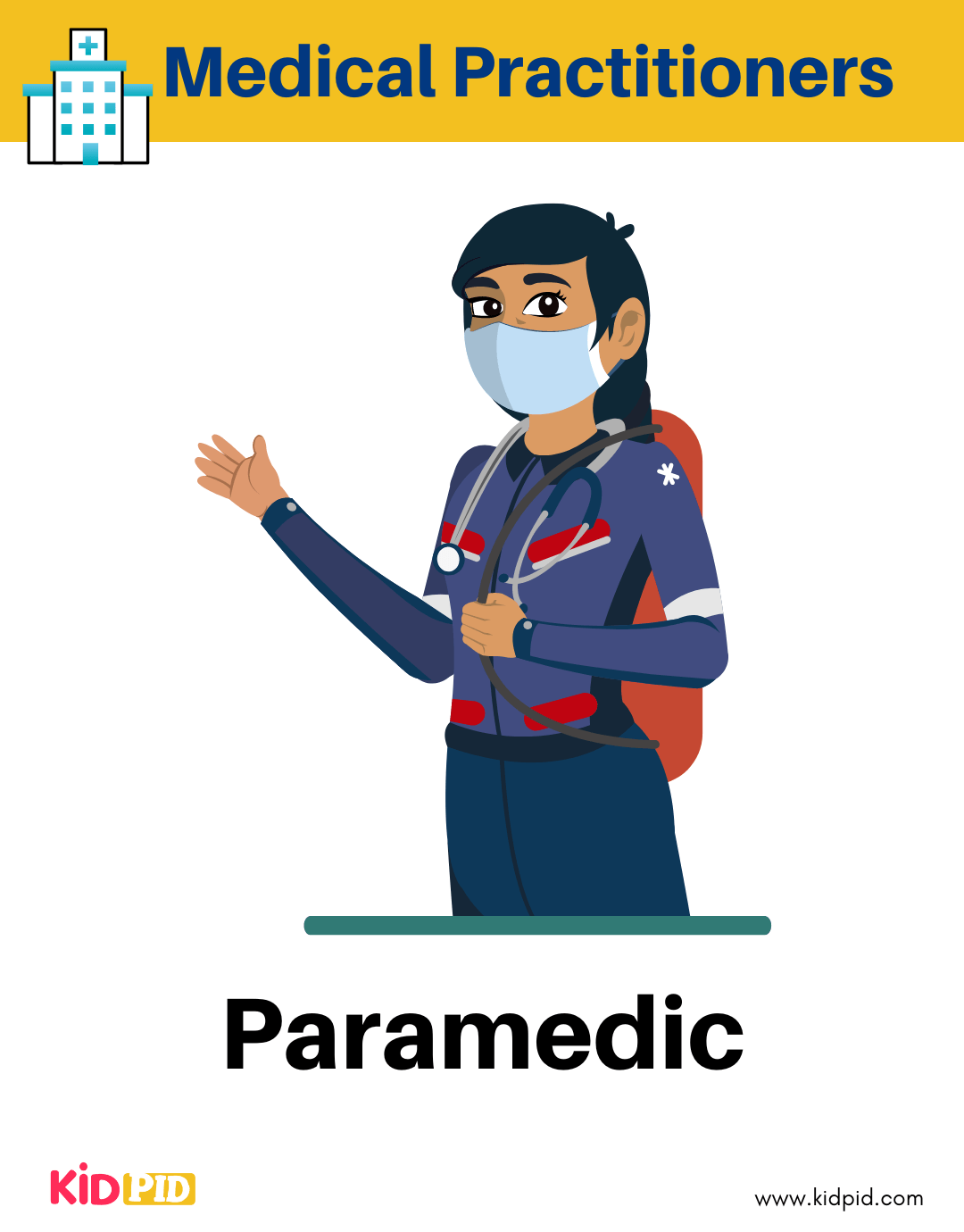
Paramedic ready for emergency assistance
Paramedics are emergency medical professionals who give first aid and life support before the patient reaches the hospital.
They work in ambulances and handle urgent cases like accidents or heart attacks.
Role: Provides emergency care and patient transport.
Psychologist

A psychologist helping with mental well-being
A pharmacist prepares and gives medicines prescribed by doctors.
They ensure the right dose is given and educate patients about safe medicine use.
Role: Dispenses medicines and advises on proper usage.
Surgeon

Surgeon performing surgery in operation room
A surgeon performs operations to treat injuries, remove diseases, or repair body parts.
They may specialize in areas like brain surgery, heart surgery, or bone surgery.
Role: Performs surgical procedures and post-surgery care.
Veterinarian

A veterinarian caring for animals with love
A veterinarian (or vet) treats and cares for animals.
They diagnose animal diseases, give vaccinations, and perform surgeries on pets and farm animals.
Role: Provides medical care for animals.
There are many types of doctors, each specializing in different areas of health care. From pediatricians to cardiologists and dentists, every doctor plays an important role in keeping us healthy and treating specific medical conditions effectively. Join us on Facebook, Pinterest, YouTube & Telegram for free educational printables, engaging kids’ worksheets, and creative teaching ideas! Connect on the Telegram group for exclusive learning resources and classroom activities for children.
Read More: