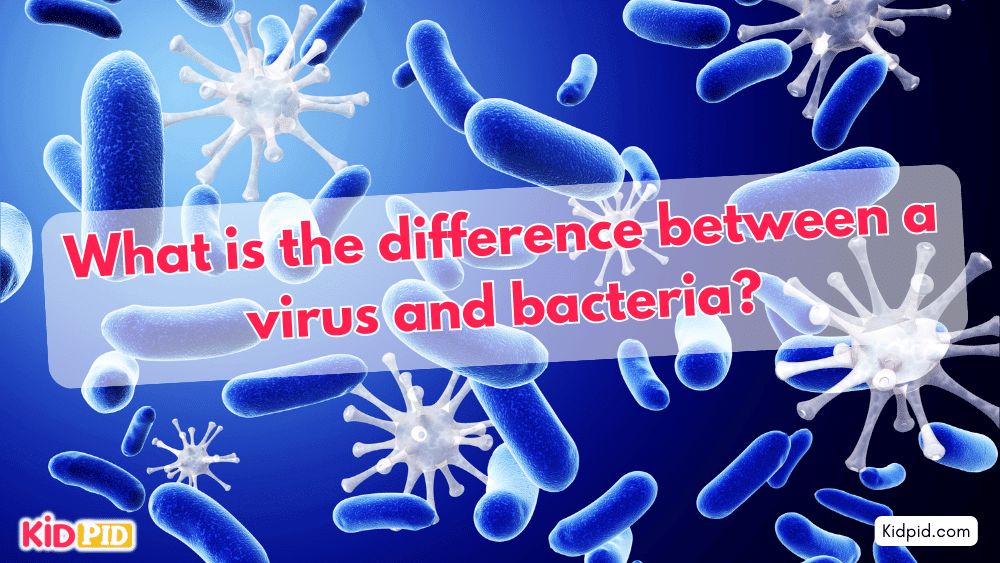
Viruses are tiny infectious agents that require a living host to replicate, while bacteria are single-celled microorganisms that can live independently. Viruses are generally smaller than bacteria and can cause diseases by hijacking the host’s cellular machinery. Bacteria can be beneficial or pathogenic and can survive in a wide range of environments.
Contents
MCQs
1. Which of the following can be treated with antibiotics?
A) Virus
B) Bacteria
C) Both
D) Neither
2. How do viruses reproduce?
A) By dividing on their own
B) By infecting host cells
C) By photosynthesis
D) By absorbing nutrients from the environment
3. Which of these is a characteristic of bacteria, but not of a virus?
A) Can exist and multiply outside a host
B) Contains genetic material
C) Can be seen under a light microscope
D) Needs a host to reproduce
4. What shapes can bacteria have?
A) Spiral only
B) Rod only
C) Spherical only
D) All of the above
5. Which of the following is a common way that viruses are spread?
A) Eating contaminated food
B) Drinking clean water
C) Breathing in fresh air
D) Touching an infected surface and then your face
Read More