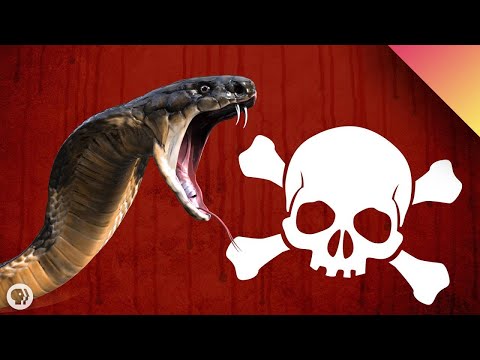
Some animals have venom as a means of defense against predators and to capture prey, ensuring their survival.
MCQs
1. Which of these animals does not use venom?
A) Snake
B) Spider
C) Elephant
D) Scorpion
Answer: C) Elephant
Explanation: Elephants are large mammals that do not have venom. Snakes, spiders, and scorpions use venom for defense and to capture prey.
2. How can venom benefit the animal that uses it?
A) It can make them move faster.
B) It helps in capturing and digesting their prey.
C) It keeps them warm.
D) It makes them invisible to predators.
Answer: B) It helps in capturing and digesting their prey.
Explanation: Venom can immobilize the prey and start the digestion process, making it easier for the predator to eat.
3. What is one way animals deliver venom?
A) By looking at their prey
B) By touching their prey
C) Through a bite or sting
D) By shouting at their prey
Answer: C) Through a bite or sting
Explanation: Animals that have venom often deliver it through a bite or sting, which allows the venom to enter the prey’s or predator’s body.
4. Why don’t all animals have venom?
A) Because it is too expensive to produce
B) Because it can be dangerous to the animal itself
C) Because not all animals need venom to survive
D) Because they forget how to produce it
Answer: C) Because not all animals need venom to survive
Explanation: Animals evolve traits that help them survive in their specific environments. Not all animals need venom; they may use camouflage, speed, or other strategies to protect themselves or hunt.
Fill in The Blanks
Choose from These Words: light, ecosystems, scatters.
1. Light pollution is the excessive, misdirected or obtrusive artificial ________ that brightens the night sky.
Answer: light
2. Light pollution disrupts ________.
Answer: ecosystems
3. Light pollution happens when artificial light sources emit too much light that ________ off particles in the atmosphere.
Answer: scatters
True / False
1. Light pollution only affects humans (True / False)
False: Light pollution can have negative effects on wildlife, disrupting their natural behaviors and habitats.
2. Leaving outdoor lights on all night does not contribute to light pollution (True / False)
False: Leaving outdoor lights on unnecessarily can contribute to light pollution by brightening the night sky.
3. Light pollution only affects the night sky (True / False)
False: Light pollution can disrupt natural light patterns during the night, but it can also impact the day-night cycle for animals and plants.
4. Light pollution does not have any negative effects on the environment (True / False)
False: Light pollution can have negative effects on the environment by disrupting ecosystems and habitats.
Read More: