

The goal of education is to equip children with the necessary knowledge that will help them understand the world a little better and motivate them to pursue their dreams in life. A strong foundation in mathematics is essential for every child, whether they’re bookish or creative.
Learning numbers and counting is only the first step – children must also learn how to use the correct words to express concepts. A great way to exercise young, developing minds is to combine multiple tasks in a single activity.
Contents
- How to teach kids when to use ‘few’ and ‘many’?
- Few & Many Worksheets for Kindergarten
- Key Facts About Few & Many Worksheets for Kindergarten
- Parts/Types/Examples of Measurement Worksheets
- How Does a ‘Few vs. Many’ Worksheet Work?
- Benefits of Learning About Quantities Early
- Learning Objectives
- Worksheet Instructions for Parents & Teachers
- Interesting Facts About Early Math Learning
- Vocabulary Words
- Real-Life Applications
- FAQs
- You may like these:
How to teach kids when to use ‘few’ and ‘many’?
- It is important to emphasize the importance of counting objects. Take 5 pens in your right hand and 2 pens in your left hand.
- Simply by looking, kids will know that the right hand has ‘many’ pens while the left hand has ‘few’ pens.
- Encourage them to count the pens in each hand before answering.
Simple habits like this will help children understand the importance of following instructions and being patient while doing any activity
Use everyday items such as books, bottles, erasers, etc. to demonstrate more examples to children – visual aids are always more interesting than simply reading from a book. This will inculcate a habit of visualizing when learning and improve their mental capacity along the way.
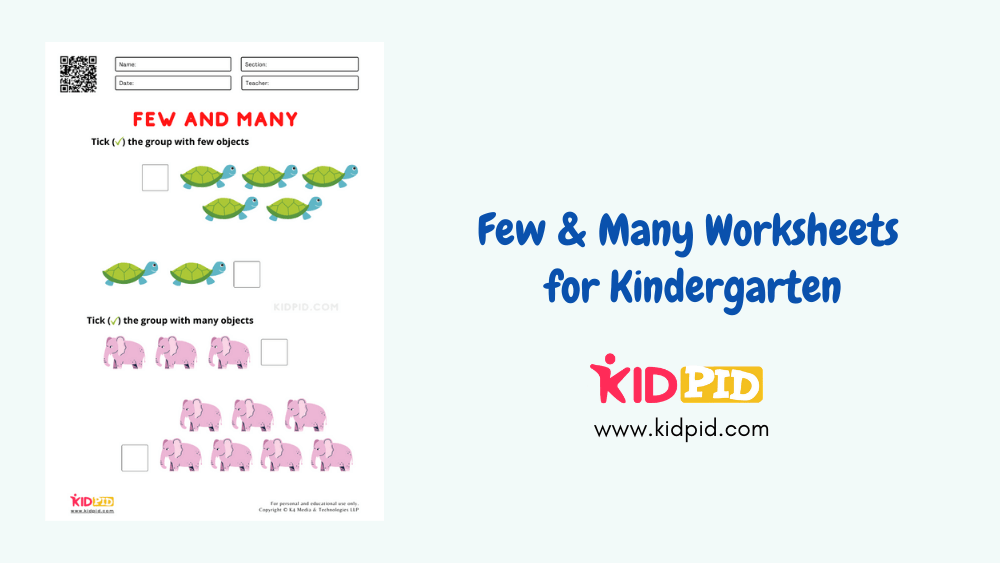
Few & Many Worksheets for Kindergarten

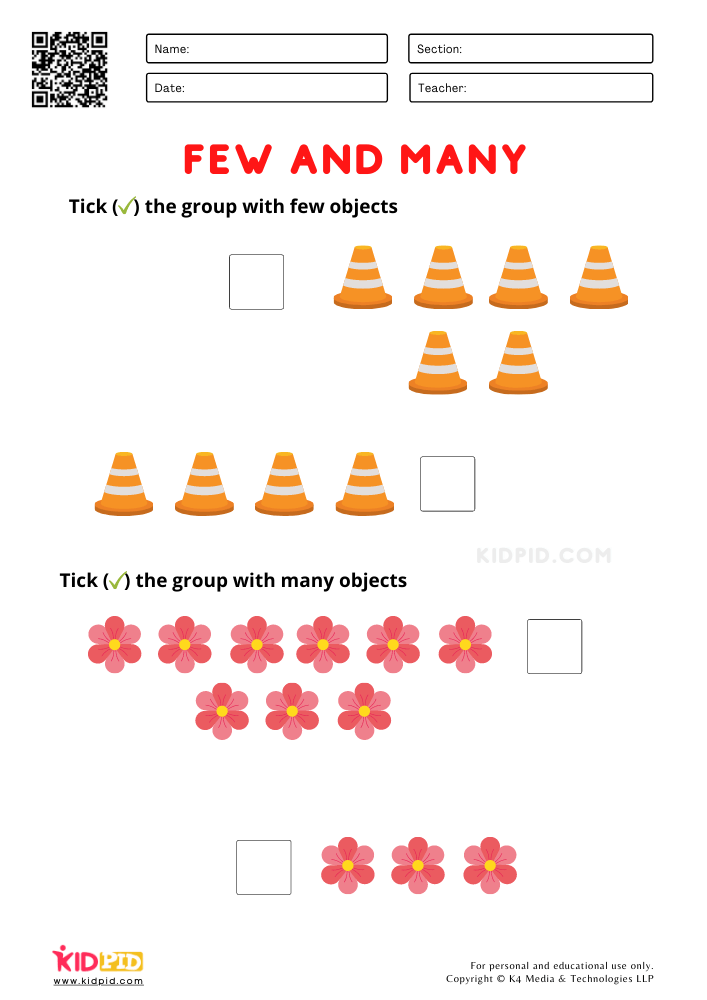
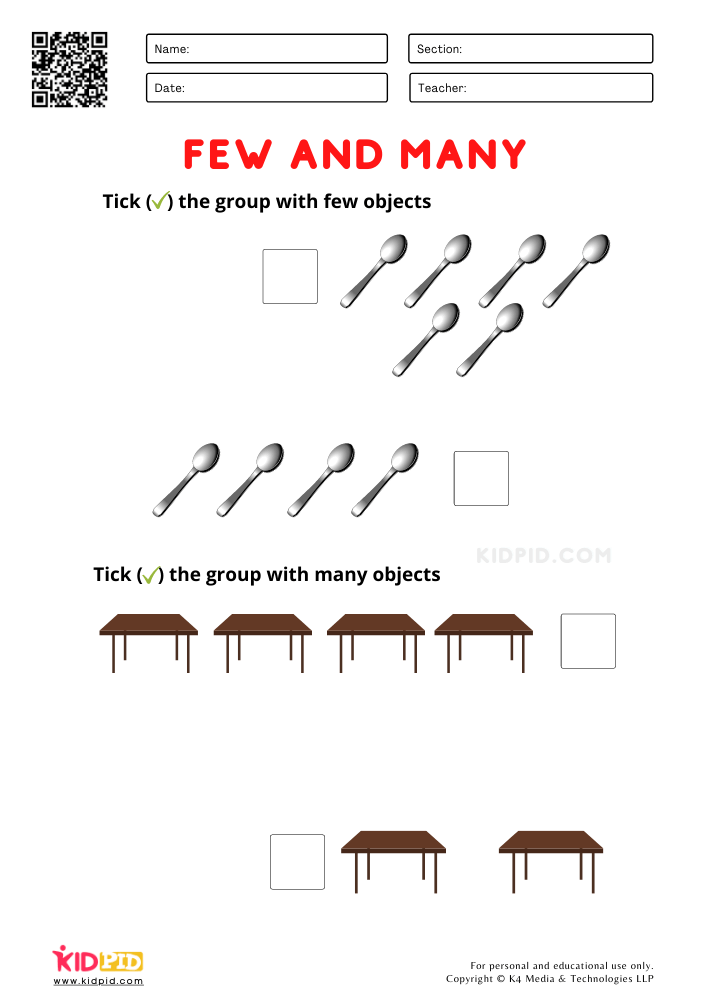
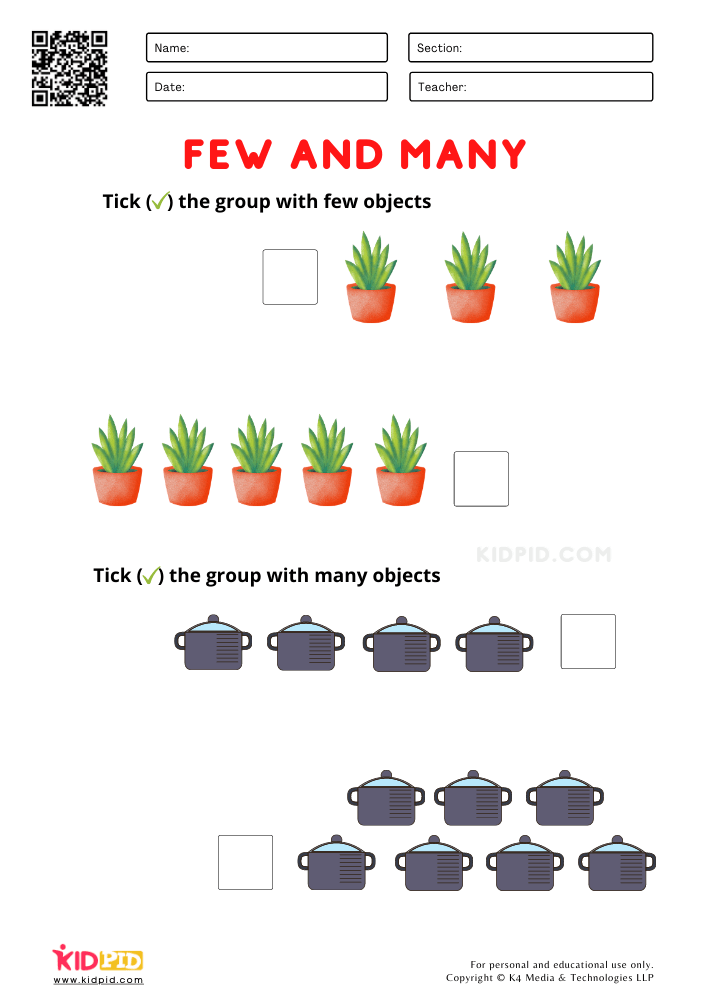
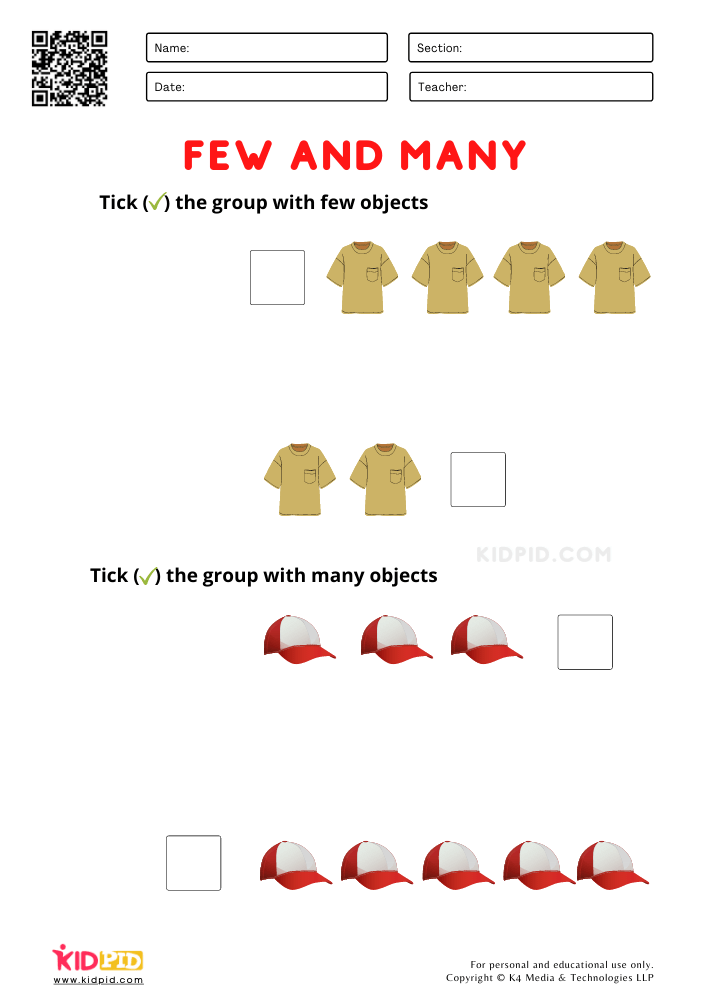
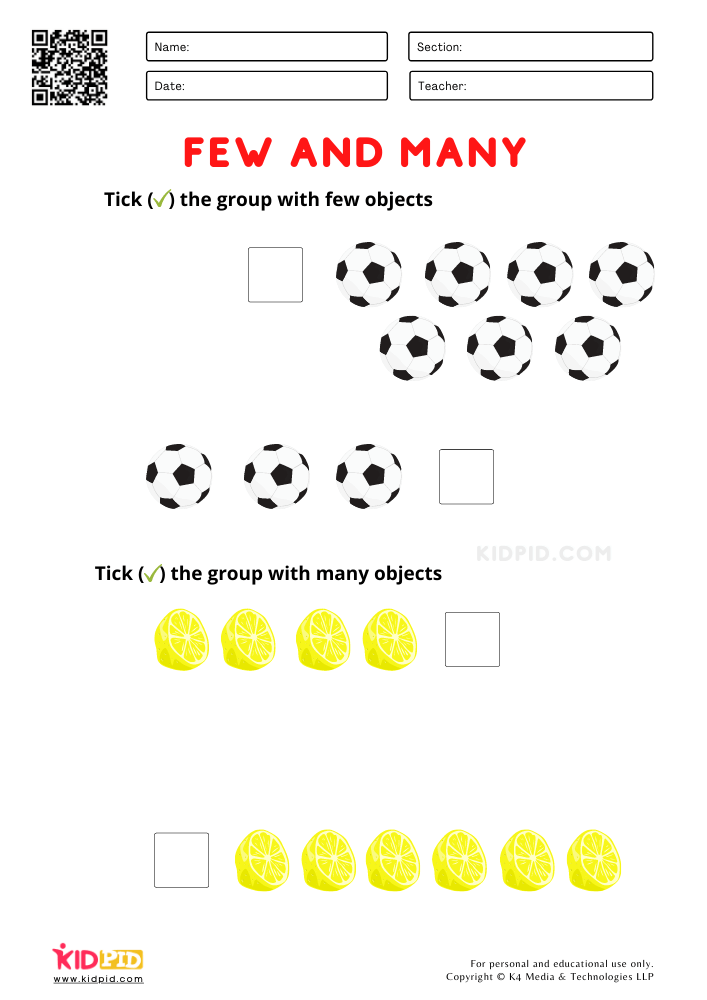
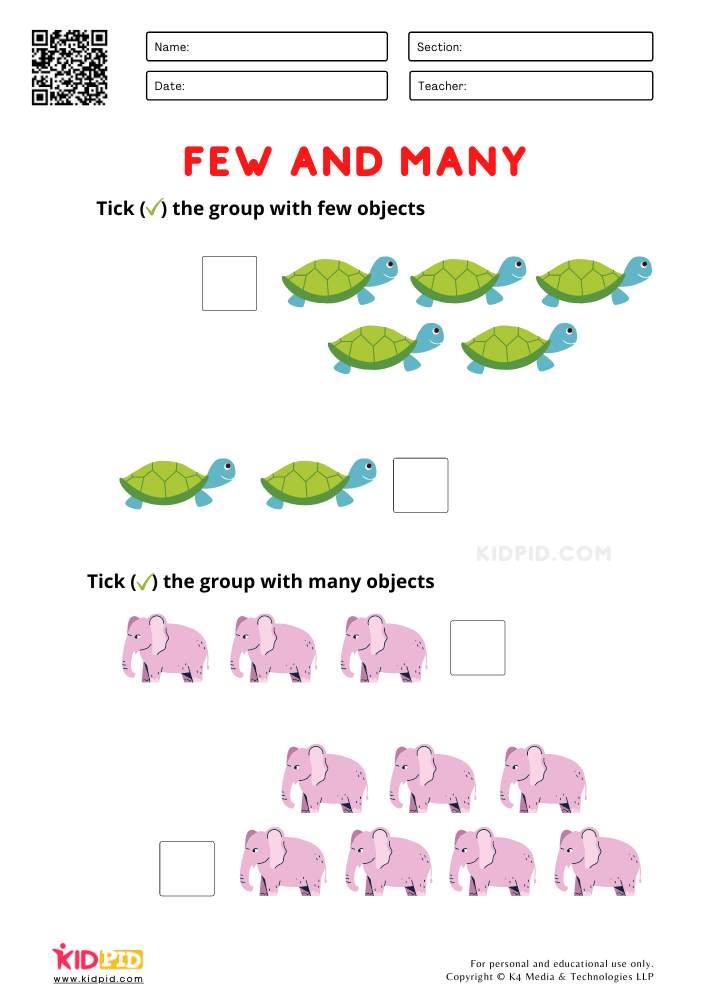
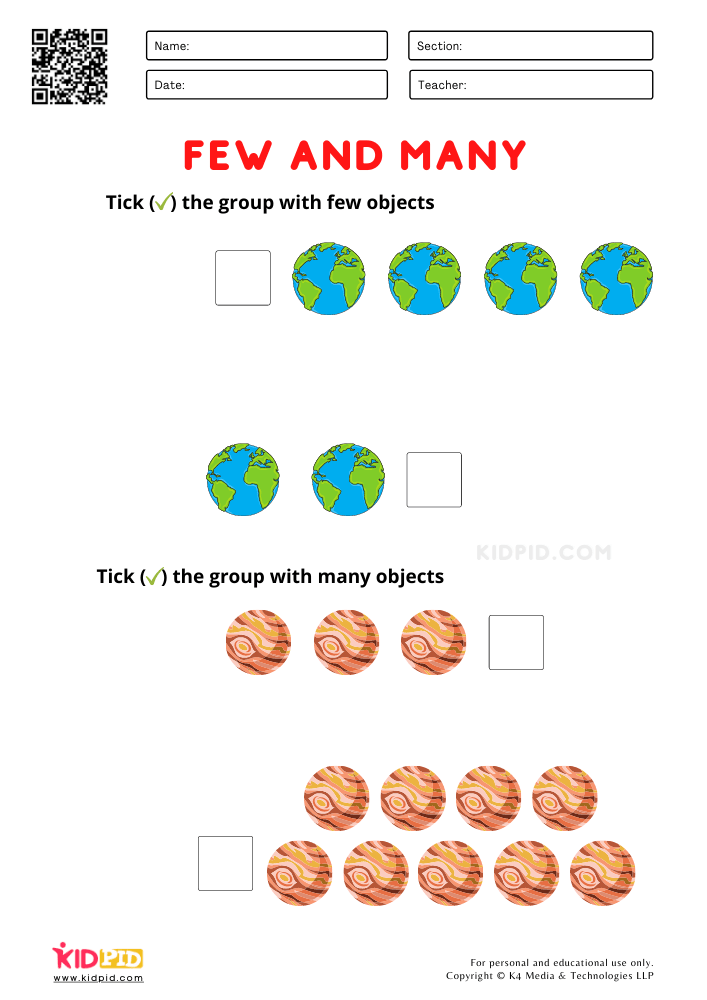
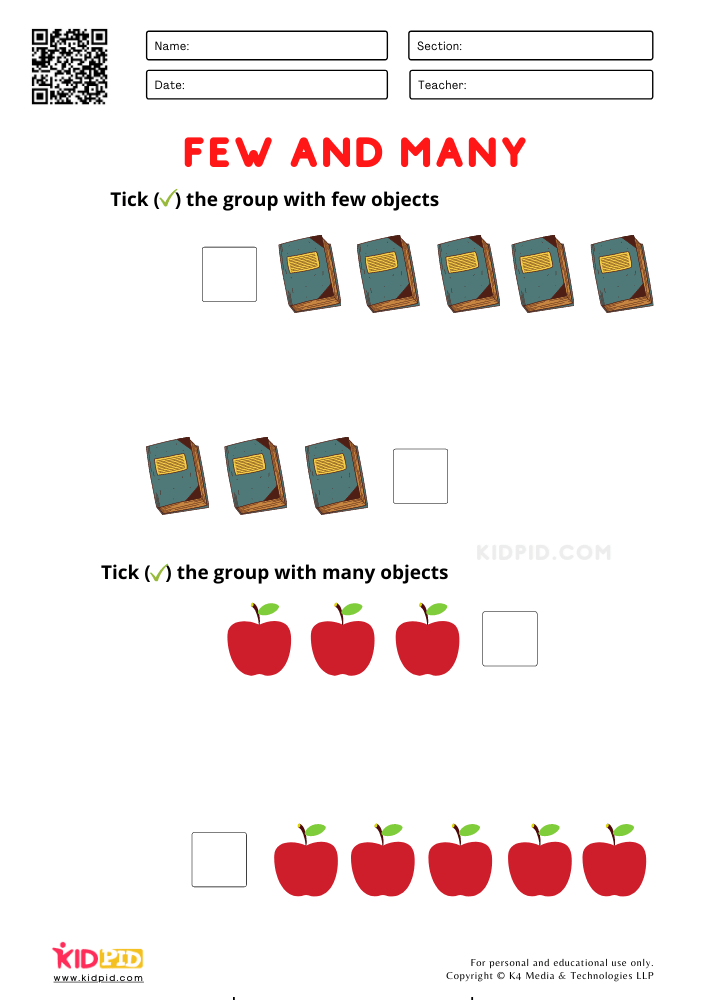
Key Facts About Few & Many Worksheets for Kindergarten
- Target Age Group: Best suited for children aged 4 to 6 years old (Preschool and Kindergarten levels).
- Core Mathematical Domain: Focuses on subitizing (instantly recognizing the number of objects in a small group without counting them individually) and estimation.
- Cognitive Pivot: Acts as the fundamental bridge between physical counting and abstract numerical relationships.
- Alignment: Directly maps to Early Learning and Developmental Standards (ELDS) for measurement and data analysis.
Parts/Types/Examples of Measurement Worksheets
Kindergarten worksheets use visual variety to keep children engaged while generalizing the concept across different contexts. The core styles include:
- Side-by-Side Comparison Panels: Two adjacent boxes displaying different sets of items (e.g., 2 apples vs. 8 apples) where children circle the set with “few” or “many.”
- Color-Coding Activities: Worksheets where children color panels containing many items in one color (like blue) and a few items in another color (like yellow).
- Cut-and-Paste Sorting Boards: Interactive pages where kids cut out small pictures of item clusters and paste them into columns labeled “Few” or “Many.”
- Count and Match Games: Exercises where children write down the exact count of objects underneath a group to explicitly tie number values to descriptive words.
How Does a ‘Few vs. Many’ Worksheet Work?
These math printables use a multi-step visual process to help a young child train their brain to perceive mathematical scale:
- Visual Perception: The child scans a set of illustrations (like birds, buttons, or stars).
- Relative Assessment: Instead of getting bogged down in precise numbers right away, the brain naturally recognizes a stark contrast in density and volume.
- Kinesthetic and Fine Motor Response: The child utilizes a physical action—such as tracing a word, holding a crayon to color, or circling a group—to confirm their decision.
- Verbal Reinforcement: Educators and parents use the worksheet as a talking prompt, asking the child to explain why one side looks like it has more than the other.
Benefits of Learning About Quantities Early
Introducing the relative concepts of “few” and “many” yields major cognitive advantages for early learners:
- Builds Number Sense: It prevents children from just memorizing number sequences (1, 2, 3…) by rote, ensuring they actually comprehend what quantities look like in reality.
- Develops Critical Pre-Math Vocabulary: Before children can grasp advanced math signs like “greater than” (>) or “less than” (<), they must master the descriptive vocabulary that underpins them.
- Reduces Math Anxiety: Because estimation worksheets don’t strictly require a precise numerical answer right away, they build confidence in children who may feel intimidated by exact counting.
Learning Objectives
By completing these guided math printables, student learning outcomes will meet the following criteria:
- Identify and contrast a small group of items (“few”) from a visibly larger group of items (“many”) on sight.
- Apply descriptive quantitative vocabulary accurately when speaking about physical collections of objects.
- Sort varied object groups into correct categories based entirely on size and volume comparisons.
- Connect the abstract concepts of scarcity and abundance to tangible everyday environments.
Worksheet Instructions for Parents & Teachers
To maximize focus and prevent early learning fatigue, introduce the pages using these simple steps:
- Read the Prompt Aloud: Point to the title words “Few” and “Many” so the child connects the printed letters to the spoken sounds.
- Run a Finger Scan: Have the child point to both groups of pictures to make sure they actively notice both sets before shouting out an answer.
- Guide the Hand Action: Instruct the child to carefully circle or color only inside the borders of the designated group.
- Double-Check with Counting: If a child makes a mistake, don’t just correct them. Say, “Let’s count them together!” to let them discover the math answer on their own.
Interesting Facts About Early Math Learning
- Natural Instincts: Research in developmental psychology shows that human babies are born with an innate “Approximate Number System” (ANS) that lets them notice differences in quantities long before they ever learn to talk or count.
- Context Matters: To a kindergartener, “many” could mean five pieces of candy, but “few” could mean five stars in the night sky. Children naturally learn to adjust their understanding of scale based on what object they are looking at!
- The Subitizing Speed: The maximum number of items a human brain can instantly recognize without individual counting is typically 4 or 5. Anything above that forces our brains to group or count!
Vocabulary Words
| Word | Kid-Friendly Definition | Example Sentence |
|---|---|---|
| Few | A small number of items; not very many. | “There are only a few cookies left in the cookie jar.” |
| Many | A large number of items; a lot of something. | “Look at how many raindrops are falling on the window!” |
| Compare | To look at two things to see how they are different or the same. | “Let’s compare your pile of blocks with my pile.” |
| Quantity | How much of something there is to count. | “We need a large quantity of crayons for the art class.” |
Real-Life Applications
The concept of “few vs. many” is used continuously outside of the classroom setting. Parents can practice this skill in daily life by asking:
- During Grocery Shopping: “Do we have many bananas left in our cart, or just a few?”
- At Clean-Up Time: “You have many toys on the rug, let’s put a few back in the box.”
- While playing at the park, looking at nature to compare green leaves on a tree branch (“many”) versus fallen brown leaves on the grass (“few”).
FAQs
Q1: At what age should I start teaching the concepts of ‘few’ and ‘many’?
Answer: You can introduce these comparative words as early as age 2 or 3 during normal playtime. However, systematic worksheet practice is most effective around ages 4 to 6, when children are developing the focus needed for desk activities.
Q2: My child can count to 20 but struggles with ‘few’ and ‘many’ worksheets. Is this normal?
Answer: Absolutely. Counting out loud is often just memorizing a pattern of words. Understanding “few” and “many” requires abstract thinking and spatial awareness. Use real toys alongside the worksheets to give them a 3D view of the problem.
Q3: Should I let my child count every single item on the worksheet?
Answer: Encourage them to look at the groups as a whole first to try estimating. If the differences are large, they should learn to spot the answer instantly. Counting is a great tool to double-check their work afterward!
The best way for kids to learn is to enjoy what they’re learning. These colourful worksheets with familiar pictures not only allow children to relate to what they’re learning but also hold their attention. We hope you enjoyed these Few & Many Worksheets for Kindergarten – Free Printables! Find more free worksheets on Kidpid. Practice daily to improve your learning. Follow us on Facebook, Pinterest, YouTube & Telegram. Join our Telegram group for free printables. Thanks for visiting, and keep learning!
So, what are you waiting for?
Download the free printables and get started today!
The worksheet is thoughtfully designed by the Content Team to improve academic outcomes.
Reviewed By Mahak Agarwal
You may like these:
One More, One Less Gold Counting Worksheets
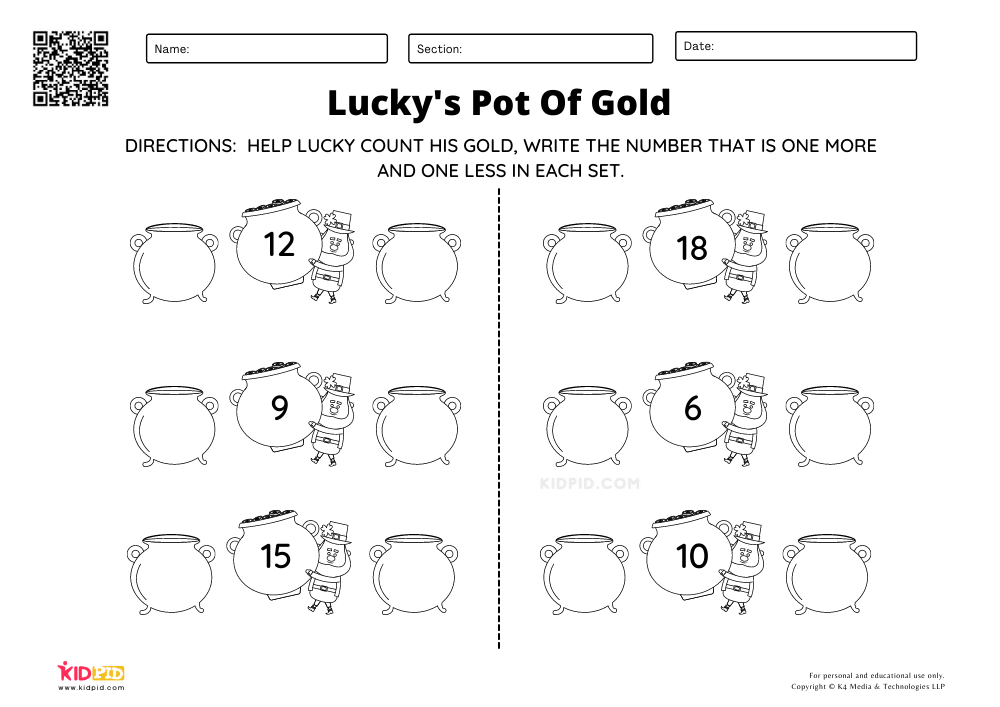
These worksheets teach students to count by identifying one more or one less, helping improve number sense and understanding of basic counting concepts.
Skip Counting by 100 & 200 Worksheets for Grade 3

Grade 3 students practice skip counting by 100 and 200 through engaging exercises, enhancing their math skills and ability to recognize number patterns.
Single-digit Addition Math Worksheets
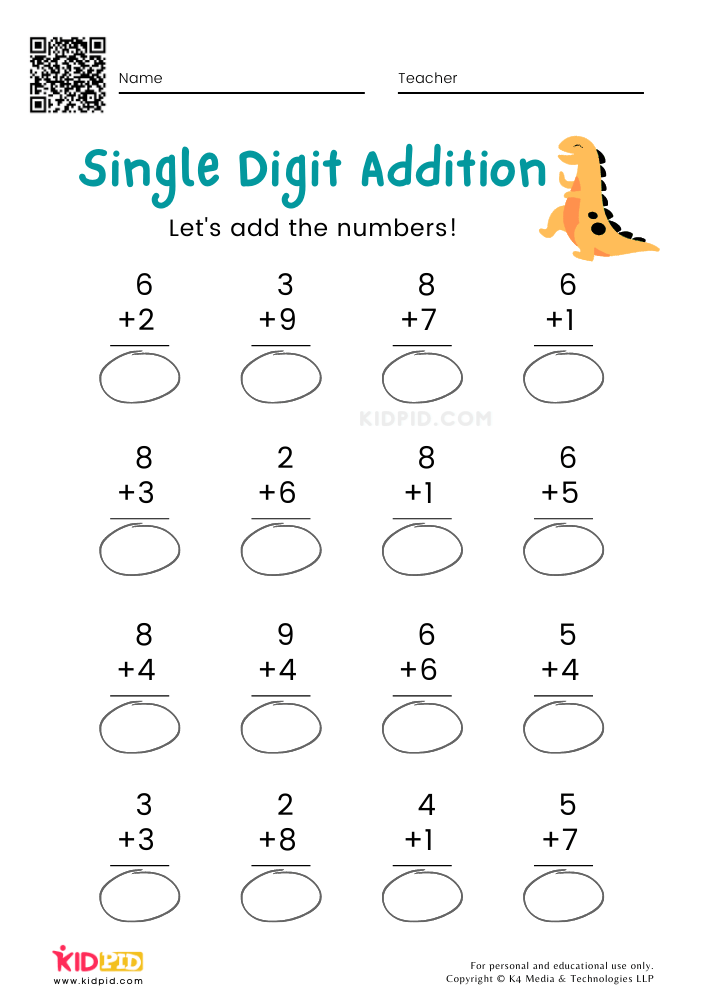
These worksheets focus on single-digit addition, offering fun activities to help young learners practice addition and strengthen their basic math skills with ease.
Skip Counting by 100, 150, 200 & 250 Worksheet for Grade 3

These worksheets help Grade 3 students practice skip counting by various increments, improving their number pattern recognition and math fluency in a fun way.
Count and Write Printable Worksheets for Kindergarten
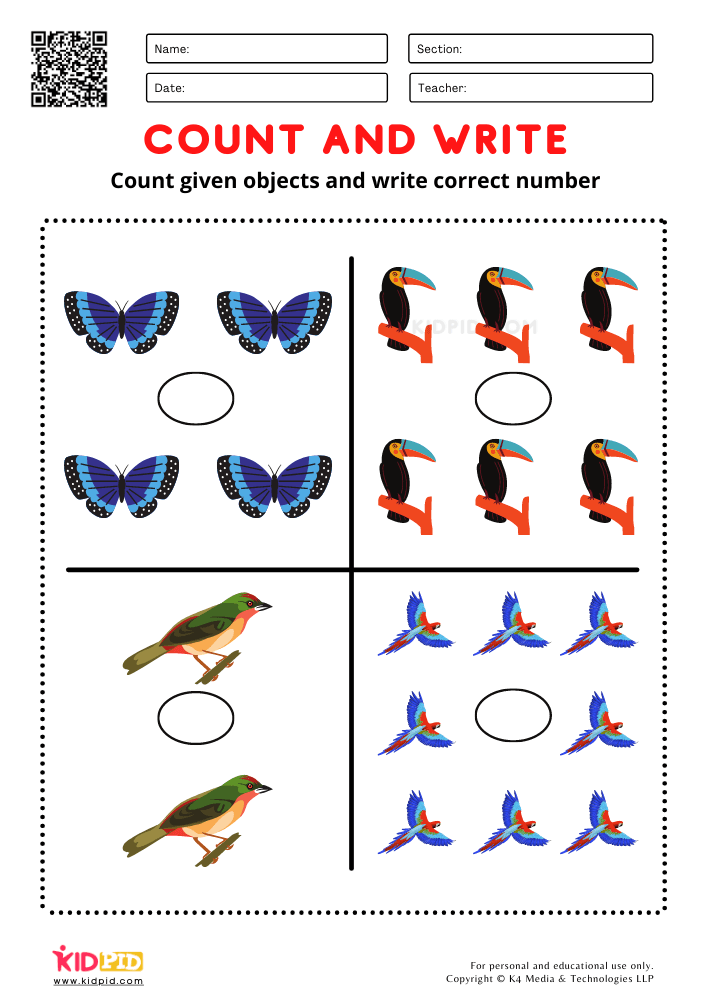
Kindergarten students practice counting and writing numbers through simple, engaging activities, building their number recognition and writing skills in a fun and interactive way.



I can’t able to print the page