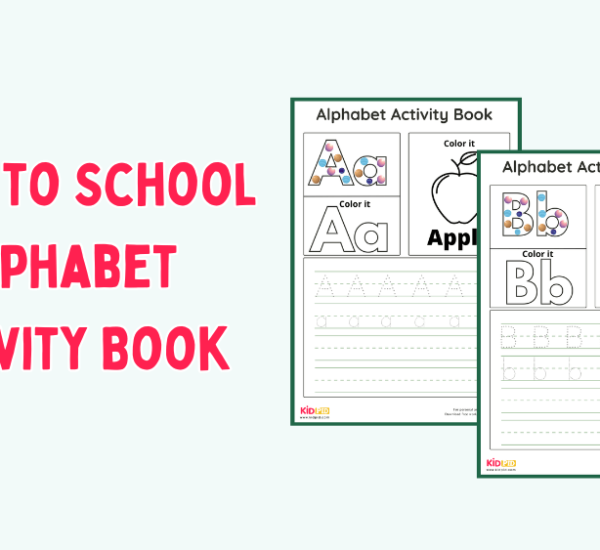

Welcome to an amazing and exciting activity of learning size comparisons. In these worksheets, kindergarten kids will learn about the comparison of the longest and the shortest sizes, and they have to circle the longest and shortest picture designed in each row according to the specific question given in this activity. So check out these knowledge-building worksheets to build their language skills and mental ability, and acknowledge the difference between the longest and the shortest size.
Contents
- Circle The Longest & Shortest Size Comparison Worksheets For Kindergarten
- Key Facts About Size Comparison Worksheets
- Parts, Types, and Examples
- How Does the Worksheet Work?
- Benefits of Learning About Size Comparison
- Learning Objectives
- Worksheet Instructions
- Interesting Facts About Size Vocabulary Words
- Real-Life Applications
- FAQs
Circle The Longest & Shortest Size Comparison Worksheets For Kindergarten
[Scroll Down for Download Link]
Read More: Length and Height Measurement Worksheet for Kindergarten


Key Facts About Size Comparison Worksheets
- Target Audience: Designed specifically for kindergarten-aged children (ages 4–6).
- Core Skill: Focuses on spatial reasoning, visual discrimination, and foundational math skills.
- Methodology: Uses comparative analysis (identifying extremes: the longest vs. the shortest).
- Curriculum Alignment: Aligns with early childhood development standards for measurement and data.
- Learning Format: Interactive, print-based exercises that promote fine motor skills (circling, coloring, identifying).
Parts, Types, and Examples
- Parts of the Worksheet:
- Visual Prompts: High-quality images of objects (animals, pencils, trains, trees).
- Task Instruction: Clear directives like “Circle the longest object” or “Put an X on the shortest item.”
- Response Area: Specifically spaced rows or grids to encourage neat work.
- Types of Exercises:
- Direct Comparison: Side-by-side images of two objects.
- Sequential Identification: Three or more objects requiring the child to order them from shortest to longest.
- Examples: Identifying the longest snake in a group of three or finding the shortest crayon among a set.
How Does the Worksheet Work?
The worksheet functions through Guided Visual Discrimination. Kindergarteners look at a set of objects and must cognitively measure their dimensions relative to one another. By physically circling the target object, the student translates their visual assessment into a motor action. This repeated reinforcement helps solidify the abstract concept of “length” as a measurable quantity rather than just a subjective feeling.
Benefits of Learning About Size Comparison
- Builds Spatial Awareness: Helps children understand how objects occupy space relative to one another.
- Enhances Vocabulary: Teaches comparative adjectives like “long,” “longer,” “longest,” “short,” “shorter,” and “shortest.”
- Prepares for Math: Sets the groundwork for future lessons in measurement, geometry, and graphing.
- Improves Fine Motor Skills: Using pencils to circle, cross out, or color specific items improves hand-eye coordination.
Learning Objectives
By the end of this activity, students should be able to:
- Define and distinguish between the concepts of “long” and “short.”
- Compare three or more objects accurately based on their length.
- Identify extremes within a group (the single longest or shortest item).
- Follow multi-step directions related to visual sorting tasks.
Worksheet Instructions
- Preparation: Print the worksheet clearly on A4 or letter-sized paper.
- Observation: Encourage the child to look at all objects in a row before making a selection.
- Identification: Ask the child, “Which one looks the longest?” or “Which one would be hardest to hold if it were very small?”
- Execution: Use a pencil or crayon to circle the correct object as directed by the prompt.
- Review: Once finished, ask the child to explain why they chose that specific object to build confidence and verbal reasoning.
Interesting Facts About Size Vocabulary Words
- Comparative vs. Superlative: In linguistics, adding “-er” (longer/shorter) compares two things, while “-est” (longest/shortest) compares three or more. Learning this distinction is a major milestone in language development.
- Relative Measurement: The concept of “long” is relative. A long pencil is still “shorter” than a tall tree; these worksheets help children understand that “size” is a comparative attribute, not an absolute constant.
Real-Life Applications
- In the Classroom: Comparing the lengths of rulers, books, or lines of students.
- At Home: Determining who has the longest spoon for dinner or the shortest pair of socks in the laundry.
- Nature Walks: Comparing the length of leaves, sticks, or shadows on the ground.
FAQs
Q1. At what age should kids start these worksheets?
Answer: Typically, around ages 4 to 6 (kindergarten), when children are beginning to understand comparative language.
Q2. Can these worksheets be used for homeschooling?
Answer: Yes, they are excellent for homeschooling as they require no special equipment and are aligned with standard early learning curricula.
Q3. How can I help my child if they struggle to identify the longest object?
Answer: Try using physical objects (like blocks or toys) to create a “real-life” version of the worksheet problems first. Moving from 3D objects to 2D paper exercises makes the transition easier.
Q4. Are these printable worksheets free?
Answer: Yes, platforms like Kidpid provide these as free printable resources to support accessible education for parents and teachers.
 Exploring the longest and shortest objects helps kindergarten learners develop comparison skills, strengthen visual observation, understand measurement concepts, and build a solid foundation for early math through fun learning activities. Explore fresh educational content every day with worksheets, essays, paragraphs, flashcards, quizzes, and interactive resources. Join us on YouTube & Facebook.
The Content Team prepared this worksheet to support focused learning.
Reviewed By Swati
Read More: