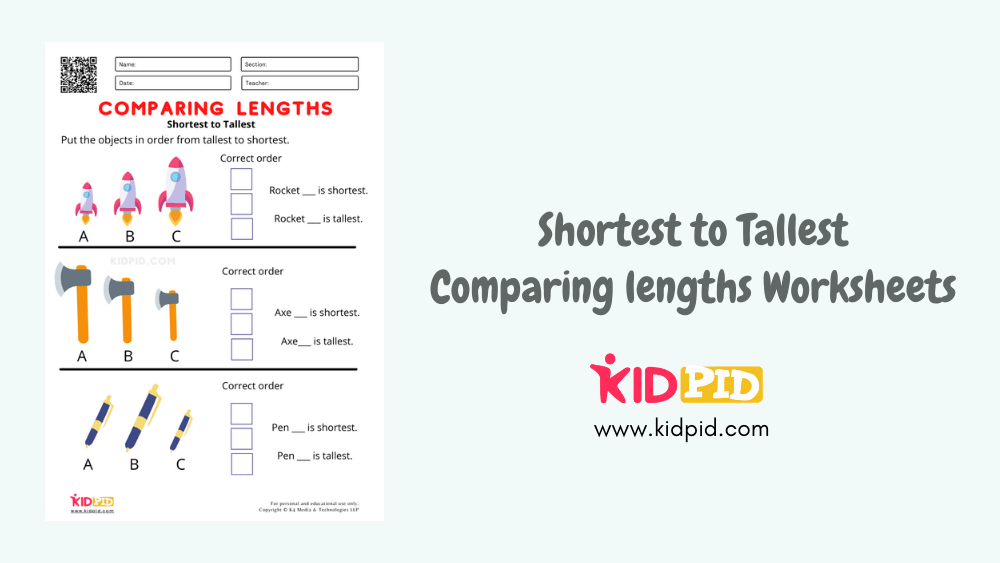
Desire your kids to be better learners? If you want, then this is the right place that you have come to. This is what your children need to be better learners, but now learning can be fun too. Fun learning can help children to understand more precisely than usual. Now, here is another interesting activity that we have come up with for your kids.
Given below is an interesting worksheet that your kids will surely love, which teaches them to compare lengths. Everyone who wants their children to know how to identify which is the shortest and which is the tallest of the given objects. What if you ask your kid to bring the tallest water bottle to teach your kids to identify the tallest and shortest objects? This activity is a must-try. This will help to sharpen your kids’ skills and will teach them on an everyday basis. And on top of it, again, the realistic pictures make learning and comparing more fun. You should surely give it a try for your kids to learn better. Happy learning!!
Contents
- Shortest to Tallest Comparing lengths Worksheets
- Key Facts About Shortest to Tallest Comparing Lengths Worksheets
- Parts/Types/Examples of Shortest to Tallest Comparing Lengths Worksheets
- How Do Shortest to Tallest Comparing Lengths Worksheets Work?
- Benefits of Learning About Shortest to Tallest Comparing Lengths Worksheets
- Learning Objectives
- Worksheet Instructions
- Interesting Facts About Comparing Lengths
- Real-Life Applications
- FAQs
- Q1. What age group are these worksheets suitable for?
- Q2. Why are shortest-to-tallest activities important?
- Q3. Do children need rulers to complete these worksheets?
- Q.4What skills do these worksheets improve?
- Q5. Can these worksheets be used at home?
- Q6. How often should children practice comparison activities?
- Q.7 Are these worksheets aligned with early learning standards?
- Q.8 What makes these worksheets engaging for children?
- You may like this:
Shortest to Tallest Comparing lengths Worksheets

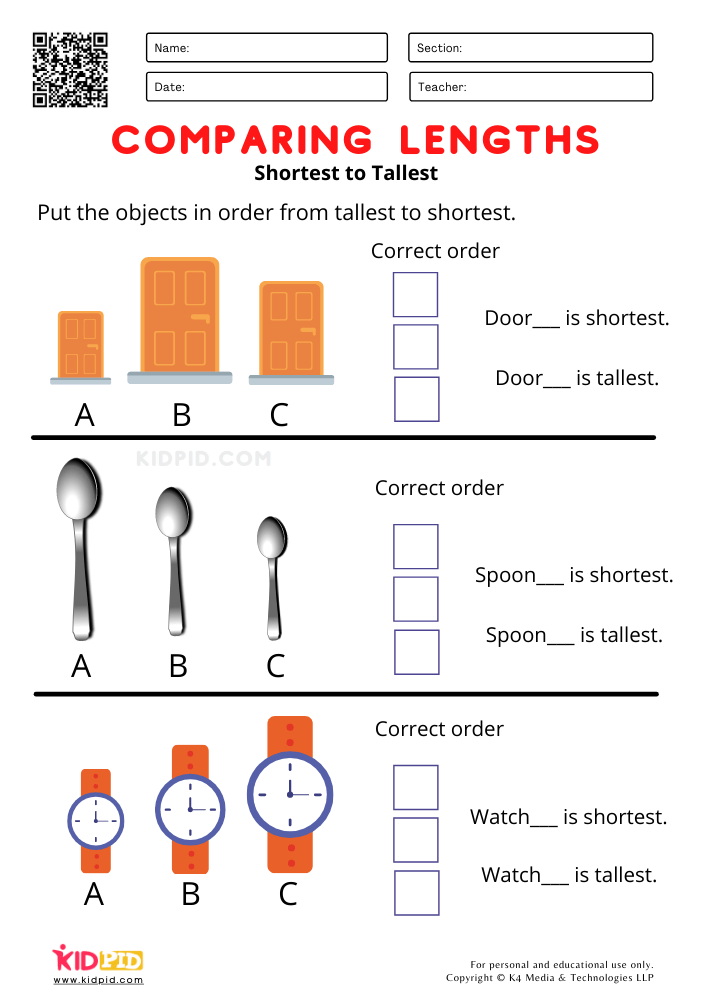
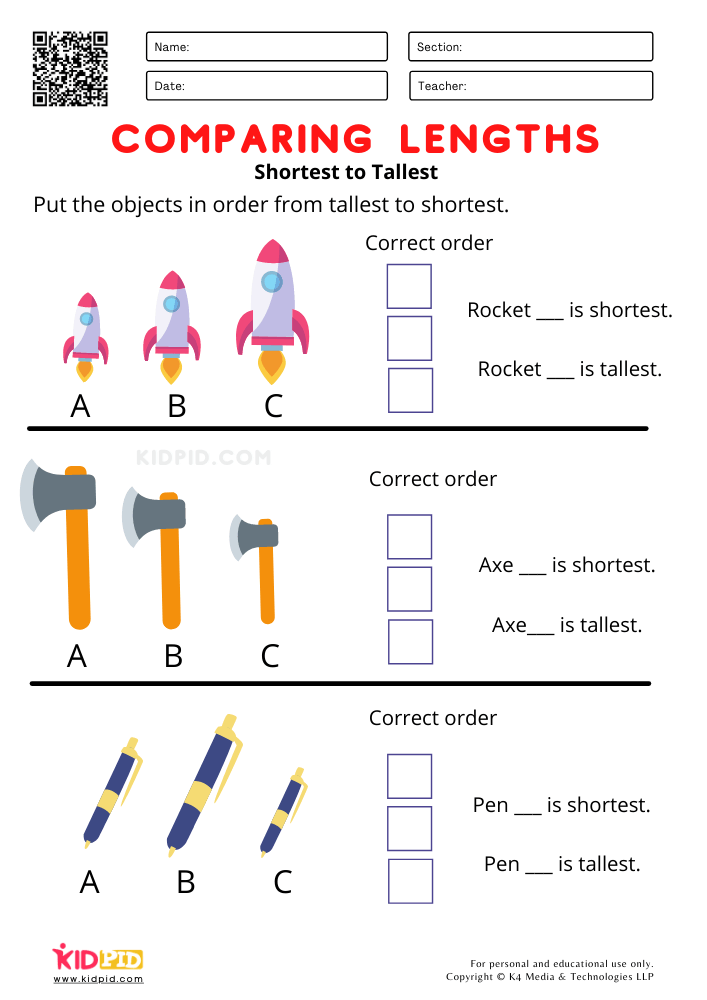
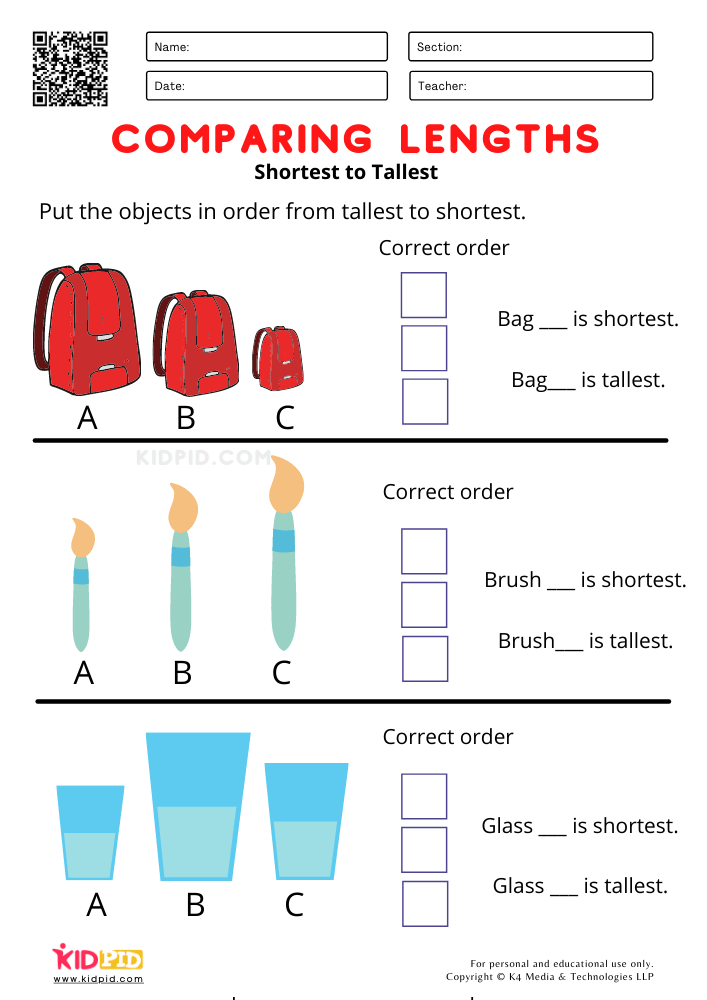
Key Facts About Shortest to Tallest Comparing Lengths Worksheets
Shortest to Tallest Comparing Lengths Worksheets help children develop early measurement and comparison skills by arranging objects according to their height or length. These worksheets introduce fundamental mathematical concepts that prepare young learners for more advanced measurement activities. Designed for preschoolers and kindergarten students, they use engaging visuals to make learning enjoyable and interactive. By comparing and ordering objects, children strengthen observation skills, logical thinking, and problem-solving abilities while building confidence in basic math concepts.
Parts/Types/Examples of Shortest to Tallest Comparing Lengths Worksheets
These worksheets come in various formats to support different learning levels and styles:
- Object Ordering Worksheets: Arrange items from shortest to tallest.
- Picture Comparison Activities: Compare animals, plants, pencils, or buildings.
- Cut-and-Paste Worksheets: Cut out images and place them in the correct order.
- Color and Compare Tasks: Color objects before arranging them.
- Numbered Sequencing Exercises: Label objects based on height order.
Examples:
- Ordering trees from shortest to tallest.
- Arranging children by height.
- Comparing pencils of different lengths.
- Sorting animals according to their size.
How Do Shortest to Tallest Comparing Lengths Worksheets Work?
These worksheets present a set of objects with varying lengths or heights. Children carefully observe each item and determine its relative size. They then arrange the objects from the shortest to the tallest or from the smallest length to the greatest length.
The activities encourage visual comparison rather than exact measurement, making them ideal for young learners. Through repeated practice, children learn important measurement vocabulary and develop a stronger understanding of size relationships.
Benefits of Learning About Shortest to Tallest Comparing Lengths Worksheets
- Builds foundational measurement skills.
- Improves visual discrimination abilities.
- Enhances logical and critical thinking.
- Strengthens observation and comparison skills.
- Develops mathematical reasoning.
- Supports problem-solving strategies.
- Encourages attention to detail.
- Prepares children for future measurement concepts.
- Increases confidence in early math activities.
- Makes learning interactive and enjoyable.
Learning Objectives
By completing these worksheets, children will:
- Understand the concepts of shortest, shorter, tallest, and taller.
- Compare the heights and lengths of different objects.
- Arrange objects in sequential order.
- Develop early measurement awareness.
- Improve visual analysis and observation skills.
- Strengthen fine motor skills through worksheet activities.
- Expand mathematical vocabulary.
- Practice following directions and completing tasks independently.
Worksheet Instructions
- Look carefully at all the objects shown on the worksheet.
- Compare the height or length of each object.
- Identify the shortest object first.
- Continue arranging the remaining objects in order until you reach the tallest one.
- Write numbers, draw lines, or cut and paste according to the worksheet instructions.
- Double-check your answers before moving to the next activity.
- Have fun learning and comparing different objects.
Interesting Facts About Comparing Lengths
- Comparison is one of the earliest math skills children learn.
- Before using rulers, children learn measurement through visual observation.
- Height and length are forms of measurement used in everyday life.
- Comparing objects helps children understand ordering and sequencing.
- Ancient civilizations used body parts, such as hands and feet, as measurement tools.
- Measurement concepts support learning in science, engineering, and mathematics.
Real-Life Applications
Children use comparison skills every day without realizing it. Examples include:
- Comparing the heights of friends and family members.
- Organizing books from shortest to tallest.
- Choosing the longest pencil in a pencil case.
- Comparing plant growth in a garden.
- Arranging toys according to size.
- Measuring furniture when decorating a room.
- Understanding size differences in sports equipment.
These practical applications help children see the importance of measurement skills in daily life.
FAQs
Q1. What age group are these worksheets suitable for?
Answer: These worksheets are ideal for preschool, kindergarten, and early elementary students, generally ages 4–7.
Q2. Why are shortest-to-tallest activities important?
Answer: They help children develop comparison, sequencing, and measurement skills that form the foundation of mathematics.
Q3. Do children need rulers to complete these worksheets?
Answer: No. Most activities rely on visual comparison rather than precise measurement.
Q.4What skills do these worksheets improve?
Answer: They improve observation, logical reasoning, visual discrimination, sequencing, and early math skills.
Q5. Can these worksheets be used at home?
Answer: Yes. Parents can easily use them for homeschooling, homework practice, or extra learning activities.
Q6. How often should children practice comparison activities?
Answer: Regular practice a few times each week helps reinforce measurement concepts and build confidence.
Q.7 Are these worksheets aligned with early learning standards?
Answer: Yes. They support common early childhood math standards related to measurement, comparison, and ordering.
Q.8 What makes these worksheets engaging for children?
Answer: Colorful illustrations, hands-on activities, and real-world examples make learning interactive and enjoyable.
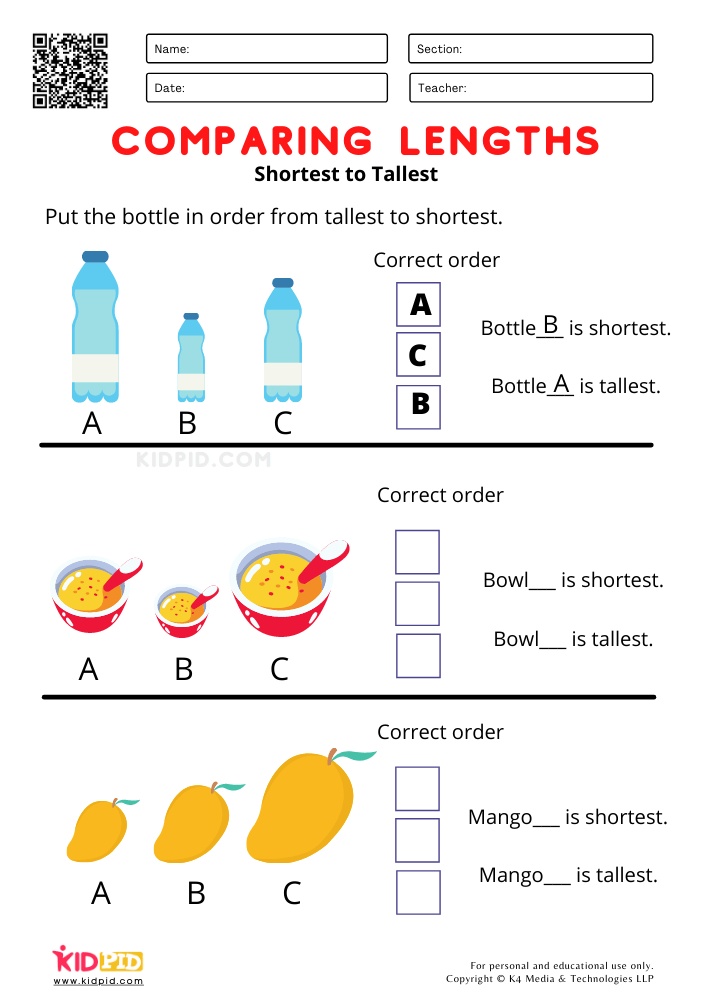
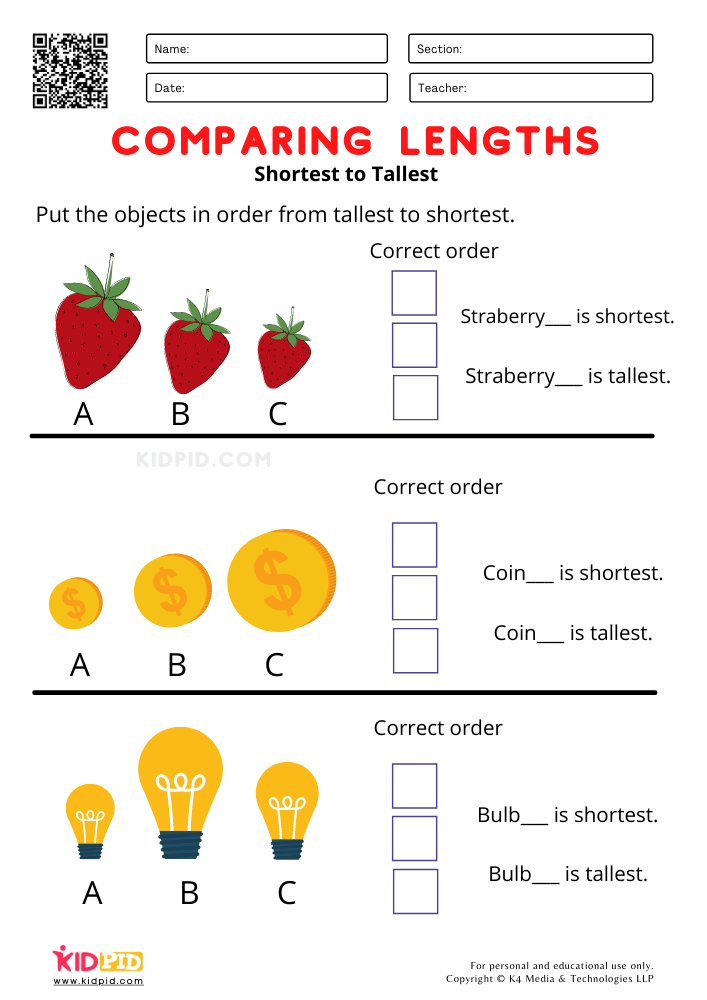
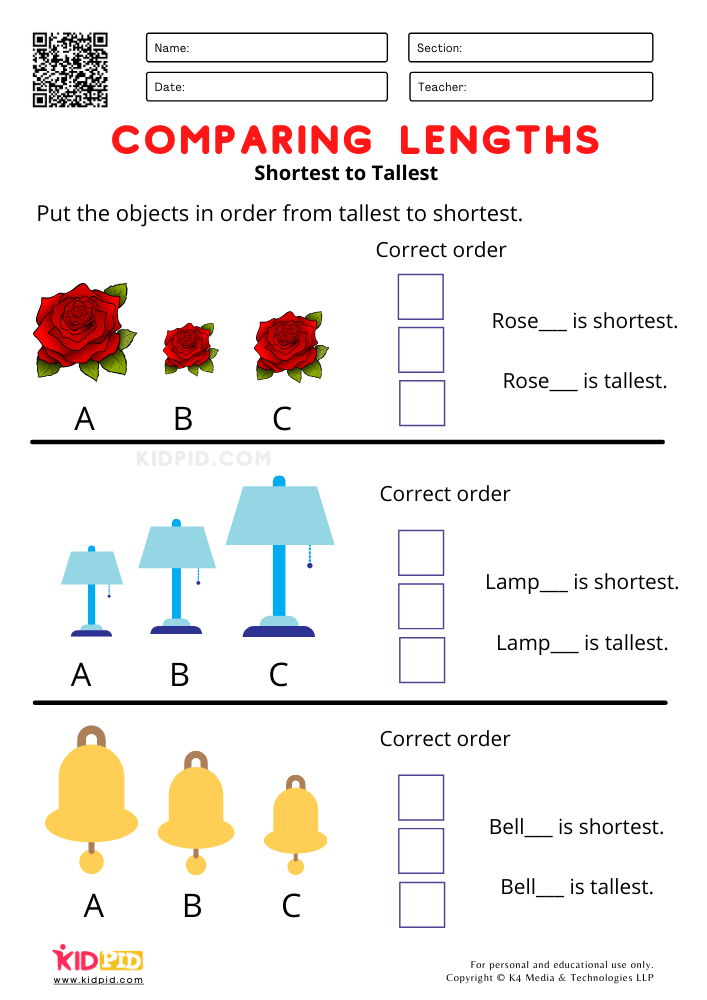
Comparing lengths sounds interesting, right? Yes, surely it is; comparing the shortest and the tallest one is what we understand when we hear about comparing lengths. In the given worksheets, you need to identify the shortest object and the object that is the tallest from the given objects. These objects can vary from fruits to water bottles, bowls, and anything else.
All you have to do is observe the objects given in the worksheets to judge which is smaller in size and which one is larger, basically according to height. The object that is smaller in height is the shortest, and the object or thing that is taller in height is the tallest one. This is the basic rule of comparison. Each worksheet has different objects to be compared, and that too with realistic pictures, which makes comparing more interesting. These worksheets will surely catch your children’s attention. Explore fun and educational resources, including paragraphs, essays, worksheets, flashcards, quizzes, and interactive resources. Follow us on YouTube & Facebook.
The Content Team created this worksheet to foster educational improvement.
Reviewed By Mahak Agarwal
You may like this:
Fun Comparison Math Coloring Activities to Enhance Math Skills
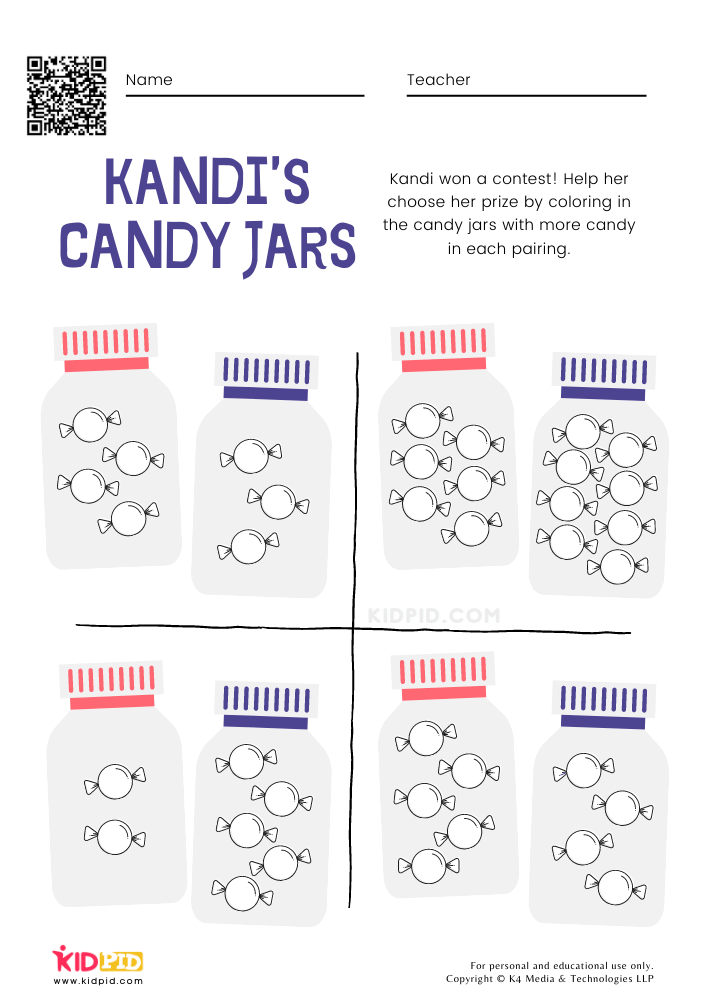
These fun coloring activities engage children while they learn to compare numbers. By incorporating creativity, kids enhance their math skills and develop a stronger understanding of comparison concepts.
Educational Compare Length of Objects Worksheets for First Grade
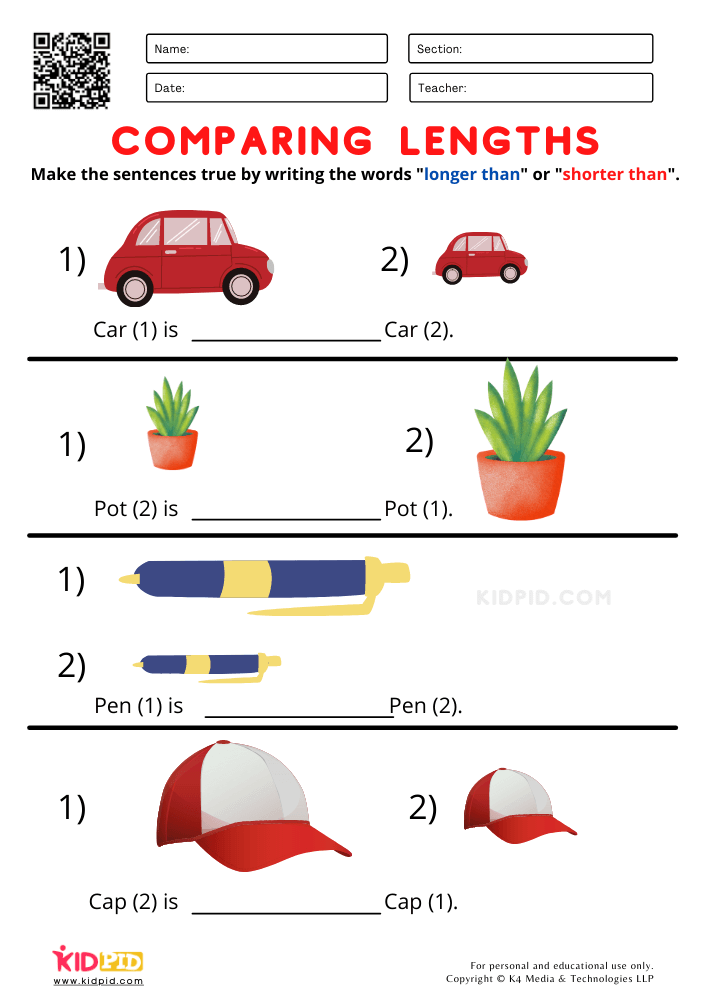
These educational worksheets help first graders compare the lengths of various objects. Engaging activities allow students to identify shorter and taller items, reinforcing measurement skills in a fun way.
Greater Than or Less Than? Fun Number Comparison Worksheets for First Graders
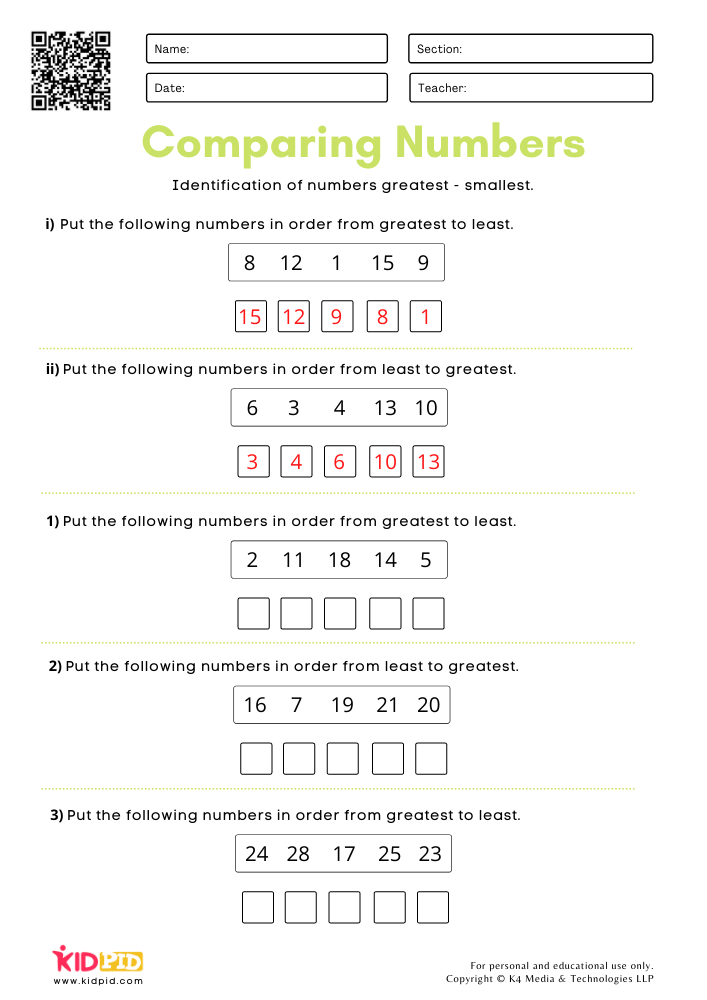
These fun worksheets teach first graders to compare numbers using greater than and less than symbols. Interactive exercises make learning enjoyable while building essential math skills in young learners.
Printable Comparing Numbers Activities for First Graders
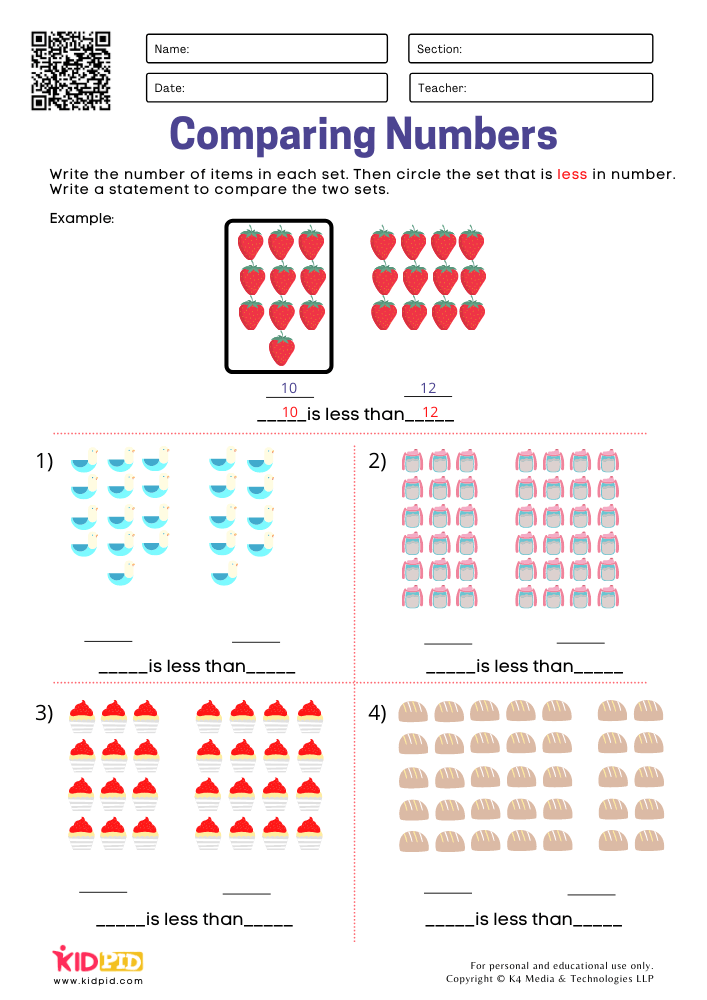
These printable activities provide first graders with hands-on practice in comparing numbers. Engaging exercises help children understand numerical relationships, enhancing their confidence and proficiency in foundational math skills.