

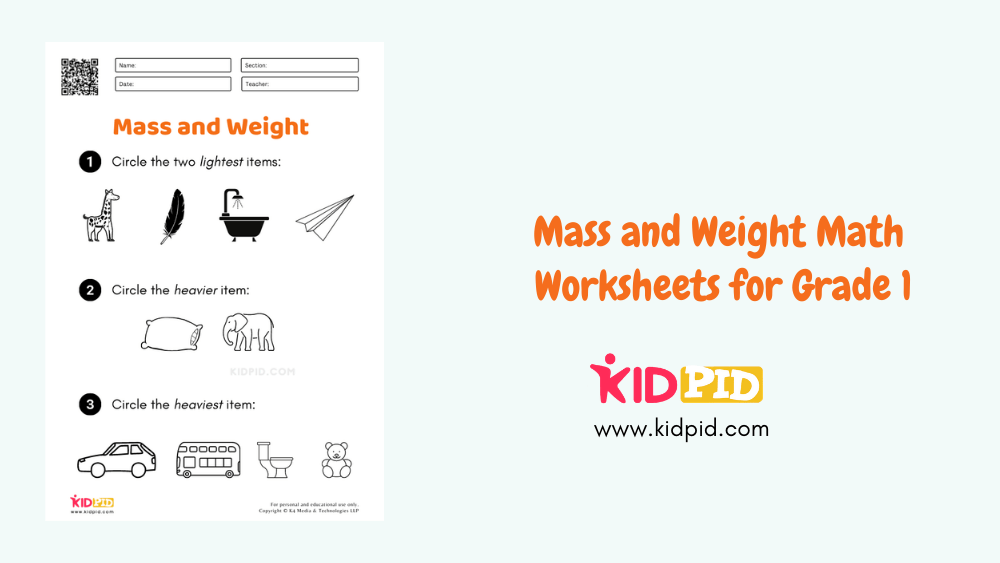
Children are encouraged to explore more when they are introduced to new concepts. This mass and weight worksheet will assist students in discovering a new mathematical idea and in learning something different than a basic concept such as addition, subtraction, or multiplication. Mass and weight help you identify what is light and what is heavy. In the given worksheet, by looking at the object of the respective question, you need to circle the correct answer.
Contents
- Mass and Weight Practice Worksheets
- Key Facts About Mass and Weight Math Worksheets for Grade 1
- Parts/Types/Examples of Mass and Weight Math Worksheets for Grade 1
- How Do Mass and Weight Math Worksheets for Grade 1 Work?
- Benefits of Learning About Mass and Weight
- Learning Objectives
- Worksheet Instructions
- Interesting Facts About Mass and Weight
- Vocabulary Words
- Real-Life Applications
- FAQs
- Q1. What is the difference between mass and weight?
- Q2. Why are mass and weight worksheets important for Grade 1 students?
- Q3. What skills do children learn from these worksheets?
- Q4. Are these worksheets suitable for beginners?
- Q5. How can parents use these worksheets at home?
- Q6. What materials can support learning about mass and weight?
- Q7. How do these worksheets support future math learning?
- Read More:
Mass and Weight Practice Worksheets

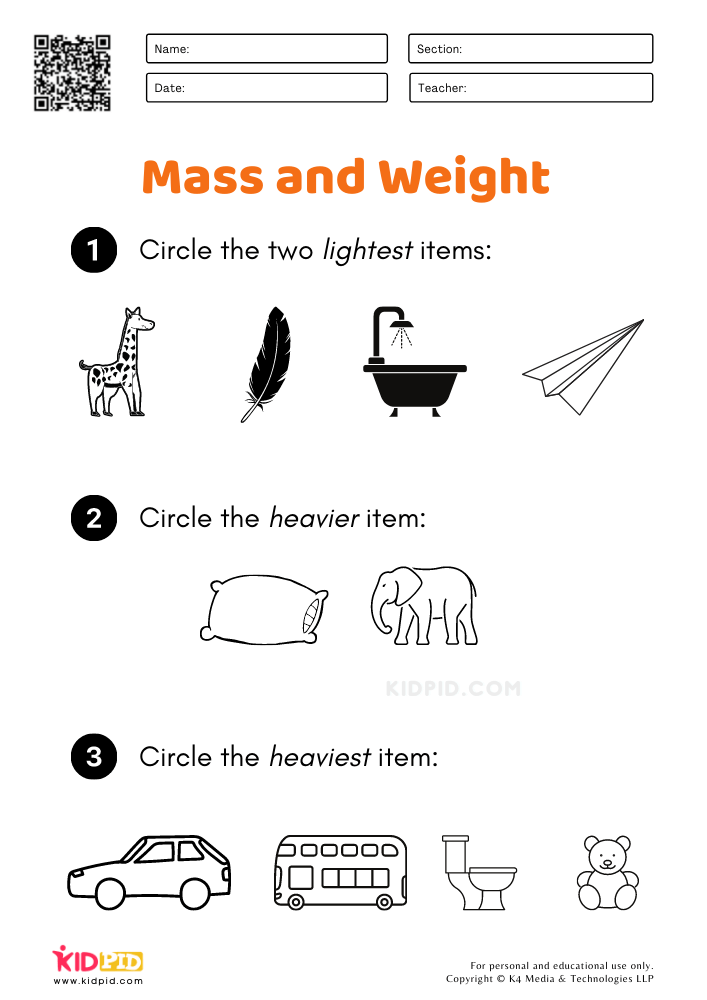
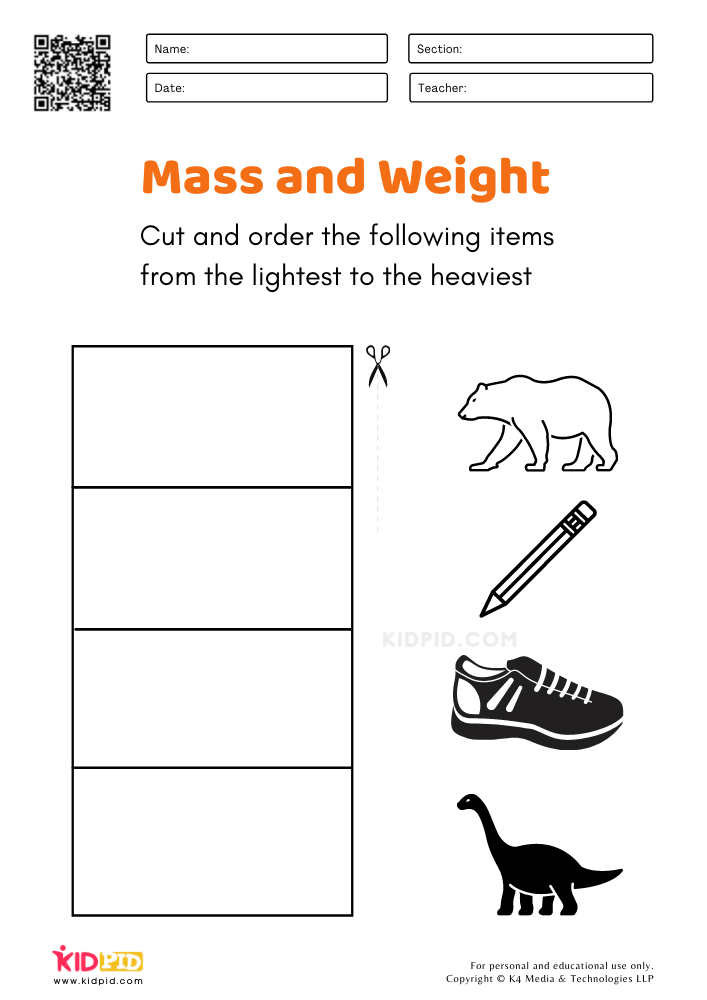
To make online learning more engaging, we’ve come up with a variety of creative ways for your children to master mathematical concepts. You should print this worksheet so that your pupils can see exactly what they need to accomplish in the given worksheet. Cut out the items you’ll need and put them in the correct order to answer the question.
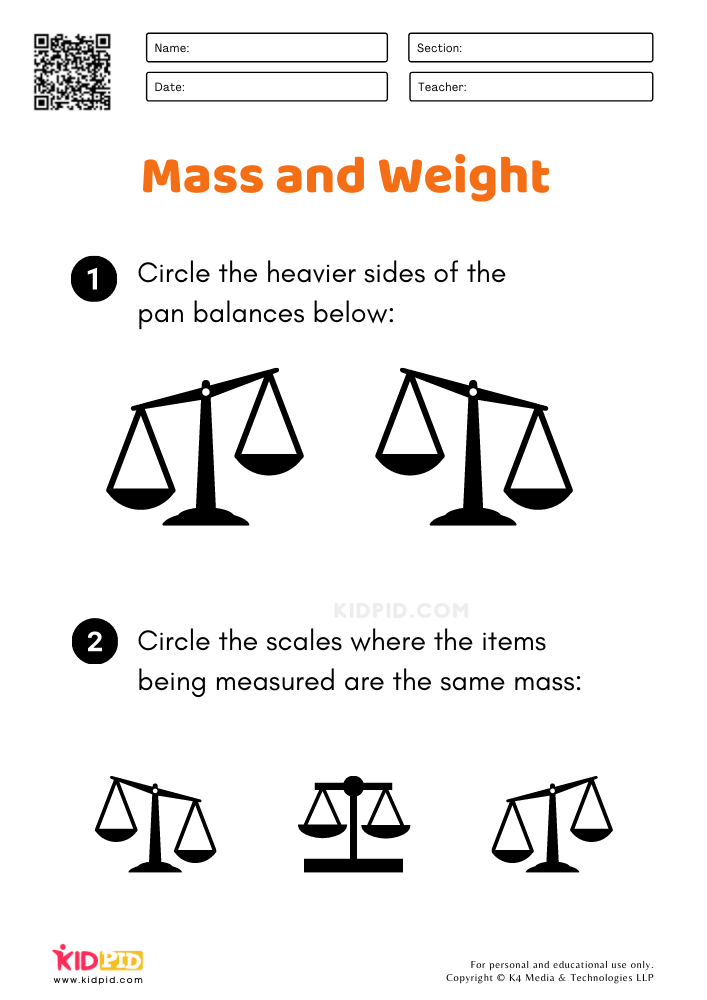
This worksheet will show kids how to use the weight machine and how it actually works. Previously, this sort of equipment was widely utilized. Your child will get a better understanding of their environment, which will pique their interest in learning more. You can instruct him in a variety of ways.
This worksheet will serve as a review for your youngster, allowing them to brush up on their knowledge. More worksheets will help them improve their skills and knowledge. In the second practice worksheet, anything that went wrong in the first may be fixed. Practicing and obtaining the right answers will increase their attention, and they may consider math to be one of their favorite subjects as they grow older.
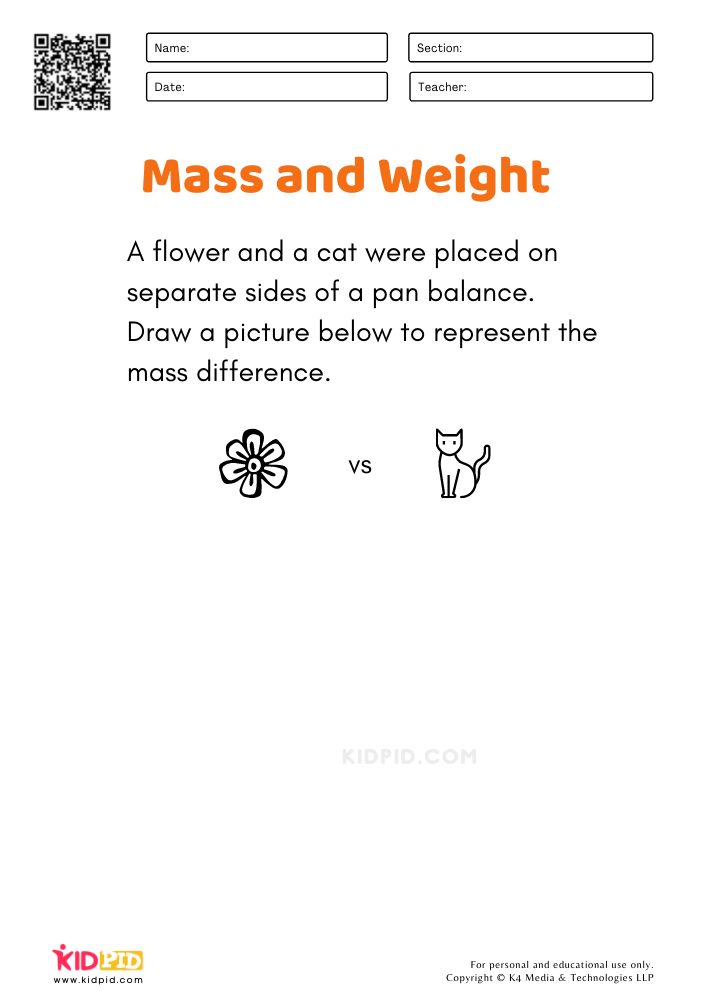
This worksheet will help children recall not just their arithmetic skills, but also the items they observe in everyday life. Drawing objects on the worksheet will help them develop their creative talents, which will improve their overall abilities. It will also improve their memory and make them more aware of their surroundings.
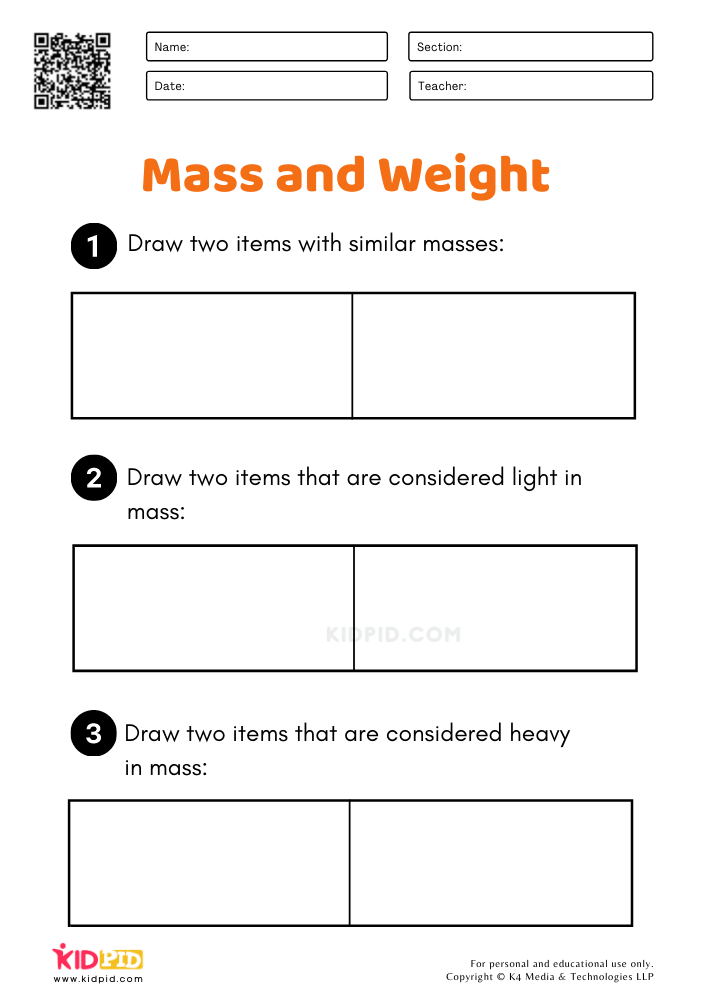
This worksheet is one-of-a-kind. It will improve your child’s writing skills, encourage them to try new things, make them more attentive, develop their creative abilities, and teach them about mass and weight. Throughout the assignment, assist your youngster and do your best to ensure that he understands the topic.
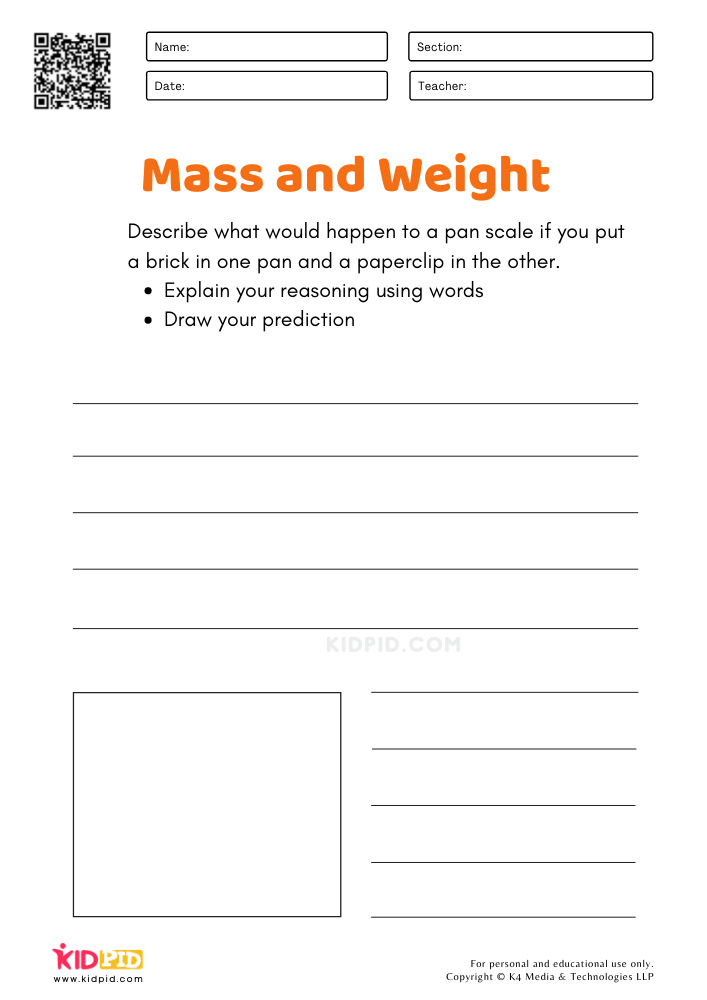
Key Facts About Mass and Weight Math Worksheets for Grade 1
Mass and Weight Math Worksheets for Grade 1 help young learners understand how heavy or light different objects are. These worksheets introduce basic measurement concepts using relatable examples and visual activities. Children learn to compare, estimate, and identify objects based on their mass and weight while developing essential math and observation skills.
Key Facts Include:
- Designed specifically for Grade 1 learners.
- Introduces basic measurement vocabulary.
- Focuses on comparing heavier and lighter objects.
- Encourages estimation and critical thinking.
- Uses real-life examples for better understanding.
- Supports early math and science learning.
- Helps build problem-solving and reasoning skills.
- Reinforces classroom measurement lessons through practice.
Parts/Types/Examples of Mass and Weight Math Worksheets for Grade 1
Mass and weight worksheets come in different formats to help students learn measurement concepts effectively.
Common Types:
- Heavier or Lighter Worksheets
- Identify which object weighs more or less.
- Example: Compare an apple and a watermelon.
- Weight Comparison Activities
- Use symbols such as >, <, or = to compare weights.
- Example: A school bag ___ a pencil.
- Picture-Based Measurement Worksheets
- Observe images and determine relative weight.
- Example: Circle the heaviest animal.
- Sorting Worksheets
- Group objects by heavy and light categories.
- Example: Sort a feather, a book, a rock, and a balloon.
- Estimating Weight Activities
- Predict which item is heavier before measuring.
- Example: Estimate whether a toy car or a notebook weighs more.
How Do Mass and Weight Math Worksheets for Grade 1 Work?
These worksheets use visual comparisons, matching activities, and simple measurement exercises to teach children about mass and weight. Students observe objects, compare their heaviness, and answer questions based on what they see.
Activities often begin with identifying heavier and lighter objects before progressing to simple estimation and comparison tasks. Through repeated practice, children learn measurement vocabulary and gain confidence in recognizing differences in weight.
The worksheets encourage hands-on learning by connecting measurement concepts to familiar everyday objects such as books, fruits, toys, and school supplies.
Benefits of Learning About Mass and Weight
Learning about mass and weight helps children understand how objects differ in size and heaviness. These skills are useful in both academics and daily life.
Benefits Include:
- Develops measurement and comparison skills.
- Strengthens logical thinking and reasoning.
- Improves observation abilities.
- Enhances vocabulary related to measurement.
- Supports future learning in math and science.
- Encourages estimation and prediction skills.
- Builds confidence in solving measurement problems.
- Helps children understand real-world objects better.
Learning Objectives
By completing these worksheets, students will be able to:
- Understand the concepts of mass and weight.
- Identify heavier and lighter objects.
- Compare objects using measurement vocabulary.
- Estimate the weight of everyday items.
- Sort objects according to their weight.
- Apply measurement concepts in real-life situations.
- Develop critical thinking and observation skills.
- Build a strong foundation for advanced measurement topics.
Worksheet Instructions
To complete the Mass and Weight Math Worksheets successfully, follow these instructions:
- Read each question carefully.
- Observe the pictures or objects shown.
- Compare the items based on their weight.
- Circle, color, or mark the correct answer.
- Use words such as “heavier,” “lighter,” or “same weight” when required.
- Complete matching and sorting activities accurately.
- Review your answers before submitting.
- Ask for help if any instructions are unclear.
Interesting Facts About Mass and Weight
- Mass measures how much matter an object contains.
- Weight measures how strongly gravity pulls on an object.
- A feather and a rock can have different weights even if they look similar in size.
- Astronauts weigh less on the Moon because gravity is weaker there.
- Large objects are not always heavier than smaller ones.
- Scientists use scales and balances to measure mass and weight.
- Measurement helps people in cooking, shopping, and construction.
- Learning weight comparison starts at an early age and supports future science learning.
Vocabulary Words
Understanding these terms helps students master mass and weight concepts:
| Word | Meaning |
|---|---|
| Mass | The amount of matter in an object |
| Weight | The heaviness of an object caused by gravity |
| Heavy | Having a greater weight |
| Light | Having less weight |
| Compare | To examine differences between objects |
| Measure | To find the size, amount, or weight of something |
| Balance | A tool used to compare weights |
| Estimate | To make a reasonable guess |
| Object | A thing that can be measured |
| Scale | A device used to measure weight |
Real-Life Applications
Mass and weight concepts are used every day in various situations.
Examples Include:
- Weighing fruits and vegetables at grocery stores.
- Measuring ingredients while cooking or baking.
- Checking luggage weight before traveling.
- Comparing the weight of school supplies.
- Weighing pets during veterinary visits.
- Measuring packages for shipping services.
- Monitoring body weight for health purposes.
- Conducting science experiments and investigations.
These practical uses help children understand why measurement skills are important.
FAQs
Q1. What is the difference between mass and weight?
Answer: Mass is the amount of matter in an object, while weight is the force of gravity acting on that object.
Q2. Why are mass and weight worksheets important for Grade 1 students?
Answer: They help children develop early measurement skills, comparison abilities, and mathematical reasoning.
Q3. What skills do children learn from these worksheets?
Answer: Students learn comparing, estimating, sorting, observing, and basic measurement vocabulary.
Q4. Are these worksheets suitable for beginners?
Answer: Yes, they are designed specifically for Grade 1 learners and use simple, age-appropriate activities.
Q5. How can parents use these worksheets at home?
Answer: Parents can combine worksheet practice with real-life activities such as weighing fruits, comparing toys, or sorting household objects by weight.
Q6. What materials can support learning about mass and weight?
Answer: Simple balances, kitchen scales, classroom objects, and everyday household items can make learning more interactive and engaging.
Q7. How do these worksheets support future math learning?
Answer: They build foundational measurement skills that prepare students for advanced topics involving units, data, and scientific measurement.
Every measurement activity helps children understand how objects differ in mass and weight. These Grade 1 worksheets encourage practical thinking, accurate comparisons, and a stronger grasp of essential measurement concepts. Dive into a collection of flashcards, quizzes, essays, worksheets, paragraphs, and engaging learning resources created for young minds. Follow us on YouTube & Facebook.
This worksheet is designed by the Content Team to encourage academic progress.
Reviewed By Swati
Read More:



