
This activity is for kindergarten kids, and we are here to provide your kids with an enthusiastic activity in which students must match colors with their specific names. This will stimulate the knowledge of colors among the kindergarten kids proficiently and effectively. So check out these amazing matching activities with your kids and engage them in these worksheets to build their color knowledge.
Contents
- Draw a Line To Match a Color And its Name
- Key Facts About Match Color With Name Worksheet for Kindergarten
- Parts/Types/Examples of Match Color With Name Worksheet
- How Does the Match Color With Name Worksheet Work?
- Benefits of Learning About the Match Color With Name Worksheet
- Learning Objectives
- Worksheet Instructions
- Interesting Facts About the Match Color With Name Worksheet
- Vocabulary Words
- Real-Life Applications
- FAQs
- Q1. What is a Match Color With Name Worksheet?
- Q2. Who can use this worksheet?
- Q3. What skills does this worksheet develop?
- Q4. Why is color recognition important for kindergarten children?
- Q5. Can this worksheet be used at home?
- Q6. How often should children practice color-matching activities?
- Q7. Are color-matching worksheets suitable for beginner learners?
- Q8. How do these worksheets support early literacy?
- Read More:
Draw a Line To Match a Color And its Name
[Scroll Down for Download Link]
Read More: Count and Match Worksheets for Kindergarten





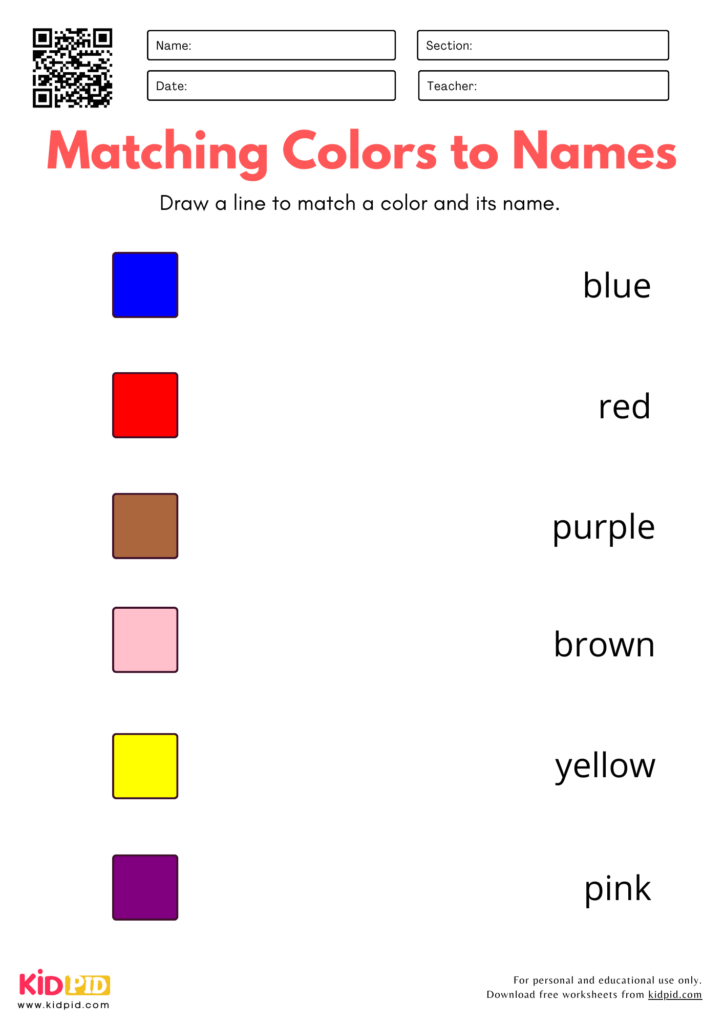
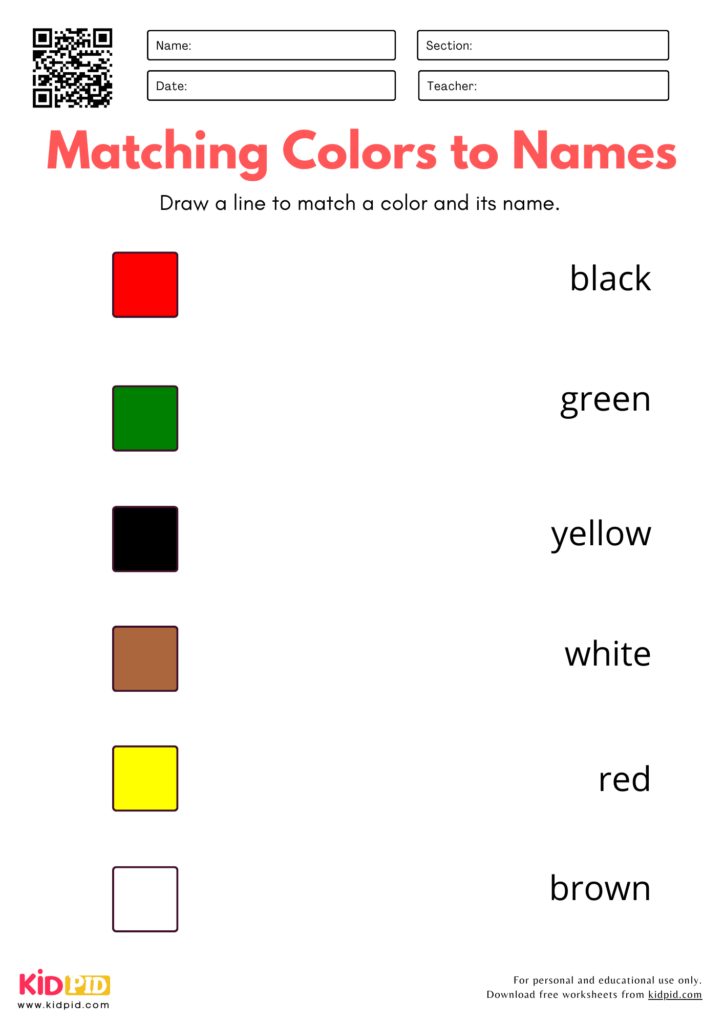
Key Facts About Match Color With Name Worksheet for Kindergarten
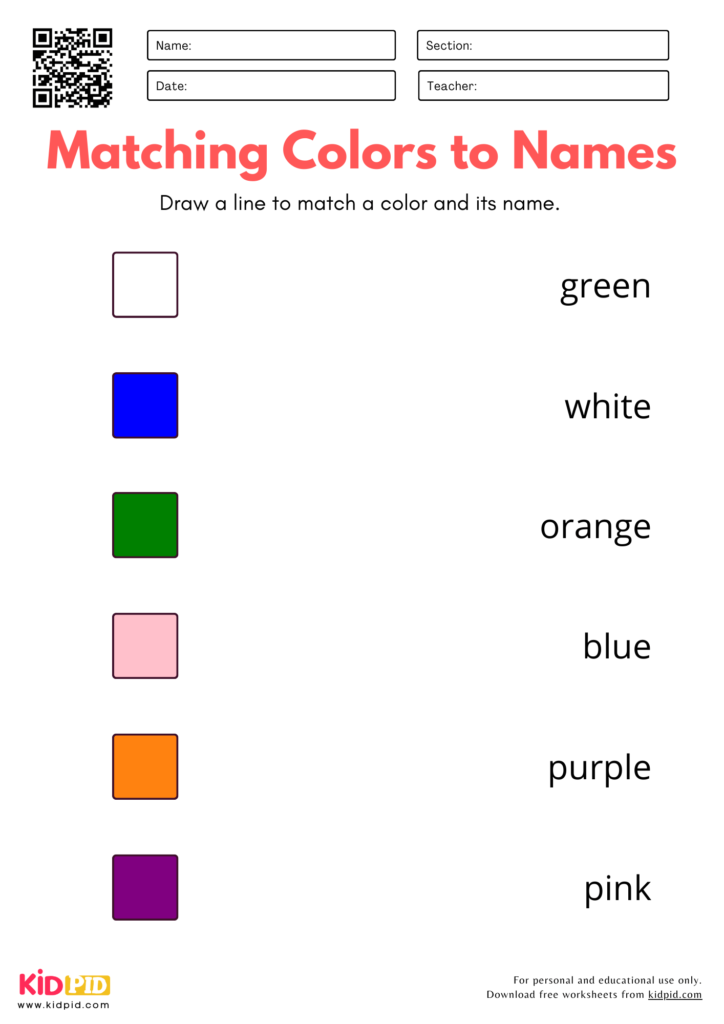
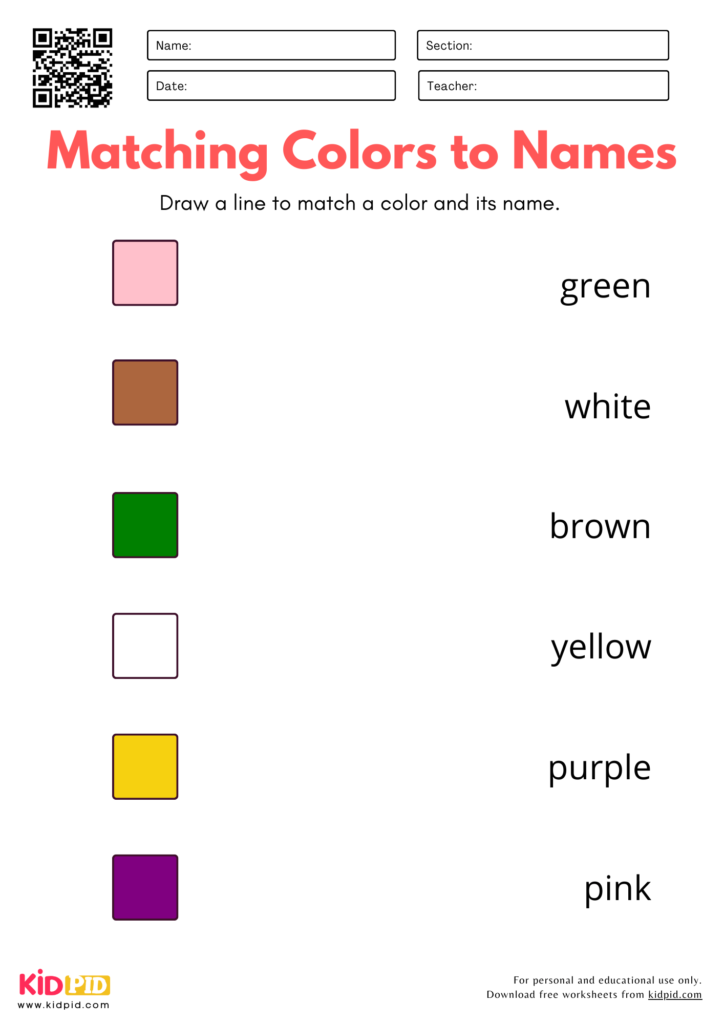
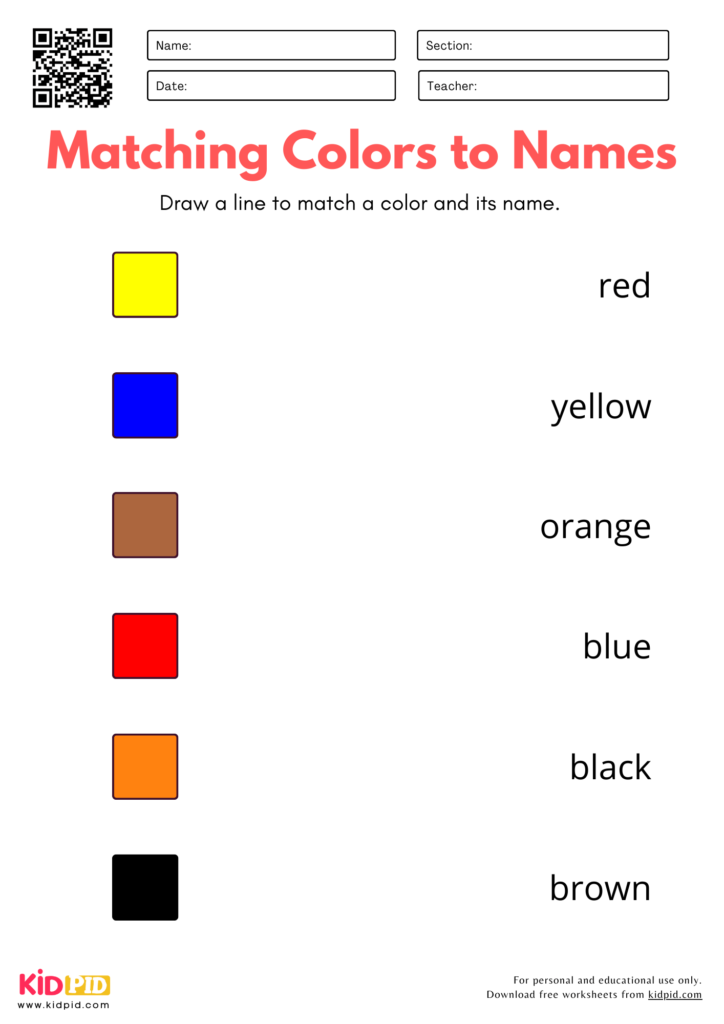
The Match Color With Name Worksheet for Kindergarten is an engaging educational activity designed to help young learners recognize colors and connect them with their written names. These worksheets combine visual learning with early reading skills, making color identification fun and interactive.
Key Facts:
- Suitable for kindergarten and preschool children.
- Improves color recognition and vocabulary development.
- Strengthens visual discrimination skills.
- Encourages word-picture association.
- Supports early reading readiness.
- Uses colorful illustrations to maintain engagement.
- Can be used in classrooms, homeschooling, or independent practice.
Parts/Types/Examples of Match Color With Name Worksheet
Parts of the Worksheet
- Color Images: Colored objects, shapes, or illustrations.
- Color Names: Written words such as red, blue, green, and yellow.
- Matching Lines: Spaces where children connect colors to their names.
- Instructions Section: Simple directions for completing the activity.
Types of Worksheets
- Basic color matching worksheets.
- Color-to-word connection activities.
- Multiple-choice color recognition worksheets.
- Color tracing and matching worksheets.
- Theme-based color-matching activities.
Examples
- Match a red apple to the word “Red.”
- Connect a blue balloon to the word “Blue.”
- Pair a yellow sun with the word “Yellow.”
- Match a green leaf with the word “Green.”
How Does the Match Color With Name Worksheet Work?
These worksheets present children with colorful pictures or shapes alongside a list of color names. Students observe the color of each object and identify the matching written word. They then draw lines, circle answers, or complete other matching tasks.
The activity encourages children to:
- Observe and identify colors.
- Read or recognize color words.
- Match colors with their correct names.
- Strengthen memory and word association skills.
Repeated practice helps children become confident in recognizing colors and reading simple vocabulary words.
Benefits of Learning About the Match Color With Name Worksheet
- Develops color recognition skills.
- Enhances visual learning abilities.
- Builds early literacy and reading readiness.
- Expands vocabulary knowledge.
- Improves concentration and attention to detail.
- Encourages independent learning.
- Strengthens cognitive development.
- Supports classroom and home learning activities.
- Increases confidence in identifying everyday colors.
Learning Objectives
By completing this worksheet, children will be able to:
- Identify common colors accurately.
- Match colors with their written names.
- Improve visual discrimination skills.
- Develop early reading and vocabulary skills.
- Enhance observation and concentration abilities.
- Strengthen hand-eye coordination through matching activities.
- Build confidence in recognizing colors in daily life.
Worksheet Instructions
- Look carefully at each colored object or shape.
- Read the color names provided on the worksheet.
- Find the correct color name that matches each object.
- Draw a line connecting the object to the matching color word.
- Double-check your answers before finishing.
- Practice saying each color name aloud for better learning.
Interesting Facts About the Match Color With Name Worksheet
- Children typically learn basic colors before mastering more advanced vocabulary.
- Color recognition is an important early childhood developmental milestone.
- Associating colors with words supports reading readiness.
- Visual learning activities help improve memory retention.
- Color-based exercises stimulate creativity and observation skills.
- Many educational programs use color-matching activities as foundational learning tools.
Vocabulary Words
Introduce children to these color-related vocabulary words:
- Red
- Blue
- Yellow
- Green
- Orange
- Purple
- Pink
- Brown
- Black
- White
- Color
- Match
- Shape
- Object
- Bright
- Dark
- Rainbow
- Shade
Real-Life Applications
Children use color recognition skills every day in various situations:
- Identifying traffic lights and safety signs.
- Choosing and organizing clothes by color.
- Recognizing fruits, vegetables, and household objects.
- Participating in art and craft activities.
- Following color-coded classroom instructions.
- Sorting toys and learning materials.
- Reading books and educational materials that use color cues.
These practical applications make color-learning worksheets highly valuable for early childhood education.
FAQs
Q1. What is a Match Color With Name Worksheet?
Answer: A Match Color With Name Worksheet is an educational activity where children connect colored objects or shapes with their corresponding color names.
Q2. Who can use this worksheet?
Answer: The worksheet is ideal for preschoolers, kindergarten students, homeschool learners, teachers, and parents.
Q3. What skills does this worksheet develop?
Answer: It improves color recognition, vocabulary, visual discrimination, concentration, and early reading skills.
Q4. Why is color recognition important for kindergarten children?
Answer: Color recognition helps children understand their environment, follow instructions, and build foundational learning skills needed for reading and cognitive development.
Q5. Can this worksheet be used at home?
Answer: Yes. Parents can easily use it as a fun learning activity to reinforce color recognition and vocabulary practice.
Q6. How often should children practice color-matching activities?
Answer: Regular practice, even for 10–15 minutes a few times a week, can significantly improve color identification and word recognition skills.
Q7. Are color-matching worksheets suitable for beginner learners?
Answer: Yes. These worksheets are specifically designed to help young children learn colors through simple, engaging, and age-appropriate activities.
Q8. How do these worksheets support early literacy?
Answer: Children learn to associate visual colors with written words, helping them recognize vocabulary and develop reading readiness skills.
 Connecting color names with the correct shades helps children learn about several colors and be able to identify kindergarten children improve reading readiness, color recognition, vocabulary development, and matching skills while making early learning fun, interactive, and easy to understand. Find exciting worksheets, essays, paragraphs, flashcards, quizzes, and interactive resources that inspire young learners. Follow us on YouTube & Facebook.
This worksheet is prepared by the Content Team to support academic practice.
Reviewed By Parul Rana
Read More: