
This is an engaging activity that challenges second-grade students to fill in the missing letters in various space-themed vocabulary words. It’s an excellent way to build their spelling skills while also expanding their knowledge of space vocabulary words that will excite the kids. So practice these worksheets to explore the space vocabulary and improve literacy skills.
[Scroll Down for Download Link]
Contents
- Write The Missing Letter Of Space Word Worksheets For Grade 2
- Key Facts About Missing Letters of Space Words Worksheet
- Parts, Types, and Examples
- How Does This Worksheet Work?
- Benefits of Learning About Space Vocabulary
- Learning Objectives
- Worksheet Instructions
- Interesting Facts About Space Vocabulary Words
- Real-Life Applications
- FAQs
- Q1. At what age should a child start using this worksheet?
- Q2. Can this be used for homeschooling?
- Q3. Why are these specific words chosen?
- Q4. Does the worksheet help with non-native English speakers?
- You may like these:
- Fun Space Crafts for Kids
- Learn About Your Solar System
- Blue Flashcards with Space Objects
Write The Missing Letter Of Space Word Worksheets For Grade 2
Read More: Compound Words Worksheets From Kindergarten to Grade 5

- SUN
- MOON
- EARTH
- MARS
- JUPITER
- SATURN
- MERCURY
- VENUS
- PLUTO
Second-grade students will practice the spelling of space words like several planets in this worksheet. They will write the missing letters in the blank column to fill in the space words. It also includes an answer key for the students to take hints and complete the worksheet in less time.

- STARS
- ECLIPSE
- ASTEROID
- ALIEN
- SPACESHIP
- ASTRONAUT
- ROCKET
- TELESCOPE
- SATELLITE
If you want to know about the world of space and the things related to space. This worksheet will educate you about a few space words. They have to write the missing letters in the blanks and complete the specific name. Students can get help from an answer key to get accurate answers effectively.
Key Facts About Missing Letters of Space Words Worksheet
- Target Audience: Specifically designed for 2nd-grade students (approx. 7–8 years old).
- Core Subject: Vocabulary building combined with fundamental Astronomy awareness.
- Skill Focus: Spelling accuracy, phonetic reinforcement, and pattern recognition.
- Curriculum Alignment: Enhances English language literacy while introducing cross-curricular science concepts.
- Accessibility: Includes an integrated answer key to promote self-directed learning and immediate feedback for students.
Parts, Types, and Examples
This worksheet is categorized into two primary vocabulary domains:
- Celestial Bodies: Includes names of our solar system’s major components like the Sun, Moon, Earth, Mars, Jupiter, Saturn, Mercury, Venus, and Pluto.
- Space Exploration & Phenomena: Focuses on human-made and natural space objects, such as Stars, eclipses, asteroids, aliens, spaceships, astronauts, rockets, telescopes, and satellites.
How Does This Worksheet Work?
The worksheet utilizes a “cloze” (fill-in-the-blank) activity format. Students are presented with key vocabulary words where specific letters have been omitted. By analyzing the remaining letters and the word’s structure, the student must deduce the missing characters. This process actively forces the brain to visualize the entire word, strengthening orthographic memory and word recognition skills more effectively than rote memorization.
Benefits of Learning About Space Vocabulary
- Cognitive Development: Promotes critical thinking by associating specific terms with scientific concepts.
- Confidence Building: Mastering specialized scientific vocabulary boosts academic confidence in both literacy and science subjects.
- Curiosity Spark: Introduces complex concepts (like Eclipse or Satellite) in a manageable, non-intimidating way, fostering a lifelong interest in STEM.
- Spelling Proficiency: Repeated engagement with these terms improves spelling accuracy for phonetically challenging words.
Learning Objectives
By completing this activity, students will be able to:
- Correctly spell common space-themed vocabulary words.
- Identify and recognize the names of major planets and celestial objects.
- Demonstrate increased word recognition through context-based practice.
- Develop independent study habits by utilizing answer keys for self-correction.
Worksheet Instructions
- Preparation: Print the worksheet clearly to ensure all blanks are visible.
- Engagement: Encourage the student to read the word aloud (even with the missing letters) to hear the phonetic sounds.
- Completion: Have the child fill in the blanks one by one. If they encounter difficulty, encourage them to look at related images or refer to a grade-appropriate science book.
- Review: Use the included answer key to verify the spelling. If an error occurs, discuss why the specific letter fits to reinforce learning.
Interesting Facts About Space Vocabulary Words
- Planetary Origins: Many planet names come from Roman and Greek mythology (e.g., Mars is named after the Roman god of war).
- Human-Made Objects: An Astronaut comes from the Greek words astron (star) and nautes (sailor)—literally “star-sailor.”
- The Light Phenomenon: An Eclipse occurs when one celestial body moves into the shadow of another, a concept as fascinating as the word itself is fun to spell.
Real-Life Applications
Learning these terms bridges the gap between classroom English lessons and real-world curiosity. Understanding these words allows children to:
- Better comprehend science documentaries or news about space missions.
- Engage more deeply with museum exhibits at planetariums.
- Utilize correct terminology when discussing the night sky with parents or teachers, fostering more meaningful intellectual conversations.
FAQs
Q1. At what age should a child start using this worksheet?
Answer: It is perfectly tailored for 2nd-grade (ages 7–8) learners, though it can be a great enrichment activity for advanced 1st graders or a review for 3rd graders.
Q2. Can this be used for homeschooling?
Answer: Absolutely. It is designed to be self-explanatory, making it an excellent resource for parents to supplement home learning.
Q3. Why are these specific words chosen?
Answer: These words strike a balance between high-frequency words and subject-specific vocabulary, ensuring the child gains both general literacy and introductory scientific knowledge.
Q4. Does the worksheet help with non-native English speakers?
Answer: Yes, the visual nature of the vocabulary helps ESL/EFL students associate words with tangible concepts, making it a valuable tool for language acquisition.
Explore the wonders of space while completing missing letters in this Grade 2 worksheet. Children strengthen spelling, vocabulary, phonics, and word recognition, making learning about space both fun and educational. Help children learn with engaging flashcards, quizzes, worksheets, essays, paragraphs, and interactive resources on our website and YouTube & Facebook.
The Content Team created this worksheet to increase practice efficiency.
Reviewed By Gargy
You may like these:
Fun Space Crafts for Kids
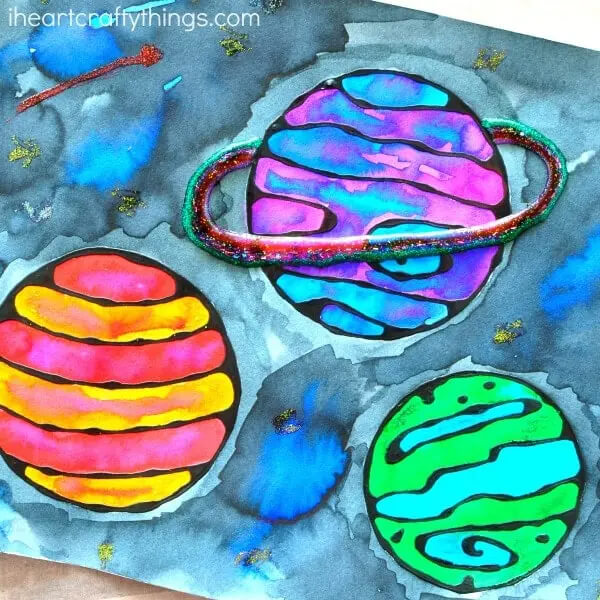
Creative and easy space-themed crafts that inspire kids to explore the universe, encouraging creativity, imagination, and learning about planets, stars, and rockets through hands-on activities.
Learn About Your Solar System

An engaging introduction to the solar system, helping kids discover the Sun, planets, and moons while understanding their unique features and place in our cosmic neighborhood.
Blue Flashcards with Space Objects
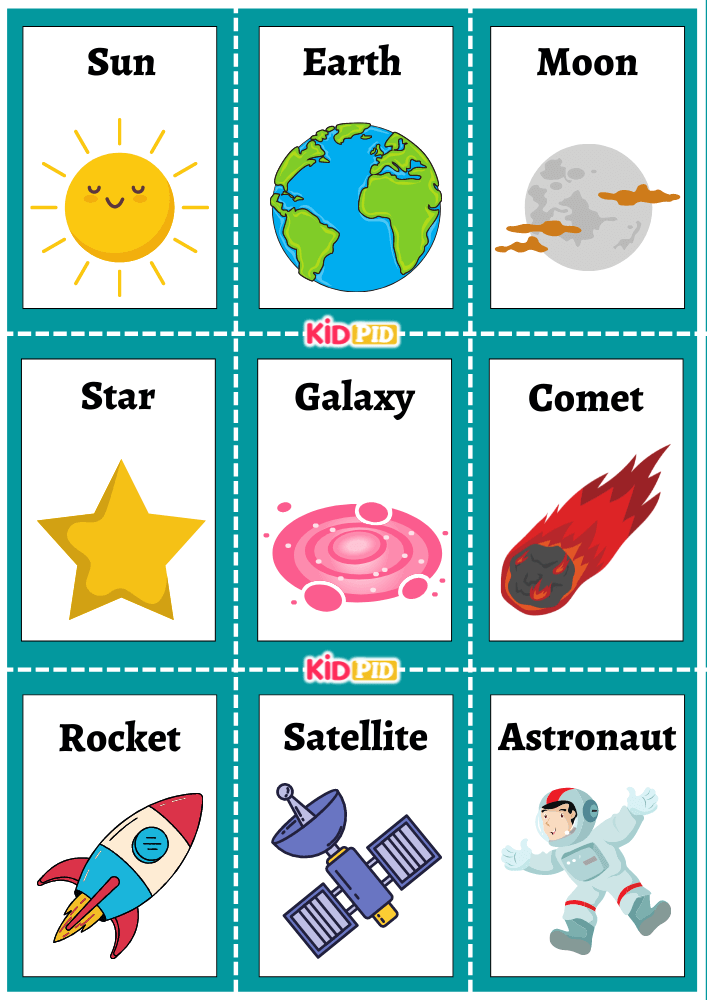
A set of blue-themed flashcards featuring space objects like stars, planets, and galaxies, designed to teach kids space vocabulary and spark curiosity about astronomy.